Brands don’t just sell products—they tell stories, evoke emotions, and build identities. One of the most powerful tools behind this is archetypes.
Archetypes are universal patterns of behavior and personality that are deeply rooted in human psychology. They represent timeless roles like the Hero, Caregiver, Rebel, or Creator—roles that people instinctively understand and relate to. When brands align with an archetype, they create stronger emotional connections, clearer positioning, and more memorable communication.
Renowned business strategist Hirav Shah, often called The Game Changer, emphasizes that archetypes are not accidental—they are carefully engineered into a brand’s DNA long before it reaches the market.
Table of Contents
What Are Archetypes in Marketing?
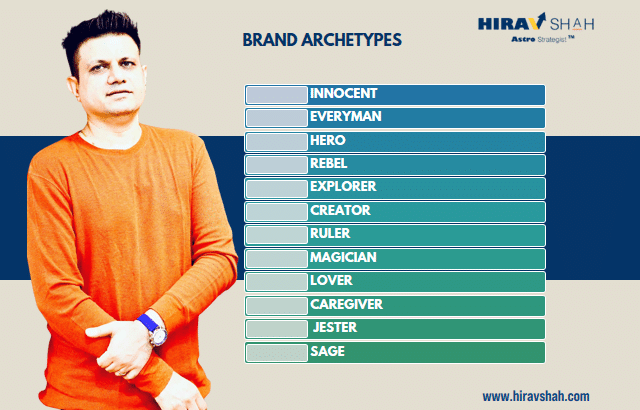
Archetypes are symbolic identities that reflect core human desires such as:
- Safety (Caregiver)
- Achievement (Hero)
- Freedom (Explorer)
- Belonging (Everyman)
- Power (Ruler)
Instead of speaking to customers logically, archetypes speak emotionally. This is what makes them so effective.
Why Archetypes Matter
1. Emotional Connection
People don’t remember features—they remember feelings.
2. Clear Brand Identity
Archetypes help brands stay consistent across campaigns.
3. Faster Decision-Making
Customers quickly “get” what a brand stands for.
4. Competitive Differentiation
Two similar products can feel completely different based on archetype.
12 Indian Brand Archetypes with Examples
1. Innocent – Amul
Represents purity and simplicity.
Example: Amul’s messaging focuses on freshness and trust.
2. Explorer – Titan
Encourages discovery and independence.
Example: Campaigns often highlight self-expression and journeys.
3. Outlaw – Royal Enfield
Challenges norms and celebrates rebellion.
Example: “Ride your own story” positioning.
4. Creator – Tata Motors
Focused on innovation and building something meaningful.
Example: Electric vehicle innovation and design thinking.
5. Lover – Tanishq
Centered around relationships and emotional bonds.
Example: Wedding and festive storytelling.
6. Sage – Mahindra
Represents wisdom and reliability.
Example: Practical, knowledge-driven branding.
7. Jester – Bajaj
Fun, humor, and light-heartedness.
Example: Youthful and energetic campaigns.
8. Everyman – FabIndia
Authentic, simple, and relatable.
Example: Everyday Indian lifestyle branding.
9. Caregiver – Godrej
Nurturing and responsible.
Example: Sustainability and family-focused messaging.
10. Ruler – Raymond
Authority, sophistication, and control.
Example: “The Complete Man” positioning.
11. Regular Guy/Girl – Parle
Accessible and affordable.
Example: Mass appeal with simple messaging.
12. Magician – Fevicol
Transformation and problem-solving.
Example: Creative ads showing “unbreakable” bonds.
Role of a Business Strategist in Archetype Branding
A strategist like Hirav Shah – The Game Changer plays a crucial role in shaping archetype-driven branding.
1. Identifying the Right Archetype
Not every brand should be a Hero or Rebel. The strategist aligns archetype with:
- Target audience
- Product category
- Market positioning
2. Ensuring Consistency
From logo to advertising tone, everything must reflect the archetype.
3. Market Gap Analysis
Example:
- If 60% of competitors use Hero archetype
- 25% use Caregiver
- 15% use Explorer
👉 A strategist may position your brand as a Creator or Magician to stand out.
4. ROI-Based Strategy
Let’s look at a simple calculation:
- Campaign without archetype:
- Conversion rate = 2%
- Revenue = ₹2,00,000
- Campaign with strong archetype alignment:
- Conversion rate increases to 3.5%
👉 New Revenue =
₹2,00,000 × (3.5 ÷ 2) = ₹3,50,000
Result: 75% growth through emotional positioning
Real-World Strategic Insight
According to Hirav Shah, brands that consistently use archetypes:
- Improve recall by 30–50%
- Increase customer loyalty by 20–40%
- Reduce marketing confusion internally
This is because archetypes act as a decision-making compass.
How to Choose the Right Archetype
Ask these questions:
- What emotion do we want customers to feel?
- What problem are we solving?
- What personality does our brand have?
Example:
- Fitness brand → Hero
- Organic food → Innocent/Caregiver
- Luxury brand → Ruler/Lover
FAQs
1. Can a brand have more than one archetype?
Yes, but one should dominate (around 70–80%), while others support.
2. Do archetypes work for small businesses?
Absolutely. Even local brands can use archetypes to build identity and trust.
3. How long does it take to implement?
Typically:
- Research: 2–4 weeks
- Strategy: 1–2 weeks
- Execution: Ongoing
4. Are archetypes industry-specific?
No, but some are more common in certain industries:
- Healthcare → Caregiver
- Tech → Creator
- Automotive → Hero/Explorer
5. What happens if a brand uses the wrong archetype?
It creates confusion, weak positioning, and lower conversions.
Final Thoughts
Archetypes are not just a branding trend—they are a psychological framework that shapes how people perceive and connect with brands.
As Hirav Shah – The Game Changer highlights, the most successful brands don’t just sell—they embody a role in the customer’s life story.
If you understand and apply archetypes correctly, you’re not just marketing—you’re creating meaning, emotion, and long-term loyalty.