
Instead of asking, “How can I fix everything that is wrong with the world?”, ask:
“What can I improve within my sphere of influence today?”
That shift in thinking is powerful.
No individual can solve every global problem. No entrepreneur can eliminate poverty single-handedly. No business leader can reverse climate change alone. No professional can help every person they meet.
But individuals can influence families. Families can influence communities. Communities can influence businesses. Businesses can influence industries. Industries can influence economies.
That is how meaningful change compounds.
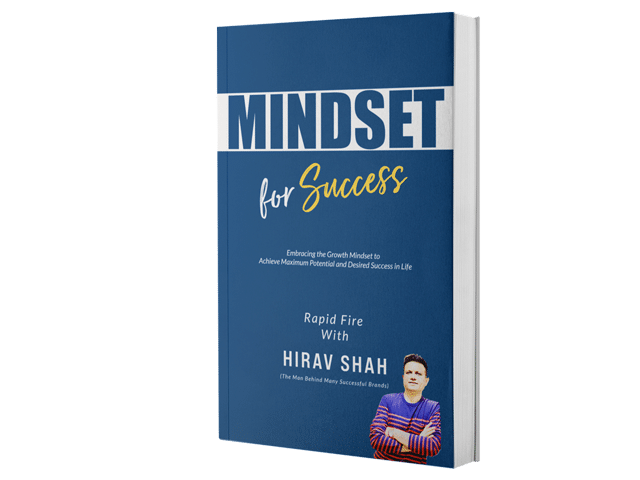
Business Strategist Hirav Shah believes that meaningful impact begins with personal clarity and gradually expands into relationships, businesses, communities, and society.
The objective is not to become a savior. The objective is to become a positive force.
You begin by becoming happier and more balanced within yourself. Then you become intentional about making the people around you better. Eventually, your influence can extend into your organization, your community, and the wider economy.
Table of Contents
1. Start With Yourself: Happiness Is the First Strategic Foundation

Before attempting to change the world, learn to manage your own world.
Business Strategist Hirav Shah emphasizes a simple foundational principle:
“Be happy with yourself first.”
This does not mean waiting until your life becomes perfect before helping others.
It means developing enough emotional stability, self-awareness, confidence, and purpose that your contribution comes from strength rather than exhaustion.
A person who is constantly overwhelmed will eventually struggle to support others.
A leader who cannot manage personal stress may unintentionally transfer that stress to employees.
An entrepreneur who operates entirely from fear may make short-term decisions that damage long-term value.
Personal well-being, therefore, is not merely a lifestyle issue. It is a leadership asset.
Why Personal Happiness Matters in Business
Consider two entrepreneurs.
Entrepreneur A wakes up every morning feeling pressured by competition, revenue targets, employee problems, and uncertainty. Every challenge feels like a threat.
Entrepreneur B faces many of the same problems but has developed routines for reflection, exercise, relationships, planning, and emotional regulation.
Neither entrepreneur has a problem-free business. The difference is their ability to respond.
A useful way to think about this is:
Pressure + poor emotional regulation = reactive decisions
Whereas:
Pressure + clarity + emotional resilience = strategic decisions
This distinction can have significant financial consequences.
Suppose a business generates ₹1 crore in annual revenue and poor decisions caused by stress result in just 3% unnecessary leakage through bad hiring, impulsive spending, missed opportunities, or customer loss.
₹1,00,00,000 × 3% = ₹3,00,000
A small improvement in the quality of leadership can therefore have measurable economic value.
Happiness Does Not Mean Ignoring Problems
Being happy with yourself does not mean pretending that everything is fine.
It means accepting reality without allowing reality to completely control your mindset.
A business owner can acknowledge:
- Sales are below target.
- Cash flow is tight.
- Competition is increasing.
- An employee is underperforming.
- A major customer has left.
- A new strategy has failed.
The strategic question is:
“What is the most constructive action I can take next?”
That question moves the mind from anxiety to agency.
The Five-Minute Personal Reset
A simple daily exercise is to spend five minutes answering:
- What is going well?
- What is currently troubling me?
- What can I control?
- What deserves my attention today?
- Who can I positively influence today?
This small exercise can prevent an entire day from being driven by emotional reactions.
2. Make Other People Happier Through Small Acts of Human Connection

Once you develop greater stability within yourself, the next opportunity is remarkably simple:
Make someone’s day better.
You do not always need money. You do not need authority. You do not need a large organization. You do not even need a solution.
Sometimes, you simply need to listen.
Business Strategist Hirav Shah points out that a compassionate conversation can be enough to make someone’s day.
This is particularly relevant in a world where everyone appears busy.
People rush between meetings. Employees move from deadline to deadline. Entrepreneurs spend hours solving operational problems. Customers interact with automated systems. Family members communicate through short messages.
In such an environment, genuine human attention becomes increasingly valuable.
The 60-Second Impact
Imagine an employee approaches a business owner after making a mistake.
The owner can respond:
“You always make mistakes. Fix it.”
Or:
“I know this was difficult. Let’s understand what happened and figure out how we prevent it next time.”
The second response does not eliminate accountability. It combines accountability with dignity.
That distinction can influence employee confidence, learning, loyalty, and future performance.
A Simple Leadership Equation
You can think about workplace relationships using a simple conceptual equation:
Trust = Competence + Consistency + Care
A leader who is highly competent but shows no care may produce compliance but not loyalty.
A leader who cares deeply but lacks competence may create goodwill without results.
The strongest leaders combine both.
Practical Example: The Customer Who Wasn’t Buying
Imagine a salesperson speaks with a potential customer who decides not to purchase.
Instead of immediately ending the conversation, the salesperson asks:
“Would you mind telling me what prevented you from moving forward?”
The customer explains that the product is good but the payment structure does not fit their current cash flow.
The salesperson learns something valuable about the market.
Perhaps the company can introduce a smaller package, monthly plan, or entry-level product.
A failed sale has now become market intelligence.
That is the strategic value of listening.
3. You Do Not Need a Special Background to Create Extraordinary Impact

One of the biggest misconceptions about impact is that you need extraordinary circumstances, wealth, education, connections, or influence before you can make a difference.
You don’t.
Many people who have created meaningful change started with significant limitations. Some faced financial hardship. Some lacked powerful networks. Some experienced repeated failure. Some began with very little confidence.
Yet they found a way forward.
The lesson for entrepreneurs and decision-makers is important:
Your starting position influences your journey, but it does not completely determine your destination.
The Strategic Principle of Resourcefulness
Business leaders often focus on resources:
- How much capital do we have?
- How many employees do we have?
- How large is our customer base?
- How strong is our network?
- How much technology can we afford?
These are legitimate questions.
But another question is equally important:
“How creatively can we use the resources we already possess?”
A startup with ₹5 lakh may not be able to compete with a corporation spending ₹5 crore.
But it can potentially compete through speed, specialization, customer intimacy, experimentation, and niche positioning.
Case Scenario: The Small Local Business
Imagine a neighborhood bakery competing against a large online food platform.
The bakery cannot win a technology competition. It may not have the same advertising budget or sophisticated logistics.
But it can build an advantage around:
- Personal relationships
- Custom orders
- Local events
- Freshness
- Community identity
- Corporate gifting
- Birthday and wedding packages
- Direct customer communication
Instead of asking, “How do I beat the big company?”, the owner asks:
“Where can my small size become an advantage?”
That is strategic thinking.
The Resource Multiplication Principle
Suppose a small business has 500 loyal customers.
If each customer refers one additional customer over a year, the theoretical customer base could increase to:
500 + 500 = 1,000 customers
If only 20% successfully generate one referral, that still creates:
500 × 20% = 100 new customers
You do not always need dramatically more resources. Sometimes you need to extract more value from the resources you already possess.
4. Dream Much Larger Than Your Current Circumstances

The next principle is ambition.
Many people unintentionally design their future around their present circumstances.
They ask:
- What can I afford today?
- What can I realistically achieve this year?
- What will people think?
- What if I fail?
- What if the market doesn’t accept me?
These questions are understandable.
But if you only think within the boundaries of your current reality, you may never discover what could exist beyond those boundaries.
Business Strategist Hirav Shah encourages entrepreneurs and leaders to think beyond immediate limitations and envision the person, business, and contribution they ultimately want to create.
The Difference Between a Goal and a Vision
A goal might be:
“I want ₹1 crore in annual revenue.”
A vision asks:
“What kind of organization could I build that creates ₹1 crore, ₹10 crore, or ₹100 crore of sustainable value while positively affecting customers, employees, and society?”
The second question creates a broader strategic lens.
The Five-Minute Vision Exercise
Spend five minutes every day visualizing your desired future.
Ask:
In five years:
- What kind of person have I become?
- What does my business look like?
- Who benefits from my work?
- What problems am I solving?
- What reputation have I built?
- What opportunities exist because I took action today?
Then bring the vision back to the present.
Ask:
“What is one thing I can do today that moves me 1% closer?”
Vision without execution is fantasy. Execution without vision becomes routine. Strategic progress requires both.
The 1% Principle
Suppose a business improves one meaningful process by just 1% each week.
If those improvements compound, the effect over 52 weeks is conceptually much larger than 52%.
Using a simplified compounding illustration:
1.0152 ≈ 1.67
That means repeated 1% improvements could theoretically produce roughly a 67% cumulative improvement under continuous compounding assumptions.
Real businesses will not behave this neatly, but the illustration demonstrates an important principle:
Small improvements become significant when repeated consistently.
From Dream to Strategic Roadmap
A useful framework is:
Vision → Objective → Strategy → Action → Measurement → Learning
For example:
Vision: Build the most trusted local sustainable fashion brand.
Objective: Reach 10,000 customers within three years.
Strategy: Differentiate through ethical sourcing and personalized service.
Action: Launch a referral program and customer education campaign.
Measurement: Track referrals, repeat purchases, customer acquisition cost, and retention.
Learning: Double down on the channels producing the highest-quality customers.
This transforms a dream into a strategic system.
5. Be Kind: Kindness Is a Leadership Advantage

Kindness is sometimes misunderstood as weakness.
In business, it should not be.
True kindness is not avoiding difficult conversations. It is treating people with dignity while still maintaining standards.
A business leader can say:
“This performance is below the required standard, and we need to address it.”
That is accountability.
The leader can then add:
“Let’s understand what is preventing you from succeeding and determine how we can fix it.”
That is kindness.
The two are compatible.
Why Kindness Can Compound
Consider an employee who receives respectful treatment during a difficult situation.
That employee may be more likely to:
- Trust leadership
- Help colleagues
- Stay engaged
- Communicate problems earlier
- Support customers better
- Model similar behavior
One act can therefore influence multiple interactions.
Kindness can behave like a social multiplier.
A Practical Example
Imagine a restaurant manager notices that a new employee is struggling during a busy shift.
The manager has two choices.
Response A: Criticize the employee publicly.
Response B: Step aside for two minutes, explain the issue privately, demonstrate the correct process, and encourage the employee to try again.
Response B may take slightly more time today.
But it can create a stronger employee tomorrow.
Strategic leadership is often about making small investments today that reduce larger costs tomorrow.
6. Slow Down and Focus on What Matters Most

Modern business culture often celebrates busyness.
A full calendar can create the illusion of productivity.
But activity is not the same as progress.
Business Strategist Hirav Shah’s strategic perspective is especially relevant here: leaders must identify what matters most and concentrate resources accordingly.
A business owner who tries to pursue ten major initiatives simultaneously may make less progress than one who executes two initiatives exceptionally well.
The Strategic Focus Formula
Think of organizational progress as:
Impact = Importance × Execution Quality
If an initiative is extremely important but poorly executed, its impact remains low.
If execution is excellent but the initiative is unimportant, the impact is also low.
The sweet spot is:
High importance + high execution quality
The 80/20 Question
Ask:
“Which 20% of activities generate approximately 80% of our results?”
The answer may reveal:
- Your most profitable customers
- Your highest-performing products
- Your strongest sales channels
- Your best employees
- Your most valuable partnerships
- Your most effective marketing activities
Then ask:
“What should we stop doing?”
This is often harder than identifying what to start.
Example: A Growing Company
Suppose a company has 10 major projects.
Each project requires approximately ₹5 lakh and 500 management hours.
The total requirement is:
10 × ₹5 lakh = ₹50 lakh
and:
10 × 500 hours = 5,000 management hours
If the organization has only ₹30 lakh available and 3,000 management hours, attempting everything creates predictable execution problems.
Instead, management can identify the four initiatives with the greatest strategic value.
That means:
4 × ₹5 lakh = ₹20 lakh
and:
4 × 500 hours = 2,000 hours
The organization now has capacity remaining for unexpected problems and opportunities.
Focus is not about doing less for the sake of doing less. It is about directing limited resources toward the highest-value outcomes.
7. Contribute to Economic Growth and Wealth Distribution

One of the most powerful ways to make a difference is through economic participation.
People often associate social impact exclusively with charity.
But creating employment, supporting entrepreneurs, purchasing from local businesses, developing skills, mentoring founders, and helping organizations become more productive can also create substantial social value.
Businesses are economic engines.
A healthy business can create:
- Jobs
- Salaries
- Supplier opportunities
- Tax contributions
- Skills
- Innovation
- Customer value
- Community activity
The Local Economic Multiplier
Imagine you spend ₹10,000 with a local business.
That business uses part of the money to pay an employee. The employee spends part of their income locally. The business owner pays a supplier. The supplier pays another worker.
The exact multiplier varies by economy and circumstances, but the principle is clear:
Money spent within an ecosystem can circulate through multiple participants.
This is why supporting productive local businesses can have effects beyond the initial transaction.
8. Use Your Professional Skills to Help Smaller Organizations

One of the easiest ways for experienced professionals to create impact is to donate something more valuable than money:
Expertise.
A small business may desperately need capabilities in:
- Marketing
- Pricing
- Accounting
- Recruitment
- Branding
- Technology
- Operations
- Customer experience
- Sales
- Strategy
A large corporation may employ entire teams for these functions.
A small business may have one owner trying to do everything.
That creates an opportunity.
Case Scenario: The Struggling Farmers’ Market
Imagine a local farmers’ market losing customers because of competition from e-commerce and large retailers.
A marketing professional could help the market:
- Redesign its customer positioning
- Create social media campaigns
- Introduce loyalty programs
- Develop weekend experiences
- Partner with local restaurants
- Build subscription vegetable boxes
- Improve vendor storytelling
The professional may contribute only a few hours each month.
But those hours could help dozens of vendors.
That is leverage.
Case Scenario: The Neighborhood Salon
Suppose a neighborhood salon provides excellent services but has almost no marketing budget.
A designer might help improve its visual identity.
A marketer might create a referral campaign.
A photographer might provide better images.
A local business owner might organize a group event.
A customer might simply leave a thoughtful review and recommend the salon to friends.
None of these actions individually transforms the world. Together, they can help a small enterprise survive and grow.
9. Support Not-for-Profits With the Right Kind of Help

Not-for-profit organizations often need more than donations.
They may need:
- Board members
- Volunteers
- Strategic advice
- Technology
- Accounting expertise
- Marketing
- Fundraising
- Legal support
- Operational systems
- Research
- Community outreach
The key is to avoid assuming what an organization needs.
Instead, ask:
“What would be most useful to you right now?”
That single question can make your contribution dramatically more effective.
The Strategic Contribution Matrix
| Opportunity | Potential Impact | Your Capability | Priority |
|---|---|---|---|
| Donate generic supplies | Medium | Low | Medium |
| Provide specialist marketing help | High | High | Very High |
| Attend occasional events | Low | Medium | Low |
| Build a sustainable fundraising system | Very High | High | Very High |
This illustrates an important strategic principle:
The best contribution is not always the largest contribution. It is often the most relevant contribution.
10. Build a Personal Impact Strategy

If you genuinely want to make a difference, turn good intentions into a system.
Business Strategist Hirav Shah would approach this much like a business strategy: define the desired outcome, identify resources, select priorities, execute consistently, and measure results.
Step 1: Define Your Impact Area
Choose one or two areas that genuinely matter to you.
- Education
- Entrepreneurship
- Environment
- Employment
- Local communities
- Skill development
- Women’s economic participation
- Small-business growth
You do not need to address everything.
Step 2: Identify Your Assets
Your assets may include:
- Money
- Time
- Expertise
- Relationships
- Technology
- Influence
- Physical resources
- Business infrastructure
Step 3: Choose Your Highest-Leverage Contribution
Ask:
“Where can my particular capabilities create the greatest positive result?”
Step 4: Start Small
Do not wait for the perfect opportunity.
Choose one action that can be completed within seven days.
- Mentor one entrepreneur.
- Help a local business improve its pricing.
- Refer a struggling business to three potential customers.
- Volunteer two hours.
- Teach a professional skill.
- Have a meaningful conversation with someone who needs support.
- Introduce two people who could benefit from knowing each other.
Step 5: Measure the Outcome
Track simple numbers.
For example:
Time contributed: 4 hours/month
People helped: 5
Businesses supported: 2
New opportunities created: 3
Revenue influenced: ₹50,000
The numbers do not capture the entire human value of your contribution, but they help you understand whether your actions are producing results.
11. The Ripple Effect: Why Small Actions Matter

Imagine one person helps five people every month.
That means:
5 × 12 = 60 direct interactions per year
Now suppose only 10% of those people independently help another five people.
That creates:
60 × 10% = 6 people
And those six people influence another:
6 × 5 = 30 people
This is a simplified illustration, not a prediction.
But it demonstrates the principle of social multiplication.
Your objective is not necessarily to directly influence millions of people.
Your objective is to create actions that are repeatable, transferable, and contagious.
That is how small behavior can become a larger movement.
12. The Business Strategist’s Perspective: Think in Systems, Not Isolated Actions

A strategist does not look at an action in isolation.
A strategist asks:
“What happens next?”
Suppose a company improves employee training.
The immediate result may be better skills.
But the downstream effects could include:
Better skills → better customer service → higher customer satisfaction → stronger retention → higher revenue → more hiring → more household income.
This is systems thinking.
Similarly:
Supporting a local business → stronger revenue → employee retention → supplier purchases → increased local spending → stronger community economy.
One action can have multiple layers of impact.
The Impact Chain
Use this simple framework:
Action → Immediate Result → Secondary Effect → Long-Term Impact
For example:
Mentor a startup founder
↓
Better business decisions
↓
Greater chance of survival
↓
Jobs retained or created
↓
Household incomes supported
↓
Local economic activity strengthened
The deeper your thinking becomes, the more opportunities you see for meaningful contribution.
13. Five Questions Every Business Leader Should Ask

1. Did My Business Make Customers’ Lives Better?
Revenue is important, but value creation is the foundation of sustainable revenue.
2. Did My Employees Become Stronger Because They Worked Here?
A great company should develop people rather than merely consume their labor.
3. Did I Create Opportunities for Others?
Look beyond your own income. Consider employment, partnerships, mentoring, suppliers, and entrepreneurship.
4. Did I Focus on the Work That Mattered Most?
Busy is not necessarily productive.
5. What Positive Result Can I Multiply Next Month?
The goal is not one good action. The goal is a repeatable system of good actions.
14. A 30-Day Positive Impact Challenge

For readers who want something practical, here is a simple 30-day challenge.
Week 1: Improve Yourself
- Spend five minutes each morning defining your priorities.
- Reduce one unnecessary source of stress.
- Identify one habit that improves your energy.
- Write down three things you are grateful for each day.
Week 2: Improve Your Relationships
- Have one meaningful conversation every day.
- Thank someone specifically for their contribution.
- Listen without interrupting.
- Give constructive feedback privately and respectfully.
Week 3: Improve Your Business or Community
- Support one local business.
- Recommend a deserving entrepreneur.
- Share useful expertise with someone who needs it.
- Identify one process that could be improved.
Week 4: Create Leverage
- Mentor someone.
- Volunteer your professional expertise.
- Connect two people who could benefit from each other.
- Design one initiative that can continue beyond the 30-day challenge.
At the end of the month, ask:
“What changed because I showed up?”
15. Common Mistakes to Avoid When Trying to Make a Difference

Mistake 1: Trying to Solve Everything
You cannot fix every problem.
Choose your battlefield.
Mistake 2: Confusing Intention With Impact
Good intentions are valuable, but outcomes matter.
Ask whether your action actually helped.
Mistake 3: Helping Without Listening
Do not assume you know what someone needs.
Ask first.
Mistake 4: Sacrificing Yourself Completely
Sustainable contribution requires sustainable energy.
You cannot continually pour from an empty cup.
Mistake 5: Measuring Success Only Through Money
Financial performance matters in business, but impact can also be measured through:
- People developed
- Jobs created
- Customers helped
- Businesses strengthened
- Skills transferred
- Opportunities created
- Problems solved
Frequently Asked Questions

Can One Person Really Make a Difference?
Yes, but usually not by attempting to solve everything.
Individual impact becomes powerful when it is focused, consistent, and multiplied through other people.
A small business owner who creates ten jobs is already influencing ten families directly, along with suppliers, customers, and the wider ecosystem.
Do I Need to Be Wealthy to Help Others?
No.
You can contribute money, but you can also contribute time, expertise, relationships, encouragement, introductions, knowledge, or attention.
Sometimes your professional expertise is more valuable than a financial donation.
How Can Entrepreneurs Create Social Impact Without Damaging Profitability?
Start by identifying areas where positive impact and business value overlap.
For example:
- Better employee development can improve retention.
- Better customer service can increase loyalty.
- Sustainable operations can reduce waste.
- Supporting local suppliers can strengthen supply resilience.
- Training employees can increase productivity.
The objective is not always to choose between profit and impact. Often, intelligent strategy can align them.
How Can a Small Business Compete With Large Corporations?
Do not automatically compete on the same dimensions.
Large organizations may have greater capital and scale.
Small businesses can compete through specialization, speed, relationships, customization, authenticity, and local knowledge.
The strategic question is:
“What can we do exceptionally well that a large competitor cannot easily replicate?”
What If I Don’t Know What My Purpose Is?
Start with problems that genuinely bother you.
Then ask:
“What am I good at?”
Finally:
“Where do those two things overlap?”
Purpose often becomes clearer through action rather than endless thinking.
How Do I Stay Kind Without Becoming Too Soft as a Leader?
Separate kindness from permissiveness.
You can be compassionate while maintaining high standards.
A strong leader can say:
“I respect you, and this standard still needs to be met.”
That is both humane and accountable.
How Can I Avoid Burnout While Trying to Help Others?
Set boundaries.
Choose a specific amount of time, money, or expertise you can sustainably contribute.
For example:
4 hours/month × 12 months = 48 hours/year
Forty-eight focused hours can create meaningful value without overwhelming your primary responsibilities.
How Do I Know Whether My Contribution Is Actually Working?
Define a simple metric before you begin.
For example:
- Number of people trained
- Number of businesses supported
- Jobs created
- Revenue improved
- Hours volunteered
- Customers reached
- Projects completed
Measure what you can, learn from what you observe, and adjust.
Final Thoughts: Become the Game Changer

Many people have made measurable contributions to the world.
They include scientists, entrepreneurs, researchers, authors, innovators, educators, business leaders, activists, and community builders.
But meaningful impact does not belong exclusively to famous people.
Everyday people create extraordinary change too.
A business owner who gives a first-time employee an opportunity can change a family’s future.
A mentor who helps an entrepreneur avoid one disastrous decision can alter the trajectory of a company.
A customer who deliberately supports a local business can help preserve jobs.
A manager who chooses compassion during a difficult conversation can change someone’s confidence.
A professional who shares expertise with a struggling organization can create value far beyond the hours invested.
This is where the philosophy of Business Strategist Hirav Shah becomes particularly relevant.
Creating positive change is not simply about thinking bigger.
It is about thinking strategically, acting consistently, and multiplying what works.
Start with yourself.
Become happier and more grounded.
Then improve the experience of the people around you.
Dream beyond your current circumstances.
Choose fewer but more meaningful priorities.
Use your professional capabilities to strengthen businesses and communities.
Support economic opportunity.
Measure your results.
And most importantly, keep going.
You do not need to change the entire world today.
You only need to improve the small part of the world that is within your reach.
Then help someone else do the same.
That is how a single action becomes a habit.
A habit becomes a culture.
A culture becomes a movement.
And a movement can become the change the world needs.
So, what are you waiting for?
It is time to become the Game Changer.