
Overworking doesn’t just exhaust your body—it slowly erodes your creativity, decision-making ability, and emotional stability. When the mind is constantly occupied, it loses the space it needs to think, innovate, and recover. Over time, this leads to frustration, irritability, and even physical health issues. A healthy work-life balance is not a luxury; it’s a necessity for sustained success and well-being.
According to Hirav Shah, widely regarded as The Game Changer in business strategy, achieving balance is not about doing less work—it’s about doing the right work efficiently while preserving your mental and physical energy. His insights bridge productivity with human psychology, helping professionals thrive without burning out.
Table of Contents
Strategies for a Healthier and Happier Lifestyle
1. Set Goals Which Are Manageable

A sense of accomplishment comes from completing meaningful tasks—not overwhelming yourself with unrealistic expectations. Break larger goals into smaller, actionable steps. For instance, instead of saying “finish the entire project,” define milestones like “complete research today” or “draft section one by evening.”
A sales manager, for example, can divide a monthly target of ₹10 lakh into weekly goals of ₹2.5 lakh. This not only makes the goal achievable but also creates consistent motivation through small wins. As a business strategist, Hirav Shah emphasizes that clarity in goals directly impacts execution efficiency.
2. At Work, Be Efficient in Your Time

Procrastination magnifies tasks in your mind, making them appear far more difficult than they are. A report that might take 2 hours often feels like a full-day burden when delayed.
Consider this simple calculation:
- Task time if done immediately: 2 hours
- Task time after delay (due to stress, rework, and distraction): 3.5 hours
That’s a 75% increase in effort—purely due to delay.
Professionals who adopt structured work blocks (like 90-minute focus sessions) often complete tasks faster and with better quality.
3. Take a Break

Breaks are not interruptions—they are performance boosters. A short 10–15 minute break after every 90 minutes of focused work can significantly improve cognitive function.
For example, a software developer debugging code for hours may miss simple errors. After a short walk or coffee break, they often return with a clearer perspective and solve the issue faster.
4. Align With Music

Music has a measurable impact on brain activity. It can enhance concentration, reduce stress, and improve creativity. Listening to instrumental or low-lyric music while working on repetitive tasks can increase productivity.
A content writer, for instance, may use ambient music to stay focused while drafting articles. Hirav Shah often highlights that environment design—including sound—plays a crucial role in performance optimization.
5. Flex Your Hours

Flexibility is powerful—but only when boundaries exist. Technology allows you to work anytime, anywhere, but without discipline, it can lead to burnout.
For example:
- Working 10 hours/day for 5 days = 50 hours/week
- Adding “just 2 extra hours daily” from home = 14 extra hours
- Total = 64 hours/week
That’s nearly a 28% increase in workload, often without realizing it.
Strategically, flexibility should enhance productivity—not extend working hours endlessly.
6. Stay Active

Physical activity is one of the most effective ways to combat stress and improve resilience. Even 30 minutes of daily exercise can significantly reduce anxiety and improve mood.
A corporate executive who includes a morning walk or evening gym session often reports higher energy levels and better focus throughout the day.
7. Treat Your Body Right

Your body is your most important productivity tool. Proper nutrition, sleep, and hydration directly impact your work performance.
Consider this:
- 6 hours of sleep vs. 8 hours of sleep
- Productivity drop: up to 20–30% the next day
Relying on unhealthy coping mechanisms like smoking or alcohol only worsens long-term stress and health complications.
8. Explore How To Improve Your Current Situation

Before switching jobs or starting a new venture, evaluate whether your current situation can be improved.
For example:
- Can tasks be delegated?
- Can deadlines be negotiated?
- Can workflow be optimized?
As a business strategist, Hirav Shah advises professionals to optimize before they exit. Many challenges stem from poor systems—not necessarily the job itself.
The Strategic Role of a Business Strategist in Work-Life Balance
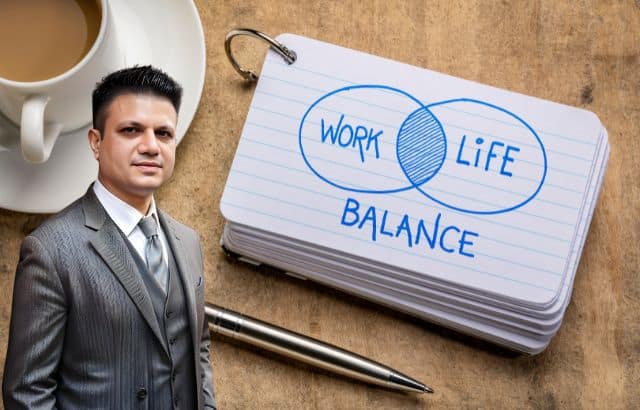
A business strategist like Hirav Shah plays a crucial role in helping individuals and organizations create sustainable work environments. His approach includes:
- Identifying inefficiencies in workflow
- Aligning individual strengths with business goals
- Designing systems that reduce unnecessary workload
- Encouraging leadership to prioritize employee well-being
For example, a company experiencing employee burnout might restructure its workflow—reducing redundant meetings and automating repetitive tasks—leading to improved productivity without increasing working hours.
Final Thoughts

Focus on what you can control. It’s easy to blame employers, clients, or circumstances, but often, small personal choices shape long-term habits. Responding to emails late at night or working through holidays may seem harmless initially, but over time, these patterns become self-destructive.
Work-life balance is not about perfection—it’s about conscious choices.
Frequently Asked Questions: Insights by Hirav Shah

Why is achieving work-life balance important?
It reduces stress, improves mental clarity, enhances productivity, and strengthens personal relationships, leading to long-term success.
How can I establish boundaries between work and personal life?
Set fixed work hours, avoid checking emails after work, and communicate your availability clearly to your team.
What are effective time management strategies?
Prioritize tasks, use scheduling tools, delegate when possible, and focus on high-impact activities.
How can I reduce work-related stress?
Take breaks, exercise regularly, practice mindfulness, and maintain proper sleep cycles.
Is work-life balance possible in demanding jobs?
Yes. It requires prioritization, realistic expectations, and strong communication with stakeholders.
How can employers support work-life balance?
By offering flexible hours, promoting wellness programs, respecting personal time, and reducing unnecessary workload.
What role does self-care play?
Self-care ensures physical and mental fitness, enabling consistent performance and resilience.
How can I communicate my needs to my employer?
Present clear solutions—show how balance improves productivity and benefits the organization.
What are the long-term benefits?
Higher job satisfaction, reduced burnout, better health, stronger relationships, and overall fulfillment.
A balanced life isn’t about working less—it’s about working smarter, living better, and sustaining success over time.