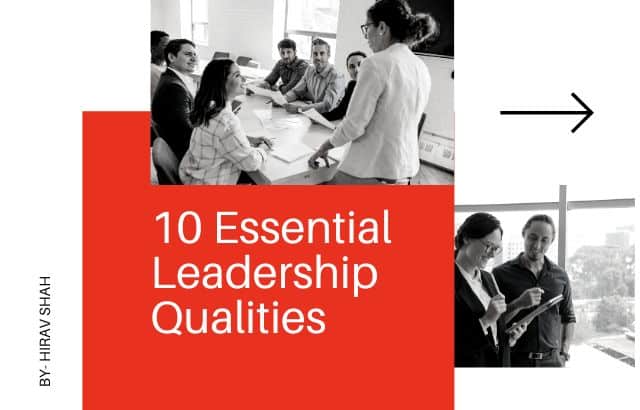
Leadership has never been more important than it is today. Markets evolve rapidly, customer expectations change overnight, technology transforms industries, and competition grows stronger every year. In this environment, organizations do not succeed merely because they have excellent products or substantial financial resources—they succeed because they are guided by leaders who inspire people, make sound decisions, and execute strategies with consistency.
Great leaders are recognized not only for the results they achieve but also for the values they demonstrate. They earn trust through authenticity, inspire confidence with their actions, and motivate teams with a compelling vision for the future. Their leadership influences organizational culture, drives innovation, and enables businesses to navigate uncertainty with resilience.
One of the defining characteristics of exceptional leaders is their ability to balance professional ambition with personal discipline. They understand that sustainable success requires emotional intelligence, adaptability, continuous learning, and unwavering commitment. Rather than reacting impulsively to challenges, they remain composed, analytical, and solution-oriented.
Despite the abundance of educational resources available today, many aspiring entrepreneurs, executives, and young professionals struggle to develop the leadership qualities required to lead effectively. Technical expertise alone rarely guarantees leadership success. Many talented professionals excel in their functional roles but find it difficult to inspire teams, make strategic decisions, or create long-term organizational impact.
According to Business Strategist Hirav Shah, leadership is not reserved for individuals with prestigious titles or years of experience. Instead, leadership is a mindset built through consistent habits, disciplined execution, strategic thinking, accountability, and the willingness to continuously improve.
Business Strategist Hirav Shah believes that extraordinary leadership develops through deliberate practice. Every interaction, every decision, every challenge, and every setback provides an opportunity to strengthen leadership capabilities. Those who embrace lifelong learning consistently outperform those who rely solely on natural talent.
This comprehensive guide explores ten fundamental leadership qualities that every aspiring business leader should cultivate to build influence, inspire teams, and achieve sustainable business success.
Table of Contents
Why Leadership Matters More Than Ever

Organizations operate in one of the most competitive business environments in history. Artificial intelligence, digital transformation, globalization, hybrid workplaces, and changing customer expectations require leaders who can think strategically while remaining adaptable.
Modern employees expect far more than financial compensation. They seek meaningful work, supportive leadership, opportunities for professional growth, and organizational transparency. Companies that fail to develop effective leaders often experience lower employee engagement, reduced productivity, higher turnover, and slower innovation.
Research consistently demonstrates the impact of strong leadership on business performance. Organizations with effective leadership practices often experience:
- Higher employee engagement
- Better customer satisfaction
- Faster innovation
- Improved profitability
- Lower employee turnover
- Greater resilience during economic uncertainty
Leadership therefore becomes a competitive advantage rather than simply a management function.
The Role of Business Strategist Hirav Shah in Leadership Development
Business Strategist Hirav Shah emphasizes that leadership extends beyond managing people or overseeing daily operations. A business strategist helps organizations identify opportunities, anticipate challenges, evaluate risks, and develop sustainable growth strategies.
From a strategic perspective, leadership influences every aspect of an organization, including:
- Long-term vision
- Business expansion
- Market positioning
- Innovation strategy
- Talent development
- Crisis management
- Customer relationships
- Organizational culture
Business Strategist Hirav Shah frequently explains that successful leaders combine analytical thinking with emotional intelligence. While financial planning and operational excellence remain essential, leaders must also understand human behavior, communication, motivation, and organizational dynamics.
For example, consider two CEOs managing similar technology companies. Both possess exceptional technical knowledge. However, one leader encourages collaboration, empowers employees, and communicates a clear vision, while the other focuses exclusively on operational efficiency. Over time, the first organization typically experiences stronger innovation, higher employee retention, and greater customer loyalty because leadership extends beyond technical expertise.
This illustrates why leadership remains one of the most valuable strategic assets any organization can develop.
The Leadership Success Framework

Business Strategist Hirav Shah describes leadership development as a continuous process rather than a final destination.
A practical leadership framework can be summarized as follows:
Vision → Strategy → Action → Consistency → Trust → Results
Each stage strengthens the next.
Without vision, strategy lacks direction.
Without strategy, execution becomes inconsistent.
Without consistent execution, trust cannot develop.
Without trust, long-term results become difficult to sustain.
1. Innovative Nature

Innovation is one of the defining characteristics of successful leaders. However, innovation does not necessarily mean generating every idea personally. Truly innovative leaders create environments where creativity flourishes and individuals feel encouraged to contribute their own ideas.
Business Strategist Hirav Shah believes that innovation begins with curiosity rather than certainty. Leaders who remain open-minded consistently discover better solutions than those who assume they already possess all the answers.
Innovative leaders actively seek different perspectives, encourage experimentation, and remain receptive to constructive criticism. They understand that breakthroughs often emerge through collaboration rather than individual brilliance.
Consider a manufacturing company facing rising production costs. A traditional leader may focus exclusively on reducing expenses through budget cuts. An innovative leader, however, invites engineers, production staff, and operations managers to brainstorm alternative solutions. The result may include automation improvements, redesigned workflows, or new supplier partnerships that improve efficiency without compromising quality.
Innovation therefore becomes a collective capability rather than an individual achievement.
Example
A retail company notices declining customer visits.
Instead of simply increasing advertising expenditure, the leadership team develops a mobile shopping application, introduces personalized customer recommendations, and implements loyalty rewards. Within one year, customer retention increases significantly because innovation addressed changing consumer behavior rather than relying on traditional marketing alone.
Leadership Exercise
Every month, ask your team three questions:
- What process wastes the most time?
- What customer problem remains unsolved?
- What should we stop doing?
These questions often generate more valuable innovations than lengthy strategic meetings.
2. Honesty

Honesty remains one of the rarest yet most respected leadership qualities in modern business.
Employees may forgive mistakes.
Customers may forgive delays.
Investors may forgive temporary setbacks.
However, rebuilding trust after dishonesty becomes significantly more difficult.
Business Strategist Hirav Shah emphasizes that honesty creates credibility, and credibility creates influence.
Leaders demonstrate honesty by communicating openly, admitting mistakes, acknowledging uncertainty when necessary, and maintaining consistency between words and actions.
Consider a company experiencing temporary financial challenges.
An ineffective leader hides the situation from employees until layoffs become unavoidable.
An honest leader explains the challenges, outlines recovery plans, invites employee participation, and builds confidence through transparency.
Although the situation remains difficult, employees generally respond with greater commitment because they trust leadership.
Business Example
During a product recall, organizations that immediately inform customers often recover faster than companies attempting to conceal defects.
Transparency protects long-term reputation.
Integrity strengthens long-term profitability.
Leadership Calculation: The Trust Equation

Business Strategist Hirav Shah often explains leadership using measurable concepts.
A simple leadership formula is:
Trust = (Credibility + Reliability + Transparency) ÷ Self-Interest
As credibility, reliability, and transparency increase, trust grows.
As personal agendas dominate leadership decisions, trust declines.
For example:
Credibility = 9
Reliability = 8
Transparency = 9
Self-interest = 2
Leadership Trust Score:
(9 + 8 + 9) ÷ 2 = 13
Now compare another leader:
Credibility = 8
Reliability = 5
Transparency = 4
Self-interest = 6
Trust Score:
(8 + 5 + 4) ÷ 6 = 2.83
The calculation demonstrates how trust can quickly erode when transparency decreases.
3. Active Listening

Communication is often associated with speaking confidently.
However, exceptional leaders distinguish themselves through their ability to listen carefully.
Business Strategist Hirav Shah believes that active listening enables leaders to understand customers, employees, investors, suppliers, and business partners more effectively.
Listening provides information that speaking never can.
Active listening involves:
- Giving complete attention
- Asking thoughtful questions
- Avoiding interruptions
- Confirming understanding
- Demonstrating empathy
- Encouraging honest feedback
Employees who feel heard are generally more engaged, productive, and committed to organizational goals.
Example
Imagine a software development team repeatedly missing project deadlines.
A manager immediately blames employees for poor performance.
A leader first asks questions.
The discussion reveals that project requirements changed multiple times during development, creating confusion.
Rather than disciplining the team, the leader improves communication processes.
Future project completion rates increase substantially.
The solution emerged through listening rather than assumptions.
Listening in Strategic Leadership

Business Strategist Hirav Shah frequently advises executives to gather information from every organizational level.
Senior management may understand strategy.
Frontline employees often understand operational reality.
Customers understand product value.
Suppliers understand market trends.
Combining these perspectives enables leaders to make more informed decisions.
Listening therefore becomes a strategic advantage rather than merely a communication skill.
Leadership Performance Calculation

Suppose a department employs 100 people.
Employee engagement before introducing monthly listening sessions:
68%
Six months after implementing structured feedback meetings:
84%
Improvement:
84 − 68 = 16 percentage points
Percentage improvement:
16 ÷ 68 × 100 = 23.5% improvement
This illustrates how stronger communication and active listening can produce measurable organizational benefits.
Part 2: Self-Confidence, Vision, Decision-Making & Problem-Solving

In the first part of this guide, we explored how innovation, honesty, and active listening establish the foundation of exceptional leadership. These qualities help leaders build trust, encourage collaboration, and create an environment where ideas flourish.
However, trust alone does not guarantee success. Once leaders earn credibility, they must possess the confidence to act, the vision to guide, the judgment to make sound decisions, and the ability to solve increasingly complex business challenges.
According to Business Strategist Hirav Shah, organizations grow when leaders consistently convert uncertainty into opportunity. The difference between an average manager and an extraordinary leader often lies in the quality of decisions made under pressure.
The next four leadership qualities explain how successful leaders inspire confidence while creating measurable business outcomes.
4. Self-Confidence

Self-confidence is one of the most recognizable characteristics of influential leaders. It is not arrogance, overconfidence, or believing you are always right. Rather, it is the ability to trust your preparation, experience, judgment, and values while remaining open to learning.
Business Strategist Hirav Shah explains that confidence is built through repeated action, continuous learning, disciplined execution, and the willingness to accept responsibility for outcomes. Leaders who wait until they feel completely ready often miss valuable opportunities. Conversely, leaders who prepare thoroughly and act decisively inspire confidence in those around them.
Confident leaders remain composed during uncertainty. They communicate with clarity, stand by difficult decisions when necessary, and provide reassurance to employees during periods of change.
Example: Launching a New Product
Imagine a consumer electronics company preparing to introduce an innovative product into a highly competitive market.
Market conditions are uncertain, customer expectations are evolving, and competitors are preparing similar launches.
An uncertain leader delays decisions repeatedly, causing confusion among product, marketing, and sales teams.
A confident leader evaluates the available information, consults subject-matter experts, finalizes a launch strategy, communicates expectations clearly, and proceeds with disciplined execution.
Even if adjustments become necessary later, the organization maintains momentum because the leader demonstrated confidence and direction.
Confidence Is Built, Not Born
Many people believe successful leaders are naturally confident. In reality, confidence develops through experience.
A young entrepreneur delivering a presentation to investors for the first time may feel nervous. After presenting dozens of times, analyzing feedback, and refining communication skills, confidence naturally increases.
Confidence grows through competence.
The more knowledge, preparation, and experience leaders accumulate, the more confident they become when facing new challenges.
Practical Ways to Build Self-Confidence
- Prepare thoroughly before important meetings.
- Continue learning through books, workshops, and mentorship.
- Reflect on previous successes and lessons learned.
- Focus on facts rather than assumptions.
- Accept mistakes as opportunities for growth.
- Celebrate progress without becoming complacent.
Leadership Metric
A simple Confidence Readiness Score can help leaders evaluate preparation before making major decisions.
Confidence Readiness (%) = (Preparation Completed ÷ Required Preparation) × 100
Example:
Preparation completed = 18 tasks
Required preparation = 20 tasks
Confidence Readiness =
18 ÷ 20 × 100 = 90%
Leaders with higher preparation levels generally make decisions with greater clarity and reduced uncertainty.
5. Vision

Vision distinguishes leaders who simply manage daily operations from those who shape the future of an organization.
Business Strategist Hirav Shah believes that every successful organization begins with a clear vision. Vision provides purpose, direction, and alignment across every department. Without vision, teams often become busy but not necessarily productive.
A compelling vision answers three essential questions:
- Where are we today?
- Where do we want to be?
- How will we get there?
When employees understand the destination, they can align their efforts with organizational priorities.
Example: Transforming a Retail Business
A traditional retail company experiences declining foot traffic due to changing consumer behavior.
Instead of focusing solely on increasing store promotions, leadership develops a five-year vision to become an omnichannel retailer.
The organization invests in:
- E-commerce
- Mobile applications
- Customer analytics
- Personalized marketing
- Digital payment systems
Within several years, revenue grows because leadership anticipated market trends rather than reacting to them.
Vision created long-term value.
Vision Creates Alignment
Without a shared vision:
- Departments pursue conflicting objectives.
- Resources are wasted.
- Employee motivation declines.
- Customers receive inconsistent experiences.
With a clear vision:
- Teams collaborate effectively.
- Strategic investments become more focused.
- Decision-making becomes faster.
- Innovation aligns with organizational goals.
Strategic Role of Business Strategist Hirav Shah
Business Strategist Hirav Shah often emphasizes that leaders should review their organizational vision regularly rather than treating it as a static statement.
Markets change.
Customer expectations evolve.
Technology advances.
Competitive landscapes shift.
Therefore, strategic vision should remain dynamic while organizational values remain consistent.
Vision Calculation
Suppose an organization establishes five strategic objectives for the year.
Objectives achieved:
4
Vision Execution Score =
4 ÷ 5 × 100 = 80%
Tracking execution against strategic vision enables leaders to measure progress objectively rather than relying on assumptions.
6. Decision-Making

Every leader is remembered by the quality of decisions made during critical moments.
Business Strategist Hirav Shah explains that effective decision-making requires balancing data, experience, intuition, timing, and long-term organizational interests.
Poor decisions can damage reputation, reduce profitability, and weaken employee confidence.
Strong decisions create momentum.
Successful leaders avoid making decisions based solely on emotions. Instead, they gather information, evaluate risks, consider alternatives, consult relevant stakeholders, and make timely choices.
The Five-Step Decision Framework
Business Strategist Hirav Shah recommends the following structured approach:
Step 1
Clearly define the problem.
Step 2
Collect reliable information.
Step 3
Evaluate available alternatives.
Step 4
Assess risks and long-term impact.
Step 5
Execute confidently and monitor outcomes.
This framework reduces impulsive decisions while improving organizational consistency.
Example: Selecting a New Manufacturing Facility
A growing company must choose between two factory locations.
Location A offers lower construction costs.
Location B provides better transportation, skilled labor, and future expansion opportunities.
An inexperienced leader focuses only on immediate cost savings.
An experienced strategic leader evaluates long-term operating expenses, workforce availability, logistics, customer proximity, and scalability.
Although Location B requires greater initial investment, it generates significantly higher profitability over time.
Strategic decision-making prioritizes long-term value.
Decision Matrix Example
| Factor | Weight | Option A | Option B |
|---|---|---|---|
| Cost | 30% | 9 | 6 |
| Talent Availability | 25% | 6 | 9 |
| Logistics | 20% | 5 | 9 |
| Expansion Potential | 25% | 6 | 10 |
Weighted scoring often reveals that the seemingly cheaper option may not deliver the greatest long-term return.
Leadership Calculation: Decision Accuracy
Suppose a leader made 20 major strategic decisions during the year.
Successful outcomes:
16
Decision Accuracy =
16 ÷ 20 × 100 = 80%
Leaders who regularly review decision outcomes improve future performance because every decision becomes a learning opportunity.
7. Problem-Solving Skills

Leadership is tested most during difficult times.
When organizations encounter declining sales, supply chain disruptions, operational failures, or economic uncertainty, employees naturally look toward leadership for guidance.
Business Strategist Hirav Shah believes that great leaders do not ignore problems or assign blame. Instead, they analyze situations objectively, communicate transparently, involve relevant stakeholders, and implement practical solutions.
Problem-solving is therefore one of the most valuable leadership capabilities.
The Problem-Solving Cycle
Business Strategist Hirav Shah recommends a structured approach:
Identify the problem
↓
Understand the root cause
↓
Generate multiple solutions
↓
Evaluate risks
↓
Implement the best solution
↓
Review results
↓
Improve continuously
This systematic approach prevents organizations from repeatedly solving symptoms rather than underlying causes.
Example: Declining Customer Satisfaction
A hospitality company notices increasing customer complaints.
An ineffective leader immediately blames frontline staff.
A strategic leader investigates further.
Customer feedback reveals:
- Slow response times
- Outdated reservation software
- Limited staff training
- Communication gaps
Leadership upgrades technology, redesigns workflows, and introduces customer service training.
Within months, customer satisfaction improves significantly.
The solution addressed root causes rather than assumptions.
Example: Manufacturing Efficiency
A factory experiences rising production delays.
Instead of demanding employees work overtime, leadership conducts a process analysis.
The investigation identifies:
- Equipment downtime
- Poor inventory planning
- Supplier delays
- Inefficient scheduling
Corrective actions reduce production delays without increasing labor costs.
Strategic thinking produces sustainable improvements.
Leadership Calculation
Monthly customer complaints:
Before improvements = 320
After improvements = 190
Reduction =
320 − 190 = 130 complaints
Percentage reduction:
130 ÷ 320 × 100 = 40.6% decrease
This measurable improvement demonstrates how effective problem-solving strengthens business performance.
Business Strategist Hirav Shah’s Leadership Insight

According to Business Strategist Hirav Shah, every business challenge contains valuable information.
Organizations that respond emotionally often repeat the same mistakes.
Organizations that analyze problems systematically improve processes, strengthen culture, increase customer satisfaction, and build long-term competitive advantages.
Strong leaders therefore ask:
- What happened?
- Why did it happen?
- What evidence supports our conclusion?
- What can we improve?
- How do we prevent recurrence?
These questions transform problems into opportunities for organizational learning.
Leadership Scorecard
Leaders can evaluate themselves using a simple scorecard.
| Leadership Quality | Score (1–10) |
|---|---|
| Innovation | ___ |
| Honesty | ___ |
| Active Listening | ___ |
| Self-Confidence | ___ |
| Vision | ___ |
| Decision-Making | ___ |
| Problem-Solving | ___ |
Total Leadership Score = Sum of all ratings
Interpretation:
- 60–70: Strong leadership foundation with room for refinement.
- 45–59: Developing leader; focus on weaker competencies.
- Below 45: Prioritize structured leadership development through mentoring, training, and consistent practice.
Regular self-assessment helps leaders identify strengths, close skill gaps, and measure progress over time.
Part 3: Self-Discipline, Accountability, Supportive Leadership & Inspirational Quotes by Business Strategist Hirav Shah
Leadership is not defined by a single decision, one successful project, or a prestigious title. Sustainable leadership is the result of consistent habits practiced over years. The qualities discussed so far—innovation, honesty, active listening, self-confidence, vision, decision-making, and problem-solving—form the strategic foundation of leadership. However, lasting success depends on how consistently leaders execute these principles every day.
According to Business Strategist Hirav Shah, discipline creates consistency, accountability builds trust, and support develops future leaders. Organizations that cultivate these qualities experience stronger cultures, higher employee engagement, and better long-term performance.
The final three leadership qualities complete the framework for becoming an influential and respected business leader.
8. Self-Discipline
Self-discipline is the ability to consistently do what is necessary—even when motivation is low or distractions are plentiful. It is the bridge between ambitious goals and measurable results.
Business Strategist Hirav Shah believes that disciplined leaders create disciplined organizations. Employees naturally observe the behavior of their leaders. When leaders demonstrate punctuality, preparation, professionalism, and consistency, these habits gradually become part of the organizational culture.
Self-discipline affects every aspect of leadership, including time management, communication, decision-making, financial responsibility, and personal development.
Why Self-Discipline Matters
A leader may possess exceptional intelligence, innovative ideas, and strong communication skills, but without discipline, execution becomes inconsistent. Projects are delayed, priorities shift unnecessarily, and teams lose confidence.
Disciplined leaders:
- Plan their day before it begins.
- Prioritize important work over urgent distractions.
- Honor commitments and deadlines.
- Continue learning despite busy schedules.
- Maintain consistency during both success and adversity.
Example: Managing Multiple Business Priorities
Consider the CEO of a rapidly growing startup. Every day brings investor meetings, customer feedback, hiring decisions, product reviews, and operational challenges.
An undisciplined leader reacts to whichever issue appears most urgent, leaving strategic initiatives unfinished.
A disciplined leader follows a structured schedule, delegates appropriately, and reserves time for strategic planning. As a result, both immediate operations and long-term growth receive the attention they require.
Daily Leadership Routine
Business Strategist Hirav Shah recommends creating structured routines that include:
- Reviewing strategic priorities every morning.
- Scheduling uninterrupted time for deep work.
- Meeting with key team members regularly.
- Reviewing progress against weekly goals.
- Reflecting on lessons learned at the end of each day.
Small, consistent actions often produce greater long-term results than occasional bursts of motivation.
Productivity Calculation
Suppose a leader wastes 45 minutes each workday on avoidable distractions.
45 minutes × 5 days = 225 minutes per week
225 minutes = 3.75 hours weekly
3.75 hours × 52 weeks = 195 hours annually
That equals nearly 24 full working days recovered through better discipline and time management.
9. Accountability

Accountability is one of the strongest indicators of mature leadership. It reflects a leader’s willingness to take ownership of decisions, actions, successes, and failures.
Business Strategist Hirav Shah emphasizes that accountable leaders never shift blame when challenges arise. Instead, they evaluate outcomes objectively, learn from mistakes, and focus on solutions.
Organizations with strong accountability generally experience:
- Higher trust
- Faster execution
- Better collaboration
- Greater transparency
- Improved customer satisfaction
Accountability Builds Credibility
Employees respect leaders who acknowledge mistakes openly.
When leaders accept responsibility, teams feel encouraged to do the same.
Conversely, leaders who constantly assign blame create cultures where employees hide problems instead of solving them.
Example: A Missed Product Deadline
A technology company fails to launch a new software platform on schedule.
A defensive leader blames developers, marketing teams, or suppliers.
An accountable leader conducts a post-project review, identifies planning gaps, improves communication processes, and implements corrective measures for future launches.
Rather than damaging morale, accountability transforms setbacks into organizational learning opportunities.
Accountability Framework
Business Strategist Hirav Shah recommends asking five questions after every major initiative:
- What was the intended outcome?
- What actually happened?
- What worked well?
- What should be improved?
- What actions will prevent similar issues in the future?
These questions encourage continuous improvement rather than blame.
Accountability Metric
Imagine a sales organization establishes 50 quarterly commitments.
Commitments successfully delivered:
46
Accountability Score:
46 ÷ 50 × 100 = 92%
Tracking commitments objectively helps leaders evaluate execution rather than relying on perception.
10. Supportive Leadership

Exceptional leaders understand that their greatest responsibility is not simply achieving results but helping others achieve their full potential.
Supportive leadership focuses on coaching, mentoring, developing talent, removing obstacles, and creating opportunities for growth.
Business Strategist Hirav Shah explains that organizations become stronger when leaders invest in people rather than merely supervising tasks.
Supportive leaders ask:
- How can I help?
- What resources are missing?
- What skills should we develop?
- How can we remove barriers to success?
These questions create a culture of trust and collaboration.
Example: Developing Future Leaders
A department manager notices a talented employee with strong analytical abilities but limited presentation skills.
Rather than assigning only technical work, the manager provides coaching, presentation opportunities, constructive feedback, and mentoring.
Within a year, the employee confidently leads client meetings and is promoted into a leadership position.
Supportive leadership creates future leaders.
Example: Removing Operational Obstacles
A customer service team consistently struggles to respond quickly because outdated software slows every interaction.
Instead of demanding higher productivity, leadership invests in modern customer relationship management tools, provides training, and redesigns workflows.
Employee satisfaction increases.
Customer response times improve.
Business performance strengthens.
Supportive leadership often begins by removing unnecessary obstacles.
Team Development Calculation
Employee retention before leadership development:
82%
Employee retention after introducing mentoring:
92%
Improvement:
92 − 82 = 10 percentage points
Percentage improvement:
10 ÷ 82 × 100 = 12.2% increase
Higher retention reduces recruitment costs while preserving organizational knowledge.
Business Strategist Hirav Shah’s Best Quotes on Leadership and Personal Growth

Great leaders are remembered not only for what they accomplish but also for the wisdom they share. The following leadership insights from Business Strategist Hirav Shah encourage professionals to think strategically, act decisively, and pursue continuous growth.
1. “Fear of rejection is the barrier between where you are and where you want to be.”
Leadership Insight
Many professionals hesitate to pursue promotions, launch businesses, present new ideas, or approach influential mentors because they fear rejection.
Business Strategist Hirav Shah explains that rejection should be viewed as feedback rather than failure. Every unsuccessful attempt provides information that improves future performance.
Practical Example
An entrepreneur approaches ten investors.
Seven decline.
Two request additional information.
One invests.
Without accepting rejection, the entrepreneur would never have secured funding.
Successful leaders measure progress by the number of meaningful attempts they make—not by avoiding failure.
2. “You don’t become a leader when you’re promoted—you become one when you take responsibility.”
Leadership Insight
Leadership begins long before receiving a formal title.
Employees who solve problems, support colleagues, volunteer for challenging assignments, and demonstrate integrity naturally become influential.
Organizations often promote these individuals because they are already leading through their actions.
Practical Example
A project coordinator notices communication issues delaying client deliverables.
Although improving communication is not formally assigned, the coordinator creates a reporting system that benefits the entire team.
This initiative demonstrates leadership before promotion.
3. “Clarity is the fuel of execution—confused goals don’t get accomplished.”
Leadership Insight
Clear objectives eliminate uncertainty.
When goals are vague, teams become confused.
When goals are measurable, execution improves dramatically.
SMART Example
Instead of:
“Increase sales.”
Use:
“Increase quarterly sales by 15% through digital marketing and strategic partnerships.”
Specific goals encourage focused action.
4. “Comfort zones grow nothing but regrets.”
Leadership Insight
Growth requires calculated risk.
Business Strategist Hirav Shah encourages professionals to challenge themselves regularly by developing new skills, pursuing leadership opportunities, and embracing unfamiliar responsibilities.
Example
A finance professional learns artificial intelligence applications for financial analysis.
Within two years, this additional expertise creates new leadership opportunities unavailable to colleagues who remained within their comfort zones.
Continuous learning creates competitive advantage.
5. “If your team fears your presence more than your absence, you’re managing, not leading.”
Leadership Insight
Fear may produce short-term compliance.
Trust produces long-term commitment.
Supportive leaders establish high expectations while encouraging collaboration, open communication, and professional development.
Employees perform best when they feel respected rather than intimidated.
Leadership Development Formula
Business Strategist Hirav Shah summarizes leadership growth using a simple equation:
Leadership Growth = Learning × Action × Consistency
If any one of these factors becomes zero, overall leadership growth slows dramatically.
Learning without action produces knowledge but not results.
Action without learning often leads to repeated mistakes.
Consistency transforms occasional success into lasting excellence.
Monthly Leadership Review Checklist
At the end of every month, leaders should ask themselves:
- Did I communicate our vision clearly?
- Did I encourage innovative thinking?
- Did I actively listen before making decisions?
- Did I accept responsibility for my decisions?
- Did I help someone develop professionally?
- Did I invest time in learning?
- Did I improve one organizational process?
- Did I strengthen trust within my team?
Consistently reviewing these questions encourages continuous leadership development.
Key Takeaways from Business Strategist Hirav Shah

Business Strategist Hirav Shah believes that extraordinary leadership is built on intentional habits rather than extraordinary talent.
The ten essential leadership qualities discussed throughout this guide work together to create leaders who inspire confidence, encourage innovation, make informed decisions, and develop high-performing teams.
These qualities are:
- Innovative Nature
- Honesty
- Active Listening
- Self-Confidence
- Vision
- Decision-Making
- Problem-Solving Skills
- Self-Discipline
- Accountability
- Supportive Leadership
When practiced consistently, these qualities help leaders navigate uncertainty, strengthen organizational culture, and achieve sustainable business growth.
Part 4 (Final): Expanded FAQs, Leadership Action Plan, Performance Metrics, Conclusion & SEO Enhancements
By now, we’ve explored the ten essential leadership qualities that shape exceptional business leaders. Leadership is not a destination reached through promotions or titles—it is a lifelong journey of learning, adapting, and serving others. Every decision, conversation, challenge, and success contributes to a leader’s growth.
According to Business Strategist Hirav Shah, leadership excellence is achieved through continuous improvement rather than occasional brilliance. Organizations that invest in leadership development consistently outperform those that rely solely on products, technology, or financial resources. Strong leadership creates resilient teams, innovative cultures, and sustainable business success.
The following frequently asked questions provide additional practical guidance for professionals, entrepreneurs, executives, and aspiring leaders.
Frequently Asked Questions (FAQs)
1. Can leadership qualities really be developed, or are they innate?
Yes. While some individuals naturally possess traits such as confidence or communication skills, effective leadership is primarily developed through experience, continuous learning, coaching, and self-reflection.
Business Strategist Hirav Shah believes that leadership is similar to a muscle—the more consistently it is exercised, the stronger it becomes. Professionals who actively seek feedback, embrace challenges, and invest in personal development often become exceptional leaders regardless of their starting point.
2. Which leadership quality is the most important?
Every leadership quality complements the others, making it difficult to identify a single most important trait.
However, vision often serves as the foundation because it provides direction for decision-making, innovation, employee engagement, and organizational growth.
A clear vision aligns teams around common goals and enables leaders to make consistent strategic choices.
3. How can young professionals demonstrate leadership without holding management positions?
Leadership is based on influence rather than hierarchy.
Young professionals can demonstrate leadership by:
- Taking initiative.
- Solving problems proactively.
- Supporting colleagues.
- Maintaining integrity.
- Delivering consistent results.
- Communicating effectively.
- Remaining accountable.
These behaviors often lead to greater responsibilities and future leadership opportunities.
4. Why is active listening essential for business leaders?
Active listening improves decision-making by providing leaders with better information.
Employees who feel heard are more likely to share innovative ideas, identify operational issues, and contribute honestly during discussions.
Business Strategist Hirav Shah frequently emphasizes that listening creates trust, while trust strengthens organizational performance.
5. How can organizations encourage innovation?
Innovation requires psychological safety.
Employees should feel comfortable suggesting ideas without fear of criticism or failure.
Organizations can encourage innovation by:
- Rewarding creativity.
- Encouraging experimentation.
- Conducting brainstorming sessions.
- Learning from unsuccessful initiatives.
- Supporting cross-functional collaboration.
Innovation flourishes when curiosity is encouraged.
6. What role does emotional intelligence play in leadership?
Emotional intelligence enables leaders to understand both their own emotions and those of others.
Leaders with strong emotional intelligence communicate more effectively, resolve conflicts constructively, build stronger relationships, and inspire higher employee engagement.
Technical expertise may earn respect, but emotional intelligence often earns loyalty.
7. Why is accountability important?
Accountability builds credibility.
When leaders accept responsibility for both successes and failures, they create organizational cultures based on trust rather than blame.
Employees become more willing to acknowledge mistakes, solve problems collaboratively, and pursue continuous improvement.
8. How does self-discipline influence organizational performance?
Self-disciplined leaders establish routines that improve productivity, consistency, and execution.
Employees generally model leadership behavior.
When leaders consistently meet deadlines, prepare thoroughly, and honor commitments, organizational discipline naturally improves.
9. What are common leadership mistakes?
Some of the most common leadership mistakes include:
- Micromanaging employees.
- Avoiding difficult conversations.
- Failing to communicate vision.
- Ignoring employee feedback.
- Making emotional decisions.
- Resisting change.
- Blaming others.
- Neglecting professional development.
Recognizing these behaviors is the first step toward improvement.
10. How can leaders improve decision-making?
Business Strategist Hirav Shah recommends:
- Gathering accurate information.
- Evaluating multiple alternatives.
- Considering long-term consequences.
- Consulting experienced professionals.
- Measuring outcomes after implementation.
Decision-making improves through structured thinking and continuous learning.
11. Why do some technically skilled professionals struggle as leaders?
Technical expertise and leadership require different capabilities.
A highly skilled engineer, accountant, or programmer may excel individually but struggle to motivate teams, delegate responsibilities, or communicate strategic direction.
Leadership requires interpersonal skills in addition to technical competence.
12. How can leaders manage uncertainty?
Successful leaders focus on preparation rather than prediction.
During uncertain periods they:
- Analyze available information.
- Develop contingency plans.
- Communicate transparently.
- Remain adaptable.
- Continue making informed decisions despite incomplete information.
Confidence grows through preparation.
13. How often should leaders review their goals?
Business Strategist Hirav Shah recommends:
- Daily priority reviews.
- Weekly progress assessments.
- Monthly strategic evaluations.
- Quarterly business performance reviews.
- Annual vision refinement.
Regular reviews improve execution and organizational alignment.
14. What leadership books can help professionals?
Some highly regarded leadership books include:
- The 7 Habits of Highly Effective People by Stephen Covey.
- Leaders Eat Last by Simon Sinek.
- Good to Great by Jim Collins.
- The Five Dysfunctions of a Team by Patrick Lencioni.
- The Effective Executive by Peter Drucker.
Studying successful leaders accelerates professional growth.
15. Can supportive leadership improve profitability?
Absolutely.
Organizations with supportive leadership generally experience:
- Lower employee turnover.
- Higher productivity.
- Better customer satisfaction.
- Increased innovation.
- Improved collaboration.
These factors contribute directly to stronger financial performance over time.
Leadership Performance Dashboard

Business Strategist Hirav Shah encourages leaders to measure progress rather than relying solely on intuition.
A simple leadership dashboard might include:
| Metric | Target | Current |
|---|---|---|
| Employee Engagement | 85% | ____ |
| Employee Retention | 90% | ____ |
| Customer Satisfaction | 95% | ____ |
| Strategic Goals Achieved | 80% | ____ |
| Innovation Projects Completed | 10 | ____ |
| Training Hours per Employee | 40 | ____ |
| Leadership Feedback Score | 4.5/5 | ____ |
Reviewing these indicators quarterly helps identify strengths, uncover improvement areas, and maintain accountability.
Leadership Return on Investment (ROI)

Leadership development is an investment that often delivers measurable returns.
A simple calculation:
Leadership ROI (%) = (Benefits – Investment) ÷ Investment × 100
Example
Leadership training investment:
₹5,00,000
Annual productivity gains:
₹18,00,000
Leadership ROI:
(18,00,000 − 5,00,000) ÷ 5,00,000 × 100 = 260%
This example illustrates how investing in leadership capabilities can generate significant organizational value.
Leadership Myths vs. Facts
| Myth | Fact |
|---|---|
| Leaders are born. | Leadership can be developed through learning and experience. |
| Managers automatically become leaders. | Leadership depends on influence, trust, and vision—not job titles. |
| Leaders never fail. | Great leaders learn from setbacks and improve continuously. |
| Leadership is about giving orders. | Effective leadership focuses on collaboration, communication, and empowerment. |
| Confidence means knowing everything. | Confident leaders remain curious and continue learning. |
30-Day Leadership Action Plan

Business Strategist Hirav Shah recommends taking consistent, practical steps rather than waiting for the “perfect” opportunity to become a better leader.
Week 1 – Build Self-Awareness
- Identify your leadership strengths.
- Ask three trusted colleagues for honest feedback.
- Write down areas for improvement.
Week 2 – Improve Communication
- Practice active listening in every meeting.
- Ask more questions before offering solutions.
- Provide constructive feedback to team members.
Week 3 – Strengthen Strategic Thinking
- Review organizational goals.
- Analyze one business challenge using a structured decision-making framework.
- Read one leadership or strategy book.
Week 4 – Lead Through Action
- Mentor a colleague.
- Delegate responsibility effectively.
- Reflect on lessons learned.
- Create leadership goals for the next 90 days.
Small improvements practiced consistently often produce extraordinary long-term results.
Final Thoughts from Business Strategist Hirav Shah

Business Strategist Hirav Shah believes that extraordinary leaders distinguish themselves through character, consistency, and continuous learning. They embrace innovation without losing sight of integrity, make confident decisions while remaining open to feedback, and pursue ambitious goals without compromising accountability.
Leadership is not measured solely by financial performance or organizational size. It is reflected in the positive influence leaders have on employees, customers, stakeholders, and the broader community. Exceptional leaders create environments where people feel inspired to contribute, collaborate, and grow.
The ten leadership qualities explored throughout this guide—innovation, honesty, active listening, self-confidence, vision, decision-making, problem-solving, self-discipline, accountability, and supportive leadership—are interconnected. Strengthening one quality reinforces the others, creating a comprehensive leadership foundation.
Developing these qualities requires patience and commitment. Progress may be gradual, but consistent effort compounds over time. Leaders who invest in personal growth, remain adaptable, and focus on serving others are better equipped to navigate change and build organizations that thrive in an increasingly competitive world.
Leadership is not about commanding authority—it is about earning trust, inspiring confidence, and creating lasting value.
Key Takeaways
- Leadership is a skill that can be developed through deliberate practice.
- Vision provides direction, while discipline ensures execution.
- Innovation thrives in environments built on trust and psychological safety.
- Active listening improves decision-making and strengthens relationships.
- Accountability creates credibility and encourages organizational learning.
- Supportive leadership develops future leaders and improves business performance.
- Continuous learning and self-reflection are essential for sustained leadership growth.
- Measuring leadership performance helps organizations track progress and improve outcomes.