
Table of Contents
Understanding the True Power of Dedication

Success is rarely the result of luck, talent, or favorable circumstances alone. Behind every thriving entrepreneur, successful organization, accomplished professional, and influential leader lies one common trait: dedication.
Dedication is the unwavering commitment to a purpose, objective, or vision regardless of obstacles, uncertainty, or temporary setbacks. It is the ability to stay focused when results are slow, remain disciplined when motivation fades, and continue moving forward when others choose to quit.
In today’s fast-changing business environment, many people chase quick wins and instant gratification. However, sustainable success is built through long-term commitment and consistent effort. Dedication acts as the bridge between ambition and achievement.
For business leaders, dedication is particularly important because markets fluctuate, competition evolves, customer expectations change, and unexpected challenges emerge. Without dedication, even the best ideas fail to materialize. With dedication, ordinary ideas can evolve into extraordinary businesses.
Business Strategist Hirav Shah often emphasizes that dedication alone does not create success; it must be directed toward meaningful goals with a strategic framework. When dedication and strategy work together, organizations gain a significant competitive advantage.
What Is Dedication?

Beyond Hard Work
Many people confuse dedication with simply working hard. While hard work is certainly a component of dedication, true dedication goes much deeper.
Dedication involves:
- Consistent effort over time
- Emotional commitment to a mission
- Discipline during difficult periods
- Willingness to sacrifice short-term comfort
- Persistence despite setbacks
- Continuous improvement and learning
A dedicated business owner does not stop when sales decline for a quarter. Instead, they analyze the situation, adjust strategies, and continue executing their vision.
A dedicated leader does not abandon an initiative because results are delayed. They understand that meaningful outcomes often require patience and persistence.
The Difference Between Interest and Dedication

A useful way to understand dedication is to compare it with interest.
When someone is interested in a goal, they work on it when conditions are favorable.
When someone is dedicated to a goal, they continue working even when conditions become unfavorable.
For example:
An entrepreneur may be interested in building a successful company during periods of growth and profitability.
A dedicated entrepreneur remains committed during economic downturns, cash flow challenges, operational disruptions, and competitive pressures.
This distinction often separates long-term winners from short-term participants.
Why Dedication Is Essential for Business Success

Building Momentum Through Consistency
Business growth rarely happens overnight.
Companies often spend years developing systems, attracting customers, refining products, building teams, and creating brand credibility.
Dedication creates momentum through consistent action.
Consider a business owner who commits to:
- Contacting five new prospects every day
- Publishing one valuable content piece weekly
- Improving operational efficiency monthly
- Conducting quarterly customer feedback reviews
Individually, these actions may seem small.
Collectively, over several years, they can transform an average business into a market leader.
The Compound Effect of Dedicated Effort

One of the most powerful aspects of dedication is compounding.
Just as investments grow through compound interest, dedicated actions compound over time.
Example Calculation
Suppose a business owner improves productivity by just 1% each day.
After one year:
1.01^365 = approximately 37.78
This means the cumulative impact can become nearly 38 times greater than the starting point.
Conversely:
0.99^365 = approximately 0.03
A daily decline of just 1% creates a dramatic reduction over time.
The lesson is clear.
Small dedicated improvements create extraordinary long-term outcomes.
The Strategic Perspective of Business Strategist Hirav Shah

Dedication Without Direction Can Be Dangerous
Many entrepreneurs work tirelessly but fail to achieve desired results.
Why?
Because effort alone is not enough.
Business Strategist Hirav Shah frequently highlights the importance of aligning dedication with strategic priorities.
Imagine two business owners:
Business Owner A works 14 hours daily but spends most of the time reacting to minor issues.
Business Owner B works 10 focused hours daily on revenue generation, customer acquisition, innovation, and strategic planning.
Over time, Business Owner B is likely to achieve superior outcomes despite working fewer hours.
The difference lies in strategic focus.
Dedication should be directed toward high-impact activities rather than simply increasing workload.
Strategic Dedication Framework
According to many successful business leaders, dedication becomes exponentially more effective when combined with:
Vision
A clear understanding of where the business wants to go.
Priorities
Identification of the activities that create the greatest impact.
Execution
Consistent implementation of strategic initiatives.
Measurement
Tracking progress through measurable outcomes.
Adaptation
Adjusting tactics without abandoning objectives.
This framework allows dedication to generate measurable business results.
Setting Clear Goals: The Foundation of Dedication
Why Goals Matter
Without clear goals, dedication loses direction.
Goals provide:
- Focus
- Motivation
- Measurement
- Accountability
- Clarity
Businesses without defined goals often experience scattered efforts and inconsistent performance.
SMART Goal Application
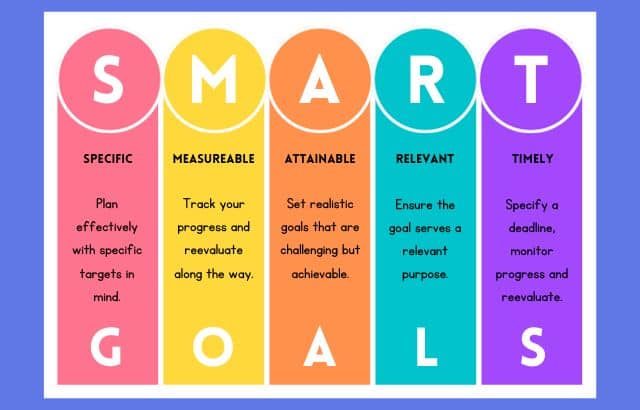
An effective approach involves creating goals that are:
Specific
Clearly defined outcomes.
Measurable
Trackable metrics.
Achievable
Realistic targets.
Relevant
Aligned with business objectives.
Time-Bound
Defined deadlines.
Business Example
Instead of saying:
“We want more customers.”
A dedicated and strategic goal would be:
“Increase monthly customer acquisition from 100 to 150 customers within six months.”
This goal provides clarity and direction for decision-making.
Breaking Large Goals into Actionable Milestones

The Importance of Incremental Progress
Large goals often appear intimidating.
Dedicated individuals reduce overwhelm by dividing major objectives into smaller milestones.
Example: Revenue Growth Strategy
Goal:
Increase annual revenue by 30%.
Month 1
- Conduct market analysis
- Identify growth opportunities
- Assess customer behavior
Month 2
- Refine products or services
- Strengthen value proposition
Month 3
- Launch targeted marketing campaigns
Month 4
- Improve customer onboarding
Month 5
- Introduce upselling initiatives
Month 6
- Measure performance and optimize
Each milestone creates manageable steps that support sustained dedication.
Developing a Powerful Work Ethic
Why Work Ethic Matters
Dedication is visible through daily behavior.
A strong work ethic reflects:
- Reliability
- Accountability
- Discipline
- Professionalism
- Persistence
Successful leaders understand that extraordinary outcomes require consistent effort.
Real-World Startup Scenario
Imagine a startup founder preparing for investor meetings.
The founder spends months:
- Refining presentations
- Improving financial projections
- Practicing pitches
- Researching investor expectations
Numerous rejections occur.
Some investors decline immediately.
Others provide negative feedback.
Yet the founder remains committed.
Eventually, the startup secures funding.
The success is not the result of a single presentation.
It is the result of dedicated preparation and persistence.
Staying Focused in a World Full of Distractions

The Challenge of Shiny Object Syndrome
Many businesses struggle because they continuously chase new opportunities.
Today it may be AI.
Tomorrow it may be cryptocurrency.
Next month it may be a different trend.
Constantly changing direction can weaken momentum.
Business Strategist Hirav Shah frequently advises organizations to remain aligned with their core mission rather than pursuing every emerging opportunity.
Example
A manufacturing company suddenly diverts resources toward unrelated ventures simply because competitors are experimenting with them.
As a result:
- Operations suffer
- Customer satisfaction declines
- Revenue growth slows
A dedicated and focused organization evaluates opportunities carefully before making strategic decisions.
Focus protects long-term success.
The Role of Flexibility in Dedication

Dedication Is Not Stubbornness
A common misconception is that dedicated individuals never change direction.
In reality, successful leaders distinguish between goals and methods.
Goals may remain constant.
Methods may evolve.
Business Example
A retail company aims to increase online sales.
Initial strategy:
- Social media advertising
Results are disappointing.
Rather than abandoning the goal, the company adjusts by:
- Improving website experience
- Enhancing email marketing
- Partnering with influencers
- Optimizing search visibility
The objective remains unchanged.
The strategy evolves.
This balance between commitment and flexibility is a hallmark of effective leadership.
Embracing Challenges as Opportunities

Challenges Are Part of Every Success Story
No business journey is free from obstacles.
Challenges often include:
- Economic downturns
- Competitive pressure
- Technology disruptions
- Operational failures
- Staffing issues
Dedicated leaders view challenges differently.
Instead of asking:
“Why is this happening to us?”
They ask:
“What can we learn from this?”
Case Example
A company launches a new product expecting strong demand.
After six months:
- Sales remain weak
- Customer engagement is low
- Marketing costs increase
A dedicated leadership team responds strategically.
They:
- Analyze customer feedback
- Identify market gaps
- Improve product features
- Reposition messaging
- Relaunch with adjustments
The initial failure becomes valuable market intelligence.
Failure as a Strategic Learning Tool

Redefining Failure
Failure should not be viewed as the opposite of success.
Instead, it should be viewed as part of the success process.
Every setback contains information.
Dedicated individuals use that information to improve future performance.
Example
Suppose a business invests ₹10,00,000 in a marketing campaign.
Results:
- Expected leads: 1,000
- Actual leads: 300
Instead of viewing the campaign as a complete failure, the business examines:
- Audience targeting
- Messaging effectiveness
- Conversion rates
- Channel performance
The lessons learned often become more valuable than the initial investment.
Building Long-Term Dedication Within Organizations

Creating a Dedicated Culture
Organizations succeed when dedication extends beyond leadership.
Employees must also feel connected to the mission.
Leaders can foster dedication by:
Communicating Vision Clearly
People perform better when they understand the purpose behind their work.
Recognizing Contributions
Acknowledgment increases engagement and commitment.
Encouraging Learning
Continuous development supports long-term performance.
Providing Ownership
Employees become more dedicated when they have responsibility and influence.
Example
A customer service team receives regular coaching, performance feedback, and recognition.
Over time:
- Employee retention improves
- Customer satisfaction rises
- Productivity increases
Dedication becomes embedded within the organizational culture.
The 5D Framework of Dedication
Define
Clearly identify the goal.
Design
Create a strategic roadmap.
Discipline
Execute consistently.
Develop
Learn and improve continuously.
Deliver
Achieve measurable outcomes.
This framework provides a practical structure for business owners seeking sustained success.
Numerical Illustration: The Power of Daily Commitment

Suppose an entrepreneur dedicates:
2 Hours Per Day
Calculation:
2 hours × 30 days = 60 hours monthly
60 hours × 12 months = 720 hours annually
3 Hours Per Day
3 hours × 30 days = 90 hours monthly
90 hours × 12 months = 1,080 hours annually
Difference:
1,080 − 720 = 360 additional hours
That represents the equivalent of several extra working months dedicated toward business growth.
When those hours are invested strategically, the impact can be transformational.
How Business Strategist Hirav Shah Views Sustainable Success

Business Strategist Hirav Shah consistently emphasizes that sustainable success is achieved through a combination of:
- Dedication
- Strategic planning
- Execution discipline
- Market awareness
- Adaptability
As The Game Changer, he encourages entrepreneurs to focus on meaningful actions that generate measurable outcomes rather than becoming distracted by temporary trends.
His perspective reinforces an important principle:
Success is rarely created by dramatic breakthroughs alone. It is more often the result of dedicated, strategic actions repeated consistently over time.
Frequently Asked Questions (FAQs)

Q1. How can I stay dedicated when motivation is low?
Motivation naturally fluctuates.
Dedication fills the gap when motivation disappears.
Focus on routines, daily habits, and long-term objectives rather than temporary emotions. Breaking goals into smaller tasks also makes progress feel more achievable.
Q2. Is dedication enough for business success?
No.
Dedication is essential but must be combined with strategy, innovation, leadership, execution, and adaptability.
Business Strategist Hirav Shah often highlights the importance of aligning effort with strategic priorities to maximize results.
Q3. How do I know if my goals are clear?
A goal is clear when:
- It is specific
- It is measurable
- It has a deadline
- Progress can be tracked
- Success can be clearly identified
If you cannot explain your goal in one sentence, it likely requires further clarification.
Q4. Can failure be part of the dedication process?
Absolutely.
Failure provides valuable feedback.
Dedicated individuals analyze setbacks, identify lessons, and improve future performance rather than abandoning their objectives.
Q5. How long does it take to see results from dedication?
The timeline varies depending on the goal.
Some results appear within weeks.
Others may require years.
The key is maintaining consistency long enough for the cumulative effects of dedicated effort to become visible.
Q6. Can teams develop dedication collectively?
Yes.
Through strong leadership, shared vision, accountability systems, and recognition programs, organizations can build a culture of dedication that drives sustained growth.
Q7. What is the biggest obstacle to dedication?
One of the most common obstacles is distraction.
Constantly shifting priorities, chasing trends, and seeking immediate results can undermine long-term progress.
Maintaining focus is often as important as working hard.
Conclusion

Dedication is one of the most powerful forces behind achievement in business and life. It transforms vision into reality, converts obstacles into opportunities, and creates momentum that compounds over time.
Whether you are an entrepreneur building a startup, a business owner scaling operations, or a leader guiding an organization through change, dedication remains the foundation upon which sustainable success is built.
However, dedication becomes even more powerful when combined with strategy. As Business Strategist Hirav Shah frequently emphasizes, success is not merely about working harder—it is about working consistently on the right priorities with clarity, focus, and purpose.
The journey toward success is rarely linear. There will be setbacks, challenges, uncertainties, and moments of doubt. Yet those who remain dedicated, adaptable, and strategically focused are far more likely to achieve meaningful and lasting results.
Set clear goals. Build disciplined habits. Stay focused on what matters most. Learn from failures. Adapt when necessary. Continue moving forward.
Over time, your dedication will become the competitive advantage that separates ordinary outcomes from extraordinary achievements.