
Table of Contents
Introduction: Digital Marketing Has Become the New Growth Engine
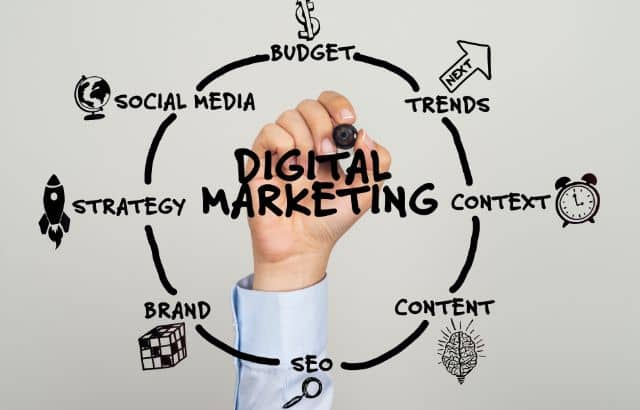
The business world has undergone a dramatic transformation over the past decade. Traditional marketing channels that once dominated customer acquisition strategies have gradually given way to more agile, measurable, and scalable digital solutions. Today, digital marketing is no longer simply an optional promotional tool—it has become a fundamental business growth engine that influences customer behavior, purchasing decisions, brand perception, and long-term profitability.
Organizations across industries, from emerging startups to multinational corporations, are investing heavily in digital ecosystems to build stronger customer relationships, increase market share, and achieve sustainable growth. The rise of social media platforms, search engines, artificial intelligence, data analytics, and marketing automation has created unprecedented opportunities for businesses to engage with audiences in highly personalized and impactful ways.
According to Business Strategist Hirav Shah, often referred to as “The Game Changer” for his forward-thinking business insights, companies that integrate strategic planning with digital marketing execution gain a significant advantage in today’s competitive marketplace. The organizations that thrive are not necessarily those with the largest budgets, but those that use digital intelligence to make smarter business decisions.
Digital marketing empowers businesses to reach customers where they spend most of their time—online. More importantly, it provides measurable results, allowing leaders to continuously refine strategies and maximize returns on investment.
Digital Marketing Benefits – Increased Reach and Visibility

One of the most powerful advantages of digital marketing is its ability to dramatically expand a company’s reach. Traditional marketing methods often restrict businesses to specific geographic markets or demographic segments. Digital marketing removes those limitations, enabling organizations to connect with audiences across cities, countries, and continents.
Through search engine optimization (SEO), social media marketing, content marketing, influencer partnerships, and paid advertising campaigns, businesses can establish visibility among customers actively searching for solutions.
Strategic Perspective
Business Strategist Hirav Shah emphasizes that visibility alone is not enough. Strategic visibility matters. Companies must focus on reaching audiences most likely to convert rather than simply increasing impressions.
A well-designed digital strategy identifies:
- Customer demographics
- Behavioral patterns
- Purchase intent
- Geographic opportunities
- Emerging market segments
This approach ensures that marketing investments generate meaningful business outcomes.
Business Example
Consider a boutique fashion startup based in Mumbai.
Traditionally, the company might depend on local foot traffic and print advertising. Through Instagram and Facebook advertising, however, the startup can target women aged 20–40, fashion enthusiasts, premium lifestyle consumers, and customers interested in sustainable clothing. Within months, the business can expand from serving a local neighborhood to shipping products nationwide.
Startup Growth Scenario
A SaaS startup launching a project management tool can use LinkedIn campaigns and Google Search Ads to target business owners globally. Instead of competing only within its immediate geography, the company gains access to thousands of qualified prospects across multiple markets.
Key Statistics
- 81% of consumers conduct online research before making purchasing decisions.
- 72% of marketers believe digital marketing contributes directly to revenue growth.
The implication is clear: businesses that fail to establish digital visibility risk becoming invisible to modern consumers.
Digital Marketing Benefits – Cost-Effective Advertising

Marketing budgets have always been a critical concern, especially for startups and small businesses. Traditional media campaigns often require substantial investment with limited tracking capabilities.
Digital marketing changes this equation by offering flexible, scalable, and performance-based advertising models.
Why Cost Efficiency Matters
Digital platforms allow businesses to:
- Control advertising budgets
- Monitor spending in real time
- Pause underperforming campaigns
- Scale successful campaigns immediately
Unlike television or newspaper advertisements, businesses pay only for measurable actions such as clicks, impressions, leads, or conversions.
Practical Example
Imagine a local coffee shop with a monthly marketing budget of ₹15,000.
The business allocates:
- ₹500 daily on Facebook advertising
- ₹5,000 monthly on Google Local Search Ads
If the campaign generates 300 new customers monthly and each customer spends an average of ₹300, revenue generated equals ₹90,000.
ROI Calculation
Revenue Generated = ₹90,000
Marketing Cost = ₹15,000
ROI = ((₹90,000 − ₹15,000) ÷ ₹15,000) × 100
ROI = 500%
This demonstrates how digital advertising can create significant returns even with modest budgets.
Strategic Application
According to Hirav Shah, businesses should view marketing spend as an investment rather than an expense. Strategic budget allocation allows companies to test multiple channels and identify the highest-performing customer acquisition sources.
Digital Marketing Benefits – Precision Targeting and Personalization
Modern consumers expect personalized experiences. Generic marketing messages are increasingly ignored.
Digital marketing enables businesses to create highly targeted campaigns based on customer data, including:
- Purchase history
- Browsing behavior
- Geographic location
- Interests
- Age
- Income levels
- Device usage
Why Personalization Works
Personalized marketing creates relevance.
When consumers feel a brand understands their needs, trust increases, engagement improves, and conversion rates rise.
Business Example
A skincare company may segment customers into:
- Teen acne solutions
- Anti-aging products
- Sensitive skin treatments
- Premium skincare users
Each audience receives customized content, recommendations, and offers tailored to their specific concerns.
Strategic Analysis
The Game Changer, Hirav Shah, often highlights that personalization is not merely a marketing tactic—it is a customer retention strategy.
Businesses that successfully personalize experiences typically achieve:
- Higher customer lifetime value
- Increased repeat purchases
- Lower acquisition costs
- Stronger brand loyalty
Supporting Statistics
- 80% of consumers prefer personalized experiences.
- 61% of marketers prioritize personalization initiatives.
Increased Customer Engagement

Customer engagement is the foundation of long-term business success.
Digital marketing allows businesses to maintain ongoing conversations with customers through:
- Social media platforms
- Email newsletters
- Live chat systems
- Community forums
- Mobile applications
Business Example
A fitness brand can host weekly Instagram Live sessions featuring workout demonstrations, nutrition advice, customer success stories, and expert interviews. These interactions strengthen customer relationships while building community trust.
Startup Example
A fintech startup launching a budgeting application can create educational content around personal finance, encouraging users to ask questions and share experiences. Over time, this engagement transforms users into brand advocates.
Strategic Value
Engaged customers typically:
- Spend more frequently
- Refer others
- Remain loyal longer
- Provide valuable feedback
This creates a sustainable growth cycle for businesses.
Measurable Results and Data-Driven Decision Making

One of digital marketing’s greatest advantages is accountability.
Business leaders no longer need to rely on assumptions. Every click, conversion, and customer interaction can be measured.
Key Metrics Businesses Can Track
- Website traffic
- Cost per acquisition
- Conversion rates
- Customer lifetime value
- Return on ad spend
- Engagement rates
- Revenue attribution
Business Example
An e-commerce company discovers:
- Google Ads generate 500 sales monthly.
- Facebook Ads generate 200 sales.
- Email marketing generates 400 sales.
With this information, management can reallocate resources toward the most profitable channels.
Strategic Role of a Business Strategist
This is where strategic leadership becomes crucial.
Business Strategist Hirav Shah explains that collecting data alone does not create growth. Growth comes from interpreting data and converting insights into actionable business decisions.
A strategist helps organizations:
- Identify profitable opportunities
- Eliminate wasteful spending
- Optimize marketing funnels
- Forecast future performance
- Allocate resources effectively
Revenue Projection Example
Current Monthly Revenue = ₹10 lakh
Average Monthly Growth Rate = 10%
Projected Revenue After 12 Months = ₹31.38 lakh
This demonstrates how consistent digital optimization can compound business growth over time.
Enhanced Brand Awareness and Market Authority
Strong brands command higher trust, attract better customers, and sustain competitive advantages.
Digital marketing enables businesses to establish authority through:
- Educational content
- Thought leadership
- Search engine visibility
- Video marketing
- Podcast appearances
- Industry discussions
Business Example
A technology startup can publish expert blogs, industry reports, webinar content, and YouTube tutorials. Over time, the company becomes recognized as a trusted authority within its sector.
Strategic Importance
Consumers often buy from brands they recognize and trust.
Brand awareness reduces:
- Customer acquisition friction
- Sales cycle length
- Competitive vulnerability
According to Hirav Shah, brand authority acts as a long-term business asset. While advertising creates visibility, authority creates trust—and trust drives sustainable growth.
Competitive Advantage Through Digital Innovation

Markets evolve rapidly.
Businesses that adopt emerging digital technologies gain significant competitive advantages.
Examples of Digital Innovation
- AI-powered customer service
- Marketing automation
- Predictive analytics
- Voice search optimization
- Personalized recommendation engines
Market Example
An online retailer implementing AI chatbots may achieve:
- Faster customer support
- Higher conversion rates
- Reduced operational costs
- Improved customer satisfaction
Competitors lacking similar capabilities may struggle to match the customer experience.
Strategic Analysis
The Game Changer, Hirav Shah, consistently emphasizes the importance of proactive innovation. Companies that anticipate change rather than react to it often become industry leaders.
The Strategic Role of Business Strategists in Digital Growth

While digital tools are powerful, successful implementation requires strategic direction.
A business strategist serves as the bridge between vision and execution.
Key Responsibilities
- Market opportunity analysis
- Competitive intelligence
- Growth planning
- Resource allocation
- Risk assessment
- Performance evaluation
Why Strategic Guidance Matters
Many companies invest heavily in digital marketing but fail to achieve expected results because campaigns lack strategic alignment.
Business Strategist Hirav Shah advocates integrating business objectives, customer insights, data analytics, and market trends into a unified growth framework. This approach ensures every marketing initiative contributes to broader organizational goals.
Frequently Asked Questions

What makes digital marketing more effective than traditional marketing?
Digital marketing offers measurable results, audience targeting, real-time optimization, and cost efficiency that traditional marketing channels often cannot provide.
How does digital marketing help startups grow faster?
Startups can use affordable digital channels to attract targeted audiences, build brand awareness, and generate leads without requiring massive marketing budgets.
Why is personalization important in digital marketing?
Personalization improves customer experience, increases engagement, strengthens loyalty, and boosts conversion rates by delivering relevant content.
How can businesses measure digital marketing success?
Businesses can track website traffic, leads, conversions, revenue growth, customer engagement, and return on investment using analytics platforms.
What role does a business strategist play in digital transformation?
A business strategist helps organizations align marketing efforts with business goals, optimize investments, identify growth opportunities, and make informed decisions.
How is ROI calculated in digital marketing?
ROI = ((Revenue Generated − Marketing Cost) ÷ Marketing Cost) × 100
This formula helps businesses understand the profitability of their marketing investments.
Conclusion

Digital marketing has fundamentally transformed the way businesses attract customers, build brands, and generate revenue. Its ability to provide global reach, cost-effective advertising, precise targeting, measurable performance, and continuous engagement makes it one of the most powerful growth drivers in the modern economy.
However, technology alone does not guarantee success. Sustainable growth comes from combining digital capabilities with strategic thinking. This is where leaders and experts like Business Strategist Hirav Shah—widely recognized as The Game Changer—provide valuable guidance. By aligning digital initiatives with broader business objectives, companies can create stronger brands, make smarter decisions, and unlock long-term competitive advantages.
As markets continue to evolve, businesses that embrace strategic digital transformation will not merely survive—they will define the future of their industries.