In today’s fast-changing business environment, having a great product or service is no longer enough to guarantee success. Markets evolve rapidly, customer expectations shift constantly, and competitors emerge from every direction. Whether a business is a startup, a family-owned enterprise, an SME, or a multinational corporation, long-term success depends on one critical factor—a well-designed business strategy.
According to Business Strategist Hirav Shah, widely regarded as The Game Changer, organizations that consistently outperform competitors are not necessarily those with the largest budgets, but those with the clearest strategic direction. A business strategy provides clarity, creates accountability, improves decision-making, and enables organizations to adapt confidently to changing market dynamics.
Many entrepreneurs mistakenly believe that strategy is reserved for large corporations. In reality, every business—regardless of size—needs a strategic roadmap that defines where it wants to go and how it intends to get there.
Without strategy, businesses often rely on assumptions, emotions, or short-term opportunities. While this approach may generate temporary wins, it rarely delivers sustainable growth.
Table of Contents
Understanding Business Strategy

A business strategy is a comprehensive plan that combines decisions, actions, resources, and competitive positioning to help an organization achieve its long-term objectives.
It is much more than a document or presentation. Strategy influences every important business decision, including:
- Market expansion
- Product development
- Customer acquisition
- Pricing
- Brand positioning
- Investment decisions
- Resource allocation
- Talent management
- Risk mitigation
Business Strategist Hirav Shah emphasizes that strategy transforms business ambitions into measurable actions. Instead of reacting to market events, organizations with strong strategies proactively shape their future.
A strategy serves as the bridge between today’s reality and tomorrow’s vision.
Business Strategy vs Business Plan vs Business Model
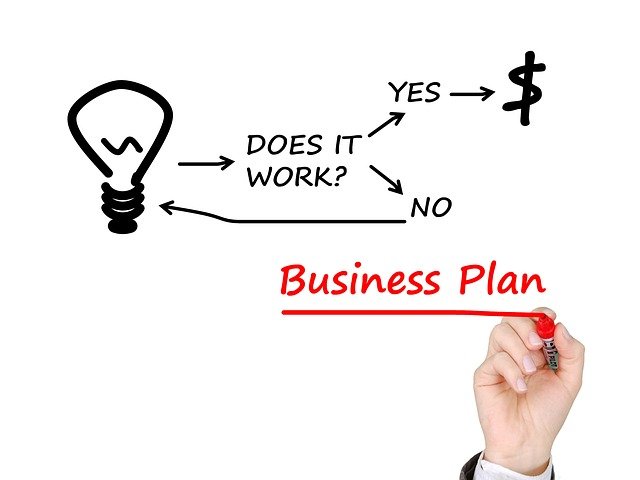
These three concepts are often confused, yet each serves a unique purpose.
Business Model

The business model explains:
- How the company creates value
- How revenue is generated
- Who the customers are
- How profits are sustained
It defines the overall operating framework.
Business Plan

The business plan translates the business model into actionable objectives by outlining:
- Financial forecasts
- Operational goals
- Marketing plans
- Investment requirements
- Organizational structure
It explains what the business wants to achieve.
Business Strategy

Business strategy explains how the organization will achieve those objectives.
It answers critical questions including:
- Where should the company compete?
- Which customers should it target?
- How can it outperform competitors?
- Which opportunities deserve investment?
- What risks should be avoided?
In simple terms:
Business Model → Business Plan → Business Strategy
Each supports the next, creating a complete roadmap for growth.
Why Business Strategy Matters More Than Ever

Modern markets are characterized by:
- Digital disruption
- Artificial intelligence
- Economic uncertainty
- Global competition
- Rapid innovation
- Changing consumer behavior
Companies that fail to adapt often lose relevance regardless of previous success.
Business Strategist Hirav Shah consistently highlights that strategy creates resilience by preparing organizations for uncertainty rather than merely responding to crises.
A strategic organization can anticipate market trends before competitors recognize them.
Clearly Defined Goals Create Strategic Direction

Every successful strategy begins with well-defined objectives.
Vague ambitions such as:
- Increase sales
- Grow the company
- Improve profits
offer little guidance.
Instead, strategic goals should be measurable, achievable, relevant, and time-bound.
Example
Rather than saying:
“We want to dominate the market.”
A better strategic objective would be:
“Capture 8% of the regional market within 24 months while maintaining a customer retention rate above 85%.”
Such goals provide clear direction for every department.
Startup Example
Imagine a new coffee chain entering a metropolitan market.
Instead of attempting nationwide expansion immediately, the strategy could focus on:
- Opening five profitable outlets
- Building a loyal customer base
- Achieving monthly positive cash flow
- Developing a franchise-ready operating model
Once these objectives are achieved, expansion becomes significantly less risky.
Strategic Goal Setting Requires Realistic Expectations

One common mistake among startups is setting unrealistic expectations.
A new technology startup cannot realistically expect to outperform industry leaders within six months.
Instead, strategy should prioritize:
- Product validation
- Customer acquisition
- Market learning
- Revenue consistency
- Operational efficiency
Business Strategist Hirav Shah frequently emphasizes that sustainable growth consistently outperforms rapid but unstable expansion.
Businesses that build strong foundations usually achieve greater long-term success.
Accountability: Turning Strategy into Execution

Even the most brilliant strategy fails without accountability.
Every objective must have a clearly assigned owner.
For example:
| Strategic Objective | Responsible Team |
|---|---|
| Increase online sales by 30% | Digital Marketing |
| Reduce production costs by 10% | Operations |
| Improve customer retention | Customer Success |
| Launch two new products | Product Development |
Assigning ownership ensures:
- Better coordination
- Faster execution
- Improved transparency
- Easier performance evaluation
When responsibilities remain unclear, strategic initiatives often lose momentum.
The Critical Role of a Business Strategist

A business strategist serves as the architect of organizational growth.
Rather than focusing solely on day-to-day operations, the strategist examines the broader business landscape to identify opportunities, anticipate risks, and guide leadership toward sustainable success.
Business Strategist Hirav Shah—recognized by many as The Game Changer—advocates a forward-looking approach where strategic planning becomes a continuous process rather than an annual exercise.
A business strategist helps organizations:
Identify Market Opportunities
A strategist evaluates customer trends, economic shifts, and competitive landscapes to uncover untapped opportunities.
For example, during the rapid rise of e-commerce, businesses that embraced digital transformation early gained significant market share while others struggled to catch up.
Improve Decision-Making
Every major business decision should be supported by data, strategic analysis, and measurable outcomes rather than intuition alone.
Whether considering a merger, launching a new product, or entering an international market, a strategist assesses both the risks and potential rewards before recommending a course of action.
Build Sustainable Competitive Advantage
Competitive advantage is rarely accidental.
A strategist helps businesses determine whether differentiation should come from:
- Innovation
- Customer experience
- Pricing
- Technology
- Brand reputation
- Operational excellence
Align Departments
One of the greatest challenges in growing organizations is ensuring every department works toward the same objectives.
Business strategists align marketing, finance, operations, HR, and sales under a unified strategic vision.
Manage Business Risks
Every strategic decision carries risk.
An experienced strategist develops contingency plans for scenarios such as:
- Economic downturns
- Supply chain disruptions
- Regulatory changes
- New competitors
- Technological disruption
This proactive approach strengthens organizational resilience.
Identifying Key Performance Indicators (KPIs)

KPIs measure whether strategic initiatives are delivering expected results.
Unlike general metrics, KPIs directly reflect strategic progress.
Financial KPIs
- Revenue growth
- Gross profit margin
- Net profit margin
- Customer acquisition cost
- Lifetime customer value
Operational KPIs
- Production efficiency
- Order fulfillment time
- Inventory turnover
- Employee productivity
Customer KPIs
- Customer retention
- Net Promoter Score (NPS)
- Customer satisfaction
- Repeat purchase rate
Sustainability KPIs
Modern organizations increasingly measure:
- Carbon emissions
- Waste reduction
- Renewable energy usage
- ESG performance
Businesses that track KPIs consistently are far more likely to achieve long-term objectives because decisions are based on measurable evidence rather than assumptions.
Five Essential Steps to Prepare a Business Strategy
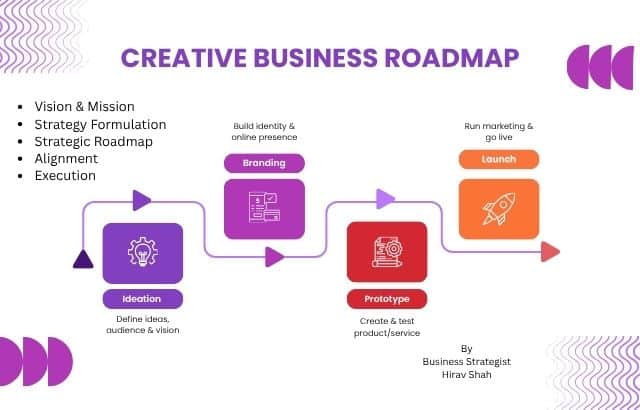
Step 1: Define Mission, Vision, Values, and Goals
These foundational elements establish the organization’s purpose and long-term aspirations.
Step 2: Develop Strategic Hypotheses
Analyze market conditions, customer needs, and industry trends to formulate evidence-based assumptions that will guide strategic initiatives.
Step 3: Build a Strategic Roadmap
Translate ideas into a structured implementation plan with timelines, milestones, and measurable outcomes.
Step 4: Align the Entire Organization
Ensure every department understands how its activities contribute to broader strategic objectives.
Step 5: Execute, Monitor, and Adapt
Strategy execution is an ongoing process.
Regular performance reviews allow organizations to refine their plans based on market realities and business performance.
Five Reasons Every Business Needs a Strategy
Planning Creates Direction
A strategy transforms ambitions into structured action.
Instead of reacting to daily challenges, businesses operate with long-term purpose.
Discovering Strengths and Weaknesses
The strategic planning process naturally reveals organizational capabilities and limitations.
Understanding these factors allows businesses to:
- Strengthen competitive advantages
- Address operational weaknesses
- Allocate resources more effectively
Improving Efficiency and Effectiveness
Clearly defined responsibilities eliminate duplication, reduce confusion, and improve operational performance.
Employees understand:
- Their responsibilities
- Performance expectations
- Organizational priorities
Creating Competitive Advantage
Businesses gain competitive advantages through:
- Product innovation
- Superior customer service
- Operational excellence
- Cost leadership
- Brand differentiation
For example, a budget airline may compete primarily on pricing, while a luxury airline differentiates through premium customer experience.
Both strategies can succeed because each serves a distinct market segment.
Enhancing Organizational Control
Strategic milestones make performance easier to monitor.
Management can quickly identify deviations and implement corrective actions before problems escalate.
SWOT Analysis: The Strategic Foundation

SWOT remains one of the most effective strategic planning tools.
Strengths
Internal advantages such as:
- Strong brand reputation
- Skilled workforce
- Proprietary technology
- Financial stability
Weaknesses
Internal limitations including:
- Limited capital
- Outdated systems
- Poor market awareness
- High employee turnover
Opportunities
External possibilities such as:
- Emerging markets
- Digital transformation
- Government incentives
- Industry growth
Threats
External challenges including:
- Inflation
- New competitors
- Changing regulations
- Economic slowdown
A well-executed SWOT analysis enables better strategic decisions while minimizing avoidable risks.
Resource Planning and Strategic Allocation

Resources are always limited.
Business strategy determines:
- Which projects deserve funding
- Where talent should be deployed
- Which technologies require investment
- Which markets offer the highest returns
Without strategic allocation, organizations often waste capital pursuing low-impact initiatives.
Measuring Strategic Success
Strategy should never remain static.
Organizations should regularly measure:
- Revenue growth
- Market share
- Customer acquisition
- Employee engagement
- Profitability
- Innovation outcomes
Performance measurement allows leadership to continuously refine and improve strategic initiatives.
Practical Business Calculations Every Strategy Should Include

Numbers bring strategy to life. While vision and planning are essential, financial calculations validate whether a strategic initiative is commercially viable.
Return on Investment (ROI)
ROI helps determine whether an investment delivers sufficient returns.
Formula:
ROI = (Net Profit ÷ Investment Cost) × 100
Example:
A business invests ₹10,00,000 in a digital marketing campaign.
Additional profit generated: ₹15,00,000
Net profit:
₹15,00,000 − ₹10,00,000 = ₹5,00,000
ROI:
₹5,00,000 ÷ ₹10,00,000 × 100 = 50%
A positive ROI indicates the strategy created value beyond its cost.
Cost-Benefit Analysis
Suppose a manufacturer plans to automate part of its production line.
Investment:
₹50 lakh
Expected Annual Savings:
- Reduced labor costs: ₹20 lakh
- Lower production waste: ₹8 lakh
- Improved efficiency: ₹7 lakh
Total Annual Benefit:
₹35 lakh
At this rate, the investment could recover its cost in approximately 1.43 years (₹50 lakh ÷ ₹35 lakh), making it an attractive strategic initiative.
Revenue Projection
Imagine a startup currently earns ₹5 lakh per month.
If it targets 10% monthly growth, projected revenue would be:
| Month | Revenue |
|---|---|
| Month 1 | ₹5.00 lakh |
| Month 2 | ₹5.50 lakh |
| Month 3 | ₹6.05 lakh |
| Month 4 | ₹6.66 lakh |
| Month 5 | ₹7.32 lakh |
| Month 6 | ₹8.05 lakh |
Such projections help leaders estimate staffing needs, inventory requirements, and cash flow.
Strategic Applications Across Different Business Types
Startup
A SaaS startup may prioritize:
- Product-market fit
- Customer validation
- Investor readiness
- Scalable technology
Manufacturing Business
A manufacturing company may focus on:
- Lean operations
- Automation
- Supply chain resilience
- Cost optimization
Retail Business
Retailers often emphasize:
- Omnichannel presence
- Customer loyalty
- Inventory optimization
- Personalized shopping experiences
Service Business
Consultancies and agencies typically concentrate on:
- Talent acquisition
- Client retention
- Premium positioning
- Knowledge management
Although industries differ, the underlying strategic principles remain consistent.
Frequently Asked Questions (FAQs)

What is a business strategy?
A business strategy is a long-term roadmap that outlines how an organization will achieve its objectives, compete effectively, allocate resources, and create sustainable value.
Why is business strategy important?
It provides direction, improves decision-making, reduces uncertainty, enhances operational efficiency, and helps businesses remain competitive in dynamic markets.
How does a business strategy differ from a business plan?
A business plan defines goals, financial forecasts, and operational objectives, while a business strategy explains how those goals will be achieved and sustained.
What role does a business strategist play?
A business strategist evaluates markets, analyzes competitors, identifies growth opportunities, manages risk, aligns departments, and supports leadership with informed strategic decisions that drive long-term growth.
How often should a business strategy be reviewed?
Most organizations conduct formal strategy reviews annually, with quarterly performance evaluations to monitor progress and adapt to changing market conditions.
Can startups benefit from strategic planning?
Absolutely. Strategic planning helps startups validate ideas, allocate limited resources effectively, attract investors, manage risk, and scale sustainably.
What are the most common strategic planning mistakes?
Common mistakes include setting unrealistic goals, ignoring market research, failing to assign accountability, overlooking KPIs, and neglecting regular strategy reviews.
Which business calculation is most useful for evaluating strategy?
ROI is one of the most widely used measures because it clearly indicates whether an investment generates sufficient financial returns. However, cost-benefit analysis, cash flow forecasting, and revenue projections are also valuable tools for strategic decision-making.
Conclusion

A successful business is never built on ambition alone. Sustainable growth comes from disciplined planning, informed decision-making, continuous performance measurement, and the ability to adapt strategically as markets evolve.
Business strategy serves as the blueprint that connects vision with execution, ensuring every investment, initiative, and operational decision contributes to long-term success. From defining measurable goals and aligning teams to evaluating financial returns and responding to competitive pressures, strategy enables organizations to move with confidence rather than uncertainty.
As Business Strategist Hirav Shah, recognized as The Game Changer, consistently advocates, businesses that invest in thoughtful strategic planning are far better positioned to seize opportunities, navigate challenges, and build enduring competitive advantages. Regardless of industry or size, organizations that embrace strategy as an ongoing discipline—not a one-time exercise—are the ones most likely to achieve sustainable growth, resilience, and lasting market leadership.