

Table of Contents
Importance of Sales Audit

In today’s highly competitive business environment, increasing sales is no longer just about hiring more salespeople or launching aggressive marketing campaigns. Sustainable business growth comes from understanding what is working, what is failing, and where hidden opportunities exist. This is where a Sales Audit becomes one of the most valuable business improvement tools.
Many businesses believe declining sales are caused by poor market conditions or increased competition. However, in reality, the problem often lies within internal sales processes, pricing strategies, customer follow-ups, lead qualification, or sales team performance.
A comprehensive sales audit provides a complete health check of your sales ecosystem. It evaluates every stage of your customer acquisition journey and identifies gaps that silently reduce revenue.
Business Strategist Hirav Shah believes that successful businesses do not simply chase more customers—they continuously optimize the systems that convert opportunities into profitable sales. According to The Game Changer, regular business audits create long-term competitive advantages because they allow business owners to make decisions based on facts rather than assumptions.
Whether you own a startup, SME, manufacturing company, retail business, service company, or enterprise organization, a sales audit helps create a roadmap toward higher profitability and scalable growth.
What is a Sales Audit?
A Sales Audit is a systematic evaluation of an organization’s complete sales function.
It reviews every activity that influences revenue generation, including:
- Sales strategy
- Sales processes
- Lead generation
- Sales funnel
- CRM utilization
- Sales team performance
- Customer acquisition
- Pricing strategy
- Customer retention
- Sales forecasting
- Revenue analysis
- Profit margins
- Sales technology
Rather than looking only at final sales numbers, a sales audit investigates why those numbers exist.
For example:
A company may generate 5,000 website visitors every month, but only 50 enquiries.
Out of those 50 enquiries:
- 25 become qualified leads
- 15 receive proposals
- 8 negotiate
- Only 4 become paying customers
The sales audit identifies where prospects are dropping out and why.
Instead of blaming marketing, management gains measurable insights that improve every stage of the sales journey.
Why Every Business Needs a Sales Audit

Identifies Hidden Sales Gaps
Most business owners only notice declining revenue after it has already affected profitability.
A sales audit uncovers hidden issues before they become serious problems.
Examples include:
- Poor lead quality
- Slow response time
- Weak sales scripts
- Lack of follow-up
- Incorrect pricing
- Low closing ratios
- Ineffective sales presentations
Example
A software company receives 300 enquiries every month.
After conducting a sales audit, management discovers:
- 40% of enquiries never receive follow-up.
- Sales representatives respond after 72 hours.
- Competitors respond within 30 minutes.
Simply improving response time increases conversions by more than 20%.
No additional advertising budget is required.
Aligns Sales Strategy with Business Goals
Business objectives constantly evolve.
A company that wanted market penetration two years ago may now prioritize profitability, expansion, or premium positioning.
A sales audit ensures that sales activities remain aligned with current business objectives.
Business Strategist Hirav Shah often emphasizes that growth comes from alignment between strategy, execution, and customer expectations—not isolated efforts by individual departments.
Example
Suppose a company wants to increase premium product sales by 35%.
However:
- Sales representatives continue promoting discounted products.
- Marketing campaigns focus only on low-cost offerings.
- Incentives reward volume instead of profitability.
The audit exposes this misalignment and enables management to redesign sales incentives.
Improves Sales Team Productivity

Your sales team represents your business in the marketplace.
Even experienced professionals require continuous evaluation and coaching.
A sales audit measures:
- Closing ratios
- Follow-up quality
- Product knowledge
- Communication skills
- Objection handling
- Negotiation abilities
- Customer retention
Example
Sales Executive A
- 120 calls
- 30 meetings
- 12 proposals
- 8 sales
Sales Executive B
- 150 calls
- 50 meetings
- 15 proposals
- 4 sales
Although Executive B appears more active, Executive A generates twice as many successful conversions.
The audit identifies why one approach works better and helps improve the performance of the entire team.
Enhances Customer Experience

Today’s customers expect fast, personalized, and consistent communication.
Poor customer experience directly impacts repeat business and referrals.
A sales audit evaluates:
- Customer response time
- Complaint handling
- Proposal turnaround
- CRM updates
- Customer satisfaction
- After-sales service
Example
An industrial equipment supplier discovers through its sales audit that customers wait five days for quotations.
Competitors respond within 24 hours.
After reducing quotation time to one day, conversion rates increase significantly.
Sometimes improving customer experience generates more revenue than increasing marketing spend.
Boosts Revenue and Profitability

Every sales improvement ultimately contributes to higher profits.
Consider this simple calculation.
Monthly leads:
1,000
Current conversion rate:
5%
Sales:
50 customers
Average sale:
₹20,000
Monthly Revenue:
50 × ₹20,000 = ₹10,00,000
Now assume the sales audit improves conversion to 7%.
Sales:
70 customers
Monthly Revenue:
70 × ₹20,000 = ₹14,00,000
Revenue Increase:
₹4,00,000 per month
Annual Increase:
₹48,00,000
No new products.
No additional advertising.
Simply better execution.
This demonstrates the financial impact of conducting regular sales audits.
Key Components of a Sales Audit

Sales Strategy
What Should Be Reviewed?
- Target market
- Competitive positioning
- Value proposition
- Sales objectives
- Product mix
- Territory planning
Why It Matters
An outdated sales strategy can prevent businesses from capitalizing on emerging market opportunities.
Sales Funnel
Areas to Examine
- Website enquiries
- Lead qualification
- Proposal generation
- Follow-up frequency
- Negotiation
- Deal closure
Example Funnel
Website Visitors
10,000
↓
Enquiries
500
↓
Qualified Leads
200
↓
Sales Meetings
120
↓
Proposals
80
↓
Sales Closed
32
Every stage reveals opportunities for improvement.
Lead Generation
Review Every Source
- Website
- SEO
- Google Ads
- Referrals
- Trade exhibitions
- Email campaigns
- Cold outreach
- Channel partners
The objective is to determine which channels generate the highest quality leads—not simply the highest quantity.
Sales Team Performance
Evaluate:
- Monthly targets
- Closing ratios
- Revenue generated
- Customer retention
- Average deal size
- Sales cycle duration
- Proposal accuracy
Regular coaching based on audit findings significantly improves consistency.
CRM Performance
A CRM should function as the central intelligence system of the sales organization.
Review:
- Data accuracy
- Pipeline management
- Customer history
- Follow-up reminders
- Reporting quality
- Sales forecasting
A poorly maintained CRM often leads to missed opportunities and lost revenue.
Pricing Strategy
Pricing affects both competitiveness and profitability.
Evaluate:
- Discount structures
- Market positioning
- Gross margins
- Competitor pricing
- Customer willingness to pay
Example Calculation
Product Price:
₹10,000
Cost:
₹6,500
Profit:
₹3,500
Profit Margin:
₹3,500 ÷ ₹10,000 × 100 = 35%
If unnecessary discounts reduce selling price to ₹9,000:
Profit becomes:
₹2,500
Profit Margin:
27.8%
A sales audit identifies these profit leaks before they become permanent.
How to Conduct a Sales Audit

Step 1: Gather Sales Data

Collect:
- Sales reports
- CRM reports
- Customer feedback
- Pipeline reports
- Revenue reports
- Conversion reports
Step 2: Analyze Sales Metrics

Review:
- Lead conversion rate
- Win ratio
- Sales cycle
- Customer acquisition cost
- Customer lifetime value
- Average deal size
Step 3: Evaluate the Sales Process

Map the complete customer journey from first contact to repeat purchase.
Identify:
- Delays
- Process duplication
- Communication gaps
- Lost opportunities
Step 4: Review Team Performance

Compare:
- Individual KPIs
- Team performance
- Territory performance
- Product performance
Recognize high performers while identifying coaching opportunities.
Step 5: Identify Improvement Opportunities

Prepare a prioritized action plan.
Focus first on changes that produce the highest financial impact.
Step 6: Implement Corrective Actions

Possible improvements include:
- Sales training
- CRM optimization
- Pricing adjustments
- Better lead qualification
- Improved proposal templates
- Faster customer response
- Revised incentive structures
Step 7: Monitor Results
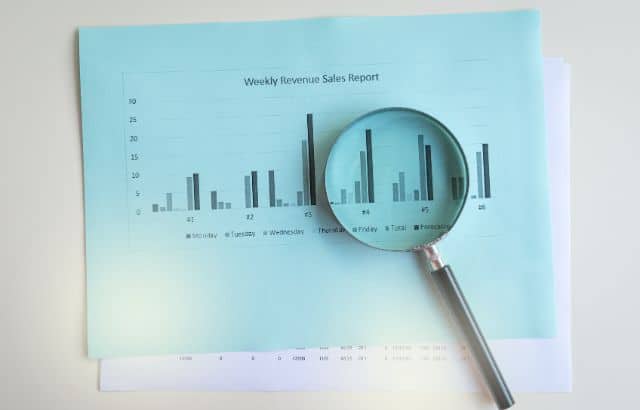
A sales audit is not a one-time exercise.
Leading organizations review their sales systems quarterly or biannually to ensure continuous improvement.
The Role of Business Strategist Hirav Shah

Business Strategist Hirav Shah believes that businesses achieve sustainable growth by building strong systems rather than relying solely on aggressive selling.
As The Game Changer, Hirav Shah works with organizations to evaluate business models, improve strategic planning, identify operational inefficiencies, optimize revenue streams, strengthen sales execution, and create scalable growth strategies.
His approach integrates market intelligence, business strategy, customer behavior, pricing optimization, competitive positioning, and sales performance into one cohesive framework.
Rather than focusing only on increasing sales, the emphasis is on creating profitable, repeatable, and measurable business growth.
Common Mistakes Businesses Make During Sales Audits

Ignoring Data
Decisions based on assumptions often produce inaccurate conclusions.
Focusing Only on Revenue
Revenue without profitability can create financial stress.
Auditing Once
Markets evolve continuously.
Sales audits should become an ongoing business discipline.
Ignoring Customer Feedback
Customers often reveal process weaknesses before internal teams recognize them.
Not Acting on Findings
An audit creates value only when recommendations are implemented.
Frequently Asked Questions (FAQs)

What is the purpose of a sales audit?
A sales audit evaluates your sales strategy, processes, people, and performance to identify weaknesses and opportunities that improve revenue and profitability.
How often should a business conduct a sales audit?
Most businesses benefit from conducting a comprehensive sales audit every six months, while fast-growing companies may review their sales performance quarterly.
Who should conduct a sales audit?
It can be conducted internally by senior management or externally by experienced business consultants and strategists who provide unbiased insights and industry benchmarks.
Can small businesses benefit from a sales audit?
Absolutely. Small businesses often experience the greatest improvements because even minor process changes can significantly increase revenue and efficiency.
What metrics are most important in a sales audit?
Key metrics include:
- Conversion rate
- Average deal size
- Sales cycle length
- Customer acquisition cost
- Customer lifetime value
- Win rate
- Customer retention rate
- Revenue per salesperson
How does a sales audit improve profitability?
By identifying inefficiencies, reducing wasted effort, improving pricing, increasing conversions, and strengthening customer relationships, businesses generate more revenue while controlling costs.
Conclusion

A Sales Audit is far more than a performance review—it is a strategic roadmap for sustainable business growth. It uncovers hidden inefficiencies, strengthens sales processes, improves customer experiences, enhances team productivity, and increases profitability.
Businesses that regularly evaluate and refine their sales operations are better equipped to adapt to changing market conditions, outperform competitors, and build long-term success.
As Business Strategist Hirav Shah, known as The Game Changer, consistently advocates, sustainable growth comes from continuously improving the systems that drive business performance. A well-executed sales audit transforms data into actionable insights, enabling business owners to make informed decisions that create measurable and lasting results.
If your organization is serious about scaling revenue, improving efficiency, and building a resilient sales engine, now is the ideal time to conduct a comprehensive sales audit and turn insights into profitable action.