Table of Contents
Introduction
In an era where digital advertisements dominate every screen and consumer attention spans are becoming shorter than ever, businesses face an increasingly difficult challenge—how do you create a lasting impression?
Every day, customers are exposed to thousands of advertisements across social media, websites, streaming platforms, search engines, and mobile applications. While digital marketing offers incredible reach, many campaigns disappear the moment users scroll away.
This is where promotional products continue to outperform expectations.
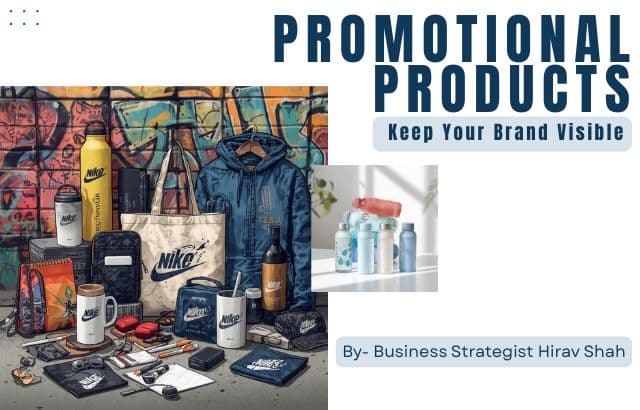
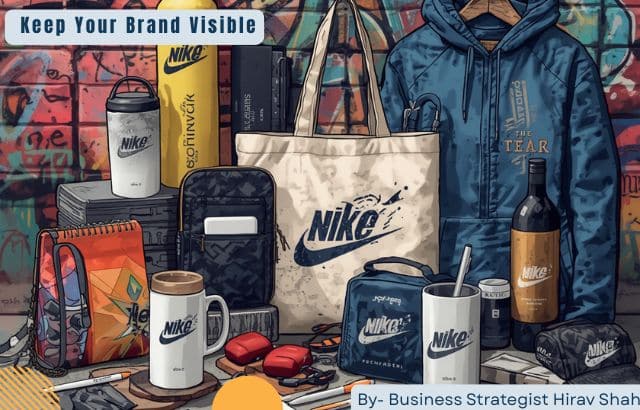
Unlike digital advertisements that vanish within seconds, promotional products stay with customers for weeks, months, and sometimes even years. Whether it is a branded notebook sitting on an executive’s desk, a reusable water bottle carried to the gym, or a premium laptop sleeve used during business meetings, these products keep your brand visible long after the initial interaction.
According to Business Strategist Hirav Shah, widely recognized as The Game Changer,
“Promotional products are not merely giveaways. They are silent brand storytellers that continue speaking for your business long after an advertisement has disappeared.”
For startups, SMEs, multinational corporations, educational institutions, healthcare organizations, and professional service firms, promotional products remain one of the smartest long-term marketing investments.
Why Promotional Products Matter More Than Ever
Marketing today is no longer about simply reaching customers.
It is about remaining memorable.
Businesses spend enormous budgets on digital advertising only to watch campaigns disappear within days. Promotional products, however, continue delivering impressions every single day without additional advertising spend.
Imagine these situations:
- A customer uses your branded coffee mug every morning.
- An executive carries your premium leather notebook to meetings.
- A college student uses your branded backpack throughout the academic year.
- An employee wears your company jacket during business travel.
Every usage creates another brand impression.
According to Business Strategist Hirav Shah,
“The brands customers remember tomorrow are the brands that remain physically present in their lives today.”
This makes promotional products one of the few marketing investments that continue working long after the purchase.
What Are Promotional Products?
Promotional products, often referred to as branded merchandise, corporate gifts, marketing giveaways, or corporate swag, are physical items customized with a company’s:
- Logo
- Brand colors
- Tagline
- Website
- Contact information
- Campaign message
These products may include affordable giveaways or premium executive gifts depending on the marketing objective.
Common promotional products include:
- Pens
- Diaries
- Coffee mugs
- Water bottles
- Tote bags
- T-shirts
- Hoodies
- USB drives
- Bluetooth speakers
- Laptop sleeves
- Power banks
- Wireless chargers
- Calendars
- Executive planners
- Desk organizers
- Travel accessories
According to Hirav Shah,
“The best promotional product is not necessarily the most expensive one. It is the one that becomes part of a customer’s everyday routine.”
The Role of Business Strategist Hirav Shah in Promotional Marketing
Looking Beyond the Product
A business strategist evaluates promotional products differently from a marketing agency.
Rather than asking:
“What should we give away?”
A strategist asks:
- Who is receiving it?
- What emotion should it create?
- How often will it be used?
- How many impressions will it generate?
- Does it strengthen brand positioning?
- Will it improve customer lifetime value?
According to Business Strategist Hirav Shah,
“Every promotional product should solve a branding problem, strengthen customer relationships, or increase future business opportunities.”
How Business Strategists Use Promotional Products
A business strategist integrates promotional products into broader business objectives such as:
Customer Acquisition
Offer branded welcome kits to new customers to improve first impressions.
Customer Retention
Reward repeat customers with exclusive branded merchandise.
Employee Engagement
Provide premium welcome kits, anniversary gifts, and recognition awards.
Trade Show Marketing
Use promotional products to attract visitors and increase booth engagement.
Channel Partner Relationships
Strengthen dealer and distributor relationships through thoughtful corporate gifting.
Brand Positioning
Premium products reinforce premium brand perception.
Top 7 Reasons Promotional Products Are Powerful Marketing Tools
1. Cost-Effective Long-Term Brand Exposure
Digital advertisements stop generating impressions once the advertising budget ends.
Promotional products continue generating visibility without recurring costs.
For example:
A branded notebook used daily in meetings may generate hundreds of brand impressions over a year.
Similarly, a reusable water bottle carried to offices, gyms, airports, and events exposes your brand repeatedly to new audiences.
Industry research consistently shows that consumers retain promotional products for extended periods, resulting in significantly higher long-term brand recall compared to many traditional advertising channels.
2. Build Stronger Client Relationships
Corporate gifting demonstrates appreciation.
Customers who feel appreciated are more likely to become loyal customers.
Examples include:
- Premium leather planners for top clients
- Personalized executive pen sets
- Luxury gift hampers during festive seasons
- Customized desk accessories
- Travel organizers for business partners
According to Hirav Shah,
“People rarely remember every email you send. They remember thoughtful experiences.”
3. Improve Brand Recall
Psychology favors tangible experiences.
Physical interaction creates stronger memory than passive digital exposure.
Consider this example.
A customer may forget seeing twenty online advertisements.
But they are likely to remember using a branded insulated bottle every day for six months.
That difference significantly improves brand recall.
4. Encourage Word-of-Mouth Marketing
Great promotional products naturally become conversation starters.
Examples include:
- Stylish notebooks
- Minimalist drinkware
- Premium backpacks
- Eco-friendly bamboo organizers
- Wireless charging pads
Every conversation about the product becomes free advertising.
5. Enhance Digital Marketing Campaigns
Today’s smartest businesses combine digital marketing with promotional products.
Example:
A skincare brand launches an Instagram giveaway.
Instead of offering discount coupons alone, it sends:
- Branded cosmetic pouch
- Mirror
- Travel kit
- Product samples
Recipients naturally share photographs and videos online.
Digital engagement increases organically.
6. Strengthen Company Culture
Employees are powerful brand ambassadors.
A thoughtfully designed welcome kit creates excitement and belonging.
A typical employee onboarding kit may include:
- Company hoodie
- Stainless steel bottle
- Notebook
- Laptop sleeve
- ID holder
- Coffee mug
Employees proudly using branded merchandise increase employer branding while improving internal engagement.
7. Reflect Business Quality
Customers often judge businesses by seemingly small details.
Premium promotional products communicate professionalism.
Cheap giveaways communicate the opposite.
According to Business Strategist Hirav Shah,
“The quality of your promotional product silently communicates the quality of your business.”
ROI Calculations: How Promotional Products Deliver Value
Example 1: Trade Show ROI
Investment:
- 500 notebooks
- Cost per notebook: ₹120
Total investment:
500 × ₹120 = ₹60,000
Suppose:
- 70 qualified leads generated
- 12 customers acquired
- Average customer value: ₹50,000
Revenue:
12 × ₹50,000 = ₹6,00,000
Marketing ROI:
₹6,00,000 − ₹60,000 = ₹5,40,000 gross return before other business costs
Example 2: Corporate Gift ROI
Company gifts premium planners worth ₹1,500 to 100 key clients.
Investment:
100 × ₹1,500 = ₹1,50,000
If only three clients place additional annual orders worth ₹8,00,000 each:
Revenue:
3 × ₹8,00,000 = ₹24,00,000
Even a modest improvement in customer retention can produce returns far exceeding the original gifting investment.
Example 3: Employee Retention
Replacing one skilled employee can cost several months of salary in recruitment, onboarding, and lost productivity.
Suppose a welcome and recognition program costs:
₹4,000 per employee
For 100 employees:
Investment:
₹4,00,000
If improved engagement helps retain just four experienced employees, the savings in hiring and training can easily exceed the program cost.
Promotional products therefore contribute not only to marketing ROI but also to operational savings.
Tips for Designing Promotional Products That Convert

Keep the Design Simple
Avoid clutter.
Use:
- Logo
- Website
- Tagline
- Brand colors
Less is almost always more.
Choose Products with Daily Utility

The more frequently people use an item, the greater the marketing impact.
Excellent choices include:
- Notebooks
- Coffee mugs
- Water bottles
- Phone stands
- Laptop sleeves
- Tote bags
- Wireless chargers
- Desk calendars
- Travel mugs
Maintain Brand Consistency
Use consistent typography, colors, messaging, and visual identity across every promotional item.
Consistency strengthens brand recognition.
Think Sustainability
Eco-friendly promotional products increasingly influence customer perception.
Examples include:
- Bamboo pens
- Recycled notebooks
- Organic cotton bags
- Stainless steel bottles
- Seed paper diaries
These products communicate environmental responsibility while enhancing brand reputation.
Real-World Examples
Coffee Chain
Offers reusable branded tumblers.
Customers receive discounts whenever they return with the tumbler.
Benefits:
- Customer retention
- Sustainability
- Continuous brand visibility
Technology Startup
Every new enterprise client receives:
- Laptop sleeve
- Wireless charger
- Notebook
- Pen
The onboarding experience immediately feels premium.
Fitness Brand
Influencers receive:
- Yoga mats
- Resistance bands
- Water bottles
- Gym towels
Every workout video becomes indirect product promotion.
Educational Institution
Students receive branded welcome kits containing:
- Backpack
- Notebook
- Water bottle
- ID holder
Brand visibility continues throughout the academic year.
Financial Consultancy
Clients receive executive planners and premium desk calendars at the beginning of each financial year, keeping the firm’s branding visible throughout daily planning activities.
Common Mistakes Businesses Make
Choosing the Cheapest Product
Low-quality products often damage brand perception instead of improving it.
Ignoring the Target Audience
Promotional products should match customer lifestyles.
Executives, students, healthcare professionals, and retailers all value different products.
Overbranding
Customers want useful products—not advertisements they cannot comfortably use.
Maintain subtle branding.
Giving Generic Items
Unique products are remembered.
Ordinary products are forgotten.
Frequently Asked Questions

What are promotional products?
Promotional products are branded physical items used to increase awareness, strengthen customer relationships, generate leads, and improve long-term brand recall.
Are promotional products still effective in 2026?
Absolutely.
While digital marketing dominates attention, promotional products continue creating long-lasting impressions because they remain useful long after advertisements disappear.
Which promotional products generate the best ROI?
Products used daily generally provide the highest return, including:
- Water bottles
- Notebooks
- Tote bags
- Coffee mugs
- Wireless chargers
- Laptop sleeves
- Pens
- Hoodies
How much should a business spend?
Budgets vary depending on campaign objectives.
Trade shows may require economical giveaways, while strategic corporate gifting benefits from investing in premium products that reflect brand value.
Can startups benefit from promotional products?
Yes.
Promotional products help startups establish credibility, improve brand recognition, encourage referrals, and compete effectively against larger brands.
How do promotional products complement digital marketing?
They create offline touchpoints that reinforce online campaigns. Customers who receive useful branded items are more likely to remember the brand, engage with future digital content, and share their experiences on social media.
Should promotional products be personalized?
Whenever possible, yes.
Adding the recipient’s name, a personalized message, or customized packaging significantly increases perceived value and emotional connection.
Final Thoughts
Promotional products continue to prove that effective marketing is not always about being louder—it is about being remembered.
In a marketplace crowded with digital advertisements, tangible branded products offer something unique: repeated exposure, emotional connection, and lasting utility.
According to Business Strategist Hirav Shah, The Game Changer,
“The most successful brands are those that become part of people’s daily lives. Promotional products achieve exactly that by transforming ordinary objects into lasting brand experiences.”
Whether you are a startup seeking visibility, a growing company building customer loyalty, or an established enterprise strengthening relationships with employees, channel partners, and clients, promotional products remain one of the smartest and most cost-effective investments available.
When planning your next marketing campaign, think beyond clicks and impressions.
Think about the products your customers will carry, use, appreciate, and remember every day.
Because the brands people remember are often the brands they can hold in their hands.