
There are countless places where entrepreneurs can seek business advice today. Social media platforms are overflowing with business coaches, consultants, motivational speakers, influencers, podcasts, YouTube channels, and online communities offering guidance—often completely free of charge. While the accessibility of information has made entrepreneurship more inclusive than ever before, it has also created a significant challenge: not all advice is equally valuable.
Many entrepreneurs eagerly consume free business advice without questioning its credibility. They attend webinars, read countless articles, and follow random opinions online. However, the real question remains:
Does this advice actually work?
Does it resonate with your business goals?
Has it been tested through real entrepreneurial success?
For many business owners, the answer is often No.
Business success is rarely achieved by following generic advice. It is built by learning from individuals who have successfully navigated uncertainty, overcome failures, built profitable enterprises, and sustained growth over many years.
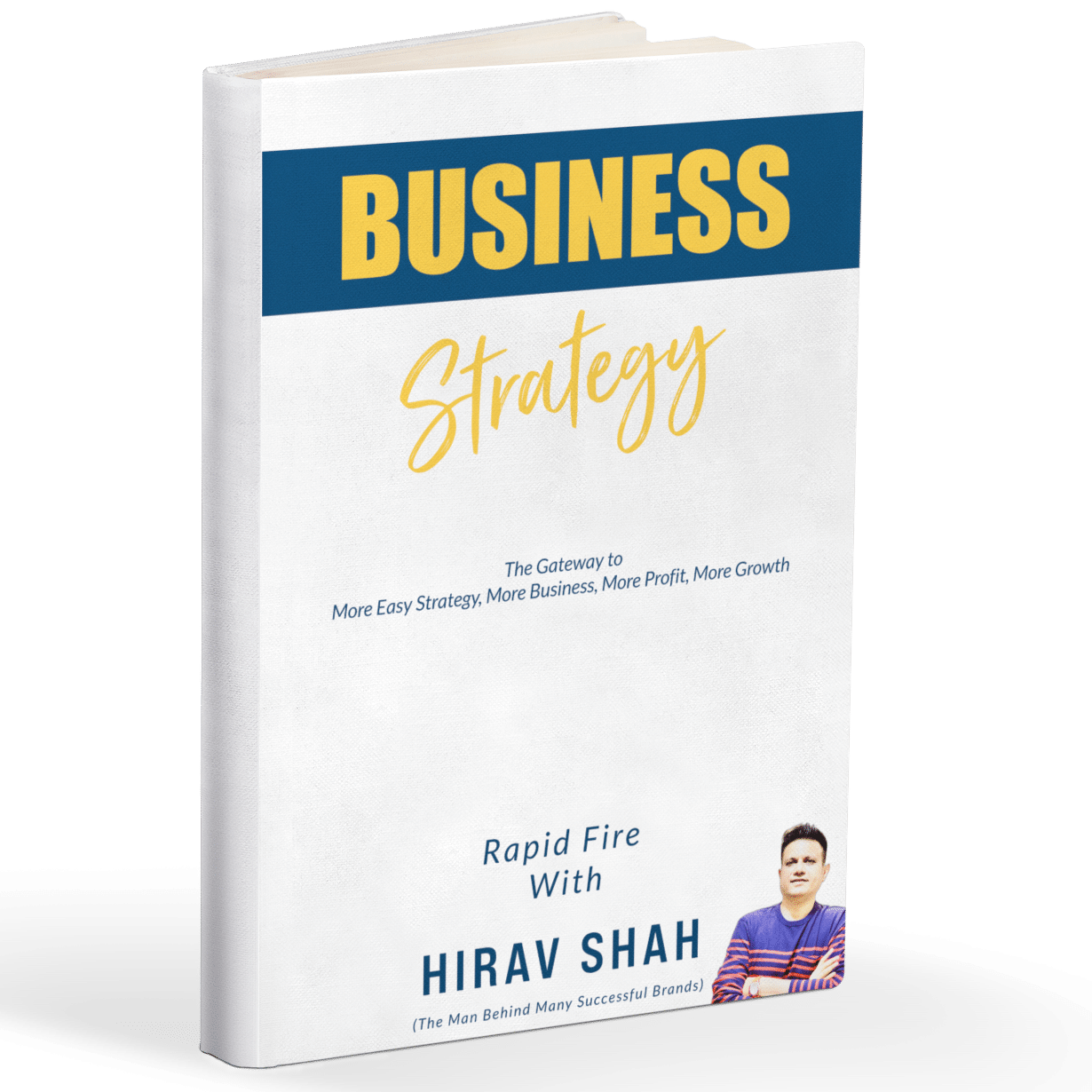
According to Business Strategist Hirav Shah, widely recognized as The Game Changer, entrepreneurs should be extremely selective about whose advice they choose to follow.
His philosophy is simple yet powerful:
“Take advice only from the very best people in that particular field.”
This principle encourages entrepreneurs to seek wisdom from accomplished founders, industry leaders, seasoned business owners, and individuals who have experienced both failure and extraordinary success. These are people who have faced economic downturns, market disruptions, competitive pressures, financial crises, and organizational challenges—and emerged stronger.
Learning directly from successful entrepreneurs significantly shortens the learning curve. Instead of repeating costly mistakes, business owners can benefit from proven strategies, tested frameworks, and practical insights developed over decades.
Business Strategist Hirav Shah believes that one of the defining habits of highly successful entrepreneurs and millionaires is their willingness to continuously learn from people who have already achieved remarkable success.
Instead of relying solely on theory, they actively seek guidance from practitioners who understand the realities of building and scaling businesses.
This habit develops better decision-making, sharper leadership skills, stronger financial discipline, and greater confidence during periods of uncertainty.
As Hirav Shah explains,
“Learning from victorious and accomplished entrepreneurs is one of the greatest success habits. It helps individuals overcome challenges, make wiser business decisions, and continue moving forward even when circumstances become difficult.”
Whether someone is launching their first startup, managing a growing family business, or leading a multinational organization, the principles shared by experienced entrepreneurs remain universally relevant.
The following five business lessons, recommended by Business Strategist Hirav Shah, have stood the test of time and continue to guide entrepreneurs across industries.
Table of Contents
1. Resilience: The Foundation of Every Successful Business

Every successful entrepreneur eventually encounters setbacks.
Economic recessions.
Cash flow shortages.
Unexpected competition.
Changing customer preferences.
Technological disruption.
Supply chain interruptions.
Hiring challenges.
These obstacles are not exceptions—they are part of entrepreneurship.
According to Business Strategist Hirav Shah, resilience is one of the most valuable qualities a business leader can possess.
Resilience is more than simply enduring difficult times. It is the ability to adapt, learn, recover, and continue progressing despite adversity.
Many companies fail not because of external challenges but because they refuse to adapt when circumstances change.
A resilient entrepreneur constantly asks:
- What has changed?
- What can we improve?
- How do we serve customers better?
- What new opportunities exist within this challenge?
Instead of viewing obstacles as roadblocks, resilient leaders see them as opportunities for innovation.
Example: Netflix
Netflix originally operated as a DVD rental company.
As digital technology evolved, the company recognized changing customer behavior and shifted its entire business model toward online streaming.
Rather than protecting an outdated business model, Netflix embraced change.
Today, it serves hundreds of millions of subscribers globally because it adapted before its competitors did.
This is resilience in action.
Example: Airbnb During COVID-19
When the travel industry nearly stopped during the pandemic, Airbnb experienced one of the biggest crises in its history.
Instead of giving up, the company shifted its focus toward long-term stays, remote workers, and local travel experiences.
This strategic adaptation helped Airbnb recover faster than many expected.
The lesson?
Businesses that adapt survive.
Businesses that refuse to change disappear.
The Role of a Business Strategist
Business Strategist Hirav Shah emphasizes that resilience should never be confused with stubbornness.
A strategist helps organizations evaluate changing market conditions objectively.
Instead of reacting emotionally, businesses learn how to:
- Analyze risks.
- Reassess priorities.
- Identify emerging opportunities.
- Protect profitability.
- Build sustainable long-term strategies.
This strategic mindset allows companies to remain competitive even during uncertain economic conditions.
Business Calculation Example
Suppose a company earns ₹10,00,000 in monthly revenue.
A market slowdown reduces revenue by 25%.
New monthly revenue:
₹10,00,000 × 75% = ₹7,50,000
A resilient business immediately looks for solutions:
- Reduce unnecessary expenses by ₹1,00,000.
- Introduce a new service generating ₹1,50,000.
- Improve customer retention by 10%.
Instead of accepting losses, the company actively rebuilds profitability.
That is resilience combined with strategic thinking.
Key Takeaway
Resilience does not eliminate challenges.
It strengthens your ability to overcome them.
Every successful entrepreneur experiences setbacks.
Only resilient entrepreneurs transform setbacks into future success.
2. Patience: The Underrated Competitive Advantage

One of the biggest misconceptions in entrepreneurship is believing that success should happen quickly.
Today’s startup culture often celebrates overnight success stories.
However, what many people fail to see are the years of experimentation, learning, failures, product improvements, and financial struggles that occur before visible success arrives.
Business Strategist Hirav Shah reminds entrepreneurs that patience is not a weakness—it is a competitive advantage.
Every meaningful business requires time to mature.
Products evolve.
Markets develop.
Customer trust grows gradually.
Brand reputation is built consistently.
Great businesses are rarely created overnight.
They are built one decision, one customer, and one improvement at a time.
The Dyson Story
James Dyson spent years developing his vacuum cleaner.
He created more than 5,000 prototypes before launching the final product.
Most entrepreneurs would have stopped after dozens of failures.
Dyson continued improving.
Eventually, his persistence transformed a simple household appliance into a globally recognized premium brand.
The lesson is clear:
Patience allows innovation to flourish.
Example: Starbucks
Starbucks did not become an international coffee brand within a few months.
The company spent decades building customer experience, refining operations, selecting premium locations, and strengthening its brand identity.
Today, customers pay not only for coffee but for consistency, ambiance, and trust.
That reputation required years of patient execution.
Building Industry Relationships Takes Time
Entrepreneurs often underestimate the importance of relationships.
Suppliers.
Investors.
Distributors.
Corporate buyers.
Strategic partners.
These relationships cannot be rushed.
Trust develops through consistent communication, reliability, transparency, and delivering results over time.
Business Strategist Hirav Shah frequently highlights that many of the biggest business opportunities come through long-term relationships rather than short-term transactions.
Winning Major Customers
Large clients rarely change vendors overnight.
They evaluate:
- Reliability
- Product quality
- Financial stability
- Customer support
- Industry reputation
Building enough credibility to secure these customers often takes months—or even years.
Entrepreneurs who remain patient while consistently delivering value are the ones who eventually earn these opportunities.
Business Calculation Example
Imagine acquiring one new loyal customer every week.
52 customers annually.
If each customer spends ₹50,000 every year:
52 × ₹50,000 = ₹26,00,000 annual revenue
Now imagine retaining those customers for five years.
₹26,00,000 × 5 = ₹1,30,00,000
Patience, combined with excellent customer service, can generate substantial long-term revenue.
The Role of a Business Strategist
A business strategist helps entrepreneurs balance ambition with realistic timelines.
Instead of chasing short-term wins, strategic planning focuses on:
- Sustainable growth.
- Strong customer relationships.
- Consistent cash flow.
- Brand equity.
- Market positioning.
- Long-term profitability.
Business Strategist Hirav Shah believes that entrepreneurs who remain patient while continuously improving their business create organizations capable of lasting for generations.
Key Takeaway
Success is rarely immediate.
Patience allows businesses to improve products, strengthen customer relationships, build stronger brands, and achieve sustainable growth.
The entrepreneurs who stay committed through difficult periods are often the ones who ultimately achieve extraordinary success.
To be continued in Part 2, where we will explore:
- Spend Strategically
- Prepare for the Long Entrepreneurial Journey
- Build a Powerful Unique Value Proposition
- More real-world business examples
- ROI and cash-flow calculations
- Strategic insights from Business Strategist Hirav Shah
3. Spend Strategically: Smart Spending Creates Sustainable Businesses

One of the biggest misconceptions among new entrepreneurs is that spending more money automatically leads to faster business growth. While investment is essential for expansion, uncontrolled spending without a clear return on investment (ROI) can quickly become a burden rather than an advantage.
According to Business Strategist Hirav Shah, successful entrepreneurs understand that every rupee invested should have a defined purpose. They don’t spend to impress—they spend to grow.
Many startups raise large amounts of funding and immediately begin spending on expensive office spaces, unnecessary hiring, luxurious interiors, excessive advertising, or technology they don’t yet need. While these expenses may create an image of success, they often reduce cash reserves and increase financial pressure.
Instead, Business Strategist Hirav Shah advises entrepreneurs to focus on strategic spending—investing in activities that directly improve profitability, customer acquisition, operational efficiency, or long-term value.
Every Rupee Should Have a Purpose
Before making any business expense, ask yourself:
- Will this investment increase revenue?
- Will it reduce costs?
- Will it improve customer satisfaction?
- Will it strengthen our competitive advantage?
- Can this expense generate measurable returns?
If the answer is unclear, reconsider the investment.
Strategic spending isn’t about being cheap—it’s about being intentional.
Example: Amazon’s Early Years
In its early years, Amazon wasn’t focused on luxurious offices or extravagant marketing. Instead, Jeff Bezos reinvested profits into improving logistics, technology, customer experience, and distribution networks.
This disciplined approach allowed Amazon to scale sustainably while building one of the world’s most efficient business operations.
The lesson is simple: invest in assets that create long-term value, not short-term appearances.
Example: Small Business Scenario
Imagine two entrepreneurs each start with ₹20,00,000.
Entrepreneur A spends:
- ₹6,00,000 on office interiors
- ₹4,00,000 on luxury furniture
- ₹3,00,000 on unnecessary branding
- ₹2,00,000 on premium gadgets
Total non-essential spending = ₹15,00,000
Remaining working capital = ₹5,00,000
Entrepreneur B spends:
- ₹5,00,000 on product development
- ₹4,00,000 on digital marketing
- ₹3,00,000 on hiring skilled employees
- ₹2,00,000 on customer support systems
- ₹1,00,000 on business software
Remaining working capital = ₹5,00,000, but every investment contributes toward business growth.
After one year, Entrepreneur B is more likely to generate sustainable revenue because the investments directly support business performance.
ROI Calculation Example
Suppose your company spends ₹2,00,000 on a digital marketing campaign.
The campaign generates additional revenue of ₹8,00,000.
If the profit margin is 25%, then:
Profit earned = ₹8,00,000 × 25% = ₹2,00,000
ROI Formula:
ROI = (Profit ÷ Investment) × 100
ROI = (₹2,00,000 ÷ ₹2,00,000) × 100 = 100%
A positive ROI indicates that the investment has successfully generated value.
Business Strategist Hirav Shah encourages entrepreneurs to measure the effectiveness of every significant expense rather than relying on assumptions.
Cash Flow Matters More Than Vanity
Many profitable businesses fail because they run out of cash—not because they lack customers.
Maintaining healthy cash flow enables businesses to:
- Pay employees on time.
- Purchase inventory.
- Invest in innovation.
- Manage emergencies.
- Negotiate better supplier terms.
Strong cash flow provides flexibility during uncertain economic conditions.
The Role of a Business Strategist
Business Strategist Hirav Shah works with entrepreneurs to identify where money should—and should not—be invested.
A business strategist helps organizations:
- Prioritize investments.
- Improve financial discipline.
- Maximize returns.
- Reduce unnecessary expenditure.
- Build scalable financial systems.
- Create long-term profitability.
Strategic spending is not about limiting ambition.
It is about ensuring every investment contributes to sustainable growth.
Key Takeaway
Businesses do not become successful by spending more.
They become successful by spending smarter.
4. Prepare for the Long Entrepreneurial Journey

Entrepreneurship is often described as a marathon rather than a sprint—and for good reason.
Starting a business is exciting, but sustaining and growing it requires far more than enthusiasm. It demands discipline, resilience, adaptability, financial planning, continuous learning, and unwavering commitment.
Business Strategist Hirav Shah believes that entrepreneurs should prepare mentally for the long journey ahead rather than expecting immediate success.
Every business experiences periods of rapid growth, slow progress, uncertainty, setbacks, and transformation.
The entrepreneurs who succeed are those who remain committed during every phase.
Success Takes Time
Many founders overestimate what they can achieve in a week but underestimate what they can accomplish over five or ten years.
Building a respected brand requires:
- Consistent customer service.
- Product improvement.
- Team development.
- Financial discipline.
- Strategic marketing.
- Strong leadership.
These elements accumulate gradually.
Example: Apple
Apple’s journey began in a garage.
Its founders faced financial difficulties, leadership changes, product failures, and intense competition.
Yet, through continuous innovation and strategic decision-making, Apple evolved into one of the world’s most valuable companies.
Its success was built over decades—not months.
Example: Tata Group
The Tata Group has spent more than a century building trust across multiple industries.
Its reputation wasn’t created overnight.
It was built through consistent ethical leadership, customer trust, innovation, and long-term vision.
This demonstrates that enduring businesses are created through patience and perseverance.
Long-Term Planning Example
Suppose a business increases revenue by just 15% annually.
Starting Revenue = ₹1 Crore
Year 1 = ₹1.15 Crore
Year 2 = ₹1.32 Crore
Year 3 = ₹1.52 Crore
Year 4 = ₹1.75 Crore
Year 5 = Approximately ₹2 Crore
Steady annual growth creates extraordinary long-term results.
Small improvements, consistently applied, outperform occasional dramatic changes.
Stay Grounded
Business Strategist Hirav Shah advises entrepreneurs to remain realistic.
Optimism should be balanced with practical planning.
Successful entrepreneurs prepare for:
- Market fluctuations.
- Competitive pressure.
- Economic downturns.
- Customer expectations.
- Technological change.
- Regulatory developments.
Being prepared allows businesses to respond confidently rather than react emotionally.
The Role of a Business Strategist
One of the most valuable contributions of a business strategist is helping entrepreneurs develop a long-term roadmap.
Business Strategist Hirav Shah assists organizations by:
- Defining strategic objectives.
- Measuring performance.
- Anticipating future risks.
- Creating sustainable growth plans.
- Aligning business decisions with long-term vision.
Strategic planning transforms uncertainty into opportunity.
Key Takeaway
Entrepreneurship is a long journey.
Businesses that remain committed, adaptable, and strategically focused are the ones that endure.
5. Build a Unique Value Proposition

One of the biggest mistakes businesses make is trying too hard to be different without understanding what truly creates value.
Being different alone does not guarantee success.
Being valuable does.
According to Business Strategist Hirav Shah, every successful business must clearly answer one fundamental question:
“Why should customers choose us?”
The answer lies in a powerful Unique Value Proposition (UVP).
A Unique Value Proposition explains the specific value your business delivers that competitors cannot easily replicate.
It communicates:
- Who you serve.
- What problem you solve.
- Why your solution is better.
- Why customers should trust you.
Stop Copying Competitors
Many businesses imitate successful competitors.
They copy products.
Pricing.
Marketing.
Design.
Brand messaging.
Unfortunately, imitation rarely creates long-term success.
Instead, entrepreneurs should focus on discovering their own strengths.
Example: Starbucks
Starbucks doesn’t simply sell coffee.
It sells an experience.
Comfort.
Consistency.
Community.
Personalization.
Customers willingly pay premium prices because they perceive additional value beyond the product itself.
Example: Apple
Apple doesn’t compete only on hardware specifications.
It competes through simplicity, design, innovation, ecosystem integration, and exceptional customer experience.
Its value proposition extends far beyond individual products.
Questions Every Entrepreneur Should Ask
Business Strategist Hirav Shah encourages business owners to regularly ask:
- How do we improve customers’ lives?
- What unique benefit do we provide?
- Why do customers return?
- What emotional connection do customers have with our brand?
- How can we create more value every year?
Businesses that continuously answer these questions remain relevant in changing markets.
Customer Value Example
Suppose your company provides accounting software.
Competitor Price = ₹5,000
Your Price = ₹6,500
Customers still choose your software because:
- It saves 15 hours every month.
- Reduces accounting errors.
- Automates GST filing.
- Includes customer support.
- Improves compliance.
Although your price is higher, your value is significantly greater.
Customers purchase value—not merely products.
The Role of a Business Strategist
Business Strategist Hirav Shah helps organizations identify their strongest competitive advantages.
This includes:
- Market positioning.
- Brand differentiation.
- Customer experience.
- Pricing strategy.
- Competitive analysis.
- Innovation planning.
A well-defined value proposition becomes the foundation of sustainable business growth.
Key Takeaway
Don’t compete by copying others.
Compete by creating exceptional value that customers cannot easily find elsewhere.
When businesses focus on delivering meaningful value, growth becomes a natural outcome.
Final Thoughts: Entrepreneurship Is Built One Decision at a Time

Entrepreneurship is often portrayed through headlines celebrating billion-dollar valuations, unicorn startups, and overnight success stories. However, behind every successful business lies years of hard work, disciplined execution, calculated risks, strategic planning, and countless decisions made every single day.
Success is rarely about one breakthrough moment.
It is built brick by brick, customer by customer, decision by decision.
According to Business Strategist Hirav Shah, entrepreneurship is not merely about generating massive revenues or achieving impressive business exits. It is equally about developing the mindset required to navigate uncertainty while remaining committed to long-term goals.
As The Game Changer, Hirav Shah believes that courage, patience, adaptability, resilience, and strategic thinking are qualities that separate sustainable businesses from short-lived ventures.
Great entrepreneurs understand that challenges are inevitable.
Economic uncertainty.
Changing customer expectations.
Technological disruption.
Increasing competition.
Cash flow pressures.
Leadership challenges.
These are not signs of failure.
They are opportunities to evolve.
Business owners who continue learning, adapting, and making informed decisions consistently outperform those who rely solely on luck or short-term trends.
The Role of Business Strategist Hirav Shah in Business Growth

A business strategist does much more than offer advice.
The role involves helping organizations make better decisions based on market realities, customer behavior, financial performance, industry trends, and long-term objectives.
According to Business Strategist Hirav Shah, strategy is about creating clarity before taking action.
Rather than reacting to problems after they occur, strategic planning enables entrepreneurs to anticipate challenges and prepare solutions in advance.
Some of the key areas where a Business Strategist adds value include:
Business Vision
Helping entrepreneurs define long-term business objectives that align with their mission and market opportunities.
Strategic Planning
Developing practical roadmaps that connect short-term actions with long-term business goals.
Market Positioning
Helping businesses identify opportunities where they can differentiate themselves and create lasting competitive advantages.
Financial Discipline
Guiding organizations in improving profitability, managing costs, increasing cash flow, and maximizing return on investment.
Risk Assessment
Identifying operational, financial, and market risks before they become major obstacles.
Leadership Development
Helping founders build high-performing teams, improve communication, and create strong organizational cultures.
Sustainable Growth
Ensuring businesses grow responsibly without compromising profitability or operational efficiency.
Business Strategist Hirav Shah believes that successful businesses don’t grow by accident.
They grow through consistent planning, disciplined execution, and informed decision-making.
Practical Business Calculations Every Entrepreneur Should Understand
Successful entrepreneurs rely on numbers—not assumptions.
Understanding basic financial metrics helps business owners make smarter decisions.
1. Profit Margin
Formula:
Profit Margin = (Profit ÷ Revenue) × 100
Example:
Revenue = ₹50,00,000
Expenses = ₹38,00,000
Profit = ₹12,00,000
Profit Margin:
(12,00,000 ÷ 50,00,000) × 100 = 24%
A higher profit margin generally indicates stronger operational efficiency.
2. Customer Acquisition Cost (CAC)
Formula:
Marketing Cost ÷ New Customers
Example:
Marketing Spend = ₹5,00,000
New Customers = 250
CAC:
₹5,00,000 ÷ 250 = ₹2,000 per customer
Understanding CAC helps businesses evaluate whether marketing investments are generating profitable growth.
3. Customer Lifetime Value (CLV)
Suppose:
Average Purchase = ₹20,000
Customers buy twice each year.
Average customer relationship = 5 years.
CLV:
₹20,000 × 2 × 5 = ₹2,00,000
If acquiring a customer costs ₹5,000 while their lifetime value is ₹2,00,000, customer acquisition becomes a highly profitable investment.
4. Break-Even Analysis
Monthly Fixed Costs:
₹5,00,000
Profit per Product:
₹2,500
Break-even units:
₹5,00,000 ÷ ₹2,500 = 200 units
Selling beyond 200 units begins generating profit.
This calculation helps entrepreneurs establish realistic sales targets.
Business Lessons from Global Companies
Amazon
Focused relentlessly on customer satisfaction before maximizing short-term profits.
Lesson:
Long-term customer trust creates sustainable competitive advantage.
Apple
Competes through innovation, ecosystem integration, premium branding, and customer experience rather than price alone.
Lesson:
Differentiation is more valuable than imitation.
Toyota
Built one of the world’s strongest manufacturing systems through continuous improvement (Kaizen).
Lesson:
Small improvements, consistently implemented, produce extraordinary long-term results.
Netflix
Successfully transformed from DVD rentals to digital streaming by embracing technological change.
Lesson:
Adaptability is essential for long-term survival.
Starbucks
Created a premium customer experience rather than simply selling coffee.
Lesson:
Customers remember experiences more than products.
Actionable Takeaways for Every Entrepreneur
✔ Learn from experienced entrepreneurs who have achieved measurable success.
✔ Build resilience and adapt quickly to changing business environments.
✔ Practice patience and focus on long-term value creation.
✔ Spend strategically and monitor return on investment.
✔ Protect cash flow at every stage of business growth.
✔ Create a compelling Unique Value Proposition that clearly differentiates your business.
✔ Continuously invest in learning, innovation, and customer satisfaction.
✔ Make decisions based on data rather than assumptions.
✔ Build strong relationships with customers, suppliers, investors, and employees.
✔ Remember that sustainable success is achieved through consistent execution over time.
Frequently Asked Questions (FAQs)

1. Why is resilience important in business?
Resilience enables entrepreneurs to adapt to market changes, recover from setbacks, and continue growing despite uncertainty.
2. Why does Business Strategist Hirav Shah emphasize learning from successful entrepreneurs?
Because experienced entrepreneurs provide practical insights gained through real-world business challenges rather than theoretical knowledge.
3. What is a Unique Value Proposition?
A Unique Value Proposition explains why customers should choose your business instead of competitors by highlighting the unique value you provide.
4. How can entrepreneurs spend strategically?
By investing only in activities that improve profitability, customer satisfaction, operational efficiency, or sustainable growth.
5. Why is patience considered a competitive advantage?
Strong brands, customer trust, and market leadership require years of consistent effort and continuous improvement.
6. What does a Business Strategist do?
A Business Strategist helps organizations develop long-term plans, improve profitability, manage risks, identify growth opportunities, and strengthen competitive positioning.
7. Why is cash flow more important than revenue?
A business may generate high revenue but still fail if it cannot meet its financial obligations due to poor cash flow management.
8. What makes a business sustainable?
Sustainable businesses combine profitability, customer value, innovation, strategic planning, and financial discipline.
9. Should entrepreneurs copy successful competitors?
No. Businesses should learn from competitors but focus on creating their own unique value and market positioning.
10. What is the biggest lesson for entrepreneurs?
Business success is built through consistent execution, disciplined decision-making, continuous learning, and unwavering commitment to creating value.
Conclusion

There will always be countless opinions about how to build a successful business.
However, not every opinion is based on experience.
According to Business Strategist Hirav Shah, entrepreneurs should seek guidance from individuals who have successfully built businesses, overcome challenges, and demonstrated lasting success.
The five principles discussed in this article—Resilience, Patience, Strategic Spending, Long-Term Commitment, and Building a Unique Value Proposition—remain relevant regardless of industry or economic conditions.
These are not temporary trends.
They are timeless business fundamentals.
When combined with disciplined execution, continuous learning, financial responsibility, and strategic planning, they create the foundation for sustainable business growth.
As The Game Changer, Business Strategist Hirav Shah believes that extraordinary businesses are not created overnight.
They are built one decision at a time, one improvement at a time, and one satisfied customer at a time.
For entrepreneurs willing to embrace these principles, the journey may be challenging—but the rewards can be truly transformational.