
Change Your Words — Change Your Life
Language is far more than a tool for communication—it is the architecture of our reality. Every word we choose carries layers of personal meaning, emotional weight, and subconscious influence. The way we speak shapes not only how others perceive us but also how we perceive ourselves and the world around us.
The right words, expressed with clarity and intention, can open doors to respect, love, trust, and financial success. On the other hand, careless or reactive language can damage relationships, derail opportunities, and—even at scale—spark conflict between communities or nations. History has shown us that speeches have the power to unite or divide, to inspire revolutions or restore peace.
If we are serious about achieving our goals and turning aspirations into reality, then our speech must be intentional, refined, and aligned with our vision.
Table of Contents
What is Vocabulary?

Vocabulary refers to the collection of words a person knows, understands, and actively uses. It is not just a static list—it is a living system that evolves with experience, learning, and awareness.
It can also be described as an organized set of words and phrases, often arranged alphabetically and defined for clarity. In linguistic terms, vocabulary is also known as lexis or lexicon.
For example:
- A person who says “I’m stuck” is using a limited, restrictive vocabulary.
- A person who says “I’m figuring this out step by step” is using a growth-oriented vocabulary.
Same situation. Completely different mental state.
Why Vocabulary Matters
Vocabulary is foundational to every dimension of life:
- Communication: It determines how clearly and effectively you express your ideas.
- Understanding: Strong vocabulary enhances reading comprehension and learning ability.
- Perception: The words you use influence how you interpret situations.
- Influence: Your ability to persuade, inspire, and lead depends heavily on language.
Example:
In business, saying:
- “We have a problem” creates anxiety.
- “We have an opportunity to improve” creates motivation and focus.
That subtle shift can influence team morale, productivity, and ultimately, results.
What is Transformational Vocabulary?

Transformational vocabulary is the deliberate practice of changing the words you use to transform your emotional state, behavior, and life outcomes.
It’s simple—but powerful.
By consciously replacing limiting words with empowering ones, you rewire your thinking patterns and emotional responses.
Examples of Transformational Shifts:
- “I’m overwhelmed” → “I’m prioritizing what matters most.”
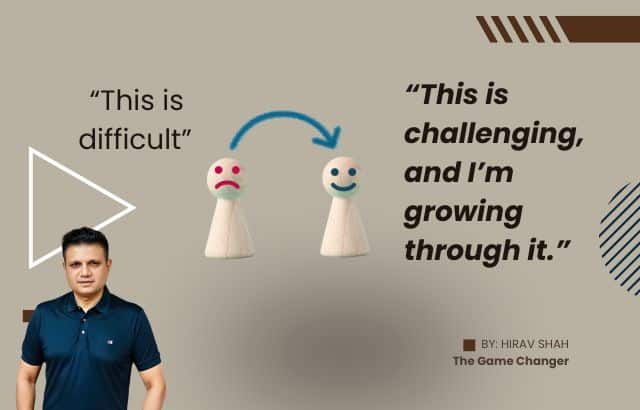
- “This is difficult” → “This is challenging, and I’m growing through it.”
- “I failed” → “I learned what doesn’t work.”
These are not just semantic changes—they influence your biochemistry, stress levels, and decision-making ability.
Why Is It Difficult to Change Your Words and Mindset?
The human brain is wired for efficiency and certainty. It prefers familiar patterns—even if they are unhelpful.
- It conserves energy by repeating habitual language.
- It seeks certainty, often resisting change.
- It reinforces emotional patterns tied to specific words.
Example:
If someone repeatedly says, “I’m bad with money,” their brain reinforces avoidance behaviors.
But if they shift to, “I’m learning to manage money better,” the brain begins seeking solutions.
Changing vocabulary requires conscious effort because you are overriding automatic neural patterns.
How to Change Your Words (and Your Life)

To transform your vocabulary, you must become aware of your current language patterns and intentionally reshape them.
Step 1: Awareness
Track commonly used negative phrases.
Example: “I can’t,” “This always happens,” “I’m unlucky.”
Step 2: Replace
Create empowered alternatives.
- “I can’t” → “How can I?”
- “This always happens” → “What can I do differently?”
- “I’m unlucky” → “I’m creating better outcomes.”
Step 3: Reinforce
Repeat new language consistently until it becomes natural.
The Science Behind Words and Biochemistry

Words are not neutral—they trigger physiological responses.
- Negative words increase cortisol (stress hormone).
- Positive, empowering words increase dopamine and serotonin (feel-good chemicals).
Simple Calculation Example:
If a person uses 20 negative phrases per day and each triggers stress for ~2 minutes:
20 × 2 = 40 minutes of daily stress
Over a year:
40 minutes × 365 = 14,600 minutes (~243 hours of stress)
Now imagine reducing that by 50% through better vocabulary—
You reclaim over 120 hours of mental clarity annually.
The Power of Words in Business
Great leaders understand that words are strategic tools.
A visionary like a business strategist doesn’t just communicate—they influence perception, align teams, and drive execution through language.
Example in Leadership:
- “We must hit targets” → Pressure-driven
- “We are building something impactful together” → Purpose-driven
Purpose-driven language increases engagement and productivity.
Role of a Business Strategist (The Game Changer Perspective)

A business strategist like Hirav Shah recognizes that language is a key driver of business transformation.
Key Roles of Strategic Vocabulary in Business:
- Vision Communication
Turning abstract ideas into compelling narratives. - Team Alignment
Using consistent language to unify teams toward common goals. - Decision Framing
Replacing fear-based wording with opportunity-based thinking. - Brand Positioning
Crafting words that resonate emotionally with customers. - Crisis Management
Choosing words that stabilize rather than escalate situations.
Example:
During a downturn:
- “We’re struggling” → Fear
- “We’re restructuring for stronger growth” → Confidence
That shift alone can impact investor trust, employee morale, and customer perception.
Transformational Vocabulary in Daily Life

You don’t need massive change—just small, consistent upgrades.
Daily Practice Example:
- Morning: Replace “I have to work” with “I get to create value today.”
- During stress: Replace “This is too much” with “I’ll handle this one step at a time.”
- At night: Replace “Today was exhausting” with “Today taught me something valuable.”
Frequently Asked Questions (FAQs)
1. Can changing words really change life outcomes?
Yes. Words influence thoughts, thoughts influence actions, and actions determine results. It’s a chain reaction.
2. How long does it take to see results?
With consistent practice, noticeable emotional shifts can happen within 7–14 days, while deeper behavioral changes may take 30–60 days.
3. Is this just positive thinking?
No. It’s strategic thinking. It’s about choosing words that lead to constructive action rather than emotional paralysis.
4. Can this be applied in business teams?
Absolutely. Organizations that adopt empowering language cultures often see improved communication, higher engagement, and better performance.
5. What is the first step to start?
Awareness. Start noticing your words without judgment—then begin replacing them intentionally.
Final Thoughts

What’s in a word?
Everything.
Your words shape your identity.
Your vocabulary reflects your mindset.
Your language determines your experience.
If you want to change your life, start with something deceptively simple—change the words you use every day.
Because in the end:
Your words become your thoughts.
Your thoughts become your actions.
Your actions become your reality.
And that is where transformation truly begins.