
Decision making is one of the most important responsibilities of every business owner, founder, executive, and manager. Every growth opportunity, market expansion, hiring choice, investment, product launch, pricing revision, and strategic shift begins with a decision.
Yet many organizations treat decision making as an event rather than a process.
Some rely entirely on intuition.
Some wait for perfect information.
Others get trapped in endless discussions without reaching a conclusion.
The reality is that successful businesses rarely win because they always make perfect decisions. They win because they use a repeatable process that helps them make better decisions consistently.
Business Strategist Hirav Shah often emphasizes that business success is rarely the result of a single brilliant idea. Instead, success emerges from a series of well-timed, well-executed decisions supported by clear criteria, disciplined execution, and continuous learning.
This guide presents a practical 10-step framework that helps leaders move from confusion to clarity, from analysis to action, and from action to learning.
The journey follows a simple path:
Frame → Compare → Choose → Act → Learn
Throughout this article, we will explore practical examples, business scenarios, strategic insights, and simple frameworks that decision-makers can immediately apply.
Table of Contents
Who Is This Decision Making Framework For?

This framework is designed for anyone responsible for making decisions that affect business outcomes.
That includes:
- Entrepreneurs and founders
- CEOs and CXOs
- Business unit heads
- Department managers
- Project leaders
- Cross-functional teams
- Investors and advisors
Consider a founder deciding whether to expand into a new city.
The decision affects:
- Capital allocation
- Team resources
- Marketing budgets
- Operational complexity
- Brand reputation
A poorly structured decision can create expensive consequences that take years to reverse.
Now consider a manager deciding whether to adopt a new project management platform.
The financial risk may be smaller, but the decision still influences productivity, employee adoption, and operational efficiency.
In both situations, a structured decision-making framework improves the quality of thinking.
This process is particularly valuable when:
The decision affects multiple departments
When marketing, finance, operations, and sales all have different priorities, a structured framework aligns everyone around shared criteria.
The stakes are high
Large investments, acquisitions, hiring decisions, product launches, and strategic pivots benefit significantly from disciplined decision-making.
The decision is difficult to reverse
The more expensive the consequences of being wrong, the more important the process becomes.
The team needs alignment
A documented decision process reduces conflict because everyone understands how the final conclusion was reached.
Why Use a Decision-Making Process Instead of Relying on Gut Feel?

Intuition has value.
Experienced leaders often develop strong instincts after years of operating in similar environments.
However, intuition works best when:
- Conditions are familiar
- Patterns repeat frequently
- Feedback loops are immediate
For example, an experienced retailer may quickly sense which product categories are likely to sell during a festive season.
But when entering a new market, launching a new business model, or making a major investment, historical patterns become less reliable.
This is where structured decision making becomes essential.
A process helps leaders:
Reduce bias
Human beings naturally favor information that confirms existing beliefs.
By defining criteria before evaluating options, leaders reduce confirmation bias.
Improve transparency
People are more likely to support decisions when they understand how they were made.
Increase accountability
When criteria, assumptions, and owners are documented, accountability becomes clear.
Build organizational learning
Every decision becomes a source of future knowledge.
Over time, organizations create a valuable archive of lessons learned.
As Business Strategist Hirav Shah frequently notes, successful companies don’t merely collect profits—they collect decision-making wisdom.
How This Framework Keeps Decision Making Simple

Many decision-making models become unnecessarily complicated.
Some require extensive spreadsheets.
Others involve countless workshops and committees.
The purpose of this framework is different.
The goal is simplicity without sacrificing rigor.
For most decisions, all you need is:
- A one-page decision memo
- A scorecard
- A simple expected value calculation
- A pilot plan (for major decisions)
- A review schedule
This approach allows leaders to spend more time making progress and less time managing process.
When Should Decisions Move Fast and When Should They Move Slowly?
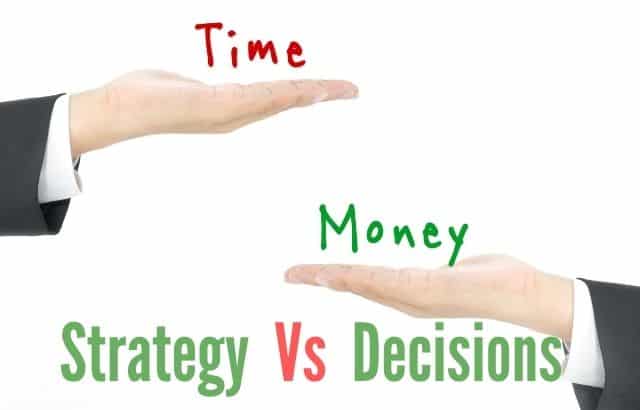
One of the most important strategic questions is not “What should we decide?”
It is:
“How much time should we spend deciding?”
Many organizations waste months analyzing decisions that could easily be reversed.
Others rush into decisions that create long-term consequences.
A useful framework divides decisions into two categories.
Reversible Decisions
These are decisions that can be changed quickly and inexpensively.
Examples include:
- Testing a new advertisement
- Updating website copy
- Changing an onboarding sequence
- Running a short marketing campaign
These decisions should move quickly.
Speed creates learning.
Hard-to-Reverse Decisions
These decisions require significant investment and are difficult to undo.
Examples include:
- Entering a new geographic market
- Acquiring another company
- Rebranding
- Building new facilities
- Major pricing transformations
These decisions require deeper analysis and often benefit from pilot testing.
A useful strategic principle is:
The harder a decision is to reverse, the more disciplined the process should become.
Why Timing Matters in Decision Making
Many leaders focus almost exclusively on whether an idea is good.
Few spend enough time evaluating whether the timing is right.
Yet timing frequently determines success.
The same business strategy can produce dramatically different results depending on when it is executed.
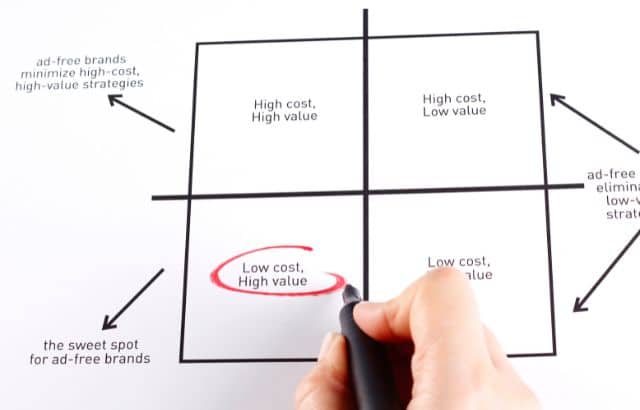
A useful way to think about timing is through the Eisenhower Matrix, which classifies decisions based on urgency and importance. While originally designed for productivity, it is equally valuable for business decision making.
Eisenhower Matrix Example in Business Decision Making
Urgent and Important (Do Now)
A cybersecurity breach, a major customer threatening to leave, or a regulatory compliance issue requires immediate action. Delaying the decision could create significant financial or reputational damage.
Important but Not Urgent (Schedule Carefully)
Entering a new market, launching a new product line, implementing digital transformation, or building leadership capabilities falls into this category. These decisions often generate the greatest long-term value, but they require careful planning and proper timing rather than rushed execution.
Urgent but Less Important (Delegate)
Routine operational approvals, administrative requests, or minor customer issues may need quick attention but should often be delegated to capable team members.
Neither Urgent nor Important (Eliminate or Delay)
Projects driven by trends, distractions, or internal politics without a clear strategic benefit should be questioned before consuming valuable resources.
For example, a SaaS company considering international expansion may view the opportunity as highly important but not immediately urgent. Using the Eisenhower Matrix, leadership can schedule detailed market research, assess readiness, and enter the market at the right time rather than rushing into expansion because competitors are making similar moves.
Business Strategist Hirav Shah often highlights that timing is not an afterthought—it is a strategic variable. A strong decision is not only about choosing the right direction; it is also about choosing the right moment to move.
A business should evaluate both external and internal timing factors before making significant commitments.
External Timing Factors
These include:
- Market demand cycles
- Economic conditions
- Industry trends
- Competitive activity
- Regulatory changes
- Capital availability
For example, launching a luxury product line during economic uncertainty may create unnecessary challenges because consumers often reduce discretionary spending during uncertain periods. The product itself may be excellent, but the market may not be ready to support its success.
Similarly, a real estate developer launching a premium residential project during a period of rising interest rates may face weaker demand than if the same project were introduced when financing conditions are more favorable.
The lesson is simple: the quality of an idea matters, but the timing of execution often determines whether that idea succeeds or struggles.
Internal Timing Factors
These include:
- Team readiness
- Leadership bandwidth
- Technology capabilities
- Financial resources
- Operational capacity
A company may have a strong growth opportunity but lack the internal infrastructure needed to support expansion.
In such situations, waiting may create better outcomes than immediate action.
The strategic lesson is simple:
A great decision at the wrong time often produces poor results.
The 6+3+2 Decision Lens

To create balanced decisions, this framework uses a practical strategic lens.
Six Core Business Areas
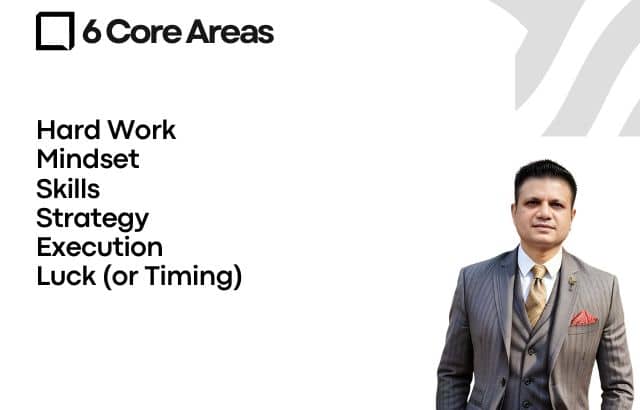
- Hard Work
- Mindset
- Strategy
- Skills
- Execution
- Timing and Opportunity
Three Performance Traits

- Hunger
- Dedication
- Consistency
Two Growth Drivers
- Innovation
- Marketing
This perspective helps leaders identify hidden weaknesses.
For example:
A company may have:
- Excellent strategy
- Strong market demand
- Adequate capital
But lack the skills needed for execution.
In such cases, hiring, training, or partnerships become necessary before scaling.

Step 1: Name the Decision
The first step is creating a clear decision statement.
Most organizations waste time because people are discussing different versions of the same problem.
A decision statement should answer:
- What are we deciding?
- For whom?
- By when?
- For what outcome?
Example
“Decide whether to launch a serviced office pilot in Bengaluru for mid-market clients by Q2 to generate ₹2.5 crore ARR within twelve months.”
This simple statement creates focus.
Everyone now understands the objective.
Strategic Perspective
Business strategists know that clarity reduces friction.
When the decision itself is vague, every later conversation becomes harder.
Step 2: Define Success and Non-Negotiables
Before evaluating options, leaders must define what success looks like.
This prevents teams from changing standards after seeing attractive options.
Success Metrics Example
- Payback period under 9 months
- ARR increase of ₹2.5 crore
- NPS increase of 6 points
- Churn increase below 0.2%
Non-Negotiables Example
- Budget cap of ₹50 lakh
- Maximum three additional hires
- Compliance standards maintained
- Brand guidelines preserved
Strategic Example
Suppose a SaaS company is evaluating a pricing change.
Without predefined success metrics, stakeholders may selectively interpret results.
By establishing clear metrics first, evaluation becomes objective.
Step 3: Evaluate Timing and Reversibility
Now assess:
Is the decision reversible?
Is the timing favorable?
Consider a real estate developer evaluating a project launch.
The project may be attractive, but:
- Regulatory approvals are pending
- Market demand is seasonal
- Financing costs are elevated
A strategist would likely recommend staging the launch rather than rushing into it.
This approach protects capital while preserving opportunity.
Step 4: Build a Weighted Scorecard
A weighted scorecard converts opinions into structured analysis.
Sample Criteria
| Criteria | Weight |
|---|---|
| Strategic Fit | 20 |
| Expected Value | 20 |
| Risk | 15 |
| Execution Readiness | 15 |
| Brand Impact | 10 |
| Skills Fit | 10 |
| Timing Fit | 10 |
Total = 100
Example
Suppose three options are being evaluated.
Option A scores highest on revenue potential.
Option B scores slightly lower on revenue but significantly higher on execution readiness and risk control.
The scorecard reveals which option best aligns with organizational priorities.
This is one reason business strategists favor scorecards—they transform subjective discussions into objective comparisons.
Step 5: Create Real Options
Many teams mistakenly compare one option against nothing.
A stronger approach compares multiple viable alternatives.
Always include:
Option A
Aggressive action.
Option B
Moderate action.
Option C
Pilot approach.
Option D
Wait or do nothing.
Including a baseline often produces surprising insights.
Sometimes the best decision is not immediate action but deliberate patience.
Step 6: Use Simple Expected Value (EV) Calculations
Expected Value provides a simple way to compare opportunities.
Formula
EV = (Probability × Reward) − Cost
Example 1
Marketing Pilot
Reward = ₹10 lakh
Probability = 50%
Cost = ₹3 lakh
EV = (0.5 × 10) − 3
EV = ₹2 lakh
Positive outcome.
Example 2
Large Brand Event
Reward = ₹30 lakh
Probability = 20%
Cost = ₹8 lakh
EV = (0.2 × 30) − 8
EV = −₹2 lakh
Negative outcome.
While EV is not perfect, it helps leaders think probabilistically rather than emotionally.
Step 7: Collect 80/20 Evidence
Not every decision requires months of research.
The objective is sufficient evidence.
A practical approach includes:
Five Customer Conversations
Gather firsthand insights.
Three Competitor Reviews
Understand market standards.
One Legal Check
Identify compliance issues.
Premortem Analysis
Ask:
“If this decision fails, why would it fail?”
Then develop preventive actions.
Example
A company considering cash-on-delivery might discover:
- Customers want flexibility.
- Competitors charge additional fees.
- Fraud risk is manageable with verification controls.
That is often enough evidence to proceed.
Step 8: Establish Governance
Good decisions fail when ownership is unclear.
Every decision requires:
One Decider
Final authority.
One DRI
Directly Responsible Individual.
RACI Structure
Responsible
Accountable
Consulted
Informed
Example
Decision: Implement customer support chatbot.
Decider: Head of Customer Success
DRI: Support Operations Manager
Consulted: Legal and Brand Teams
Informed: Sales and Finance
This eliminates ambiguity.
Step 9: Commit, Communicate, and Pilot
A decision is not complete until action begins.
Create a one-page decision memo containing:
Decision
What was chosen.
Why Now
Why action is required.
Alternatives Considered
Options reviewed.
Risks
Potential downsides.
Owners
Responsible individuals.
Timelines
Execution milestones.
For high-stakes decisions, pilots are especially valuable.
Example
Usage-Based Pricing Pilot
Duration: Four weeks
Audience: 10% of new users
Success Metric: Conversion increase of 2%
Kill Switch: Churn exceeds 0.2%
Pilots reduce risk while preserving learning.
Step 10: Execute, Review, and Learn
Decision quality improves through feedback.
Schedule:
30-Day Review
Focus on inputs.
Questions include:
- Are tasks being completed?
- Is adoption occurring?
- Are early KPIs improving?
90-Day Review
Focus on outcomes.
Questions include:
- Revenue impact?
- Margin impact?
- Customer satisfaction impact?
- Payback progress?
Example
Chatbot Pilot
30 Days:
Deflection Rate = 18%
Target = 20%
Action = Improve flows.
90 Days:
Deflection Rate = 24%
Customer Satisfaction Increased
Decision = Scale rollout.
Organizations that review decisions systematically improve faster than organizations that simply move from one initiative to another.
The Role of a Business Strategist in Decision Making

A business strategist serves as a guide rather than a decision maker.
The strategist helps organizations:
- Clarify objectives
- Identify blind spots
- Challenge assumptions
- Evaluate timing
- Compare alternatives
- Design pilots
- Interpret results
Business Strategist Hirav Shah frequently emphasizes that strategy is not about predicting the future perfectly.
Strategy is about increasing the probability of success while reducing avoidable mistakes.
The strongest strategists help leaders see trade-offs clearly.
They create frameworks that improve judgment rather than simply offering opinions.
Real-World Decision-Making Scenario
Imagine a fast-growing SaaS company considering expansion into Southeast Asia.
The leadership team is excited.
However, a strategist would guide them through the framework:
Step 1
Define the decision.
Step 2
Establish success metrics.
Step 3
Evaluate market timing.
Step 4
Score expansion alternatives.
Step 5
Compare direct entry, partnerships, and distributor models.
Step 6
Calculate expected value.
Step 7
Conduct customer and partner research.
Step 8
Assign ownership.
Step 9
Launch a pilot market.
Step 10
Review results after 90 days.
Instead of making a risky all-or-nothing commitment, the company creates a controlled learning environment.
That is strategic decision making in practice.
Frequently Asked Questions

What is decision making in business?
Decision making is the process of selecting a course of action and committing resources, people, and timelines to achieve a specific outcome.
Why is decision making important?
Every business outcome is ultimately the result of decisions. Better decisions increase the probability of growth, profitability, and long-term success.
How many options should be evaluated?
Typically three to five meaningful alternatives plus a baseline option provide sufficient comparison.
What is a reversible decision?
A reversible decision can be changed quickly and inexpensively if results are unsatisfactory.
What is a hard-to-reverse decision?
A hard-to-reverse decision involves significant cost, complexity, or long-term consequences.
What is a weighted scorecard?
A weighted scorecard ranks options using predefined criteria and priorities, making comparisons more objective.
Why use expected value calculations?
Expected value helps leaders evaluate opportunities by considering both probability and reward rather than focusing only on potential upside.
What is a pilot program?
A pilot is a small-scale test designed to validate assumptions before full implementation.
How often should decisions be reviewed?
Most business decisions benefit from structured reviews at 30 and 90 days.
What is the biggest mistake in decision making?
The biggest mistake is confusing activity with progress—spending excessive time discussing a decision without defining criteria, ownership, and timelines.
Conclusion
Great businesses are not built through occasional brilliant decisions.
They are built through a consistent series of thoughtful decisions made at the right time, executed with discipline, and refined through learning.
The most effective leaders understand that decision making is a system.
They define the decision clearly.
They establish success criteria before reviewing options.
They assess timing carefully.
They compare alternatives objectively.
They use simple financial logic.
They assign ownership.
They test before scaling.
And they learn from every outcome.
As Business Strategist Hirav Shah often reminds business leaders:
“Decisions don’t need drama; they need design—clear criteria, right timing, and firm follow-through.”
When leaders follow a structured process, decision making becomes less stressful, more transparent, and significantly more effective.
Ultimately, the quality of your business is determined by the quality of your decisions—and the quality of your decisions is determined by the quality of your process.