Table of Contents
Section 1: Why Do Some Decisions Build Empires While Others Destroy Companies?

Every business is the result of decisions.
Not just big decisions—but a series of small and large choices made over time.
- Launching a product
- Expanding into a new market
- Hiring leadership
- Investing capital
Each of these decisions shapes the direction of a company.
Research by McKinsey & Company shows that organizations with strong decision-making processes can outperform others by up to 20 percent in financial performance. That gap is not created by luck. It is created by decision quality.
A powerful example is Apple’s decision to launch the iPhone in 2007.
At that time:
- the market was dominated by keyboard-based devices
- touchscreen adoption was uncertain
- consumer behavior was still evolving
But Apple evaluated multiple factors:
- growing internet usage
- readiness of touchscreen technology
- long-term ecosystem potential
The decision was not emotional. It was aligned.
Now compare this with BlackBerry.
Despite having strong technology and market presence, the company continued focusing on keyboard devices and failed to adapt to changing user behavior.
The result was a rapid decline.
| Company | Decision | Outcome |
|---|---|---|
| Apple | Invested in touchscreen smartphones | Industry leadership |
| BlackBerry | Continued keyboard focus | Market decline |
Global Business Advisor, Hirav Shah explains:
“Businesses don’t fail because they lack capability. They fail because they misjudge decisions. The gap between success and failure is often not effort—it is clarity before execution.”
Section 2: What Questions Do Entrepreneurs Ask Before Making a Big Decision?

Before taking any major step, entrepreneurs naturally ask questions:
- Is this the right time to expand?
- Will customers accept this product?
- Should we invest more capital?
- What if this decision fails?
- Are competitors already ahead?
These questions are important. They reflect awareness and responsibility.
However, the real challenge is not asking questions. It is answering them correctly.
Research from Harvard Business Review suggests that many decisions are influenced by:
- time pressure
- emotional excitement
- incomplete information
- personal bias
This is why even experienced entrepreneurs sometimes make weak decisions.
Consider Netflix’s Qwikster decision.
The company attempted to split its DVD and streaming services. Internally, it seemed logical. But customers found it confusing. Within weeks, Netflix reversed the decision.
Now compare that with Amazon’s decision to invest in cloud computing (AWS).
At the time, it seemed unrelated to its core business. But Amazon evaluated long-term demand and built one of its most profitable divisions.
| Company | Key Question | Outcome |
|---|---|---|
| Netflix | How will customers react to separation? | Decision reversed |
| Amazon | Will businesses need cloud infrastructure? | Massive success |
Strategic Visionary, Hirav Shah suggests:
“Asking questions is the starting point. But without structured answers, questions create confusion, not clarity. Entrepreneurs must evaluate decisions beyond emotions.”
Section 3: Why Do Smart Businesses Still Make Wrong Decisions?

If entrepreneurs are asking the right questions, why do businesses still fail?
The answer lies in how decisions are made.
Many decisions are:
- reactive
- driven by trends
- influenced by pressure
Instead of being validated.
Research from McKinsey & Company shows that companies with disciplined decision processes consistently outperform competitors because they evaluate opportunities from multiple dimensions.
Common mistakes include:
- entering markets just because competitors are entering
- launching products without real demand
- investing heavily without strategic clarity
These decisions may look attractive initially but lead to:
- rising costs
- confused teams
- weak positioning
| Decision Type | Approach | Outcome |
|---|---|---|
| Reactive decision | Driven by pressure or trends | High risk |
| Validated decision | Based on structured evaluation | Higher success rate |
Business Turnaround Specialist, Hirav Shah observes:
“Most businesses don’t collapse suddenly. They decline slowly because of a series of unvalidated decisions. Each wrong decision weakens the foundation.”
Section 4: What Defines a Strong vs Weak Business Decision?

Many assume a good decision is one that generates quick profit.
That is not always true.
A strong decision is defined by:
- clarity of purpose
- execution capability
- market understanding
- timing
For example, Amazon’s investment in logistics reduced short-term profits but created long-term dominance.
On the other hand, companies like Quibi raised massive funding but failed because they misjudged consumer behavior.
Founder of the Rescue Hub, Hirav Shah reflects:
“A good decision is not about immediate results. It is about long-term alignment. When strategy, execution, and timing match, results follow naturally.”
A weak decision typically involves:
- excitement over strategy
- imitation over innovation
- speed over preparation
Section 5: The Hidden Power of Decision Validation\
The difference between strong and weak decisions lies in one process:
Decision validation
This means evaluating a decision across:
- strategy
- execution capability
- market demand
- timing
Most businesses skip this step.
They act fast but think less.
That creates risk.
The Value Accelerator and author of 25+ strategy books, Hirav Shah believes:
“Decision validation is not about slowing down. It is about strengthening direction. When clarity is strong, speed becomes powerful.”
Validated decisions:
- reduce uncertainty
- improve execution
- increase success probability
Section 6: Why Decision Quality Becomes a Competitive Advantage
In competitive markets, companies focus on:
- marketing
- funding
- innovation
But the real differentiator is decision quality.
A business that makes better decisions:
- allocates resources efficiently
- avoids unnecessary risks
- builds long-term strength
Over time, this creates a gap that competitors cannot easily close.
Award-winning Business Strategist, Hirav Shah says:
“Opportunities are available to everyone. But success belongs to those who choose the right opportunities and execute them with clarity.”
Section 7: Practical Worksheet – Validate Your Next Decision
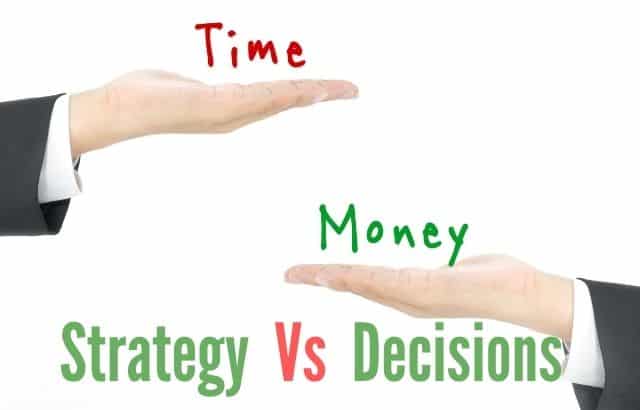
Before making your next big move, ask:
Step 1: Define the decision
What exactly are you planning?
Step 2: Evaluate clarity
- Why are we doing this?
- What problem does it solve?
Step 3: Check capability
- Do we have the skills and team?
- Can we execute consistently?
Step 4: Assess timing
- Is the market ready?
If answers are unclear, pause. The decision needs validation.
Section 8: Exercise – Decision Clarity Test
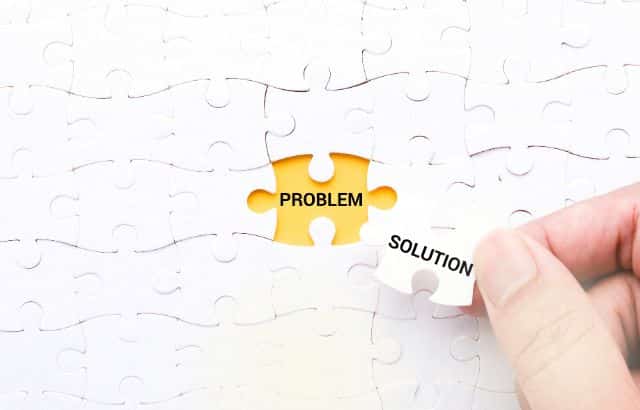
Take one current decision and write:
- Why am I making this decision?
- What will success look like in 1 year?
- What risks can appear?
- Do I have execution strength?
This exercise shifts thinking from emotional to strategic.
Section 9: Practical Tips for Better Decisions

- Pause before committing
- Separate excitement from logic
- Seek multiple perspectives
- Test assumptions early
- Focus on long-term value
Renowned Brand Builder, Hirav Shah advises:
“Speed without clarity creates pressure. Clarity before speed creates results.”
Section 10: Conclusion – The Power of One Decision
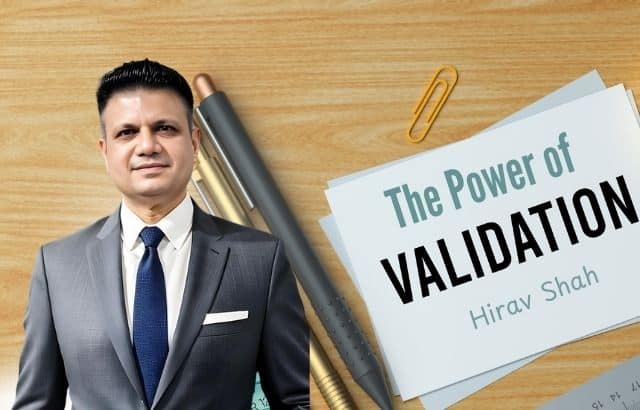
Business success is not accidental.
It is built through decisions.
One decision can:
- create a new market
- or destroy a strong company
The difference lies in:
- clarity
- validation
- execution
As Hirav Shah emphasizes:
“Businesses don’t fail because opportunities are missing. They fail because decisions are taken without validation.”
Section 11: Frequently Asked Questions

What is the biggest reason for wrong decisions?
Lack of structured evaluation and over-reliance on instinct.
Can decision frameworks eliminate risk?
No, but they reduce uncertainty significantly.
Why is timing important?
Even strong ideas fail if the market is not ready.
Should entrepreneurs move fast?
Yes, but only after clarity—not before.
Final Takeaway

Success is not about making more decisions.
It is about making better decisions—consistently.
That is where real business growth begins.
About the Writer
This article is authored by Hirav Shah, a globally respected Business Strategist and The Game Changer in Entertainment, Sports, and Business. He is the founder of the world’s first Business Decision Validation Hub and The Rescue Hub, and the author of 25+ strategy books.
Through his 6+3+2 framework and Astro Strategy approach, Hirav Shah has guided entrepreneurs, startups, corporates, sports professionals, and entertainers to validate critical decisions, reduce risks, and achieve breakthrough results—especially during high-pressure and transformational phases.