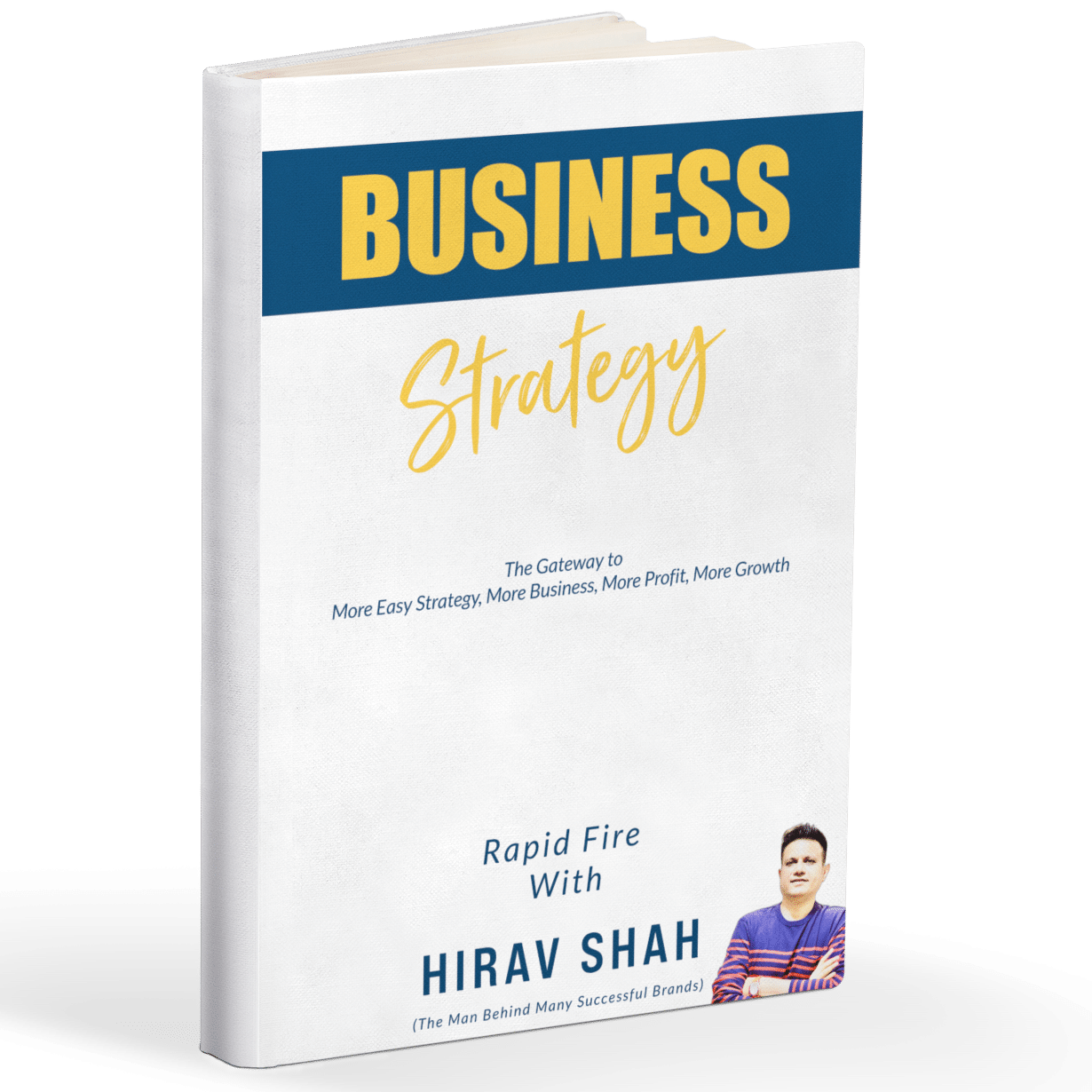

Building wealth is not about luck, shortcuts, or overnight success. It is about making smart financial decisions consistently over time. True wealth creation requires a balance between long-term vision and short-term execution. While patience helps investments grow, disciplined action today determines your financial future tomorrow.
According to renowned Business Strategist Hirav Shah, the foundation of financial success lies in one powerful principle:
“Plan long-term, execute short-term, and treasure the present.”
This philosophy highlights the importance of taking immediate financial action while staying committed to long-term wealth goals. Whether you are a salaried professional, entrepreneur, startup founder, investor, or business owner, strategic investing can transform your future.
In this comprehensive guide, Business Strategist Hirav Shah shares practical wealth-building strategies, real-life examples, investment insights, and financial planning methods that can help you create lasting prosperity.
Table of Contents
Why Investing Early Matters

One of the biggest advantages in wealth creation is time. The earlier you start investing, the greater the benefit of compound growth.
Compound interest allows your money to generate returns, and then those returns begin generating additional returns. Over time, this creates exponential growth.
Example of Compound Growth
Suppose you invest ₹10,000 per month starting at age 25 with an average annual return of 12%.
Using the SIP growth formula:
A=P\left(\frac{(1+r)^n-1}{r}\right)(1+r)
Where:
- P = Monthly investment
- r = Monthly return rate
- n = Total number of months
Scenario 1:
- Monthly SIP = ₹10,000
- Time = 30 years
- Expected return = 12%
Approximate wealth created:
₹3.5 Crore+
Scenario 2:
If the same investment starts at age 35 instead of 25:
Approximate wealth created:
₹1 Crore to ₹1.2 Crore
That 10-year delay can cost you over ₹2 Crore in potential wealth.
This is why Hirav Shah repeatedly emphasizes:
“Your greatest investment asset is not money — it is time.”
1. Start Early for Maximum Financial Growth

The sooner you begin investing, the longer your investments have to grow.
Many people delay investing because they believe they need a large amount to start. That is a myth. Even small, consistent investments can create significant wealth over time.
Example
A college graduate investing ₹5,000 monthly at age 22 may build more wealth than someone investing ₹20,000 monthly starting at age 40.
The key is consistency and duration.
Role of a Business Strategist
A business strategist helps individuals and entrepreneurs:
- Identify long-term wealth opportunities
- Allocate capital wisely
- Avoid emotional financial decisions
- Build systems for scalable wealth generation
Business Strategist Hirav Shah advises young professionals to begin investing as soon as they start earning, regardless of income level.
2. Invest Regularly Without Overextending Yourself

Wealth is rarely built through one-time investments. It is built through disciplined and regular investing.
A financial corpus grows steadily when investments are consistent.
Example
If you invest:
- ₹5,000 monthly for 20 years at 12% return
- Total investment = ₹12 lakh
- Estimated corpus = ₹50 lakh+
But if you invest irregularly, skip payments, or stop midway, your wealth creation slows significantly.
Important Lesson
Never invest more than you can comfortably sustain.
Overcommitting financially often leads to:
- Missed SIPs
- Loan dependence
- Financial stress
- Early withdrawal of investments
Hirav Shah explains that financial discipline is more important than investment size.
3. Prioritize Saving Before Spending

Most people save whatever remains after spending. Wealthy individuals do the opposite.
The smart formula is:
Save first → Pay obligations → Spend the rest
Example of Smart Monthly Allocation
Suppose your monthly income is ₹1,00,000.
A disciplined allocation could look like this:
- 30% Investments & Savings = ₹30,000
- 20% EMI & Debts = ₹20,000
- 50% Lifestyle & Expenses = ₹50,000
This strategy ensures long-term financial growth without sacrificing present-day living.
Role of Business Strategy in Personal Finance
A business strategist helps create:
- Budget frameworks
- Financial accountability systems
- Long-term planning structures
- Sustainable money management habits
4. Have Clear Investment Goals

Investing without goals is like traveling without a destination.
Every financial goal should have:
- A timeline
- A target amount
- A separate investment strategy
Examples of Financial Goals
| Goal | Time Horizon | Suggested Investment |
|---|---|---|
| Emergency Fund | Immediate | Savings Account / Liquid Fund |
| Child Education | 10–15 Years | Mutual Funds |
| House Purchase | 5–10 Years | Hybrid Funds |
| Retirement | 20–30 Years | Equity Investments |
| Vacation | 1–2 Years | Recurring Deposits |
When investors know exactly why they are saving, they remain committed and emotionally disciplined.
5. Diversify Your Investments

Diversification reduces financial risk.
Every investment instrument has strengths and weaknesses. A balanced portfolio helps protect wealth during uncertain market conditions.
Example of Diversified Portfolio
A balanced investor may allocate:
- 40% Equity Mutual Funds
- 20% Fixed Deposits
- 15% Gold
- 15% Real Estate
- 10% Emergency Cash
If one asset underperforms, others can stabilize overall returns.
Example
During stock market corrections:
- Gold prices may rise
- Fixed deposits remain stable
- Real estate may hold long-term value
This creates financial balance.
Business Strategist Hirav Shah strongly advocates diversified investing to protect against economic uncertainty.
6. Invest Only in What You Understand

Never invest blindly because someone else recommended it.
Understanding the fundamentals of an investment is essential.
Example
Many investors enter:
- Crypto markets
- Penny stocks
- Futures trading
- High-risk schemes
…without understanding risks, volatility, or liquidity.
As a result, they lose money due to emotional decisions.
Smart Investor Rule
Before investing, understand:
- Risk level
- Lock-in period
- Liquidity
- Tax implications
- Historical performance
Hirav Shah advises investors to focus on knowledge before returns.
7. Never Copy Someone Else’s Investment Plan

Every person has:
- Different income levels
- Different responsibilities
- Different risk appetite
- Different financial goals
Therefore, no single investment strategy fits everyone.
Example
Your friend may invest aggressively in stocks because:
- He is unmarried
- Has no liabilities
- Has high risk tolerance
But someone with family responsibilities may need a more balanced portfolio.
Role of a Business Strategist
A business strategist evaluates:
- Financial behavior
- Cash flow patterns
- Risk management
- Wealth objectives
This helps create customized financial plans instead of copied strategies.
8. Use Debt Wisely

Debt can either build wealth or destroy it.
The key lies in using productive debt instead of destructive debt.
Productive Debt Examples
- Home loans
- Business loans
- Education loans
Destructive Debt Examples
- Credit card debt
- Unnecessary personal loans
- Lifestyle borrowing
Example
Suppose:
- Credit card interest = 36% annually
- Mutual fund returns = 12% annually
If you carry large credit card debt, your investment gains become meaningless.
Smart Financial Calculation
If you owe ₹5 lakh on a credit card at 36% interest:
genui{“math_block_widget_always_prefetch_v2”:{“content”:”A=P(1+r)^n”}}
After 5 years:
- ₹5 lakh can become approximately ₹23 lakh+
This shows how dangerous high-interest debt can become over time.
Hirav Shah recommends reducing expensive debt aggressively while simultaneously building assets.
9. Celebrate Financial Milestones

Financial discipline becomes easier when progress is acknowledged.
Reward yourself for:
- Paying off debt
- Completing investment targets
- Increasing savings rates
- Reaching corpus milestones
Example Rewards
- Taking a short vacation
- Spending quality family time
- Learning a new skill
- Taking a break from routine
Small celebrations create long-term motivation.
10. Focus on the Present While Building the Future

Wealth creation should improve life — not make life stressful.
Many people become obsessed with saving so much that they stop enjoying the present.
Financial success is about balance.
Example
If someone earns well but:
- Never travels
- Never spends on health
- Never enjoys life
…then wealth loses its true purpose.
Business Strategist Hirav Shah believes that financial planning should support both:
- Future security
- Present happiness
The Role of a Business Strategist in Wealth Creation

A skilled business strategist plays a major role in financial success by helping individuals:
- Build wealth frameworks
- Manage financial risks
- Create scalable income systems
- Develop disciplined financial habits
- Improve decision-making
- Balance business growth with personal wealth
Business Strategist Hirav Shah has consistently emphasized that wealth is not created by income alone — it is created through strategy, discipline, timing, and execution.
Warren Buffett’s Investment Lesson
Did you know that Warren Buffett started investing at just 11 years old?
Today, he is one of the world’s wealthiest investors.
His success demonstrates one timeless truth:
“The earlier you invest, the longer compounding works in your favor.”
FAQs on Financial Planning & Wealth Building

What are the best investment strategies for long-term wealth?
Diversification, disciplined SIP investing, equity mutual funds, index investing, and long-term compounding are among the most effective wealth-building strategies.
Can I start investing with a small salary?
Yes. Even investing ₹500–₹2,000 monthly consistently can create substantial wealth over time.
The key is consistency rather than investment size.
How can I become financially wealthy faster?
You can accelerate wealth creation by:
- Increasing income sources
- Investing early
- Avoiding bad debt
- Staying invested long-term
- Improving financial discipline
- Learning money management skills
What role does compound interest play in wealth building?
Compound interest helps your money grow exponentially because returns are generated on both your principal and accumulated gains.
The longer you stay invested, the stronger compounding becomes.
Is diversification really important?
Yes. Diversification reduces risk and protects your portfolio during market fluctuations.
It creates financial stability and improves long-term wealth preservation.
How important is financial planning before investing?

Financial planning is essential because it helps:
- Define goals
- Understand risk tolerance
- Create investment strategies
- Improve financial discipline
- Track progress effectively
Final Thoughts: Invest NOW to BUILD Wealth Later

Wealth is not built overnight.
It is built through:
- Discipline
- Smart decisions
- Patience
- Strategic planning
- Consistent execution
According to Business Strategist Hirav Shah:
“Invest NOW, to be wealthy later.”
The journey to financial freedom starts with the decisions you make today.
Start small if necessary.
Start cautiously if needed.
But most importantly — start now.
Lastly, congratulations in advance on taking the first step toward financial success and long-term wealth creation.