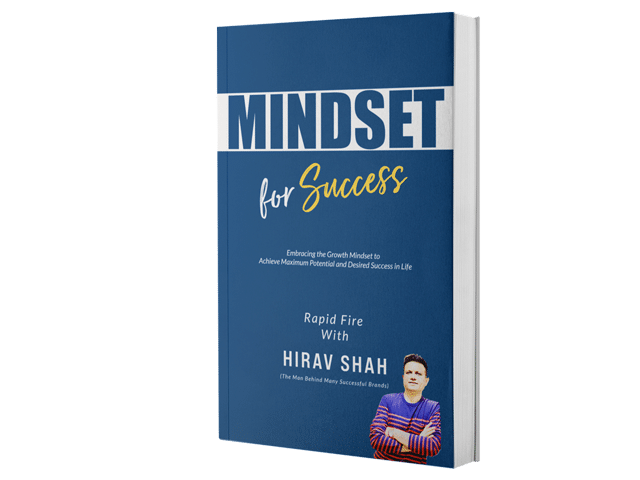

Guilt can weigh heavily on our hearts, affecting our mental health, relationships, confidence, and productivity. Whether it comes from a mistake, a missed opportunity, or a misunderstanding, carrying guilt for too long can prevent growth and inner peace. The key is not to ignore guilt, but to learn from it and move forward with clarity and purpose.
Renowned business strategist Hirav Shah believes that guilt, when handled wisely, can become a powerful teacher rather than a lifelong burden. Through practical strategies, emotional awareness, and disciplined thinking, anyone can break free from guilt and rebuild confidence.
Table of Contents
Understanding Guilt

Guilt is a natural emotional response when we believe we have done something wrong or failed to meet expectations. Healthy guilt can guide us toward accountability and improvement. However, excessive guilt can trap us in negativity and self-blame.
Many successful individuals silently struggle with guilt — guilt over family time lost to work, wrong decisions, failed investments, or broken relationships. What matters most is how we respond to it.
A Story: The Businessman Who Couldn’t Forgive Himself

A successful businessman once approached Hirav Shah after facing a major financial setback. Years earlier, he had made a risky expansion decision that resulted in losses for his company. Though the business eventually recovered, he continued to blame himself daily. He avoided new opportunities, lost confidence in leadership, and carried constant emotional stress.
During one conversation, Hirav Shah asked him a simple question:
“Are you punishing yourself to grow, or simply punishing yourself to suffer?”
The businessman remained silent.
Hirav Shah then explained that mistakes are part of every success story. The real danger was not the failed decision — it was allowing guilt to destroy future possibilities. He encouraged the businessman to write down three lessons he learned from the experience and focus on building stronger systems instead of replaying old regrets.
Over time, the businessman shifted his mindset. He stopped viewing himself as a failure and started seeing himself as someone who had gained wisdom through experience. Within two years, he successfully launched a more stable and profitable venture.
The lesson was clear: guilt should educate you, not imprison you.
Practical Ways to Move On from Guilt
1. Accept What Happened
Denial only prolongs emotional pain. Accepting your mistake or situation is the first step toward healing. Acceptance does not mean approval — it means acknowledging reality so you can move forward.
2. Learn the Lesson
Every setback contains valuable insight. Ask yourself:
- What did this experience teach me?
- How can I avoid repeating the same mistake?
- What strengths did I gain through this challenge?
Growth begins when guilt becomes wisdom.
3. Apologize If Necessary
If your actions hurt someone, offer a sincere apology. Taking responsibility demonstrates maturity and can help restore relationships. However, once you apologize genuinely, avoid endlessly punishing yourself.
4. Stop Replaying the Past
Many people mentally replay painful moments repeatedly. This habit drains energy and confidence. Instead, focus on what you can control today.
As Hirav Shah says:
“Your future cannot improve if your mind keeps living in yesterday.”
5. Practice Self-Forgiveness
Forgiving yourself is not weakness — it is emotional strength. Everyone makes mistakes. Treat yourself with the same compassion you would offer a friend facing a difficult moment.
6. Focus on Positive Action
One of the best ways to overcome guilt is through constructive action. Improve your habits, rebuild trust, help others, or create something meaningful. Positive action restores self-respect.
7. Surround Yourself with Supportive People
Isolation increases emotional burden. Talk to mentors, trusted friends, or family members who can offer perspective and encouragement.
Stop Feeling Guilty lets understand

Guilt is an emotional response to actions or decisions we perceive as wrong. While it can motivate positive change, excessive guilt can lead to self-criticism, anxiety, and stagnation. According to Hirav Shah, a strategist who helps individuals and businesses overcome obstacles, guilt often arises from misalignment between actions and values. Addressing it requires self-awareness and proactive steps.
Stop Feeling Guilty Strategies to Move On From Guilt

- Acknowledge and Accept: Recognize your guilt without judgment. Accepting your feelings validates your experience and opens the door to healing.
- Learn from the Experience: Reflect on what caused the guilt and identify lessons to avoid similar situations in the future.
- Make Amends: If possible, take action to rectify the situation, such as apologizing or correcting a mistake.
- Practice Self-Compassion: Treat yourself with the same kindness you’d offer a friend. Remind yourself that everyone makes mistakes.
- Reframe the Narrative: Shift your perspective to focus on growth rather than failure. View mistakes as opportunities for improvement.
- Seek Support: Talk to a trusted friend, mentor, or therapist to gain perspective and guidance.
Example: Applying Strategies
Scenario: Sarah, a project manager, feels guilty for missing a deadline, causing her team to lose a client.
Application: Sarah acknowledges her guilt and reflects on the oversight (e.g., poor time management). She apologizes to her team and proposes a new scheduling system to prevent future issues. By practicing self-compassion, she reminds herself that one mistake doesn’t define her competence. With support from her mentor, she reframes the experience as a chance to improve her leadership skills.
Stop Feeling Guilty Meet your Strategist in Overcoming Guilt

A business strategist like Hirav Shah plays a pivotal role in helping individuals navigate guilt, especially when it impacts professional or personal growth. Strategists provide structured frameworks, objective insights, and accountability to transform guilt into actionable progress. Their roles include:
- Objective Analysis: Identifying the root cause of guilt and separating facts from emotions.
- Action Planning: Creating step-by-step plans to address guilt-inducing situations and prevent recurrence.
- Mindset Coaching: Guiding individuals to reframe negative self-perceptions and build resilience.
- Accountability: Ensuring consistent progress through regular check-ins and goal-setting.
Example: Strategist Intervention

Scenario: Raj, an entrepreneur, feels guilty for a failed product launch that cost his investors money.
The Game Changer’s Approach: As a strategist, Hirav conducts a root cause analysis, identifying poor market research as the issue. He helps Raj develop a recovery plan, including investor communication and a revised launch strategy. Through mindset coaching, Hirav encourages Raj to view the failure as a learning opportunity, boosting his confidence to try again.
Calculations: Measuring Progress in Overcoming Guilt

To quantify your progress in moving on from guilt, Hirav Shah suggests tracking key metrics over time. Below are two simple calculations to assess emotional and behavioral changes:
1. Guilt Frequency Score
Formula: Number of guilt-related thoughts per day ÷ Total waking hours
Example: If you have 8 guilt-related thoughts in a 16-hour day, your score is 8 ÷ 16 = 0.5 thoughts per hour. Track this weekly to monitor reductions.
2. Action Completion Rate
Formula: (Number of guilt-addressing actions completed ÷ Total actions planned) × 100
Example: If you plan 5 actions (e.g., apologize, journal, seek therapy) and complete 4, your rate is (4 ÷ 5) × 100 = 80%. Aim for a higher percentage over time.
Frequently Asked Questions (FAQs)

1. How long does it take to move on from guilt?
The time varies depending on the situation and individual. Simple guilt may resolve in days with action, while deeper guilt may take weeks or months with consistent effort and support.
2. Can guilt be a positive force?
Yes, when channeled constructively, guilt can motivate self-improvement and ethical behavior. The key is to avoid dwelling on it excessively.
3. How can a strategist like Hirav Shah help with guilt?
A strategist provides objective insights, structured plans, and mindset coaching to transform guilt into growth opportunities, as seen in Hirav Shah’s work with entrepreneurs and professionals.
4. What if I can’t make amends for my mistake?
Focus on self-forgiveness and preventive measures. For example, if you can’t undo a past error, commit to new behaviors that align with your values.
Conclusion

Moving beyond guilt is a powerful journey of self-awareness, acceptance, and personal transformation. With the guidance and insights of business strategist Hirav Shah, guilt can be transformed from an emotional burden into a stepping stone toward growth and wisdom. By embracing practical strategies, learning from experiences, and taking positive action, individuals can free themselves from regret and rediscover clarity, confidence, and purpose.
Guilt is a natural part of life, but it should never become a permanent identity. Every successful person has faced failures, wrong decisions, or moments of regret. What separates achievers from others is their ability to learn, adapt, and keep moving forward despite setbacks.
According to Hirav Shah, true success begins when you stop living in the shadows of past mistakes and start focusing on progress, possibility, and a stronger future. The key is not to dwell on what went wrong, but to use every experience as a lesson for growth.
Release the guilt. Embrace the lesson. Rebuild your peace of mind and move forward with renewed strength and purpose.
— Hirav Shah, Business Strategist
The Game Changer | May 20, 2026