
Table of Contents
1. Passion: The Driving Force Behind Every Great Business

Passion is one of the strongest foundations of entrepreneurial success. It gives business owners the motivation to work through difficult times, overcome failures, and stay committed when results are slow.
Every entrepreneur experiences setbacks. What separates successful founders from others is their willingness to continue despite challenges. Passion keeps the vision alive during uncertain periods.
Howard Schultz transformed Starbucks from a small coffee retailer into one of the world’s most recognized brands because he was deeply passionate about creating an exceptional coffee experience rather than simply selling coffee.
Steve Jobs spent years perfecting Apple’s products because he believed technology should be beautifully designed and easy to use. His passion influenced every product the company launched.
Colonel Harland Sanders faced more than one thousand rejections before Kentucky Fried Chicken became a global success. His commitment to his product eventually created one of the largest restaurant franchises in the world.
How to Build Passion
- Identify industries that genuinely interest you.
- Spend time learning about your market every week.
- Attend business conferences and networking events.
- Speak regularly with customers to understand their problems.
- Focus on solving meaningful challenges rather than chasing trends.
Passion creates persistence, and persistence builds successful businesses.
2. Time Management: Your Most Valuable Business Asset

Every entrepreneur has the same twenty-four hours each day. The difference lies in how effectively those hours are used.
Business owners often juggle sales, operations, finance, marketing, hiring, and customer service. Without proper time management, productivity declines and growth slows.
Elon Musk is known for scheduling his day into short time blocks, allowing him to manage multiple companies simultaneously.
Bill Gates has consistently emphasized focused work sessions and uninterrupted reading time to improve decision-making.
Indra Nooyi, former CEO of PepsiCo, managed one of the world’s largest corporations through disciplined planning and prioritization.
Practical Ways to Improve Time Management
- Create daily and weekly business goals.
- Prioritize tasks using urgency and importance.
- Delegate repetitive work.
- Automate invoicing, customer support, and reporting.
- Limit unnecessary meetings.
- Review progress at the end of each day.
Time is the only resource that cannot be recovered. Managing it effectively directly influences business growth.
3. Develop a Growth Mindset

Markets evolve continuously. Entrepreneurs who embrace learning outperform those who rely solely on experience.
A growth mindset means viewing mistakes as opportunities rather than failures.
Sara Blakely, founder of Spanx, faced repeated rejection from manufacturers before finding success. Every rejection became a lesson that improved her approach.
Airbnb struggled to attract investors during its early years. Instead of quitting, the founders listened to customer feedback, improved the platform, and eventually built one of the largest hospitality companies in the world.
Microsoft reinvented itself under Satya Nadella by embracing cloud computing and innovation, demonstrating the power of continuous learning.
Ways to Develop a Growth Mindset
- Read business books every month.
- Analyze successful competitors.
- Learn from customer complaints.
- Welcome constructive criticism.
- Invest in leadership development.
Businesses grow when entrepreneurs continue growing.
4. Hard Work Creates Extraordinary Results

Every successful entrepreneur understands that sustainable success requires consistent effort.
Jeff Bezos spent years working extremely long hours while building Amazon into one of the world’s largest companies.
Dhirubhai Ambani started with modest resources before building one of India’s largest business empires through determination, calculated risk-taking, and relentless execution.
Kiran Mazumdar-Shaw faced skepticism while establishing Biocon but remained committed to building a world-class biotechnology company.
Hard work alone is not enough, but hard work combined with strategic planning creates remarkable outcomes.
Daily Habits of Successful Entrepreneurs
- Review financial performance.
- Speak with customers regularly.
- Study competitors.
- Improve operational efficiency.
- Build stronger teams.
- Learn something new every day.
Success is usually the result of thousands of disciplined decisions rather than one extraordinary moment.
5. Flexibility and Adaptability

Business environments change rapidly due to technology, consumer preferences, regulations, and economic conditions.
Entrepreneurs who adapt quickly remain competitive.
Netflix successfully transformed from DVD rentals to a global streaming platform after recognizing changing consumer behavior.
Adobe shifted from selling software licenses to a subscription-based model, creating recurring revenue and stronger customer relationships.
During the pandemic, many restaurants survived by quickly introducing online ordering, cloud kitchens, and home delivery services.
How to Become More Adaptable
- Monitor industry trends.
- Listen to customer feedback.
- Test new ideas regularly.
- Diversify revenue streams.
- Invest in technology.
Adaptability often determines whether businesses survive during periods of disruption.
The Role of a Business Strategist in Entrepreneurial Success

Many entrepreneurs excel at creating products but struggle with long-term planning. This is where a Business Strategist becomes valuable.
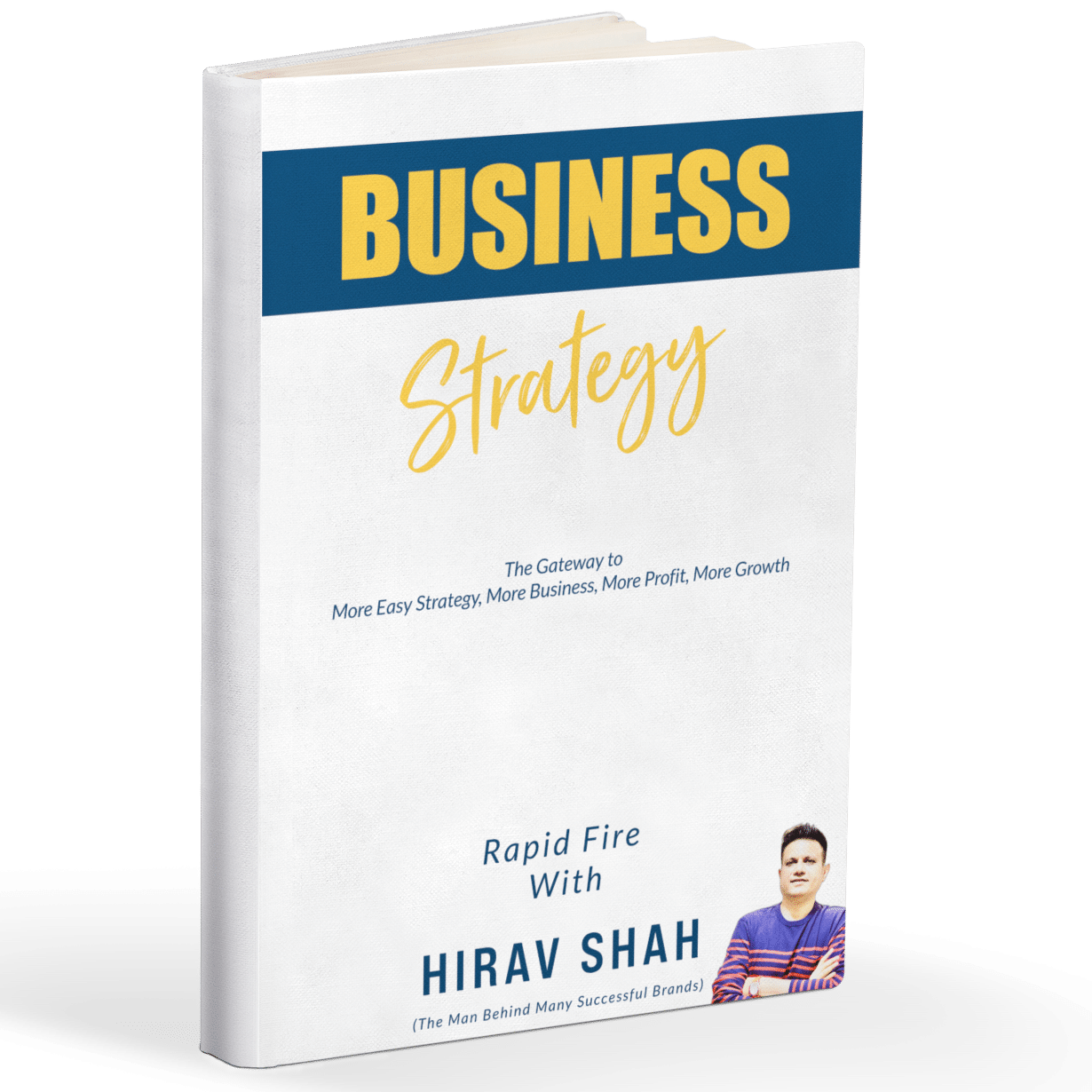
Business Strategist Hirav Shah emphasizes that strategy is about making informed decisions based on market realities, business strengths, financial planning, and long-term vision.
Rather than reacting to problems after they occur, successful businesses anticipate challenges and prepare solutions in advance.
A Business Strategist helps entrepreneurs:
- Develop a long-term business vision.
- Identify profitable market opportunities.
- Conduct SWOT Analysis (Strengths, Weaknesses, Opportunities, Threats).
- Analyze competitors and industry trends.
- Improve pricing strategies.
- Plan market expansion.
- Build scalable business models.
- Reduce operational risks.
- Optimize investment decisions.
- Improve decision-making using market research and data analysis.
For example:
A manufacturing company planning international expansion may require a strategist to evaluate market demand, supply chain risks, pricing strategies, and operational feasibility before entering a new country.
A startup launching a new product may need guidance on customer segmentation, branding, positioning, and competitive analysis to maximize market success.
Strategic planning reduces uncertainty and improves long-term business sustainability.
Essential Financial Calculations Every Entrepreneur Should Know

Understanding financial metrics helps entrepreneurs make informed decisions.
1. Profit Margin
Formula
Profit Margin = ((Total Revenue − Total Expenses) ÷ Total Revenue) × 100
Example
Revenue = ₹25,00,000
Expenses = ₹18,00,000
Profit = ₹7,00,000
Profit Margin = (7,00,000 ÷ 25,00,000) × 100
Profit Margin = 28%
2. Return on Investment (ROI)
Formula
ROI = (Net Profit ÷ Investment Cost) × 100
Example
Investment = ₹10,00,000
Profit = ₹3,50,000
ROI = (3,50,000 ÷ 10,00,000) × 100
ROI = 35%
3. Break-Even Point
Formula
Break-Even Units = Fixed Costs ÷ (Selling Price − Variable Cost)
Example
Fixed Costs = ₹6,00,000
Selling Price = ₹800
Variable Cost = ₹500
Break-Even = 6,00,000 ÷ 300
Break-Even = 2,000 Units
4. Customer Acquisition Cost (CAC)
Formula
CAC = Total Marketing Cost ÷ Number of New Customers
Example
Marketing Spend = ₹2,00,000
New Customers = 400
CAC = ₹2,00,000 ÷ 400
Customer Acquisition Cost = ₹500 per customer
5. Return on Marketing Investment (ROMI)
Formula
ROMI = (Revenue Generated from Marketing − Marketing Cost) ÷ Marketing Cost × 100
Example
Marketing Cost = ₹1,50,000
Revenue Generated = ₹5,50,000
ROMI = (₹5,50,000 − ₹1,50,000) ÷ ₹1,50,000 × 100
ROMI = 266.67%
Frequently Asked Questions (FAQs)

How can I stay motivated after business failures?
Treat every setback as valuable business experience. Analyze what happened, seek feedback, improve your strategy, and continue moving forward. Most successful entrepreneurs experienced multiple failures before achieving lasting success.
Do I need a Business Strategist even if my business is small?
Yes. Even small businesses benefit from strategic planning. A Business Strategist can help identify growth opportunities, improve operations, reduce risks, and develop a roadmap for sustainable expansion.
What qualities make a successful entrepreneur?
Successful entrepreneurs typically demonstrate passion, resilience, adaptability, leadership, financial awareness, strong communication skills, strategic thinking, and continuous learning.
How important is financial planning?
Financial planning is essential because it helps manage cash flow, control expenses, evaluate profitability, and support informed investment decisions.
How can I improve my business strategy?
Regularly review your business goals, monitor competitors, understand customer needs, analyze financial performance, embrace innovation, and seek professional strategic guidance when necessary.
Why is adaptability important in business?
Consumer preferences, technology, and markets evolve constantly. Businesses that adapt quickly remain competitive and are better prepared for future challenges.
What role does market research play?
Market research helps entrepreneurs understand customer behavior, identify emerging trends, evaluate competitors, and make informed decisions about products and services.
Final Thoughts

Building a successful business is a long-term journey that requires much more than ambition. It demands passion, discipline, strategic planning, financial understanding, adaptability, and a commitment to continuous improvement.
Business Strategist Hirav Shah believes that entrepreneurs achieve sustainable success by combining vision with practical execution. Rather than focusing solely on profits, successful business leaders prioritize innovation, customer satisfaction, operational excellence, and long-term value creation.
Whether you are launching a startup, expanding a family business, or leading a growing enterprise, cultivating these entrepreneurial qualities will strengthen your ability to navigate challenges and seize new opportunities.
The road to becoming a business tycoon is built one strategic decision at a time. Stay committed to learning, embrace change with confidence, make informed decisions, and continue creating meaningful value for your customers. With determination, resilience, and a well-defined strategy, your entrepreneurial journey can lead to lasting success and sustainable business growth.