
Real estate is a high-profile industry involving substantial investments, complex transactions, and properties located in some of the world’s most competitive markets. In an environment influenced by changing interest rates, economic cycles, regulatory developments, consumer demand, and broader socio-political conditions, realtors and real estate businesses need more than ambition to achieve consistent growth. They need a disciplined plan for evaluating opportunities, managing risk, generating leads, and forecasting income.
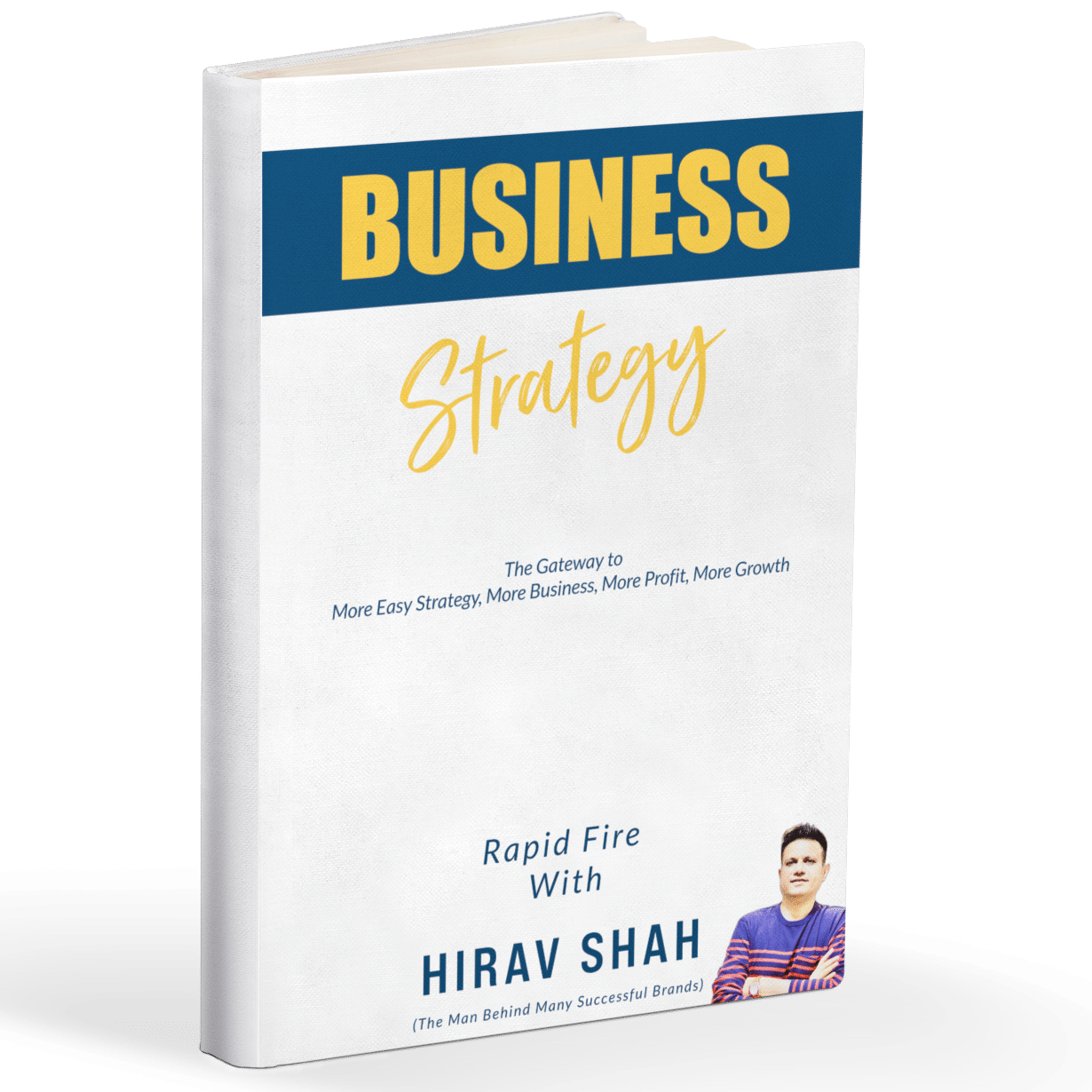
Business Strategist Hirav Shah has worked extensively around business strategy, strategic thinking, positioning, growth, customer understanding, and business decision-making. His approach to real estate strategy combines conventional business considerations with astrology-based perspectives for those who choose to incorporate them into their planning process. The practical value of such an approach is best understood as an additional perspective rather than a substitute for financial analysis, market research, legal due diligence, or professional investment advice.
Table of Contents
The Importance of Real Estate in Today’s Economy

Real estate remains a cornerstone of wealth creation for individuals, entrepreneurs, family offices, and institutions. From a first-time homebuyer purchasing a residential property to an investment firm acquiring a portfolio of commercial assets across multiple countries, the industry encompasses a wide range of participants, property types, investment strategies, and risk profiles. Success in realty depends heavily on understanding the forces that influence property demand, pricing, financing, occupancy, rental income, development activity, and long-term appreciation.
For example, a small business owner may purchase a commercial property rather than continue renting, while a startup founder may invest in a mixed-use property as part of a long-term wealth-building strategy. A professional services firm may also evaluate whether leasing office space or purchasing a building makes greater financial sense over a ten-year period. Each decision requires a different analysis, even though all of them fall within the broader real estate ecosystem.
As an investment class, real estate can remain viable across many economic environments, although it is not immune to severe downturns, recessions, interest-rate increases, liquidity constraints, or local market corrections. High-net-worth individuals and institutions continue to evaluate premium properties in residential, commercial, industrial, hospitality, and mixed-use markets. Real estate is also a tangible asset, creating opportunities for investors who want exposure to physical property rather than relying exclusively on financial markets.
The central question, however, is not simply whether real estate is valuable. It is whether a particular property, market, financing structure, and investment horizon fit the investor’s objectives. A strong real estate strategy therefore begins with disciplined research and realistic assumptions.
Hirav Shah: Combining Business Strategy with Strategic Thinking
Hirav Shah, a prominent business strategist, focuses on strategic decision-making, business growth, positioning, customer understanding, innovation, and risk management. In the real estate sector, these capabilities can be applied to questions such as which market to target, which customer segment to serve, how to differentiate a property business, how to structure growth plans, and how to evaluate opportunities before committing capital.
His work also includes perspectives on real estate investment, property-related astrology, and business risk. For businesses operating in volatile markets, the underlying strategic principle is important: major decisions should be evaluated from multiple angles rather than being driven by a single forecast or assumption. Market data, cash-flow projections, customer demand, financing costs, competitive conditions, regulatory considerations, and management capacity should remain central to the decision.
Shah’s use of astrology alongside business strategy represents a holistic planning perspective for audiences who find value in that framework. Astrological interpretations can be treated as an additional reflective or timing-oriented input, while financial forecasts and business decisions should still be tested against measurable evidence. This distinction helps entrepreneurs use strategic thinking responsibly while maintaining a practical approach to risk.
The Role of a Business Strategist in Real Estate

A business strategist can help real estate professionals move from reactive decision-making toward a more structured growth model. This is particularly valuable when a company is expanding into new markets, launching a property-related service, entering a competitive segment, or trying to improve the economics of an existing business.
- Market positioning: Identify the specific market, property category, customer segment, and value proposition the business should prioritize.
- Customer analysis: Understand what buyers, tenants, investors, landlords, and developers actually value before building marketing and sales campaigns.
- Competitive differentiation: Determine why customers should choose one realtor, developer, brokerage, or property service over competing alternatives.
- Growth strategy: Establish realistic targets for leads, appointments, transactions, revenue, geographic expansion, and customer retention.
- Innovation: Explore technology, digital marketing, data analysis, automation, virtual property tours, customer relationship management, and new service models.
- Decision-making: Create a framework for comparing investments and business opportunities based on expected returns, risks, costs, and strategic fit.
- Business planning: Translate long-term objectives into measurable quarterly and annual operating plans.
- Communication strategy: Develop clearer messaging so that property owners, buyers, investors, tenants, and business partners understand the company’s value.
Short Case Study: Consider a hypothetical residential brokerage with 20 agents. The company receives plenty of enquiries but has inconsistent conversion rates. Instead of simply increasing advertising expenditure, a strategist might examine lead sources, response times, customer segments, agent specialization, follow-up processes, and the reasons prospects fail to move forward. The resulting strategy could focus on improving the quality and handling of existing leads before increasing the marketing budget.
Advantages of Investing in Real Estate

Real estate investment can appeal to both experienced investors and newcomers because it can combine income generation, potential appreciation, leverage, and diversification. However, the outcome depends heavily on the property, location, financing, operating costs, tax structure, holding period, and broader market conditions. The following advantages explain why real estate continues to attract investors:
- Cash Flow
Real estate can provide a recurring income stream through rent, lease payments, or other property-related activities. Commercial properties occupied by established businesses, for example, may generate predictable rental income under suitable lease agreements. Investors should calculate net cash flow after mortgage payments, taxes, insurance, maintenance, vacancies, management costs, and other operating expenses rather than looking only at gross rent. - Tax Breaks and Deductions
Depending on the country, ownership structure, and applicable tax laws, real estate investors may have access to deductions or other tax benefits. Potential areas can include eligible mortgage interest, depreciation, maintenance, operating expenses, or other property-related costs. Because tax treatment varies significantly by jurisdiction, investors should confirm applicable rules with a qualified tax professional rather than assuming that every expense is deductible. - Appreciation
Property values may increase over time, particularly in locations experiencing population growth, infrastructure development, employment expansion, or increasing demand. A property in a developing urban corridor, for example, may benefit from improved transportation or commercial activity. Appreciation is not guaranteed, however, and local property values can decline as well as rise. - Wealth Building
Investors can build equity as a mortgage balance decreases and, where market conditions support it, property value increases. That equity may eventually provide a basis for future investments. Long-term real estate returns vary considerably by property and market, so broad return figures should be treated as historical or illustrative rather than guaranteed future performance. - Diversification of Portfolio
Real estate can provide another asset category for investors whose portfolios are heavily concentrated in equities or other financial instruments. Property markets do not always move in exactly the same way as stock markets, although real estate is still exposed to economic cycles, interest rates, credit conditions, and investor sentiment. Diversification can help manage concentration risk, but it does not eliminate investment risk. - Leverage
Mortgage financing allows investors to control a property with a smaller amount of initial capital. For example, a hypothetical $500,000 property purchased with a 20% down payment would require $100,000 of initial equity before closing costs and other expenses, while the investor controls a $500,000 asset. Leverage can amplify gains, but it can also amplify losses and increase financial pressure when property values or rental income decline. - Hedge Against Inflation
Real estate and rental prices can increase during inflationary periods, although the relationship is not uniform across all markets or property types. Properties with strong rental demand and appropriately structured leases may provide a degree of protection against rising costs and declining purchasing power. - Real Estate Investment Trusts (REITs)
Investors who want exposure to real estate without directly purchasing or managing properties can consider REITs. REITs can provide access to portfolios of income-producing assets with a lower capital requirement than buying an entire property. Dividend yields vary by REIT, market conditions, property sector, and share price, so investors should assess each REIT individually rather than relying on a fixed expected yield.
Practical Real Estate Investment Calculation

Illustrative example: Suppose an investor purchases a rental property for $400,000 and contributes $100,000 in equity. If the property generates $30,000 in annual rent and operating expenses total $10,000, the annual operating cash flow before financing costs would be $20,000.
The simplified calculation is:
Annual operating cash flow = $30,000 − $10,000 = $20,000
If the investor’s initial equity is $100,000, the simplified cash-on-cash return before financing, taxes, and other adjustments would be:
$20,000 ÷ $100,000 × 100 = 20%
This is only an illustrative calculation. A proper investment analysis should also consider financing costs, vacancies, capital expenditures, taxes, transaction costs, appreciation or depreciation, and the investor’s actual cash invested.
Challenges Faced by the Real Estate Industry

While the potential rewards of real estate can be significant, investors, developers, brokers, and property businesses also face challenges that can materially affect profitability. Understanding these risks is essential for realistic planning and responsible decision-making.
- Liquidity Issues
Unlike publicly traded securities that can generally be sold through established markets, real estate transactions can take weeks or months to complete. Luxury homes, specialized commercial properties, or assets in slower markets may require even longer selling periods. An investor should therefore avoid assuming that property can always be converted into cash quickly. - Delayed Infrastructure Projects
Infrastructure can significantly influence property demand, but planned projects may experience delays caused by regulatory approvals, funding constraints, construction problems, or supply disruptions. For example, a commercial property expected to benefit from a new metro station may not receive the anticipated demand if the infrastructure project is postponed for several years. - Land Availability
Prime land is limited, particularly in dense urban areas. Cities such as New York and Tokyo illustrate how land scarcity can influence property prices, development models, and investor behavior. When central locations become expensive, investors may need to consider suburban areas, secondary cities, or emerging development corridors. - Changing Building Regulations
Zoning rules, building codes, environmental requirements, development approvals, and other regulations can change over time. A project that appears financially attractive at the beginning may face delays or additional costs if regulatory requirements change before completion. - Recession Risks
Economic downturns can reduce buyer demand, increase vacancy, restrict credit, and place downward pressure on property prices. The 2008 financial crisis demonstrated how severe financial stress can affect property markets. Higher-value and highly leveraged properties can be particularly vulnerable when financing becomes more expensive or buyers become cautious. - Supply Chain Disruptions
Construction projects depend on materials, skilled labor, equipment, transportation, and financing. Rising material costs or labor shortages can increase development budgets and extend completion timelines. Developers therefore need contingency planning rather than relying solely on the original project estimate.
Short Case Study: Consider a hypothetical startup developing small technology-enabled office spaces. The original business plan assumes construction will cost $2 million. If materials and labor push the final cost to $2.3 million, the additional $300,000 must be financed, absorbed through pricing, or addressed through design changes. A strategist would stress-test the project before construction begins to determine how much cost escalation the business can withstand.
Managing Real Estate Risk Through Better Planning
Risk management in real estate begins before the purchase agreement is signed. Investors and real estate businesses should evaluate several scenarios rather than building their entire plan around an optimistic forecast.
- Calculate the expected return under conservative, moderate, and optimistic assumptions.
- Estimate the effect of higher interest rates on monthly financing costs.
- Allow for vacancy periods and unexpected maintenance expenses.
- Review the property’s location, infrastructure plans, zoning, and regulatory environment.
- Compare the opportunity with alternative investments and business uses of capital.
- Maintain adequate liquidity for unexpected delays or market corrections.
- Track customer and tenant demand rather than relying solely on historical property prices.
Setting Realistic Income Goals as a Realtor

Establishing a clear income forecast is essential for building a sustainable real estate career. A realtor should not simply choose a desired annual income and hope that transactions will follow. A stronger approach works backward from the income target and identifies the number of leads, appointments, proposals, negotiations, and completed transactions required to reach it.
- Understand the Market
Research local property values, transaction volumes, commission structures, buyer behavior, inventory, competition, and demand. In major urban centers such as Mumbai or New York, transaction values may be high, but competition and customer acquisition costs can also be substantial. A realtor serving a smaller city may have lower average transaction values but potentially face a different competitive environment. - Set Realistic Goals
Goals should reflect experience, market conditions, lead flow, available time, and the realtor’s sales process. A new realtor may initially focus on building a reliable pipeline rather than expecting the transaction volume of an established agent. For example, a target of 3 to 5 completed transactions per month could be used as an internal planning assumption, while an experienced agent may model a higher volume. These are illustrative targets, not universal benchmarks. - Calculate Your Commission Rate
Commission structures vary by market, transaction type, brokerage arrangement, and negotiation. If a hypothetical realtor earns a 5% gross commission on a $500,000 transaction, the gross commission would be $25,000 before brokerage splits, taxes, marketing costs, and other expenses. At 6%, the gross figure would be $30,000. These percentages are examples rather than a universal industry standard. - Estimate Your Sales Volume
Suppose a realtor aims to complete 12 transactions in a year at an average sale price of $400,000 and assumes a 5% gross commission for planning purposes. The calculation would be: 12 × $400,000 × 5% = $240,000 in gross commissions before expenses and brokerage arrangements. - Factor in Expenses
Gross commission revenue is not the same as personal income. Realtors may share commissions with their brokerage, pay for advertising, photography, transportation, software, office services, professional fees, taxes, and lead-generation activities. If a hypothetical realtor generates $240,000 in gross commissions and retains 65% after a brokerage split and selected operating costs, the resulting amount would be approximately $156,000 before any additional personal tax obligations that may apply. - Adjust Your Strategy
If projected income does not match the target, identify the exact gap. The solution might involve generating more qualified leads, improving conversion rates, increasing average transaction value, specializing in a profitable niche, strengthening referral relationships, or reducing unnecessary operating costs. Simply increasing advertising spend is not always the best answer. - Stay Motivated and Measure Progress
Real estate can involve long sales cycles and periods of uncertainty. Set monthly and quarterly milestones, monitor pipeline activity, and review which activities produce qualified opportunities. Continuous learning about local markets, negotiation, customer service, technology, and industry practices can strengthen long-term competitiveness.
Real Estate Income Forecasting: A Simple Funnel Calculation
One of the most useful ways to approach real estate income forecasting is to connect revenue goals with measurable sales activity.
Illustrative example: Suppose a realtor wants to complete 12 transactions in one year. If the realtor historically converts 10% of qualified enquiries into completed transactions, the simplified requirement would be:
12 transactions ÷ 10% conversion rate = 120 qualified enquiries
If the realtor receives 300 total enquiries but only 40% are considered qualified, then the number of qualified enquiries would be:
300 × 40% = 120 qualified enquiries
This example shows why tracking the entire funnel matters. If the business needs 120 qualified enquiries but only generates 80, the problem may be lead volume. If it generates 120 qualified enquiries but closes only 6 transactions, the larger issue may be sales conversion, follow-up, pricing, customer qualification, or negotiation.
Customer Acquisition Cost and Cost Per Enquiry
Real estate professionals should also monitor what they spend to acquire potential customers. A simple customer acquisition calculation can reveal whether a marketing channel is economically sustainable.
Illustrative example: If a realtor spends $6,000 on digital advertising and receives 200 enquiries, the cost per enquiry is:
$6,000 ÷ 200 = $30 per enquiry
If 20 of those enquiries become customers, the simplified customer acquisition cost is:
$6,000 ÷ 20 = $300 per customer
If the average gross profit contribution from each customer is substantially higher than the acquisition cost, the channel may be worth testing further. If the economics are unfavorable, the realtor should investigate lead quality, conversion performance, follow-up, and customer lifetime value before increasing the budget.
Average Order Value and Revenue Planning
For real estate businesses, the equivalent of average order value can be thought of as the average transaction value or average revenue generated per completed transaction. Tracking this number helps a business determine whether growth should come from more transactions, higher-value transactions, better margins, or a combination of these factors.
Illustrative calculation: If a realtor completes 10 transactions generating a total of $180,000 in gross commissions, the average commission revenue per transaction is:
$180,000 ÷ 10 = $18,000 per transaction
If the business wants to reach $270,000 in gross commission revenue while maintaining the same average of $18,000 per transaction, it would need approximately:
$270,000 ÷ $18,000 = 15 transactions
This creates a measurable target and makes the income forecast more actionable.
Short Case Study: A Hypothetical Real Estate Service Business
Short Case Study: Imagine a small property advisory firm serving entrepreneurs and professional firms. The firm currently generates 50 enquiries per month, converts 12% into consultations, and converts 30% of consultations into paying clients.
The simplified monthly funnel would be:
- 50 enquiries × 12% = 6 consultations
- 6 consultations × 30% = 1.8 clients
- At an illustrative average revenue of $4,000 per client, expected monthly revenue would be approximately $7,200
The firm does not necessarily need to double its advertising budget. It could first test whether improving the enquiry-to-consultation conversion rate from 12% to 18% changes the economics. At the same 50 enquiries, 18% would produce 9 consultations. At a 30% consultation-to-client conversion rate, that would result in approximately 2.7 clients and illustrative revenue of $10,800.
These figures are entirely hypothetical and are provided to demonstrate how business strategy can connect marketing activity with revenue forecasting.
Practical Action Steps for Realtors and Real Estate Businesses
Turning strategy into execution requires a manageable operating system. Whether you are an independent realtor, a property developer, a brokerage, a real estate startup, or a professional firm serving the industry, the following steps can create a stronger planning discipline:
- Define your target customer: Specify whether you primarily serve first-time buyers, luxury clients, investors, landlords, tenants, developers, commercial businesses, or another segment.
- Choose a clear market position: Build a value proposition around a specific strength such as local expertise, commercial specialization, investment analysis, customer service, or technology.
- Track the sales funnel: Measure enquiries, qualified leads, consultations, property visits, offers, negotiations, and completed transactions.
- Calculate your economics: Track cost per enquiry, customer acquisition cost, average transaction value, gross commission, operating expenses, and net income.
- Build multiple lead sources: Combine referrals, networking, content marketing, partnerships, digital campaigns, repeat customers, and local relationships where appropriate.
- Stress-test your forecast: Create conservative scenarios that account for slower sales, higher expenses, longer vacancy periods, or changes in financing costs.
- Review performance regularly: A monthly dashboard can reveal problems before they become annual financial surprises.
- Use strategic guidance when needed: A business strategist can help challenge assumptions, clarify priorities, improve positioning, and connect long-term goals with practical execution.
How Hirav Shah Approaches Strategic Decision-Making
The strategic philosophy associated with Hirav Shah places importance on looking beyond isolated decisions and considering how different parts of a business interact. In real estate, a decision about entering a new market can affect marketing expenditure, staffing, customer acquisition, financing, operational complexity, and long-term positioning at the same time.
For example, a technology business considering a move into property management should not evaluate the opportunity only by estimating potential revenue. It should also assess customer demand, software development requirements, competitive differentiation, compliance, staffing, acquisition costs, and whether the opportunity fits the company’s broader capabilities.
This is where strategic thinking becomes particularly valuable. The objective is not to predict every market movement perfectly. It is to build a decision-making process that allows a business to recognize opportunities, identify risks, allocate resources intelligently, and adjust when assumptions change.
FAQ on Real Estate Income Forecasting

How much can I expect to earn as a realtor?
There is no single income figure that applies to every realtor. Earnings depend on the local market, property values, transaction volume, commission arrangements, experience, lead generation, brokerage splits, specialization, and operating expenses. Some realtors may earn modest incomes while building their client base, whereas established agents in high-value markets can generate substantially more. Rather than relying on an industry-wide average, it is more useful to build an individual forecast based on expected transactions, average transaction value, commission structure, and expenses.
What are some common mistakes new realtors make?
Common mistakes include entering the market without understanding the local customer base, overestimating expected transaction volume, failing to maintain a consistent lead-generation process, neglecting follow-up, underestimating operating expenses, and confusing gross commissions with personal income. New realtors may also focus heavily on immediate transactions while failing to build referral relationships and a long-term customer pipeline. A disciplined sales funnel and realistic financial forecast can help address these issues.
How do I forecast my income as a realtor?
Begin with your desired annual income and work backward. Estimate the average revenue or commission per transaction, determine the number of completed transactions required, and then calculate how many qualified leads are needed based on your historical conversion rate. Next, account for brokerage splits, marketing, technology, transportation, professional expenses, taxes, and other operating costs. Review the forecast monthly and update it when your actual conversion rates or transaction values change.
What is the difference between gross commission and net income?
Gross commission represents the commission generated from transactions before business expenses and applicable splits. Net income is the amount remaining after relevant brokerage deductions, marketing expenses, operating costs, taxes, and other applicable expenses. For example, a realtor generating $200,000 in gross commissions does not necessarily take home $200,000. Understanding this distinction is essential when setting realistic financial goals.
How can a business strategist help a real estate company?
A business strategist can help a real estate company clarify its market position, understand its customers, assess competitors, identify growth opportunities, develop business plans, improve communication, and establish measurable performance indicators. The strategist can also help management challenge assumptions and compare alternative growth paths. In the context of business strategist Hirav Shah, strategic thinking is connected with broader themes such as growth, positioning, innovation, customer understanding, and business decision-making.
Can astrology be used in real estate business planning?
Some entrepreneurs choose to incorporate astrology into their personal or business planning as an additional interpretive framework. Hirav Shah has discussed astrology in connection with business strategy and real estate decision-making. However, astrology should not replace property valuation, financial modeling, legal due diligence, market research, professional advice, or risk assessment. Businesses can consider such perspectives as part of their broader decision-making process while keeping measurable evidence at the center of significant financial decisions.
How often should a realtor review an income forecast?
A monthly review is a practical starting point for most active real estate professionals, while a deeper quarterly review can help identify larger strategic trends. Compare projected and actual leads, conversion rates, transactions, average transaction values, expenses, and revenue. If performance differs materially from the forecast, determine whether the cause is market conditions, lead quality, pricing, sales execution, customer demand, or internal capacity, and then adjust the strategy accordingly.

Building a More Resilient Real Estate Strategy
Real estate offers significant opportunities, but successful participation requires a realistic understanding of both opportunity and risk. Property values can rise, rental income can create cash flow, leverage can accelerate capital deployment, and real estate can contribute to portfolio diversification. At the same time, liquidity constraints, regulatory changes, economic downturns, construction delays, financing costs, and changing customer demand can materially affect outcomes.
For realtors, real estate income forecasting provides a practical bridge between ambition and execution. Instead of setting an income target in isolation, professionals can connect that target to transaction volume, average revenue, conversion rates, lead requirements, acquisition costs, and operating expenses. This makes performance easier to measure and gives business owners a clearer understanding of where improvement is required.
The broader lesson is that strategic growth comes from better decisions, not simply from taking bigger risks. Whether you are an independent realtor, a startup, a property developer, a retail entrepreneur, a professional firm, or a technology business entering the real estate sector, a structured approach to market positioning, customer analysis, competitive differentiation, innovation, planning, and communication can strengthen your ability to respond to changing conditions.
Hirav Shah brings these themes together through his focus on business strategy, strategic thinking, growth, positioning, innovation, customer understanding, and decision-making. His work demonstrates the value of examining a business from multiple perspectives, while real estate professionals should continue to ground major financial decisions in sound research, due diligence, measurable performance data, and appropriate professional advice.
The objective is not to eliminate uncertainty from real estate. That is rarely possible. The objective is to understand the numbers, recognize the risks, identify the opportunities, and create a plan that can adapt as the market changes. For realtors and real estate businesses seeking sustainable growth, that combination of disciplined forecasting and strategic thinking can provide a stronger foundation for the decisions that matter most.