
In today’s competitive market, it can be challenging to make your business stand out. Customers have more choices, more information, and more ways to compare businesses than ever before. Whether you are running a startup, a professional service firm, a retail business, a technology company, a manufacturing organization, or an established enterprise, simply having a good product or service may not be enough to attract sustained attention.
To make your business stand out, you need to understand what your customers actually value and communicate that value clearly. One approach is to focus on your unique value proposition and explain it in language your target audience understands. Another is to build a strong brand identity that customers can recognize and remember. Providing exceptional customer service and creating a memorable customer experience can also help establish meaningful differentiation.
At the same time, businesses need to stay aware of changing industry trends, customer expectations, technology, and communication channels. Continuous learning and innovation can help an organization remain relevant as the market changes.
Business strategist Hirav Shah, also known as The Game Changer, emphasizes the importance of understanding customers and adapting business communication to the changing marketplace.
We’re living in a communication revolution, and to be effective, you should be a part of the new world order. Today, individuals communicate progressively. Social networks are not difficult to use, are often free or relatively inexpensive to access, and can reach enormous audiences. It is no surprise that billions of people around the world have embraced digital communication.
However, the result can also be a crowded and sometimes impersonal digital environment, with waves of promotional emails, advertisements, social media posts, and competing messages. With so many businesses and individuals seeking online attention, it has become increasingly important for companies to build trust and create meaningful relationships with customers.
So, how can you generate attention in today’s crowded marketplace?
Here are five practical ways, based on the business-strategy principles discussed by Hirav Shah, to make your business stand out while creating greater relevance for your customers.
Table of Contents
5 Tips to Make Your Business Stand Out
1. It’s Not About You. It’s About Your Buyers.

Today, buyers are in control.
With almost unlimited information available on the web and social media, customers can independently research businesses, products, services, people, prices, reviews, and alternatives before making a decision. The traditional idea of a business controlling all the information available to a buyer has largely disappeared.
There is no longer simply a process where a salesperson provides information and the customer makes a decision based only on that conversation. Buyers can research companies before attending their first meeting. They can investigate a CEO before signing a contract. They can check professional profiles before interviewing a candidate. They can read product reviews before purchasing. They can watch demonstrations and compare alternatives before contacting a sales team.
When buyers have extensive information available online, businesses need to move from simply being sellers toward becoming trusted guides, educators, problem-solvers, and sources of useful information.
The key is to understand your buyers by carefully identifying and defining your target audiences and considering what information, content, communication, and experiences are needed to address their requirements.
Ask These Questions About Your Buyers
- Who are my ideal customers?
- What problems are they trying to solve?
- What frustrates them about existing solutions?
- What words do they use to describe their problems?
- Where do they search for information?
- Which social media platforms do they use?
- What prevents them from making a purchase?
- What information would make their decision easier?
- How can my business educate, inform, or entertain them?
Very few businesses consistently spend enough time understanding customers at this level. That creates an opportunity for organizations willing to listen carefully.
For example, imagine a financial consultancy that repeatedly publishes the statement, “We provide the best financial solutions.” The statement sounds positive, but it does not tell a prospective customer exactly what problem the company solves.
Instead, the company could publish content such as “How much emergency savings should a family maintain?” or “Five cash-flow mistakes small-business owners should avoid.”
The second approach begins with the customer’s problem instead of the company’s service.
Example: Changing the Message
Traditional business message: “We are a leading digital marketing agency offering innovative marketing solutions.”
Customer-focused message: “We help local service businesses generate qualified enquiries without depending entirely on referrals.”
The second message is more specific because it identifies a customer group, a problem, and a potential outcome.
Short Case Study: A Local Service Business
Imagine a home-services company that receives 100 website visitors every month and converts 5% of those visitors into enquiries.
100 visitors × 5% = 5 enquiries.
If customer-focused communication increases the conversion rate to 8%, the same traffic could produce:
100 visitors × 8% = 8 enquiries.
That means the company could potentially generate three additional enquiries without increasing its website traffic.
This demonstrates an important business-strategy principle: business growth does not always require reaching more people. Sometimes it requires communicating more effectively with the people who are already paying attention.
The Role of a Business Strategist
A business strategist such as Hirav Shah can help an organization examine its customer segments, market positioning, competitive environment, communication strategy, and growth opportunities.
The role of a business strategist is not simply to recommend advertising. It can involve connecting customer needs with business objectives and identifying opportunities where the company can create meaningful differentiation.
2. Buyers Don’t Care About Your Products and Services

Many entrepreneurs who learned traditional approaches to marketing feel compelled to talk extensively about their products and services. But customers generally do not spend their time thinking about how impressive a company’s product description is. They are more concerned about their own problems, goals, frustrations, aspirations, budgets, risks, and desired outcomes.
As Hirav Shah often emphasizes, one of the mistakes businesses can make is becoming too attached to their product or service instead of remaining focused on their customers.
What people typically care about is how an organization can solve a problem or help them achieve an objective. They may also want to be informed, entertained, inspired, reassured, or included in something interesting.
This means businesses should resist the temptation to advertise their products and services in every communication. Instead, they can create something useful, educational, interesting, memorable, or conversation-worthy.
Here Are Some Specific Activities That Can Help
- Instead of using overused phrases such as “best of breed,” “cutting edge,” and “innovative,” understand the actual words and expressions your buyers use to describe their problems.
- Understand that customers value authenticity and transparency. Honest and empathetic communication can be more meaningful than exaggerated promotional language.
- Do not overwhelm customers with unwanted promotional messages. Publish content they actually want to consume.
- Use customer questions as content ideas. If one customer asks a question, many other potential customers may have the same question.
- Show customers how your product or service works rather than only telling them that it is excellent.
- Use real examples, demonstrations, case studies, testimonials, and educational resources to make your communication more useful.
Example: Turn a Product Feature Into a Customer Benefit
Imagine a software company says:
Feature: “Our software includes automated reporting dashboards.”
A customer-focused version could be:
Benefit: “See your key business numbers in one place instead of spending hours compiling reports manually.”
The feature explains what the product has. The benefit explains why the buyer should care.
Simple Business Calculation
Suppose a company spends ₹50,000 on advertising and receives 100 enquiries.
Cost per enquiry = ₹50,000 ÷ 100 = ₹500.
If better customer-focused communication increases enquiries to 125 while the advertising budget remains ₹50,000:
New cost per enquiry = ₹50,000 ÷ 125 = ₹400.
The cost per enquiry has decreased from ₹500 to ₹400.
Reduction = ₹500 − ₹400 = ₹100.
Percentage reduction = ₹100 ÷ ₹500 × 100 = 20%.
This is an illustrative calculation, but it demonstrates how improvements in communication and conversion can influence marketing efficiency.
3. Educate Your Buyers Instead of Selling

What is emotional mastery and management in business? Emotion management is the ability to identify, understand, use, and manage emotions positively so that customers can communicate effectively and interact without unnecessary barriers.
In today’s marketplace of ideas, effective business people educate and inform. Instead of constantly talking about their products and services, they demonstrate expertise by sharing videos, content-rich websites, social media posts, blogs, ebooks, webinars, guides, case studies, and other useful resources.
Instead of using the old sales approach of holding information back, businesses can freely publish content that customers genuinely find useful.
Education can also happen through conversations. Businesses can participate in relevant discussions on social media, professional communities, review platforms, and other online channels. When someone asks a question related to your area of expertise, providing a useful response can demonstrate knowledge at the exact moment a potential customer is looking for information.
The best educators often become recognized because they consistently provide value. When people find your information useful, they may remember your business when they eventually need a product or service in your category.
Examples of Educational Business Content
- A real-estate company can explain how buyers should calculate the total cost of home ownership.
- An accounting firm can publish a guide explaining common cash-flow mistakes made by small businesses.
- A fitness business can explain how beginners can structure a realistic weekly routine.
- A technology company can publish a checklist for evaluating software before purchasing it.
- A business strategist can publish frameworks that help entrepreneurs evaluate growth opportunities.
- A restaurant can publish information about ingredients, preparation methods, food sourcing, or menu choices.
Short Case Study: The Educational Funnel
Imagine a consulting company publishes one useful business article every week. Each article attracts 500 readers, and 4% of readers download a detailed guide.
500 × 4% = 20 downloads per article.
Over four weeks:
20 × 4 = 80 downloads.
If 10% of those 80 people eventually request a consultation:
80 × 10% = 8 consultations.
This does not guarantee sales, but it demonstrates how educational content can create a pathway from attention to engagement and eventually to a commercial conversation.
How a Business Strategist Can Help
A business strategist can help determine what the market needs to know, which customer problems should be addressed first, what type of content should be created, and how educational material can support broader business objectives.
For Hirav Shah, the role of a business strategist can involve looking beyond individual marketing campaigns and examining the relationship between customer psychology, market opportunity, positioning, communication, and business growth.
4. The Power of Real-Time Communications

We’re living in a constant 24×7 communication environment. Newsfeeds and social channels can move almost instantly. That means businesses need to understand what is happening in their markets and, where appropriate, engage with customers when conversations are taking place rather than relying exclusively on communication planned weeks or months in advance.
Real-time communication means responding to relevant opportunities while they are still relevant. It does not mean that every business needs to react to every trend. Instead, organizations should develop the ability to monitor their industry, customers, competitors, and broader market environment and decide which developments deserve a response.
Today’s event can suddenly become tomorrow’s major conversation. A company that identifies an important customer question early may have an opportunity to provide useful information while the topic is receiving attention.
Businesses can monitor industry news, customer feedback, search trends, social conversations, competitor announcements, emerging technologies, and changing customer expectations. The objective is not to spend the entire day watching social media. The objective is to create a practical system for identifying meaningful developments.
Example: Real-Time Customer Communication
Suppose a software company discovers that many customers are confused about a new industry regulation. Instead of waiting several weeks to publish a standard promotional campaign, the company could quickly create:
- A short explanatory article.
- A customer FAQ.
- A webinar.
- A practical checklist.
- A short social media video.
- An email explaining the issue to existing customers.
The company is not simply advertising. It is responding to an immediate customer information need.
Short Case Study: Speed as a Business Advantage
Consider two businesses competing in the same sector. Company A identifies a recurring customer problem on Monday and publishes a useful guide on Tuesday. Company B identifies the same issue but publishes its response three weeks later.
Even if both companies eventually provide similar information, Company A has had more time for its content to be discovered, shared, discussed, and associated with the problem.
This illustrates an important strategic principle: timeliness can become part of differentiation.
Practical Real-Time Communication System
- Monitor five to ten important industry sources.
- Track frequently asked customer questions.
- Review relevant social media conversations.
- Monitor competitor announcements without copying them.
- Identify emerging customer problems.
- Decide whether the development is relevant to your audience.
- Respond with useful information rather than unnecessary promotion.
Hirav Shah’s business-strategy perspective emphasizes that organizations need to recognize opportunities and act deliberately rather than remaining completely tied to old communication schedules.
5. Manage Your Fear of New Ways to Communicate

We all face fear — fear of the unfamiliar, the new, the untested, and the uncertain. It is a natural human reaction. Hirav Shah frequently discusses the importance of moving beyond fear when exploring new opportunities.
His central message is that fear can keep individuals and organizations inside the boundaries of what feels familiar and predictable. To accomplish meaningful change, businesses need to take action and experiment.
Sometimes this means trying a new communication platform, launching a different type of content, improving a customer experience, entering a new market, or adopting a new technology.
There is always a possibility that an experiment will fail. However, a controlled experiment can provide information that helps a business make a better-informed next decision.
Think in Experiments Instead of All-or-Nothing Decisions
- Test one new content format for 30 days.
- Launch one pilot product.
- Try one new customer-service process.
- Run a small advertising experiment.
- Conduct ten customer interviews.
- Test two versions of a landing page.
- Experiment with one new communication channel.
Simple Risk Calculation
Suppose a company has ₹1,00,000 available for a new marketing experiment.
Instead of committing the entire amount immediately, it could allocate ₹20,000 to an initial test.
If the experiment produces 40 qualified enquiries:
₹20,000 ÷ 40 = ₹500 cost per qualified enquiry.
The company now has actual data that can inform its next decision. It can increase, modify, or stop the activity based on the results.
This is different from spending the entire ₹1,00,000 without first learning whether the strategy is producing meaningful results.
Short Case Study: Testing a New Communication Channel
A professional-services company that historically depends on referrals decides to test educational videos. Instead of immediately building a large production team, the company records ten short videos answering frequently asked customer questions.
The company tracks views, engagement, website visits, enquiries, consultations, and the resources required to produce the content. After 60 days, it compares the results with the cost and effort involved.
The objective is not simply to go viral. The objective is to determine whether the new communication channel can contribute to meaningful business outcomes.
This is where the role of a business strategist becomes important. Strategic thinking can turn experimentation into a learning process. A strategist can help define the objective, establish measurable indicators, assess risks, interpret results, and determine whether the experiment should be changed, expanded, or discontinued.
How a Business Strategist Helps a Business Stand Out
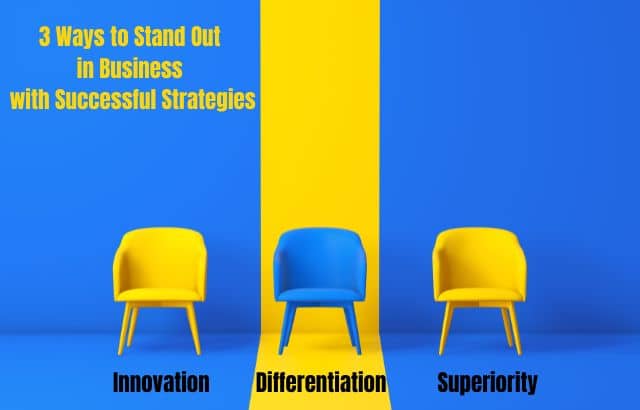
Standing out is not simply a marketing problem. It can involve strategy, positioning, customer psychology, operations, communication, innovation, technology, leadership, and financial planning.
A business strategist such as Hirav Shah can approach the challenge by examining the business from multiple angles.
1. Market Positioning
A strategist can help identify how a business is positioned relative to competitors and whether its message is sufficiently clear to its target audience.
2. Customer Understanding
Understanding customer expectations, frustrations, decision-making patterns, and purchasing barriers can help a business create more relevant products, services, and communication.
3. Differentiation
A strategist can help identify meaningful points of difference rather than relying on generic claims such as “quality,” “trust,” “innovation,” or “excellent service,” which competitors can also use.
4. Growth Planning
Business growth should be connected to measurable objectives. A strategist can help convert broad ambitions into specific initiatives, timelines, resource requirements, and performance indicators.
5. Innovation
Innovation does not always mean inventing an entirely new product. It can involve changing a process, improving customer experience, creating a new service model, using technology differently, or discovering a new distribution channel.
6. Decision-Making
Entrepreneurs often have many ideas but limited time and resources. Strategic thinking can help separate urgent activities from important activities and identify which initiatives deserve deeper analysis.
7. Competitive Analysis
A business strategist can help an organization examine competitors’ offerings, positioning, communication, customer experience, pricing structures, distribution methods, and areas of specialization.
The objective is not to copy competitors. It is to understand the market clearly enough to identify opportunities for meaningful differentiation.
A Practical Formula for Making Your Business Stand Out
Businesses can think about differentiation through a simple framework:
Attention + Relevance + Trust + Experience + Innovation = Stronger Differentiation
For example, a company may attract attention through useful content, create relevance by addressing a specific customer problem, build trust through transparent communication, strengthen its position through excellent customer experience, and continue differentiating through innovation.
This is not a mathematical formula that guarantees business success. It is a strategic framework for thinking about the different elements that influence how customers perceive a company.
Business Calculation: From Attention to Revenue
Consider a hypothetical business with the following monthly numbers:
- 10,000 website visitors.
- 3% enquiry conversion rate.
- 300 enquiries.
- 20% enquiry-to-customer conversion rate.
- 60 new customers.
- ₹5,000 average contribution per customer.
The estimated monthly contribution would be:
60 customers × ₹5,000 = ₹3,00,000.
Now imagine improved customer-focused communication increases the website enquiry conversion rate from 3% to 4% while traffic remains at 10,000 visitors.
10,000 × 4% = 400 enquiries.
If the enquiry-to-customer conversion rate remains 20%:
400 × 20% = 80 customers.
At ₹5,000 contribution per customer:
80 × ₹5,000 = ₹4,00,000.
The difference would be:
₹4,00,000 − ₹3,00,000 = ₹1,00,000 additional monthly contribution.
This is an illustrative calculation rather than a guarantee. It demonstrates how a relatively small improvement in conversion can have a significant effect when multiplied across a larger customer base.
How to Measure Whether Your Business Is Standing Out
Making a business stand out should not be based only on subjective impressions. Businesses can track measurable indicators to understand whether their positioning and communication are creating meaningful changes.
- Website traffic: How many relevant people are visiting?
- Engagement: Are people reading, watching, commenting, sharing, or saving your content?
- Enquiry conversion: What percentage of visitors become enquiries?
- Customer acquisition cost: How much does it cost to acquire a customer?
- Customer retention: How many customers continue doing business with you?
- Repeat purchases: How frequently do existing customers return?
- Referrals: How many new customers come through existing customers?
- Average order value: How much does the average customer purchase?
- Response time: How quickly does your business respond to customers?
- Customer feedback: What do customers consistently praise or criticize?
5 Tips to Make Your Business Stand Out: Quick Action Plan
- Understand your buyers: Identify their problems, expectations, language, motivations, and objections.
- Stop talking only about products: Communicate customer benefits, outcomes, solutions, and experiences.
- Educate instead of constantly selling: Publish useful information that demonstrates expertise.
- Respond to relevant developments: Build the ability to communicate in a timely manner when market conditions or customer conversations change.
- Experiment with new communication methods: Test new ideas in controlled ways, measure the results, and learn from the data.
5 Tips to Make Your Business Stand Out: FAQs and Insights by Hirav Shah

How can I make my business stand out from competitors?
Answer: Start by understanding exactly what your target customers value. Develop a clear value proposition, create consistent branding, provide a strong customer experience, publish useful content, communicate where your customers spend time, and continue improving your products and processes. Differentiation becomes stronger when your business can demonstrate a meaningful difference rather than simply claiming to be different.
What is a unique value proposition and why is it important?
Answer: A unique value proposition explains what your business offers, who it serves, and why the offering is relevant to that audience. It helps customers quickly understand what makes your business different. A strong value proposition should be specific enough to communicate a meaningful benefit rather than relying on generic promotional words.
How does high-quality branding help my business stand out?
Answer: High-quality branding can create recognition and consistency across your website, packaging, social media, advertising, customer communications, and physical locations. A memorable visual identity combined with a clear brand story can make it easier for customers to recognize your business and associate it with a particular experience or promise.
What are some ways to provide exceptional customer service?
Answer: Personalize interactions, respond promptly, communicate clearly, resolve issues efficiently, collect feedback, and make it easy for customers to receive help. Businesses can also look for opportunities to exceed reasonable customer expectations. Customer service should not be treated as an isolated department; it is part of the overall customer experience.
How can social media help my business stand out?
Answer: Social media can help businesses communicate directly with audiences, share educational content, respond to questions, demonstrate expertise, showcase customer experiences, and participate in relevant conversations. The objective should not be to post simply for the sake of posting. Each communication should have a clear purpose.
Why is continuous innovation important for my business?
Answer: Customer expectations, technology, competitors, and market conditions continue to change. Continuous innovation allows a business to evaluate whether its products, services, processes, and communication remain relevant. Innovation can be incremental rather than revolutionary. Even small improvements can compound over time.
How can a small business compete with larger companies?
Answer: A small business can focus on areas where it can create meaningful customer value, such as specialized expertise, personalization, speed of response, niche positioning, community relationships, or a highly focused customer experience. Smaller organizations can also experiment with new ideas without necessarily requiring the same organizational structure as larger companies.
What should I measure when trying to make my business stand out?
Answer: Relevant metrics may include website traffic, engagement, enquiry conversion rate, customer acquisition cost, repeat purchases, customer retention, referrals, average order value, response time, customer satisfaction, and contribution per customer. The right metrics depend on the business model and strategic objective.
How often should a business review its strategy?
Answer: Businesses should continuously monitor important indicators while conducting more structured strategic reviews periodically. The frequency depends on the industry, business size, market volatility, and speed of change. A rapidly changing technology company may need a different review cycle from a stable local service business.
What is the role of a business strategist like Hirav Shah?
Answer: A business strategist can help entrepreneurs and organizations examine market opportunities, positioning, customer needs, growth plans, competitive differentiation, innovation, and strategic decision-making. Hirav Shah’s work as a business strategist focuses on helping businesses think strategically about growth, opportunities, challenges, and the decisions that can shape their future direction.
Conclusion: Make Your Business Stand Out by Creating Meaningful Value

In a crowded marketplace, standing out is not simply about making more noise. It is about becoming more relevant, useful, recognizable, trustworthy, and responsive to the people you want to serve.
Businesses need to understand that today’s customers have more information and more choices than ever. They can compare competitors, read reviews, research leadership teams, study product alternatives, watch demonstrations, ask questions publicly, and evaluate a company before ever contacting its sales team.
That changes the role of marketing and business strategy.
Instead of focusing exclusively on what the company wants to say, businesses need to understand what customers want to know. Instead of talking endlessly about products and services, organizations can demonstrate how those products and services solve meaningful problems. Instead of waiting for customers to discover them, businesses can educate their markets. Instead of ignoring real-time conversations, organizations can develop systems for identifying and responding to relevant opportunities.
Instead of allowing fear of failure to prevent experimentation, businesses can test new ideas on a manageable scale, measure outcomes, learn from the results, and improve their next decision.
Hirav Shah, as a business strategist and The Game Changer, emphasizes the importance of adapting to changing communication environments and recognizing that conversations about a business can happen whether the organization participates or not.
The strategic opportunity is therefore to listen, understand, participate, educate, innovate, and create value consistently.
The objective is not simply to be different for the sake of being different. The objective is to give customers a clear and meaningful reason to notice your business, understand your value, trust your organization, and remember the experience you provide.
Businesses that think differently, communicate intelligently, understand their customers, and act strategically can create stronger foundations for long-term differentiation and growth.