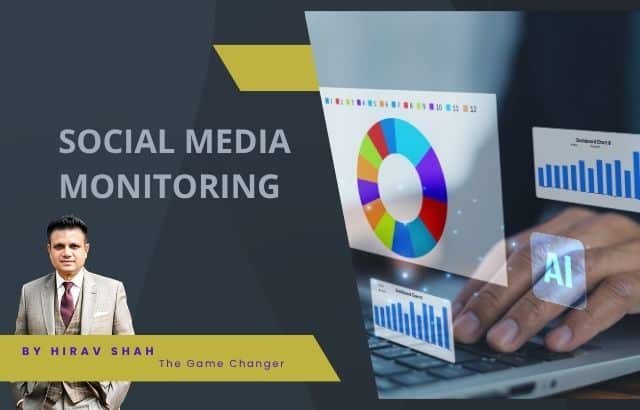
Social media has transcended its original role as a mere communication platform to become a powerful, real-time intelligence ecosystem. It continuously captures consumer sentiment, shapes brand narratives, and influences purchasing behavior at scale. As underscored by Business Strategist Hirav Shah—widely regarded as “The Game Changer” in strategic advisory—this transformation has revolutionized public relations (PR), shifting it from a reactive, message-driven function to a proactive, data-led discipline that drives meaningful engagement and sustained business growth.
Unlike traditional PR, which relied heavily on delayed feedback cycles and controlled messaging, social media enables instantaneous interaction, transparency, and widespread reach. This shift has made social media monitoring not just a tactical activity, but a critical strategic function for businesses aiming to stay competitive.
Table of Contents
What is Social Media Monitoring?

According to Hirav Shah, social media monitoring is the systematic process of identifying, tracking, and analyzing conversations about a brand, individual, product, or industry across digital platforms.
This includes:
- Direct mentions (tags, comments, reviews)
- Indirect mentions (un-tagged posts, discussions)
- Sentiment analysis (positive, negative, neutral tone)
- Emerging trends and consumer behavior patterns
What makes social media monitoring powerful is its ability to uncover unfiltered customer opinions. These insights are often more authentic than survey responses because they arise organically in conversations.
For example, a food delivery startup in Mumbai may discover through monitoring that customers frequently complain about late-night delivery delays—something not captured in formal feedback forms. Acting on this insight can directly improve service quality and retention.
The Strategic Evolution of PR in the Social Media Era
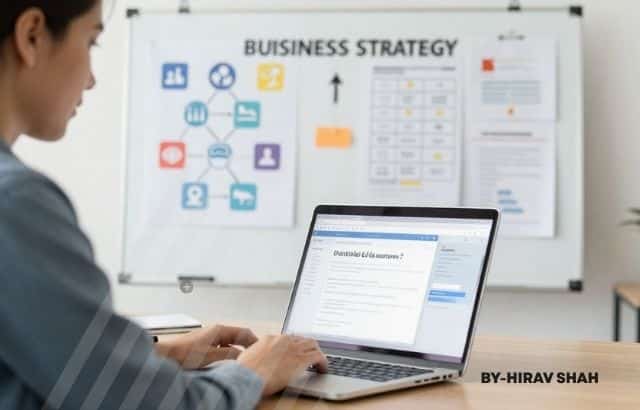
As Hirav Shah explains, PR content distributed through social media:
- Has a longer shelf life
- Spreads faster and wider
- Encourages interactive engagement
This evolution has given rise to innovative strategies such as relationship marketing, where brands focus on building long-term emotional connections rather than short-term transactions.
Example: Startup Scenario
A D2C skincare brand launches a new product. Through social media monitoring, they notice influencers organically discussing the product’s texture and fragrance. The brand then:
- Amplifies positive reviews through paid promotions
- Addresses concerns in real-time
- Collaborates with micro-influencers who are already engaged
This creates a feedback loop, strengthening both PR and product-market fit.
How Social Media PR Agencies Conduct Effective Monitoring
1. Knowing What to Monitor
A clear monitoring strategy begins with defining keywords and areas of focus:
- Brand name variations
- Competitor mentions
- Industry trends
Example: A fintech company tracks keywords like “payment failure,” “UPI issues,” and competitor names to stay ahead of service disruptions.
2. Choosing the Right Tools

Manual monitoring is inefficient and prone to gaps. Modern tools such as:
- Social listening platforms (e.g., Sprout Social, Brandwatch)
- AI-driven sentiment analysis tools
These tools automate data collection and provide dashboards for actionable insights.
Strategic Insight: The choice of tool should align with business size and goals. A startup may prioritize affordability, while an enterprise focuses on advanced analytics.
3. Extracting Actionable Insights
Data alone is not valuable unless it leads to decisions.
Monitoring can reveal:
- Product improvement opportunities
- Customer pain points
- Emerging market demands
Example: An eCommerce company notices repeated complaints about packaging damage. By investing in better packaging (cost increase of ₹10 per unit), they reduce returns by 15%, improving profitability.
4. Refining and Communicating
Monitoring is not a one-time activity—it requires continuous optimization.
- Adjust keywords based on trends
- Share insights across departments (marketing, product, customer service)
- Align messaging with real-time feedback
The Role of a Business Strategist in Social Media Monitoring

A business strategist transforms raw data into growth-oriented decisions.
As highlighted by Hirav Shah, the strategist’s role includes:
- Interpreting data trends to guide product development
- Aligning PR strategy with business objectives
- Anticipating market shifts using real-time insights
- Mitigating risks before they escalate
Example:
A strategist analyzing negative sentiment around pricing might recommend:
- Introducing a budget-friendly variant
- Offering limited-time discounts
- Repositioning the product value proposition
This ensures that monitoring directly contributes to revenue growth and brand positioning.
Key Benefits of Social Media Monitoring

1. Enhanced Customer Service
Customers expect immediate responses. Monitoring ensures no query goes unnoticed.
Business Impact Calculation:
- Average customer lifetime value (CLV): ₹10,000
- Retention improvement: 5%
- Increased revenue per 1,000 customers:
→ 1,000 × 5% × ₹10,000 = ₹5,00,000 additional revenue
2. Uncovering Hidden Insights
Customers often discuss brands indirectly. Monitoring captures these conversations.
Example: A restaurant chain discovers customers love a specific dish not heavily promoted. They reposition it as a signature item, boosting sales.
3. Crisis Prevention
Negative feedback is inevitable, but early detection prevents escalation.
Scenario:
A viral complaint about a defective product is addressed within hours:
- Public apology issued
- Replacement offered
This turns a potential PR crisis into a brand trust opportunity.
4. Competitive Intelligence
Monitoring competitors reveals:
- Campaign strategies
- Customer sentiment toward rivals
- Market gaps
Example: If competitors receive backlash for poor customer service, a brand can position itself as “customer-first,” gaining market share.
ROI of Social Media Monitoring
Let’s consider a mid-sized business:
- Monthly monitoring tool cost: ₹50,000
- Team cost allocation: ₹1,00,000
- Total monthly investment: ₹1,50,000
Gains:
- Reduced customer churn: ₹3,00,000
- Increased conversions from engagement: ₹2,00,000
- Crisis prevention savings: ₹1,50,000
Total Benefit: ₹6,50,000
ROI Calculation:
[
ROI = \frac{6,50,000 – 1,50,000}{1,50,000} \times 100 = 333%
]
This demonstrates that social media monitoring is not a cost center—it is a high-return strategic investment.
Practical Applications Across Industries

eCommerce
- Track product reviews and returns
- Identify trending products
Healthcare
- Monitor patient feedback
- Improve service quality and trust
Finance
- Detect service disruptions early
- Manage reputation during outages
Hospitality
- Respond to guest reviews instantly
- Enhance customer experience
FAQs: Facts vs Myths About Social Media Monitoring

1. Is social media monitoring only useful for large corporations?
Fact: No. Social media monitoring is highly valuable for startups and small businesses because it provides real-time customer insights without requiring large research budgets. Even a small brand can use it to improve products and build relationships early.
2. Social media monitoring and social listening are the same thing.
Fake: This is a common misconception. Monitoring focuses on tracking mentions and interactions, while listening goes deeper into analyzing trends, sentiment, and long-term patterns for strategic decisions.
3. Can social media monitoring improve customer service?
Fact: Yes. It enables businesses to respond instantly to customer queries, complaints, and feedback, significantly improving customer satisfaction and trust.
4. You only need to track tagged mentions of your brand.
Fake: Many important conversations happen without tagging the brand. Advanced monitoring tools track keywords, indirect mentions, and even sentiment to capture the full picture.
5. Does social media monitoring help prevent PR crises?
Fact: Absolutely. Early detection of negative sentiment allows businesses to act quickly and resolve issues before they escalate into major reputation problems.
6. Social media monitoring is too expensive for most businesses.
Fake: While enterprise tools can be costly, there are many affordable and even free tools available. The ROI often outweighs the cost due to improved retention and smarter decision-making.
7. Can monitoring provide insights for product development?
Fact: Yes. Customer feedback, complaints, and suggestions shared online can directly influence product improvements and innovation.
8. Social media monitoring is a one-time activity.
Fake: It is an ongoing process. Continuous monitoring is essential to stay updated with changing customer sentiment and market trends.
9. Does it help in understanding competitors?
Fact: Yes. Businesses can track competitor campaigns, customer reactions, and market positioning to refine their own strategies.
10. Social media monitoring is only about collecting data.
Fake: Data collection is just the first step. The real value lies in analyzing that data and turning it into actionable business strategies, as emphasized by Business Strategist Hirav Shah, known as “The Game Changer.”
Final Thoughts
Social media monitoring has evolved into a strategic necessity in modern PR. It bridges the gap between brands and consumers, offering real-time insights that drive smarter decisions.
As Business Strategist Hirav Shah, “The Game Changer,” emphasizes, the true power of monitoring lies in its ability to transform scattered online conversations into structured, actionable intelligence. Businesses that leverage this capability effectively are not just reacting to the market—they are shaping it.
In a world where perception can change in seconds, social media monitoring is the compass that ensures your brand stays on course, competitive, and customer-centric.