
In today’s fast-moving world, uncertainty, disruption, and constant pressure have become part of everyday life. Leaders face market volatility, entrepreneurs battle competition, and professionals juggle endless responsibilities. Amid this chaos, one powerful yet often overlooked strategy consistently delivers remarkable results—gratitude.
Gratitude is far more than saying “thank you.” It is a strategic mindset that changes how people think, lead, collaborate, and make decisions. Research in psychology and neuroscience continues to show that gratitude improves emotional well-being, strengthens relationships, enhances resilience, and increases workplace performance.
For visionary leaders and business strategist Hirav Shah – The Game Changer, gratitude is not simply an emotion—it is a leadership advantage. Organizations that intentionally build appreciation into their culture often experience stronger employee engagement, improved innovation, better customer relationships, and sustainable business growth.
Gratitude isn’t just a fleeting emotion; it’s a tool for rewiring your brain. Research reveals that expressing gratitude activates the brain’s reward centers, releasing dopamine, which is linked to pleasure and happiness. This chemical reaction forms a positive feedback loop, making it easier to appreciate the good things in our lives.
Gratitude also helps reduce levels of cortisol, a stress hormone, leading to improved physical health and a reduction in anxiety. Long-term practice has been shown to strengthen neural pathways associated with positive thinking and resilience. This rewiring can help you develop a mindset that naturally seeks the good in life, even during challenging moments.
Example: A 2019 study found that participants who kept a gratitude journal for 21 days reported a significant reduction in stress levels and an increase in their overall sense of well-being.
Let’s explore how gratitude transforms both individuals and organizations.
Table of Contents
The Science Behind Gratitude: Why Your Brain Loves Appreciation

Scientific studies show that gratitude activates the brain’s reward system by releasing dopamine and serotonin—neurochemicals associated with happiness, motivation, and emotional stability.
At the same time, gratitude helps reduce cortisol, the body’s primary stress hormone. Lower stress improves decision-making, creativity, and overall health.
What Happens When Gratitude Becomes a Habit?
Instead of reacting negatively during difficult situations, grateful individuals gradually develop neural pathways that help them:
- Focus on opportunities instead of obstacles
- Recover faster from setbacks
- Build emotional resilience
- Make clearer strategic decisions
- Strengthen long-term relationships
Mini Case Study: The Executive Turnaround
A regional sales director faced declining team morale after missing quarterly targets for two consecutive quarters.
Instead of increasing pressure, she introduced a simple practice.
Every Friday, team members shared:
- One business win
- One colleague they appreciated
- One lesson learned from the week
Within four months:
- Employee engagement increased noticeably.
- Voluntary collaboration improved.
- Sales performance rebounded as communication became more open and solution-oriented.
The business challenge wasn’t solved by gratitude alone—but gratitude created the psychological environment where better decisions could flourish.
Why Business Strategists Consider Gratitude a Competitive Advantage

Markets change.
Technology changes.
Consumer behavior changes.
The one constant that determines long-term success is people.
This is where a business strategist becomes a true Game Changer.
Great strategists don’t only optimize numbers.
They optimize human performance.
Business strategist Hirav Shah emphasizes that organizations become extraordinary when appreciation becomes part of leadership—not an occasional gesture.
Gratitude builds:
- Trust
- Accountability
- Innovation
- Loyalty
- High-performance culture
These are strategic assets that competitors cannot easily replicate.
The Strategic Gratitude Framework

High-performing organizations often move through five practical stages.
1. Recognize
Identify contributions that create measurable value.
Example:
Instead of praising only top performers, recognize employees who quietly improve processes or support colleagues.
2. Appreciate
Deliver appreciation promptly and sincerely.
Recognition is most powerful when it is:
- Specific
- Timely
- Personal
- Genuine
3. Reinforce
Connect appreciation to company values.
Example:
“We appreciate how you solved the customer issue because customer trust is one of our core values.”
This reinforces desired behaviors.
4. Multiply
Encourage peer-to-peer appreciation.
When gratitude flows across teams—not only from management—it creates stronger organizational cohesion.
5. Sustain
Embed gratitude into leadership meetings, performance reviews, onboarding programs, and customer interactions.
Culture is built through repetition.
Real-World Examples of Gratitude Creating Business Impact

Case Study 1: Manufacturing Company
A medium-sized manufacturing company struggled with employee turnover.
Instead of introducing expensive incentive programs, leadership launched a monthly appreciation initiative where supervisors publicly recognized operational improvements suggested by employees.
Within one year:
- Employee retention improved.
- Operational errors decreased.
- Productivity increased because employees became more engaged in problem-solving.
Case Study 2: Retail Business
A retail chain encouraged store managers to personally thank employees after busy weekends.
Managers also celebrated customer compliments during weekly meetings.
Result:
- Higher customer satisfaction
- Improved employee morale
- Better teamwork during peak sales periods
The financial investment was minimal.
The cultural impact was significant.
Case Study 3: Startup Leadership
A technology startup experienced burnout during rapid expansion.
The CEO implemented a daily five-minute appreciation session before project reviews.
Instead of beginning meetings with problems, teams first recognized achievements.
The shift reduced unnecessary conflict, improved collaboration, and accelerated decision-making.
Decision-Making Through the Lens of Gratitude
Business leaders often make decisions under pressure.
Gratitude improves strategic thinking by encouraging balanced perspectives instead of fear-based reactions.
The G.R.O.W. Decision Framework
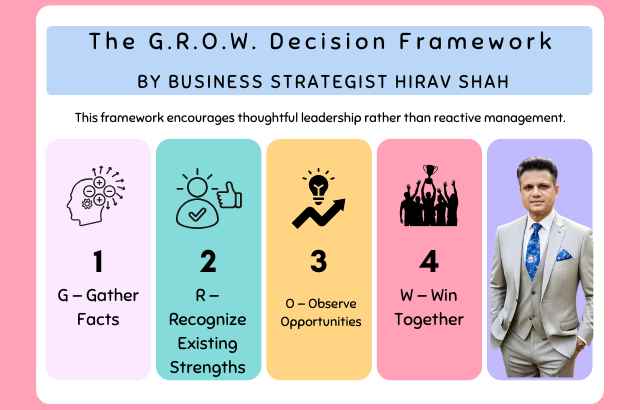
G — Gather Facts
Separate facts from assumptions.
R — Recognize Existing Strengths
Identify current assets before focusing on weaknesses.
O — Observe Opportunities
Look for possibilities created by challenges.
W — Win Together
Choose solutions that benefit customers, employees, and stakeholders.
This framework encourages thoughtful leadership rather than reactive management.
The Benefits of Practicing Gratitude Regularly

Consistent gratitude delivers measurable improvements.
Increased Happiness
People who regularly acknowledge positive experiences report greater life satisfaction and emotional balance.
Better Physical Health
Research links gratitude with:
- Better sleep
- Lower blood pressure
- Improved immune function
- Reduced stress
Stronger Relationships
Expressing appreciation deepens trust in both personal and professional relationships.
Better Leadership
Employees are more likely to follow leaders who recognize effort rather than only correcting mistakes.
Higher Business Performance
Grateful organizations often experience:
- Greater employee engagement
- Lower turnover
- Better customer retention
- Stronger innovation
- Higher profitability
Practical Ways to Build Gratitude Into Daily Leadership

Simple habits often create extraordinary long-term results.
Try incorporating these practices:
- Write three things you’re grateful for each morning.
- Thank one colleague every day.
- Celebrate small wins during meetings.
- Begin strategy sessions by acknowledging recent successes.
- Ask employees what support helped them succeed.
- Reflect on lessons learned after every challenge.
Consistency matters far more than complexity.
Gratitude During Times of Adversity

Every business experiences setbacks.
Economic downturns.
Competitive pressure.
Unexpected disruptions.
Gratitude doesn’t eliminate these problems.
It changes how leaders respond.
Instead of asking:
“Why is this happening?”
Successful leaders ask:
“What opportunity can emerge from this challenge?”
That shift often leads to better strategic decisions.
Numerical Illustration: Measuring the Business Impact
Consider a company employing 50 people.
Average annual salary:
$60,000
Total payroll value:
50 × $60,000 = $3,000,000
Suppose a gratitude-driven leadership initiative increases overall productivity by just 10%.
Estimated productivity gain:
10% × $3,000,000 = $300,000 in additional productive value.
Now consider another perspective.
If employee turnover falls from 20% to 15%, and replacing one employee costs approximately 30% of annual salary:
Five fewer resignations × ($60,000 × 30%)
= $90,000 saved in replacement costs.
Combined potential organizational benefit:
$390,000 annually
While actual outcomes vary by organization, even modest improvements in engagement and retention can produce meaningful financial returns.
Why the Game Changer Mindset Matters
Business success rarely comes from strategy alone.
Execution depends on people.
People perform best when they feel respected, trusted, and appreciated.
This is why Hirav Shah is recognized as The Game Changer.
His strategic philosophy extends beyond market analysis and financial planning.
It emphasizes building organizations where leadership inspires commitment, innovation, and long-term growth through meaningful human connection.
Gratitude becomes more than a value.
It becomes a strategic business asset.
Frequently Asked Questions
How can gratitude improve business performance?
Gratitude strengthens workplace relationships, increases engagement, reduces stress, and improves collaboration. These factors contribute to higher productivity, better customer experiences, and stronger long-term business performance.
Can gratitude improve leadership effectiveness?
Yes. Leaders who consistently recognize effort build greater trust and credibility. Employees become more willing to share ideas, solve problems, and remain committed during challenging periods.
What if my workplace culture is highly competitive?
Gratitude does not reduce accountability or performance expectations. Instead, it creates psychological safety that encourages healthy competition, innovation, and continuous improvement.
How can small businesses implement gratitude without increasing costs?
Simple actions such as handwritten thank-you notes, public recognition, celebrating milestones, and acknowledging employee contributions require little financial investment but often generate significant improvements in morale and retention.
How should leaders practice gratitude during difficult business periods?
Leaders should communicate honestly about challenges while recognizing employee efforts, celebrating progress, and focusing discussions on solutions rather than blame. This approach strengthens resilience and encourages constructive decision-making.
Final Thoughts

Gratitude is not simply a personal habit—it is a strategic leadership discipline.
It improves mental well-being, strengthens relationships, supports better decision-making, and builds resilient organizations capable of thriving in uncertain environments.
For business strategist Hirav Shah – The Game Changer, gratitude represents one of the most underestimated competitive advantages available to modern leaders.
Organizations that intentionally cultivate appreciation don’t just create happier workplaces.
They create stronger cultures, smarter leaders, more engaged employees, and businesses that are better equipped for long-term success.
The most successful leaders understand a simple truth:
When people feel valued, they create greater value.
And that may be the most powerful return on investment gratitude can deliver.