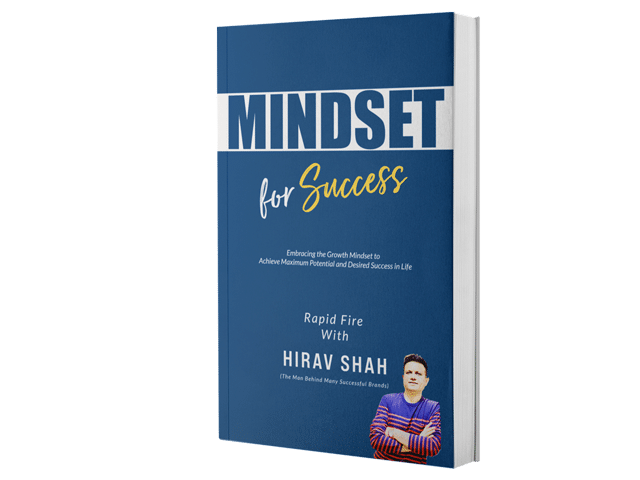

Having the right attitude for success is not something people are simply born with—it is a skill that can be learned, practiced, and mastered over time. While it may sound simple, building a success-oriented mindset is a lifelong process that requires awareness, discipline, and consistent effort.
According to Hirav Shah, often referred to as The Game Changer, your attitude acts like a mental operating system. Just like software determines how a computer performs, your attitude determines how you respond to opportunities, challenges, and setbacks.
Table of Contents
Why Attitude Matters More Than Talent

Many people believe success depends on intelligence, luck, or connections. While these factors may help, attitude plays a far bigger role.
Example:
- Two employees join the same company.
- Person A complains about workload, avoids challenges, and blames others.
- Person B takes initiative, learns new skills, and stays solution-focused.
After 2 years:
- Person A remains in the same role.
- Person B gets promoted.
Difference? Attitude.
The Role of a Business Strategist in Shaping Attitude

A business strategist like Hirav Shah emphasizes that attitude is not just personal—it directly impacts professional growth and business outcomes.
Key Roles of a Business Strategist in Mindset Development:
- Clarity Builder
- Helps individuals define goals clearly.
- Example: Turning “I want success” into “I want to grow my revenue by 20% in 12 months.”
- Reality Checker
- Identifies negative patterns like procrastination or fear.
- Example: Showing a business owner how fear of failure is blocking expansion.
- Strategy Designer
- Aligns mindset with actionable plans.
- Example: Breaking big goals into weekly measurable tasks.
- Performance Optimizer
- Tracks progress and adjusts behavior patterns.
- Example: Using weekly reviews to improve decision-making.
8 Practical Steps to Build the Right Attitude for Success
1. Opt – Choose Your Attitude

Decide the kind of person you want to become.
Example:
- Instead of reacting with anger, choose patience and problem-solving.
2. Track – Set Measurable Goals

Goals act as your roadmap.
Simple Calculation Example:
- Goal: Increase productivity by 25%
- Current output: 40 tasks/week
- Target: 40 + (25% of 40) = 40 + 10 = 50 tasks/week
3. Write – Maintain a Progress Journal

Writing helps reinforce discipline.
Example Entry:
- Today I stayed calm during a conflict → Progress in emotional control.
4. See – Visualize Success

Visualization trains your brain to believe success is achievable.
Example:
- A salesperson visualizing closing deals becomes more confident during real pitches.
5. Leave – Eliminate Negative Patterns

Let go of habits that slow your growth.
Example:
- Replace “I can’t do this” with “I will learn how to do this.”
6. Praise – Practice Positive Self-Talk

Example:
- Instead of “I failed,” say “I learned something valuable.”
7. View – Use Affirmations

Affirmations reprogram your subconscious.
Example Affirmation:
- “I am consistent, focused, and improving every day.”
8. Act – Become Before You Become

Act like the person you want to be.
Example:
- Want to be a leader? Start taking responsibility before you get the title.
How Attitude Impacts Results (With Numbers)
Let’s break it down with a simple model:
| Factor | Negative Attitude | Positive Attitude |
|---|---|---|
| Daily effort | 60% | 90% |
| Skill growth/month | +2% | +8% |
| Performance after 1 year | ~24% improvement | ~96% improvement |
Conclusion: Small daily mindset differences create massive long-term results.
Real-Life Example
Case: Small Business Owner
- Initially: Fearful of investment → stagnant growth
- After mindset shift:
- Invested ₹50,000 in marketing
- Monthly revenue increased from ₹1,00,000 to ₹1,60,000
ROI Calculation:
- Profit increase = ₹60,000/month
- Investment recovery time = ₹50,000 ÷ ₹60,000 ≈ 1 month
Lesson: Right attitude leads to smart decisions.
Final Thoughts

As Hirav Shah explains, your attitude defines your world. Reality may remain the same, but how you respond to it changes everything.
A positive and growth-oriented attitude:
- Improves decision-making
- Strengthens relationships
- Boosts productivity
- Creates long-term success
- Most importantly, increases happiness
FAQs

1. Can attitude really be developed?
Yes. Just like any skill, attitude improves with consistent practice and awareness.
2. How long does it take to change mindset?
It varies, but noticeable changes can occur within 21–90 days with daily effort.
3. What is the biggest barrier to a positive attitude?
Negative self-talk and fear of failure.
4. How can I stay consistent?
- Set small goals
- Track progress
- Celebrate small wins
5. Does attitude affect financial success?
Absolutely. Better attitude → better decisions → better results → higher income.
Closing Insight

Success is not just about what you do—it’s about how you think while doing it. Master your attitude, and you gain control over your growth, your career, and your life.