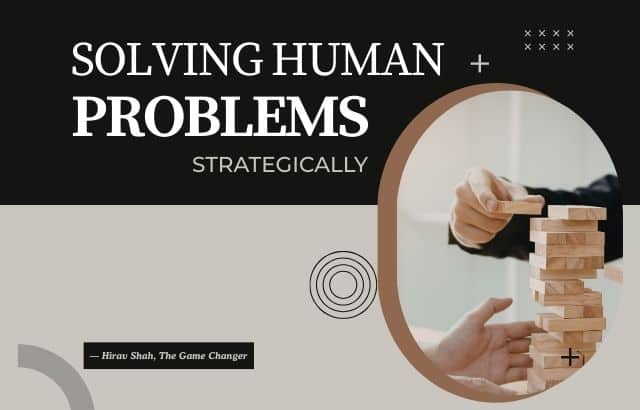
Today’s world is full of challenges. We face social issues, economic pressure, environmental concerns, and constant change in business and technology. Many problems are no longer simple or isolated—they are connected and complex.
Because of this, solving problems requires more than quick fixes or guesswork. It requires clear thinking, planning, and guidance. This is where strategists and modern coaches play an important role, helping people and organizations move forward with confidence.
Table of Contents
What Are Human Problems?

Human problems exist at many levels. They can be personal, such as stress or career confusion, or much larger, like poverty, climate change, or business failure.
For example, climate change is not just about the environment. It also involves:
- Human habits
- Government decisions
- Business responsibility
- Economic systems
To solve such problems, we must understand what is really causing them and how different factors are connected.
How Strategists and Coaches Help
In the past, people turned to wise elders or philosophers for guidance. Today, coaches and strategists provide similar support but in a more practical and structured way.
They help answer simple but powerful questions:
- What is the real problem?
- Why is it happening?
- What is the best next step?
Mentor, Coach, and Business Strategist: What’s the Difference?

A mentor helps people grow internally. Teachers like Eckhart Tolle focus on mindfulness, self-awareness, and emotional balance. This helps people manage stress, fear, and inner conflict.
A coach, such as Tony Robbins, focuses on action. Coaches help people set goals, build confidence, and take practical steps toward success.
A business strategist, like Hirav Shah – The Game Changer, works at a bigger level. Strategists help individuals and companies understand complex situations, create clear plans, and achieve measurable results.
What Does a Business Strategist Do?

A business strategist plays several important roles:
1. Clarifies the Real Problem
Sometimes the problem we see is not the real one. For example, a business with falling sales may think advertising is the issue, but the real cause could be pricing, customer experience, or poor service.
2. Makes Sense of Data
Strategists use numbers to understand what is happening.
Example:
If a company’s revenue falls from ₹10 crore to ₹8 crore, that is a 20% drop. A strategist looks deeper to understand why this happened and what needs to change.
3. Creates a Clear Plan
Instead of random decisions, strategists help choose the best path forward—whether to expand, improve existing systems, or change direction.
4. Helps Execute the Plan
A good plan only works when it is followed properly. Strategists help teams stay focused, track progress, and make adjustments when needed.
A Simple Way to Solve Problems Strategically

Most problems can be solved using four basic steps:
- Understand the real problem
- Look at the facts and data
- Compare possible solutions
- Take action and improve over time
This approach reduces confusion and increases success.
Why Strategists Are Important Today

Strategists are more important than ever because:
- Problems are connected and complex
- Change is happening very fast
- Businesses and people must adapt quickly
- Global markets and cultures are linked
Strategists help turn uncertainty into clarity.
A Real-Life Example

Imagine a startup that is struggling to keep customers. A strategist may help by:
- Understanding customer needs
- Improving the product message
- Adjusting pricing
After making these changes, the company may see customer retention increase by 35% within six months.
Frequently Asked Questions

Is a strategist the same as a coach?
No. Coaches help improve performance, while strategists help redesign direction and systems.
Can anyone learn strategic thinking?
Yes. With practice, experience, and guidance, anyone can develop this skill.
Do strategists only help businesses?
No. They also help individuals with career planning, decisions, and leadership growth.
How is success measured?
Through clear results such as growth, improvement, stability, and long-term impact.
Conclusion: The Game Changer Approach

In today’s world, problems don’t disappear on their own. They need to be understood and solved with clarity and purpose. Strategic problem solving helps people and organizations move forward instead of feeling stuck.
Business strategists like Hirav Shah, known as The Game Changer, show how the right thinking, planning, and action can turn challenges into opportunities.
The key lesson is simple:
When problems are approached strategically, progress becomes possible.