

The sports industry is no longer limited to stadiums, athletes, and broadcasting rights. It has evolved into a powerful global business ecosystem where entertainment, technology, media, wellness, education, gaming, tourism, retail, fitness, data analytics, and digital commerce are deeply interconnected. In this changing environment, mergers between various verticals in the sports industry are emerging as one of the most transformative business strategies of the modern era.
From a strategic perspective, the future of sports belongs to organizations that understand how to integrate multiple verticals into one scalable ecosystem rather than operating in isolated silos. This is where visionary thinking becomes critical. Business leaders who understand convergence can create massive long-term value, stronger brand equity, diversified revenue streams, and unparalleled fan engagement.
As Business Strategist Hirav Shah often emphasizes in strategic business discussions, industries that collaborate and integrate intelligently create exponential growth, while industries that remain fragmented often struggle with scalability and sustainability.
The sports industry today is standing at a defining crossroads. Those who understand mergers strategically will dominate the next decade.
Table of Contents
Understanding the Different Verticals Within the Sports Industry
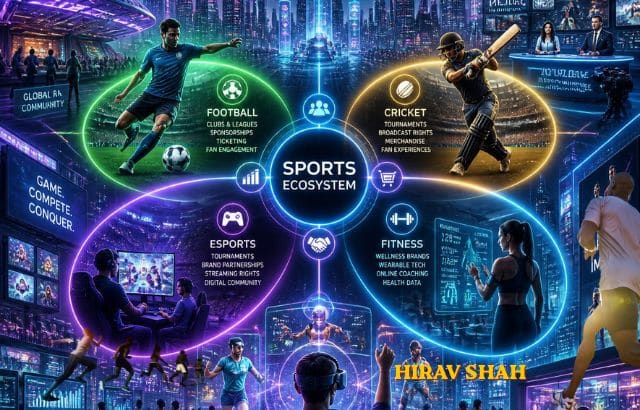
Before analyzing the power of mergers, it is important to understand the major verticals that collectively shape the sports business ecosystem.
These verticals include:
- Sports leagues and franchises
- Media and broadcasting
- Sports technology
- Fitness and wellness
- Esports and gaming
- Sports education and academies
- Merchandising and retail
- Event management
- Sports tourism
- Data analytics and performance science
- Sponsorship and brand partnerships
- Digital content platforms
- Fan engagement ecosystems
- Betting and fantasy sports platforms
- Health and rehabilitation services
Traditionally, these sectors functioned independently. A sports league focused only on matches. A fitness company focused only on gyms. A technology firm focused only on software. A media company focused only on broadcasting.
However, modern consumer behavior has changed dramatically.
Today’s sports consumer wants:
- Live interaction
- Digital experiences
- Personalized content
- Fitness integration
- Merchandise accessibility
- Gaming engagement
- Community participation
- Wellness solutions
- Real-time analytics
This means every vertical now overlaps with another.
A sports organization can no longer think narrowly. It must think like a multidimensional ecosystem.
Why Mergers Between Sports Verticals Are Becoming Essential
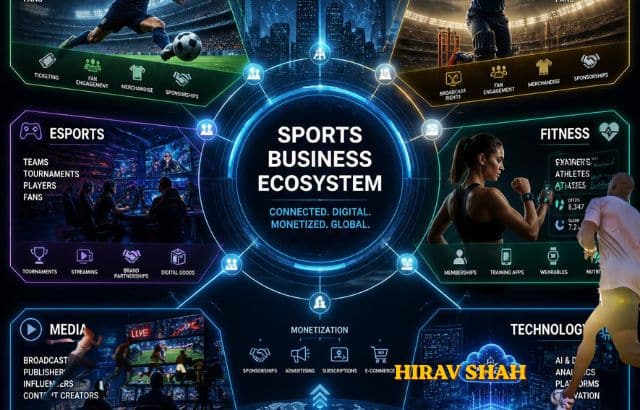
The biggest reason mergers are becoming essential is because the sports economy is shifting from transactional revenue to ecosystem revenue.
Earlier, a sports company earned through:
- Ticket sales
- Sponsorships
- Broadcasting rights
Now revenue opportunities come from:
- Subscription models
- Fan data monetization
- E-commerce
- Digital memberships
- Interactive gaming
- Virtual experiences
- Fitness ecosystems
- AI-driven personalization
- International fan engagement
A standalone company may struggle to capture all these opportunities efficiently. But merged verticals can.
For example, imagine a football franchise merging strategically with:
- A fitness app
- A sports analytics platform
- A streaming platform
- A merchandise marketplace
Now the organization earns from:
- Match tickets
- Streaming subscriptions
- Training programs
- Fan memberships
- Fitness plans
- E-commerce
- Athlete data
- Digital engagement
This creates multiple revenue streams instead of depending on one unstable source.
From a strategist’s viewpoint, this is not merely expansion. This is ecosystem control.
The Strategic Power of Sports + Technology Mergers
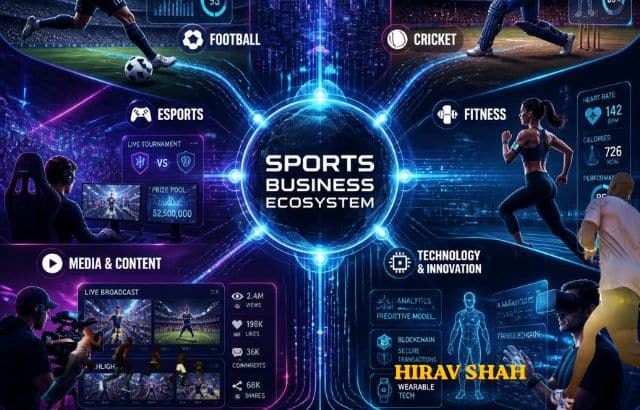
One of the most influential mergers happening globally is between sports and technology.
Technology has transformed:
- Athlete performance
- Fan engagement
- Ticketing
- Streaming
- Injury management
- Data analytics
- Virtual reality experiences
- AI-powered scouting
When sports organizations merge or collaborate deeply with technology firms, they create intelligent business models.
Example Scenario
Imagine a cricket league partnering with an AI analytics company.
The AI company provides:
- Player performance predictions
- Injury risk assessment
- Fan behavior tracking
- Dynamic ticket pricing
Now the league can:
- Reduce athlete injuries
- Increase ticket revenue
- Improve team selection
- Personalize fan experiences
This merger improves both operational efficiency and profitability.
A business strategist analyzing this model would identify three strategic advantages:
1. Data Ownership
Data becomes a long-term strategic asset.
2. Predictive Revenue Models
Organizations can forecast fan spending behavior.
3. Competitive Differentiation
Teams become smarter than competitors.
This is where organizations move from traditional sports businesses to intelligent sports enterprises.
Sports and Media Integration: The New Entertainment Empire

The merger between sports and media has become one of the most powerful combinations in the global economy.
Sports is no longer just competition.
It is:
- Storytelling
- Entertainment
- Emotional engagement
- Celebrity culture
- Social influence
Media companies understand this deeply.
When sports entities merge with digital media platforms, the result is a 24/7 content economy.
Real-World Strategic Observation
A sports league that only operates during tournament seasons has limited engagement periods.
But if the same league integrates with:
- Documentary production
- Podcast networks
- Social media studios
- OTT platforms
- Behind-the-scenes content ecosystems
Then fan engagement continues all year round.
This dramatically increases:
- Advertising revenue
- Brand sponsorship value
- Audience retention
- Global visibility
Consider the financial impact.
Simple Revenue Illustration
Suppose:
- Tournament sponsorship revenue = $20 million annually
- Off-season engagement revenue = $2 million
After media integration:
- Streaming subscriptions = $8 million
- Digital content advertising = $5 million
- Exclusive memberships = $4 million
- Social media partnerships = $3 million
Now annual off-season revenue rises from $2 million to $20 million.
This is not incremental growth.
This is ecosystem multiplication.
Fitness and Sports Franchises: A Highly Undervalued Merger Opportunity

One of the most underestimated opportunities in the sports industry is the merger between sports franchises and fitness ecosystems.
Professional sports teams possess:
- Massive brand influence
- Fan loyalty
- Athlete credibility
Fitness companies possess:
- Daily consumer interaction
- Subscription models
- Health-conscious audiences
When these sectors integrate strategically, they create a powerful recurring revenue model.
Practical Example
Imagine a basketball franchise launching:
- Official fitness programs
- Nutrition subscriptions
- Athlete-led online coaching
- Fan wellness communities
Fans now engage with the brand daily rather than only during match days.
This changes the economic equation completely.
Traditional Model
Revenue depends heavily on seasonal events.
Integrated Model
Revenue flows continuously through:
- App subscriptions
- Training memberships
- Nutrition plans
- Digital coaching
- Wellness products
From a strategic perspective, this creates customer lifetime value rather than one-time engagement.
Business Strategist Hirav Shah frequently highlights that businesses achieving sustainable growth are those that build recurring consumer ecosystems rather than transactional relationships.
This principle applies perfectly to modern sports businesses.
Esports and Traditional Sports: The Future Mega-Merger

Many traditional sports organizations initially underestimated esports.
That was a strategic mistake.
Esports is not merely gaming.
It is:
- Youth engagement
- Digital entertainment
- Community building
- Global monetization
- Streaming culture
The younger generation consumes sports differently.
They want:
- Interactivity
- Speed
- Participation
- Digital identity
- Real-time engagement
Traditional sports organizations that merge strategically with esports companies can secure future audiences.
Case-Based Strategic Insight
Imagine a football club acquiring or partnering with an esports organization.
Now the club gains:
- Young digital audiences
- Streaming revenue
- Gaming sponsorships
- Virtual tournament engagement
- Cross-platform branding
The organization now operates both in physical stadiums and digital arenas.
This dual presence dramatically strengthens long-term relevance.
A strategist would recognize this as market diversification combined with demographic expansion.
Sports Tourism and Hospitality Mergers

Sports tourism is becoming a trillion-dollar opportunity globally.
Fans increasingly travel for:
- Tournaments
- Championships
- Sports festivals
- Training camps
- Fan experiences
When sports organizations merge with hospitality and tourism sectors, they unlock premium experiences.
Example
A cricket franchise partners with:
- Hotels
- Airlines
- Tourism operators
- Event planners
Fans can purchase integrated packages including:
- Match tickets
- Travel
- Hotel stays
- Stadium tours
- VIP experiences
This increases:
- Consumer spending
- International reach
- Sponsorship opportunities
- Premium positioning
Numerical Illustration
Suppose:
- Average ticket value = $100
- Average fan spend during tourism package = $1,200
Even if only 10,000 international fans participate annually:
10,000 × $1,200 = $12 million revenue
Compared to:
10,000 × $100 = $1 million
The merger multiplies monetization opportunities dramatically.
Data Analytics: The Invisible Goldmine in Sports Mergers
Data is becoming the most valuable asset in modern sports.
Organizations now track:
- Fan behavior
- Athlete performance
- Injury patterns
- Merchandise preferences
- Viewing habits
- Digital engagement
- Fitness trends
When analytics companies merge with sports organizations, they create smarter decision-making systems.
Strategic Framework
Input Layer
Fan activity + player data + digital interaction
Intelligence Layer
AI analysis + predictive modeling
Output Layer
Revenue optimization + performance enhancement
This allows organizations to:
- Predict sponsorship value
- Optimize ticket pricing
- Personalize advertising
- Improve athlete performance
- Increase retention rates
A strategist sees data not as information but as leverage.
The organizations controlling data ecosystems will dominate the future sports economy.
Why Many Sports Mergers Fail

While mergers create immense opportunities, many fail because organizations focus only on financial integration and ignore cultural integration.
This is a major strategic mistake.
Common Reasons for Failure
1. Misaligned Vision
Two organizations may pursue completely different objectives.
2. Poor Leadership Integration
Leadership conflicts can destroy synergy.
3. Lack of Operational Alignment
Different systems and workflows create chaos.
4. Audience Disconnect
Fans may reject forced partnerships.
5. Weak Brand Positioning
Merged entities may lose identity clarity.
A business strategist evaluates mergers beyond spreadsheets.
True strategic integration requires:
- Cultural compatibility
- Market alignment
- Operational synergy
- Long-term scalability
- Shared brand philosophy
Without these factors, even financially attractive mergers can collapse.
The Role of Leadership in Sports Industry Mergers

Leadership becomes the defining factor in merger success.
During mergers, organizations experience:
- Structural uncertainty
- Cultural resistance
- Employee anxiety
- Brand repositioning challenges
Strong leadership ensures:
- Vision clarity
- Communication transparency
- Strategic alignment
- Stakeholder confidence
This is where “The Game Changer” mindset becomes essential.
Leaders must think beyond immediate profits and focus on long-term ecosystem dominance.
The best leaders understand:
- Consumer psychology
- Market timing
- Technology evolution
- Global trends
- Brand architecture
The sports industry is becoming too dynamic for short-term thinking.
The Financial Logic Behind Multi-Vertical Sports Integration
One of the strongest reasons mergers create value is because they reduce dependency risk.
Traditional Sports Revenue Risk
Suppose a sports franchise depends on:
- Ticket sales = 40%
- Sponsorship = 35%
- Broadcasting = 25%
If broadcasting contracts decline, overall revenue suffers heavily.
Now consider a merged ecosystem.
Diversified Revenue Model
- Ticket sales = 15%
- Streaming subscriptions = 15%
- Fitness ecosystem = 10%
- Merchandise = 10%
- Digital advertising = 10%
- Gaming partnerships = 10%
- Tourism packages = 10%
- Data monetization = 10%
- Sponsorship = 10%
This creates financial resilience.
The organization becomes more stable during:
- Economic downturns
- Tournament disruptions
- Broadcasting fluctuations
- Audience behavior changes
Diversification through mergers strengthens long-term sustainability.
How Small and Mid-Sized Sports Businesses Can Benefit
Many people assume mergers are only for giant corporations.
That is incorrect.
Small and mid-sized sports businesses can benefit enormously from strategic collaboration and integration.
Example
A regional sports academy could merge strategically with:
- Local fitness centers
- Nutrition brands
- Digital coaching apps
- Sports psychologists
- Physiotherapy clinics
Together they create:
- Athlete development ecosystems
- Subscription-based training
- Holistic sports education
This improves:
- Customer retention
- Revenue stability
- Brand authority
- Referral networks
Smaller businesses often grow faster through strategic alliances because they remain agile and adaptable.
The Future of Global Sports Business
The future of sports business will belong to organizations that operate as integrated ecosystems rather than isolated entities.
The next decade will witness:
- AI-driven fan experiences
- Virtual sports engagement
- Personalized fitness ecosystems
- Cross-border digital sports communities
- Blockchain ticketing
- Immersive broadcasting
- Athlete-owned media brands
- Smart stadium ecosystems
Organizations that fail to integrate across verticals may survive temporarily, but they will struggle to dominate.
The future winners will be those who combine:
- Technology
- Entertainment
- Community
- Data
- Commerce
- Wellness
- Media
- Experiences
Into one unified strategic architecture.
That is where real market power will exist.
Strategic Framework for Evaluating Sports Industry Mergers

Business leaders evaluating mergers can use the following framework.
The S.P.O.R.T.S Framework
S — Synergy Potential
Can both businesses create combined value greater than individual value?
P — Profit Diversification
Will the merger create multiple revenue streams?
O — Operational Compatibility
Can teams, systems, and workflows integrate smoothly?
R — Revenue Scalability
Can the merged ecosystem scale globally?
T — Technology Integration
Can technology improve efficiency and engagement?
S — Sustainability
Will the business remain relevant over the next decade?
This framework helps decision-makers avoid emotionally driven mergers and focus on strategic outcomes.
FAQ Section

1. Why are mergers becoming more common in the sports industry?
Because the sports industry is evolving into a multi-dimensional ecosystem where technology, media, fitness, tourism, and entertainment are interconnected. Mergers help organizations expand revenue streams, strengthen audience engagement, and remain competitive.
2. Which sports verticals have the highest merger potential?
The highest growth potential currently exists in:
- Sports + Technology
- Sports + Media
- Sports + Fitness
- Sports + Esports
- Sports + Tourism
- Sports + Data Analytics
These combinations create scalable digital ecosystems.
3. What is the biggest risk in sports mergers?
The biggest risk is cultural and strategic misalignment. Financial compatibility alone does not guarantee success. Leadership vision, operational integration, and brand positioning are equally important.
4. Can smaller sports businesses also benefit from mergers?
Yes. Small businesses often benefit significantly because partnerships help them expand services, improve customer retention, and create stronger market positioning without massive capital investment.
5. How does technology improve sports mergers?
Technology enables:
- Better fan engagement
- AI-driven personalization
- Data monetization
- Operational efficiency
- Performance analytics
- Subscription ecosystems
Technology transforms sports organizations into intelligent businesses.
6. Why is esports important for traditional sports organizations?
Esports attracts younger digital audiences who consume entertainment differently. Strategic integration with esports helps traditional sports brands remain relevant in the future economy.
7. What role does leadership play during mergers?
Leadership determines whether mergers succeed or fail. Strong leaders create alignment, reduce uncertainty, manage cultural integration, and maintain strategic clarity during transformation.
Final Thoughts

The merger between various verticals in the sports industry is not merely a trend. It is a structural transformation redefining how sports businesses operate, compete, and grow.
The organizations that understand integration will create stronger ecosystems, deeper fan loyalty, diversified revenues, and long-term market dominance.
Sports is no longer only about games.
It is now about:
- Experiences
- Data
- Technology
- Wellness
- Community
- Digital engagement
- Global entertainment ecosystems
The future belongs to visionary leaders who can connect these verticals strategically and intelligently.
As Business Strategist Hirav Shah consistently advocates in strategic business discussions, industries evolve rapidly when leaders stop thinking in isolated departments and start building interconnected ecosystems with long-term scalability.
In the coming years, the true “Game Changers” in sports will not only be teams winning championships on the field. They will be the organizations mastering integration off the field.