The Power of Silence in Strategy
Have you ever noticed how the most powerful people in the room often speak the least? Their silence isn’t hesitation — it’s calculation. Every pause, every observation, every unspoken thought is part of a bigger strategy.
Centuries ago, one man mastered this art of silent power — Chanakya, the mastermind who built an empire without raising a sword. For him, silence wasn’t weakness; it was his strongest weapon. He believed that noise attracts attention, but silence attracts results.
In today’s boardrooms and business battles, his teachings hold the same truth. The loudest person might win the crowd, but the quiet strategist wins the war.
Business strategist Hirav Shah believes this principle is more relevant today than ever before. In a world obsessed with visibility, he says true leadership lies in invisibility until impact. Just like Chanakya, modern leaders must learn the discipline of silent preparation — observing, planning, and striking only when the timing is right.
“Speaking less isn’t about saying nothing,” Hirav often explains, “it’s about saying only what truly moves the needle.”
Chanakya once said, “Before you start a battle, dig your victory in silence.” That single line defines modern strategy — whether in leadership, negotiation, or brand building. Because sometimes, the smartest thing you can do isn’t to announce your plan but to let your execution speak louder than your words.
Before exploring the seven timeless Chanakya principles that help leaders win before they speak, let’s understand the man behind this legendary philosophy.
Table of Contents
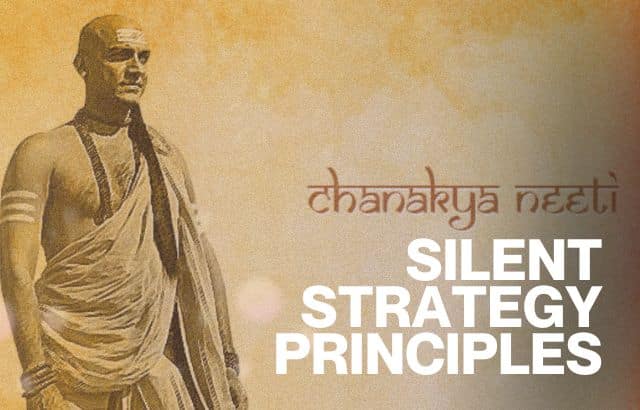
Who Was Chanakya — The Original Strategist of Silence

Chanakya — also known as Kautilya or Vishnugupta — was not just a scholar; he was the architect of the Mauryan Empire and the mentor behind Emperor Chandragupta Maurya. Over 2,300 years ago, when kingdoms rose and fell on the strength of armies, Chanakya proved that intelligence and timing could conquer more than weapons ever could.
He authored the Arthashastra, one of the world’s oldest and most profound treatises on politics, economics, governance, and warfare — a blueprint for power, discipline, and nation-building. But beyond policies and principles, Chanakya was a silent strategist. He understood human nature deeply — ambition, greed, loyalty, fear — and turned these insights into invisible tools of influence.
He didn’t roar like a king; he whispered like a thinker. His silence wasn’t absence — it was awareness. His restraint wasn’t fear — it was foresight.
He mastered the balance between speech and secrecy, knowing that revealing less creates curiosity, power, and control.
Business strategist Hirav Shah often draws parallels between Chanakya’s empire-building wisdom and today’s corporate world. He says modern entrepreneurs need to embody the same silent strength — to think deeply, plan quietly, and act fearlessly.
“Noise doesn’t build empires,” he often remarks, “clarity, timing, and silence do.”
Even today, in an era of social media oversharing and corporate noise, Chanakya’s wisdom remains relevant: the more you talk, the more predictable you become. The more you observe, the more powerful your next move gets.
That’s why his teachings are not just history — they’re strategy. And for entrepreneurs, leaders, and decision-makers of today, mastering this silent strategy could be the difference between being heard and being remembered.
The 7 Silent Principles That Still Shape Smart Strategy

Chanakya’s brilliance didn’t come from loud speeches — it came from quiet observation, precise timing, and invisible preparation. His silent strategies still guide leaders today. As business strategist Hirav Shah says:
“Silence is not the absence of sound; it’s the presence of focus.”
Let’s explore seven timeless Chanakya principles that can help you win before you speak.
Principle 1: Speak Less, Observe More — Information Is Power

Chanakya knew that those who listen deeply, lead wisely. He stayed silent not to agree but to understand — because every word heard was a step closer to clarity, while every unnecessary word spoken risked revealing intent.
In today’s business world, the same holds true. Markets, teams, and clients constantly communicate through actions more than words. The strategist’s job is to catch those silent signals.
Hirav Shah, Business Strategist, explains:
“The quieter you become, the clearer your next move gets.”
And adds,
“Observation isn’t passive — it’s preparation in disguise.”
So, the next time you’re in a discussion, don’t rush to respond. Watch, listen, and note the patterns. In business and in life, those who master observation always move first — and win last.
Principle 2: Don’t Reveal Intentions Too Early

Chanakya never announced his next move — not even to his closest allies. He believed that power lies in unpredictability. Once your plan becomes public, your advantage disappears.
In business too, revealing your intentions too early — whether it’s a product launch, a negotiation stance, or a new idea — invites imitation and interference.
Hirav Shah, Business Strategist, says:
“Timing decides trust — reveal only when action is irreversible.”
He adds,
“Strategy shared too soon becomes strategy stolen.”
Patience isn’t delay; it’s protection. Let results surprise others before your words do.
Principle 3: Master the Pause — Every Silence Sends a Message

Chanakya often used silence to control conversations. His pauses were never empty — they created pressure, curiosity, and power. The one who controls the pace controls the outcome.
In today’s boardrooms, the same rule applies. Silence in negotiation can make others reveal more than they intended. It gives you time to think while they rush to fill the gap.
Hirav Shah, Business Strategist, explains:
“Silence creates space — and space creates control.”
He further notes,
“In strategy, the smartest words are often the ones left unsaid.”
A well-timed pause can achieve what long speeches cannot — authority without arrogance.
Principle 4: Let Results Speak Louder Than Promises

Chanakya never explained his brilliance; he proved it through outcomes. He believed that promises create expectations, but performance creates empires.
In business, too, it’s not about how loudly you claim success — it’s about how clearly your results reflect it. The best leaders let actions narrate their stories.
Hirav Shah, Business Strategist, says:
“Silence before success builds anticipation; silence after success builds respect.”
He adds,
“When you let outcomes do the talking, even your competitors start listening.”
Noise fades. Results echo. Let your work become your voice.
Principle 5: Hide Your Weakness, Sharpen Your Strengths

Chanakya warned that exposing weaknesses invites attack. His philosophy was simple — fix your flaws quietly, and let your strengths shine loudly.
In business, constant disclosure of problems or plans can make competitors stronger and investors nervous. The right approach is to correct silently and communicate confidently.
Hirav Shah, Business Strategist, says:
“In strategy, transparency without timing is vulnerability.”
He adds,
“Work on weaknesses in silence; let the world notice your comeback, not your correction.”
True strength doesn’t shout — it simply performs.
Principle 6: Be Predictable in Words, Unpredictable in Moves

Chanakya was consistent in values but unpredictable in action. His enemies could guess his intent, never his timing. That unpredictability made him undefeatable.
Modern leaders can learn the same. Keep your words stable, your ethics clear — but your moves flexible. The market respects consistency in principle, not predictability in pattern.
Hirav Shah, Business Strategist, explains:
“Predictable minds follow patterns; strategic minds break them.”
And adds,
“Surprise is not chaos — it’s control in disguise.”
When people can’t predict your next step, they can’t prepare for it.
Principle 7: Know When to Speak — and When Silence Becomes a Statement

Chanakya knew that silence, at the right moment, carried more authority than an army of words. He used it to lead, to teach, and to command.
In leadership and branding today, timing is everything. Speaking too often weakens influence; speaking precisely strengthens it.
Hirav Shah, Business Strategist, says:
“In communication, less isn’t just more — it’s magnetic.”
He adds,
“The most powerful message is often the one that leaves space for thought.”
Speak only when your words can change direction — otherwise, let your silence speak for your strength.
Conclusion: The Silent Strategist Within You

Chanakya taught that true power doesn’t shout — it acts. His silent strategies weren’t about hiding; they were about timing. Every pause had a purpose. Every silence had strategy.
In today’s fast-paced world of constant talking, posting, and reacting, his wisdom stands taller than ever. You don’t have to announce your every move. You just have to make moves that announce you.
Hirav Shah, Business Strategist, says:
“Noise builds attention. Silence builds empires.”
And when silence meets clarity, consistency, and courage — that’s where transformation begins.
So, before your next big decision or conversation, remember Chanakya’s code: speak less, plan more, and let your silence do the winning.
Exercise: Test Your Silent Strategy
Reflect on these 5 quick questions:
- Do you speak to express — or to impress?
- When facing pressure, do you react instantly or pause before responding?
- How often do you reveal plans before executing them?
- In meetings, are you the one who listens or the one who fills the silence?
- What’s one area in your business where strategic silence could give you an edge?
Action Step
Pick one area this week — a decision, negotiation, or idea — and practice silent observation.
Watch what changes when you speak less and think more.
3 Tips to Master the Chanakya Way of Silent Strategy

Listen to learn, not to reply.
Observation turns noise into insight.
Delay disclosure.
Reveal your ideas only when your foundation is unshakeable.
Speak with precision.
Every word should serve a purpose — otherwise, silence will serve it better.
FAQs

Q1. Why did Chanakya value silence so much in strategy?
Because silence gives space to observe, analyze, and anticipate. Speaking too early exposes plans before they’re ready.
Q2. How can modern leaders apply this principle?
By learning to listen first — to markets, teams, and timing — and acting only when the probability of success is highest.
Q3. Is staying silent a sign of weakness in leadership?
Not at all. As Hirav Shah says, “Silence backed by clarity is confidence; silence born of confusion is fear.”
Q4. Can silence really influence others?
Yes. Silence creates presence. It demands attention without asking for it — the mark of true leadership.
Q5. What’s the biggest takeaway from Chanakya’s Silent Strategy?
That power is never in loudness — it’s in control. Control over thoughts, timing, and tone.
About the Writer

This article is authored by Hirav Shah, a globally respected Business Strategist and The Game Changer in Entertainment, Sports, and Business. He is the founder of the world’s first Business Decision Validation Hub and the author of 19+ strategy books. His 6+3+2 framework and Astro Strategy approach have guided entrepreneurs, startups, corporates, sports professionals, and entertainers to validate decisions, reduce risks, and achieve breakthrough results.