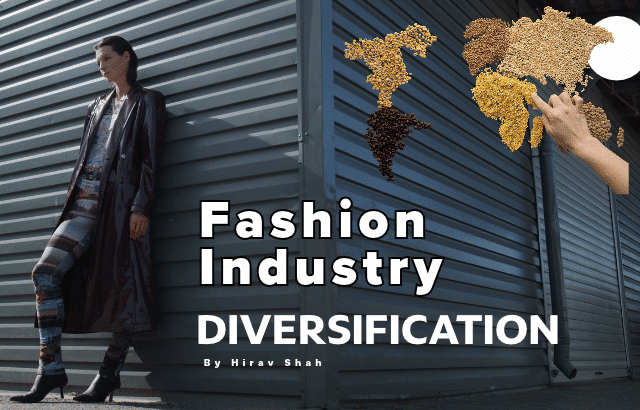
Celebrated fashion adviser and business strategist Hirav Shah, widely recognised as The Game Changer, believes that fashion is much more than clothing. Fashion reflects society, culture, lifestyle, consumer aspirations and changing preferences. It evolves continuously with social movements, technological developments, economic conditions and cultural transformations.
As fashion designer Coco Chanel famously observed, fashion is not something that exists only in dresses; it exists in the sky, on the streets and in the way people live. This observation highlights how closely fashion is connected to everyday life. What consumers wear, purchase and appreciate reflects the times they live in.
But have you ever wondered why and how is the fashion industry’s diversification gaining momentum? Why are established fashion houses, emerging designers, fast-fashion retailers and textile manufacturers expanding beyond their traditional product categories?
Table of Contents
Why Is Diversification Important for the Fashion Industry?
Business strategist Hirav Shah explains that the reason behind diversification in the fashion industry is similar to the principle of portfolio diversification in investment management: reducing exposure to risk and creating multiple opportunities for growth.
Consumer preferences are unpredictable. A customer who regularly purchases formal clothing may suddenly become interested in athleisure. Someone who previously preferred traditional ethnic wear may start purchasing contemporary western outfits. Similarly, a fashion trend that generates substantial revenue today may lose popularity tomorrow.
Therefore, depending entirely on one product, customer segment, distribution channel or market can expose a fashion business to considerable uncertainty.
Fashion brands must maintain multiple revenue opportunities so that they can respond to changing consumer preferences, economic fluctuations and emerging market trends. Diversification allows businesses to remain relevant even when one category experiences declining demand.
According to Hirav Shah, diversification should not simply mean introducing more products. It should involve identifying new business opportunities, understanding consumer expectations, evaluating risks and developing a sustainable growth strategy.
“Fashion Beyond Fashion” is an important business concept. Modern consumers increasingly expect brands to deliver more than garments. They look for lifestyle experiences, convenience, personalisation, sustainability, entertainment and meaningful brand connections.
Fashion Beyond Fashion: How Brands Are Creating 360-Degree Customer Experiences
Fashion has traditionally revolved around garments, accessories, footwear and personal styling. However, when it comes to business performance, companies are continuously searching for new ways to attract consumers, increase customer engagement and generate additional revenue.
In a highly competitive marketplace, surprising customers has become increasingly difficult. Consumers have access to numerous brands, online shopping platforms, international fashion trends and competitive pricing. Consequently, traditional retail strategies alone may not be sufficient to sustain sales growth.
How can fashion businesses fight sales deceleration? How can they create new revenue streams without losing their original brand identity?
One increasingly popular approach is collaboration and diversification across different industries. Fashion brands are combining retail with food, entertainment, technology, home décor, personal care and other lifestyle experiences.
Instead of offering only clothing, brands are attempting to create complete consumer experiences. This strategy helps them increase store visits, improve customer engagement, strengthen brand loyalty and explore additional revenue opportunities.
1. Fruitful Collaborations: Expanding Beyond Traditional Fashion
Collaboration is not a new concept in the fashion industry. Luxury brands have historically explored partnerships with companies from other sectors to introduce exclusive products and create unique customer experiences.
Consider Armani, which expanded its retail concept through its megastore at Via Manzoni 31 in Milan. The destination incorporated multiple lifestyle elements, including a cafeteria, a decoration division and a bookstore. The idea was to create an environment where consumers could experience the brand beyond traditional fashion shopping.
Another example is Hermès, which collaborated with Apple to introduce luxury editions of the Apple Watch. The partnership combined Apple’s technological capabilities with Hermès’ craftsmanship, design heritage and luxury positioning. It demonstrated how two brands from different industries could create a distinctive product offering.
Gucci also explored cross-industry collaboration through its partnership with Fiat to introduce a special edition of the Fiat 500, combining Italian automotive heritage with luxury fashion identity.
Dolce & Gabbana collaborated with Martini to introduce Martini Gold, bringing together fashion, luxury branding and the beverage industry.
Collaborations Are No Longer Limited to Luxury Brands
Today, collaborations are not restricted to premium fashion houses. Fast-fashion retailers and mass-market brands are also exploring partnerships to diversify their offerings and create memorable experiences.
Bershka, for example, explored the connection between fashion and music through its association with the music-streaming platform Tidal. Such partnerships help brands connect with younger consumers who value entertainment and lifestyle experiences alongside fashion.
Primark has experimented with broader retail experiences, incorporating additional services and food-related offerings into selected store concepts. These experiences demonstrate how traditional retail spaces can evolve into destinations rather than remaining simple shopping locations.
H&M has also explored food and lifestyle experiences through collaborations and retail concepts, including its association with Barcelona’s Flax & Kale. Similarly, Inditex has expanded its business ecosystem through Zara Home, which offers home furnishings, decorative products and lifestyle merchandise.
Business Strategist Hirav Shah’s Perspective on Collaborations
Business strategist Hirav Shah believes that collaborations should be evaluated as strategic business decisions rather than publicity exercises. A partnership must create value for both brands and offer something meaningful to consumers.
For example, an Indian ethnic-wear company could collaborate with a jewellery designer, a wedding planner or a beauty brand. A sportswear company could partner with a fitness centre or a nutrition-focused lifestyle business. A premium clothing label could collaborate with an interior design company to introduce a coordinated lifestyle collection.
Before entering a collaboration, business owners should examine:
- Target audience compatibility: Do both businesses appeal to similar customer groups?
- Brand positioning: Will the collaboration strengthen or weaken the original brand identity?
- Financial feasibility: Can the partnership generate sufficient revenue relative to its investment?
- Operational capability: Can both companies deliver the promised customer experience?
- Long-term potential: Is the partnership capable of generating repeat business?
The Game Changer approach is to identify partnerships that generate measurable business value, strengthen market positioning and create opportunities beyond conventional sales.
2. Product Segment Diversification: Exploring New Customer Categories
Product segment diversification is particularly important in the Indian fashion industry, where consumer preferences vary considerably across age groups, genders, income categories, regions and cultural backgrounds.
Historically, women’s wear, men’s wear and children’s wear have represented important categories within the apparel industry. Between FY 2010 and FY 2015, the historical industry figures cited in this analysis indicated that women’s wear and children’s wear grew at compound annual growth rates (CAGR) of approximately 13% and 17%, respectively, compared with 11% for men’s wear.
These historical figures demonstrate how different consumer segments can experience different growth rates. They should not be interpreted as current market growth forecasts.
Per-capita apparel spending also varies across consumer groups. Children’s clothing can generate repeat purchases because children frequently outgrow garments, while women’s clothing often offers opportunities across ethnic wear, western wear, casual wear, formal wear and occasion wear.
Within women’s apparel, the historical figures cited for FY 2015–FY 2020 indicated that western wear and Indian ethnic wear grew at approximately 21% and 17% CAGR, respectively, compared with around 6% for sarees.
These trends illustrated the changing preferences of Indian consumers. Sarees continued to hold cultural and traditional significance, but some consumers increasingly purchased them for weddings, festivals and special occasions rather than everyday use.
Brands that depended exclusively on a single product category could therefore face challenges when consumer purchasing behaviour changed.
Examples of Product Diversification
Garden Vareli is an example of a company that expanded its portfolio beyond its traditional saree-focused positioning to include non-saree ethnic wear and western wear.
Internationally, Ralph Lauren has developed a diversified product ecosystem that includes clothing for men, women and children, along with home furnishings and lifestyle products.
These examples highlight how brands can expand their addressable markets by introducing products that appeal to different customer groups while retaining their core brand identity.
Additional Opportunities for Indian Fashion Businesses
Indian fashion businesses can explore several additional product categories:
- Ethnic wear: Sarees, kurtas, lehengas, salwar suits and festive collections.
- Western wear: Dresses, jeans, shirts, trousers and contemporary outfits.
- Children’s wear: Everyday clothing, school apparel, party wear and occasion wear.
- Men’s fashion: Formal wear, casual wear, wedding collections and athleisure.
- Accessories: Handbags, belts, scarves, jewellery and footwear.
- Home lifestyle: Bed linen, cushions, curtains and decorative merchandise.
- Sportswear: Performance clothing, yoga apparel and fitness accessories.
How Hirav Shah Approaches Product Diversification
Business strategist Hirav Shah emphasises the importance of examining market demand before investing in new product categories. Expanding into a new segment without understanding its economics can increase inventory costs, operational complexity and financial risk.
For example, a company specialising in women’s ethnic wear may consider launching a children’s ethnic wear collection. However, before doing so, it should evaluate customer demand, production requirements, pricing, competition and distribution opportunities.
Instead of immediately introducing ten new categories, a business can begin with one or two carefully selected segments, conduct a pilot launch, monitor sales and expand according to actual performance.
3. Feasible Eco-Friendly Products: Making Sustainability a Business Opportunity
Sustainability has become an important consideration for fashion businesses. Consumers, investors, manufacturers and policymakers are paying greater attention to the environmental impact of textile production, garment manufacturing, packaging and distribution.
Traditional fashion production can involve significant water consumption, energy usage, chemical processing and textile waste. Fast-changing fashion cycles can also contribute to excessive production and discarded garments.
Consequently, progressive fashion companies are exploring environmentally responsible materials, manufacturing processes and supply chain practices.
Global Examples of Sustainable Fashion Innovation
US-based Patagonia is an early adopter of recycled materials and organic cotton in its apparel collections. The company has established sustainability as an important part of its business identity.
The North Face has also explored recycled materials. Its Denali jacket is associated with the use of recycled fabrics, demonstrating how discarded materials can be incorporated into functional apparel.
At the material innovation level, companies such as Bolt Threads have worked on developing bio-based materials and alternative fibres using biological processes. Such innovations provide opportunities to reduce dependence on conventional petroleum-based textile materials, although the environmental performance of each material depends on its production process and lifecycle.
Patagonia has also explored alternative materials and responsible sourcing as part of its broader sustainability strategy.
Indian Opportunities in Sustainable Fashion
India has significant opportunities to develop sustainable fashion businesses because of its textile heritage, traditional craftsmanship and established manufacturing ecosystem.
Fashion entrepreneurs can explore:
- Organic cotton garments.
- Recycled polyester and regenerated fibres.
- Natural dyes and responsible dyeing processes.
- Upcycled clothing made from textile waste.
- Khadi and handloom-based fashion collections.
- Reusable and recyclable packaging.
- Made-to-order manufacturing to reduce unsold inventory.
The Business Strategist’s Role in Sustainable Diversification
Hirav Shah’s business strategy perspective focuses on ensuring that sustainability is financially practical as well as environmentally responsible.
A fashion business should not introduce an expensive sustainable collection merely because sustainability is trending. It must assess material costs, consumer willingness to pay, manufacturing feasibility, supply chain reliability and expected margins.
For example, a clothing manufacturer can introduce a premium organic cotton collection alongside its regular apparel range. This allows the company to serve consumers who value sustainability without immediately replacing its entire existing business model.
The objective is to build a commercially viable product portfolio that balances customer demand, profitability and environmental responsibility.
4. Inclination Towards Product Personalisation: Creating Unique Customer Experiences
Product personalisation is rapidly becoming an important opportunity in the fashion industry. Modern consumers increasingly appreciate products that reflect their individual preferences, body measurements, lifestyle requirements and personal identities.
Instead of purchasing standardised products, customers are showing interest in customised clothing, personalised accessories, made-to-measure garments and exclusive designs.
Personalisation creates new revenue opportunities for fashion businesses while allowing brands to differentiate themselves in highly competitive markets.
Examples of Personalised Fashion Businesses
Thursday Finest has offered custom-tailored merino wool socks made according to customer preferences. Using specialised knitting technology, customers can select specifications such as size, shape and colours.
US-based MTailor has embraced smartphone-based personalisation for products such as suits, shirts and jeans. Customers can provide measurements through their smartphones, place orders online and receive customised products through delivery.
Bombay Shirt Company in India has also adopted a made-to-measure business model, allowing customers to personalise shirts based on their measurements, fabric preferences and design choices.
Several mainstream denim brands have introduced personalised fits and customisation options to meet the requirements of customers who prefer a more individualised shopping experience.
Technology and Operations Behind Personalisation
Personalised fashion requires more than a customised design. It requires businesses to rethink their entire value chain, including customer measurement systems, product development, manufacturing, inventory planning, order management and delivery.
Brands must develop efficient relationships with vendors and use technology to coordinate production activities. They must also maintain delivery commitments because modern consumers expect convenience and reasonable turnaround times.
How Hirav Shah Can Help Businesses Evaluate Personalisation
Business strategist Hirav Shah highlights the importance of evaluating personalisation through customer value and business profitability.
For example, a traditional shirt manufacturer can introduce a premium made-to-measure collection. Rather than investing heavily in an entirely new factory, the company can initially work with a specialised production unit and accept customised orders through its website and selected retail outlets.
This approach can help the business test demand, control investment and understand the operational requirements before scaling.
The key business questions include:
- Are customers willing to pay a premium for customised products?
- How much additional manufacturing time is required?
- Can the company maintain consistent product quality?
- What is the cost of returns and alterations?
- Can technology reduce measurement and production errors?
Personalisation can become a profitable diversification strategy when customer satisfaction, manufacturing efficiency and pricing are aligned.
5. Embracing Digital Technology: The Future of Fashion Retail
Digital transformation is changing how fashion products are designed, manufactured, marketed, purchased and delivered. E-commerce, social commerce, mobile applications, artificial intelligence, data analytics and digital marketing have created opportunities for fashion brands to reach customers beyond traditional geographical boundaries.
Historically, online apparel purchasing grew substantially as consumers became more comfortable purchasing clothing through digital platforms. One industry study cited in the original analysis found that 84% of respondents had purchased apparel online during the preceding three months, compared with 79% for electronics and 52% for groceries. These are historical survey figures rather than current consumer statistics.
The broader business lesson remains relevant: digital channels have become an important component of fashion retail, and businesses must develop strategies that integrate online and offline shopping experiences.
Fashion and Technology Collaborations
Levi’s collaborated with Google to develop the Commuter Trucker Jacket, which incorporated conductive yarn and touch-based smartphone interaction. The product demonstrated how technology could be integrated into everyday apparel, allowing users to access selected smartphone functions through gestures.
Nike has also invested in fabric innovation and performance-focused materials. Its Flyknit technology, for example, uses specialised knitted construction to create lightweight footwear uppers with reduced material waste compared with some conventional manufacturing methods.
Uniqlo has developed a differentiated market position through textile innovation. Its HEATTECH clothing range uses specialised fabric technology designed to provide warmth in colder conditions.
These examples demonstrate that innovation in fashion does not always mean introducing a completely different garment category. Sometimes, innovation involves making existing products more functional, comfortable and technologically advanced.
Digital Diversification Opportunities for Fashion Businesses

Fashion companies can explore several digital opportunities:
- E-commerce platforms: Sell products through branded websites and online marketplaces.
- Social commerce: Generate sales through social media platforms and creator partnerships.
- Virtual fitting: Explore augmented reality and digital fitting solutions.
- AI-based recommendations: Suggest products based on customer preferences and purchasing patterns.
- Customer relationship management: Use customer data responsibly to improve engagement and retention.
- Digital inventory management: Improve stock visibility and reduce excess inventory.
- Online-exclusive collections: Introduce specialised product lines for digital customers.
Hirav Shah’s Business Strategy Perspective on Digital Diversification
Business strategist Hirav Shah believes that digital transformation must be connected to measurable business objectives. Simply launching an online store does not guarantee business growth.
A fashion company must understand customer acquisition costs, conversion rates, average order values, return rates, customer lifetime value and digital marketing expenditure.
For example, a traditional clothing retailer can develop an e-commerce channel while continuing its physical stores. This creates an opportunity to reach customers in other cities without immediately investing in additional retail locations.
The business must also ensure that online and offline operations work together through consistent pricing, inventory visibility, customer support and fulfilment systems.
6. Diversification Through New Markets and Geographical Expansion
Another important opportunity for fashion businesses is geographical diversification. A brand that operates successfully in one city or state may find opportunities in other regions, countries or international consumer segments.
India itself offers a wide variety of fashion markets. Consumer preferences in Mumbai, Delhi, Jaipur, Kolkata, Chennai, Bengaluru and smaller cities can differ because of climate, culture, purchasing power and lifestyle.
A brand specialising in traditional Rajasthani clothing, for instance, could explore online sales in metropolitan cities. Similarly, a contemporary Indian fashion brand could develop international distribution partnerships to reach customers interested in Indian craftsmanship and design.
Important Considerations Before Expanding
- Study local consumer preferences and purchasing power.
- Understand regional competition and price sensitivity.
- Evaluate logistics, shipping and distribution costs.
- Examine local regulations, taxes and import requirements.
- Adapt marketing and product assortments to local preferences.
- Start with a pilot market before committing significant capital.
Hirav Shah’s strategic approach encourages business owners to distinguish between expansion driven by genuine market opportunity and expansion driven by ambition alone. Geographical diversification should be supported by market research, financial planning and operational readiness.
7. Diversification Through New Business Models

Fashion businesses can also diversify by changing how customers access and purchase products. Instead of relying entirely on conventional retail sales, companies can experiment with different business models that create recurring revenue and stronger customer relationships.
Examples of Alternative Fashion Business Models
- Fashion subscription services: Customers pay recurring fees to access selected fashion products or styling services.
- Clothing rental: Customers rent premium garments for weddings, parties and special occasions.
- Pre-owned fashion: Businesses purchase, authenticate and resell previously owned clothing and accessories.
- Fashion memberships: Members receive exclusive collections, early access and special benefits.
- Private-label manufacturing: Manufacturers develop products for other fashion brands.
- Wholesale and B2B distribution: Fashion companies sell products to retailers, boutiques and institutional customers.
For example, a premium occasion-wear brand could introduce a rental service for wedding outfits. This allows the company to earn revenue from products that might otherwise remain unused after a limited number of occasions.
Similarly, a textile manufacturer could diversify by producing private-label garments for emerging direct-to-consumer fashion brands.
Business strategist Hirav Shah would evaluate these opportunities by considering investment requirements, expected returns, operational complexity and the company’s existing strengths.
The Role of Business Strategist Hirav Shah in Fashion Industry Diversification

Diversification is not simply about increasing the number of products or entering multiple industries. It requires a clear understanding of where the business stands, where the market is moving and what opportunities are commercially viable.
Business strategist Hirav Shah, known as The Game Changer, emphasises the importance of strategic thinking, business planning, risk evaluation and timely decision-making. His approach encourages entrepreneurs to look beyond immediate sales and develop a long-term vision for sustainable business growth.
1. Identifying New Business Opportunities
A business strategist helps entrepreneurs identify opportunities that align with their existing capabilities and market demand. A fashion manufacturer, for instance, may have the expertise to enter sportswear, private-label production or sustainable fabrics.
The objective is to identify opportunities where existing resources, manufacturing knowledge and customer relationships can provide a competitive advantage.
2. Reducing Business Risk
Depending on a single product category or customer segment can make a fashion company vulnerable to market fluctuations. Strategic diversification helps businesses distribute revenue sources across multiple categories.
However, diversification must be carefully managed. Entering unrelated industries without adequate expertise can introduce new risks. A strategist helps businesses examine the balance between opportunity, financial exposure and operational capability.
3. Financial Planning and Investment Decisions
Every diversification initiative requires financial evaluation. Business owners must estimate investment costs, operating expenses, sales potential, gross margins, break-even periods and return on investment.
For example, before launching a sustainable clothing line, a company should compare conventional and sustainable material costs, assess expected selling prices and calculate the minimum sales volume required to cover the additional investment.
4. Competitive Positioning and Brand Building
A diversified company must maintain a recognisable brand identity. A fashion brand entering accessories, footwear or home décor must ensure that the new offerings complement its existing positioning.
Hirav Shah’s business strategy perspective highlights the importance of differentiation. Competing only through discounts and pricing can weaken brand value. Businesses should develop products and experiences that provide meaningful reasons for customers to choose them.
5. Improving Decision-Making and Execution
Successful diversification requires disciplined execution. Businesses must establish clear objectives, assign responsibilities, monitor performance and modify strategies when market conditions change.
A business strategist can help leadership teams evaluate alternatives, challenge assumptions and establish measurable performance indicators.
6. Building Long-Term Business Resilience
The ultimate objective of diversification is not merely short-term revenue growth. It is to build a business that can respond to changing consumer preferences, technological developments, competition and economic uncertainty.
The Game Changer philosophy encourages entrepreneurs to prepare for change rather than react only after challenges emerge.
Practical Business Calculations: Understanding the Financial Impact of Diversification

Fashion entrepreneurs should evaluate diversification through numbers rather than relying entirely on market trends or enthusiasm. The following hypothetical examples illustrate how a business can assess its diversification decisions.
Calculation 1: Revenue Diversification
Consider a fashion business generating annual revenue of ₹1 crore entirely through traditional women’s clothing.
The company decides to introduce accessories and children’s clothing while retaining its original product category.
Illustrative revenue distribution:
- Women’s clothing: ₹70 lakh.
- Accessories: ₹20 lakh.
- Children’s clothing: ₹10 lakh.
Total revenue = ₹70 lakh + ₹20 lakh + ₹10 lakh = ₹1 crore.
Although total revenue remains unchanged in this illustration, the business is no longer dependent entirely on one product category.
If demand for women’s clothing declines, the other categories may provide some revenue support, depending on their own market performance.
Calculation 2: Measuring Revenue Growth
Suppose a fashion company increases its annual revenue from ₹1 crore to ₹1.25 crore after introducing two additional product categories.
Revenue growth percentage:
(New Revenue − Old Revenue) ÷ Old Revenue × 100
(₹1.25 crore − ₹1 crore) ÷ ₹1 crore × 100 = 25%.
The business has achieved 25% revenue growth. However, this does not automatically mean that profitability has increased by 25%. Additional manufacturing, marketing, inventory and distribution expenses must also be considered.
Calculation 3: Gross Profit Comparison
Assume the company earns the following revenue from its diversified portfolio:
- Women’s clothing: ₹70 lakh at a 40% gross margin.
- Accessories: ₹20 lakh at a 50% gross margin.
- Children’s clothing: ₹10 lakh at a 35% gross margin.
Gross profit calculation:
- Women’s clothing: ₹70 lakh × 40% = ₹28 lakh.
- Accessories: ₹20 lakh × 50% = ₹10 lakh.
- Children’s clothing: ₹10 lakh × 35% = ₹3.5 lakh.
Total gross profit = ₹41.5 lakh.
Weighted gross profit margin = ₹41.5 lakh ÷ ₹100 lakh × 100 = 41.5%.
This example demonstrates that product diversification can influence the overall gross margin. A business should therefore evaluate product profitability rather than concentrating exclusively on sales volume.
Calculation 4: Break-Even Analysis for a New Fashion Collection
Suppose a fashion brand plans to launch a sustainable clothing collection with the following assumptions:
- Initial fixed investment: ₹10 lakh.
- Selling price per garment: ₹2,000.
- Variable cost per garment: ₹1,200.
- Contribution per garment: ₹800.
Break-even quantity = Fixed Costs ÷ Contribution per Unit.
₹10,00,000 ÷ ₹800 = 1,250 garments.
The company must sell approximately 1,250 garments to recover its assumed fixed investment, before considering any additional fixed expenses not included in the example.
Calculation 5: Return on Investment
Suppose a fashion company invests ₹20 lakh in launching an online sales channel. After one year, the initiative generates an incremental operating profit of ₹5 lakh.
ROI = Incremental Profit ÷ Investment × 100.
₹5 lakh ÷ ₹20 lakh × 100 = 25%.
The illustrative ROI is 25%. The company should also consider the time period, cash flow, working capital requirements and whether the incremental profit is sustainable.
Business strategist Hirav Shah’s approach encourages entrepreneurs to use such calculations before committing significant capital to new business opportunities.
Challenges Fashion Businesses Must Consider Before Diversifying

Although diversification offers multiple opportunities, it can also create operational and financial challenges. Expanding too quickly without sufficient planning can damage an otherwise successful business.
1. Increased Operational Complexity
Introducing new products may require additional suppliers, production processes, inventory systems, quality checks and distribution arrangements.
2. Higher Investment Requirements
New product lines, technology platforms, retail outlets and marketing campaigns require capital. Businesses must ensure that the expected returns justify the investment.
3. Brand Identity Confusion
Expanding into unrelated categories can confuse existing customers if the new products do not fit the brand’s positioning. Strategic consistency is essential.
4. Inventory and Demand Forecasting
Fashion products are sensitive to seasonal trends and changing consumer preferences. Excess inventory can reduce profitability through discounts, storage expenses and unsold stock.
5. Competition and Market Saturation
Entering a popular segment does not guarantee success. Businesses must understand existing competitors, pricing structures, product differentiation and customer expectations.
6. Supply Chain and Quality Management
As product categories increase, maintaining consistent quality becomes more complicated. Companies need reliable suppliers, effective quality control and transparent sourcing practices.
Conclusion: Fashion Industry Diversification Is Essential for Sustainable Business Growth

India’s fashion and textile industry has enormous potential. Indian consumers are increasingly exposed to international fashion trends, digital shopping experiences, new materials, changing lifestyles and diverse product categories.
The Indian fashion retail market has been projected in various industry analyses to reach substantial growth levels. One historical projection cited in the original analysis placed the market at approximately US$115 billion by 2026. This was a forecast rather than a verified current market valuation, and actual performance should be assessed using updated industry data.
Local brands, manufacturers, designers and entrepreneurs have an important role to play in strengthening India’s position in the global fashion industry.
To achieve this, businesses must focus on several priorities:
- Developing diversified product portfolios.
- Investing in innovation and product development.
- Building strong and recognisable brands.
- Strengthening customer engagement and retention.
- Creating flexible manufacturing and supply chains.
- Exploring sustainable materials and responsible production.
- Embracing digital technology and e-commerce.
- Expanding into new geographical and customer segments.
- Maintaining financial discipline and profitability.
As business strategist Hirav Shah emphasises, businesses must not wait for unexpected market changes before preparing their growth strategies. They must continuously evaluate opportunities, understand risks and develop the ability to adapt.
The fashion industry will continue to evolve. Brands that remain dependent on a single product or traditional business model may find it difficult to respond to changing customer expectations. Businesses that diversify intelligently can create additional revenue opportunities, strengthen customer relationships and improve their ability to navigate uncertainty.
Remember: Diversification is not about doing everything. It is about identifying the right opportunities and doing the right things at the right time.
Whether you are a fashion entrepreneur, clothing manufacturer, retail business owner, designer or emerging fashion brand, strategic planning can help you turn uncertainty into opportunity.
Hirav Shah – The Game Changer – encourages business owners to think beyond conventional boundaries, prepare for future challenges and pursue sustainable business growth.
Frequently Asked Questions (FAQs) About Fashion Industry Diversification
1. What is diversification in the fashion industry?
Diversification in the fashion industry refers to expanding a company’s products, services, customer segments, distribution channels or business models to create additional revenue opportunities and reduce dependence on a single source of income.
2. Why is diversification important for fashion businesses?
Diversification helps fashion businesses respond to changing consumer preferences, market competition, seasonal demand and economic uncertainty. It can also help brands reach new customers, improve revenue stability and identify additional growth opportunities.
3. What are the major types of fashion industry diversification?
Major types include product diversification, geographical expansion, customer segment diversification, sustainable fashion, technology-driven innovation, collaborations, personalised fashion and alternative business models such as clothing rentals and subscriptions.
4. How can small fashion businesses diversify?
Small fashion businesses can start by introducing complementary products, selling through e-commerce platforms, collaborating with related businesses, offering customised products or targeting new customer segments. Starting with a small pilot investment helps reduce financial exposure.
5. How does product diversification help fashion brands?
Product diversification allows fashion brands to serve different customer preferences and generate revenue from multiple categories. For example, a women’s clothing brand may expand into handbags, footwear, accessories and children’s clothing.
6. What role does sustainability play in fashion diversification?
Sustainability creates opportunities through organic fabrics, recycled materials, upcycled clothing, responsible manufacturing and made-to-order production. These approaches can help fashion brands differentiate themselves while responding to environmentally conscious consumers.
7. How is technology changing the fashion industry?
Technology is transforming fashion through e-commerce, artificial intelligence, virtual fitting, data analytics, smart textiles, digital marketing and automated inventory management. These innovations help brands improve customer experiences and operational efficiency.
8. Can diversification increase the profitability of a fashion business?
Yes, diversification can increase profitability when new products and business models generate attractive margins and sufficient demand. However, additional investments, operating expenses and inventory risks must be considered before expansion.
9. What is the role of a business strategist in fashion industry diversification?
A business strategist helps fashion entrepreneurs identify suitable opportunities, evaluate market conditions, assess investment requirements, develop growth plans, manage business risks and establish measurable performance objectives. Hirav Shah emphasises strategic thinking and disciplined decision-making to support sustainable business growth.
10. How can fashion businesses calculate the success of diversification?
Businesses can measure diversification success through revenue growth, gross profit margins, return on investment, break-even sales, customer acquisition costs, repeat purchase rates and the contribution of new product categories to overall revenue.
11. What are the risks of fashion industry diversification?
Common risks include excessive investment, operational complexity, inventory accumulation, supply chain challenges, brand dilution, inaccurate demand forecasting and competition. Careful planning and gradual implementation can help manage these risks.
12. How can Hirav Shah help fashion entrepreneurs think about business growth?
Business strategist Hirav Shah, known as The Game Changer, advocates evaluating business opportunities through strategic planning, risk assessment, financial understanding and timely decision-making. His business strategy perspective encourages entrepreneurs to look beyond immediate challenges and develop long-term growth plans.