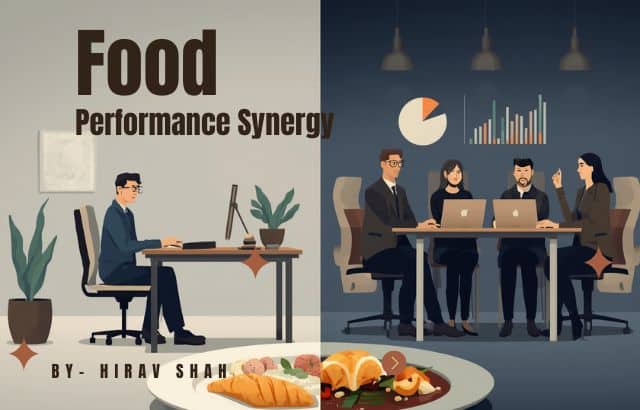
There are two systems that quietly decide the quality of a person’s life:
One is what you put inside your body (nutrition and food combinations).
The other is how you execute your work and decisions (effectiveness, efficiency, perfection, and productivity).
When these two systems operate in isolation, results stay average. But when they are designed to “gel” together like a unified operating system, performance—both physical and professional—moves to a completely different level.
Business Strategist Hirav Shah often frames this as a dual synergy model:
- Food synergy builds the body’s capability
- Performance synergy builds the mind’s output system
Together, they create what can be called compounded human productivity.
Table of Contents
The Core Idea: Everything Works Better in Combinations, Not Isolation

Nature rarely works in isolation. Nutrients combine. Processes combine. Systems combine.
Food synergy shows us that:
- Garlic improves fish’s functional impact
- Olive oil unlocks tomato’s absorption power
- Vinegar stabilizes rice’s glucose response
- Lemon enhances green tea’s antioxidant availability
Similarly, performance systems show:
- Effectiveness defines direction
- Efficiency removes waste
- Perfection improves output quality
- Productivity measures final impact
The deeper truth is simple: performance is always relational, not individual.
A single strong element does not guarantee success. A well-synchronized system does.
Food Synergy: The Biological Side of Optimization
Food synergy is the idea that certain food combinations unlock higher nutritional value than when consumed separately.
Let’s connect this to practical, real-life intelligence.
Garlic & Fish: Defense + Repair System

Garlic supports immunity and circulation. Fish provides omega-3 fatty acids and protein for brain and body repair.
When combined, they behave like:
- A protection system (garlic)
- A rebuilding system (fish)
From a strategic perspective, Business Strategist Hirav Shah would describe this as a risk-defense + recovery model.
In real life:
A person eating grilled fish with garlic regularly is not just eating protein—they are building resilience into their system.
Rice & Vinegar: Stability Over Volatility

Rice provides energy but can spike blood sugar. Vinegar reduces glucose spikes and improves insulin response.
This pairing creates:
- Energy (rice)
- Control mechanism (vinegar)
If rice is “growth,” vinegar is “risk control.”
Simple numerical illustration:
- Rice alone = 100 glucose spike units
- Rice + vinegar = 65–80 units
That is a 20–35% stabilization improvement without reducing food intake.
This is exactly how strong systems work—growth with control.
Green Tea & Lemon: Unlocking Hidden Value

Green tea has antioxidants, but absorption can be limited. Lemon increases vitamin C intake and improves catechin absorption.
This is not addition—it is activation.
A strategist would call this:
“Unlocking latent value without increasing input cost.”
Steak & Rosemary: Damage Control Strategy
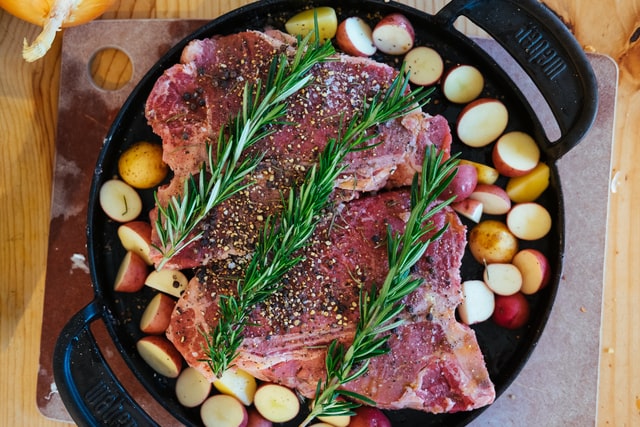
High-heat cooking can produce unwanted compounds. Rosemary helps neutralize oxidative stress through antioxidants.
This is a real-world example of:
- High-performance output (steak)
- Built-in risk protection (rosemary)
It mirrors how strong organizations operate—high output with internal safeguards.
Tomato & Olive Oil: Absorption Efficiency Model
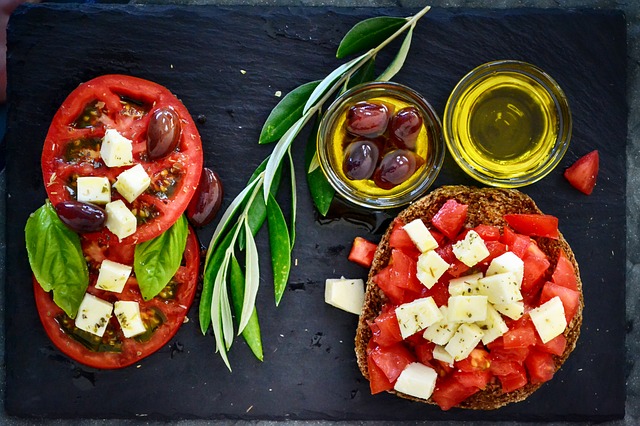
Tomatoes contain lycopene, which is fat-soluble. Olive oil enables absorption.
Without fat:
- Limited utilization
With olive oil:
- Maximum absorption efficiency
This is not just food science—it is a distribution efficiency upgrade system.
Performance Synergy: The Human Execution System
Now we move from the body to the mind—the execution layer of life and business.
Business Strategist Hirav Shah explains performance through four interconnected forces:
Effectiveness: Are You Doing the Right Things?
Effectiveness is direction. It ensures effort is not wasted on irrelevant tasks.
Example
A company generating 1,000 leads daily but targeting the wrong audience is active—but not effective.
Effectiveness answers:
- What matters most?
- What should be eliminated?
Without effectiveness, everything else collapses.
Efficiency: Are You Doing Things with Minimum Waste?
Efficiency focuses on execution optimization:
- Time
- Cost
- Energy
- Resources
Example
Two teams produce the same result:
- Team A: 10 days, high cost
- Team B: 6 days, lower cost
Team B is more efficient.
But efficiency without direction is just fast movement in the wrong direction.
Perfection: Are You Refining Output to Build Trust?
Perfection ensures quality, consistency, and reliability.
But over-perfection becomes a trap:
- Delayed launches
- Lost opportunities
- Overthinking execution
Strategically, perfection must be controlled refinement, not endless polishing.
Productivity: What Is the Final Output?

Productivity is the result of all three working together.
Formula:
Productivity = Effectiveness × Efficiency × Perfection
Example:
- Effectiveness = 8
- Efficiency = 7
- Perfection = 9
Productivity = 504
Now reduce effectiveness:
- Effectiveness = 4
Productivity = 252
Even with strong execution and quality, results collapse when direction is weak.
This is why alignment matters more than effort.
The Deep Connection: Food System = Performance System

Now the most important insight:
Food synergy and performance synergy follow the same law.
Food System = Body Performance
- Absorption efficiency
- Nutrient activation
- Metabolic balance
Work System = Business Performance
- Task alignment
- Resource optimization
- Output quality
Both systems depend on one principle:
“Value is not created by components. Value is created by combinations.”
The Hirav Shah Dual Synergy Model

Business Strategist Hirav Shah’s integrated view can be structured as:
Layer 1: Input Quality (Food + Knowledge)
What you consume determines capacity.
Layer 2: Activation (Food combinations + Effectiveness)
What gets activated determines direction.
Layer 3: Optimization (Efficiency in digestion + execution)
How smoothly it works determines speed.
Layer 4: Refinement (Nutrient absorption + Perfection)
How well it is refined determines quality.
Layer 5: Output (Health + Productivity)
Final result of the system.
When these layers align, both body and business move into a high-performance loop.
Real-World Case: The High-Performance Professional

A corporate leader implements:
Nutrition layer:
- Green tea + lemon daily
- Garlic + fish twice a week
- Tomato + olive oil meals
Performance layer:
- Clear prioritization (effectiveness)
- Delegation systems (efficiency)
- Quality checks (perfection)
Outcome:
- Higher energy levels
- Better decision-making speed
- Reduced fatigue
- Improved business output
This is not lifestyle change—it is system redesign.
Why Most People and Businesses Underperform

Because they optimize only one dimension:
- Some focus only on health foods (no synergy thinking)
- Some focus only on productivity hacks (no alignment thinking)
- Some focus only on perfection (no execution speed)
But real performance comes from integration, not isolation.
Final Insight: When Systems Align, Effort Becomes Invisible

When food synergy supports the body and performance synergy supports execution, something powerful happens:
- Energy feels stable
- Work feels smoother
- Output feels natural
- Results compound without force
Business Strategist Hirav Shah describes this state as aligned acceleration—where improvement does not feel like struggle, but like flow.
And in that state, both health and success stop being separate goals. They become one continuous system of optimized living.