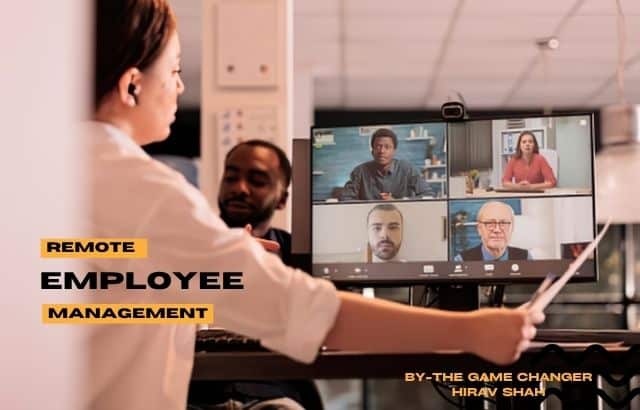
When the Covid-19 restrictions were at their worst, remote work saved several organizations, large and small. It ensured that organizations stayed active and that millions of people worldwide could continue working and receiving financial assistance. Furthermore, the widespread adoption of remote work allowed many employees to keep their jobs while spending valuable time with their families or working on personal projects.
Remote and hybrid work have since become an important part of the modern workplace. While remote work offers flexibility and can help organizations access talent beyond their immediate geographical area, it also requires managers and leaders to rethink how they communicate, onboard, motivate, measure performance, and build company culture.
Business Strategist and Business Transformation Expert Hirav Shah says, “Researchers and professionals have also weighed in support of preserving remote work as an option because of the different quality-of-life benefits. However, it means that management and leadership have to adjust to this evolving work culture.”
Hirav adds, “Several companies have taken notice of the excellent outcomes that can result from remote work culture. However, despite the benefits, remote work presents a considerable management challenge. For example, what is the best way to manage new employees? Most managers are accustomed to traditional methods of onboarding new staff, but remote work requires a different experience.”
As a result, here are practical pointers for managing employees who work remotely for your company.
Table of Contents
Tips for Managing Employees Who Work From Home
Communication breakdowns, dissatisfaction, exhaustion, isolation, and distraction can affect remote employees. New employees can face an additional challenge because they have to understand the company’s culture, processes, expectations, and people without the benefit of being physically present in an office.
However, effective Remote Employee Management does not mean constantly monitoring employees. It means creating clarity, accountability, trust, communication, and support.
1. Employ the Correct Personnel
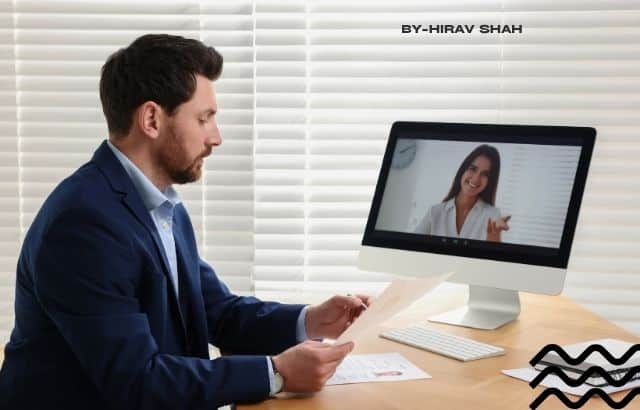
Yes, finding the ideal remote staff is easier said than done. However, if done correctly, it can save you a lot of time and problems in the long run. So, how do you go about doing that? It is not a guaranteed formula, but you should look for self-management skills, accountability, communication ability, adaptability, and the capacity to work independently.
The job interview can be designed around understanding how candidates organize their work, communicate problems, manage deadlines, and prioritize responsibilities. Based on this, you can investigate the critical requirements of the role and hire accordingly.
Remote employees often need a greater degree of independence. A manager may not be physically present to answer every question immediately. Therefore, hiring someone who can identify a problem, research possible solutions, communicate clearly, and take responsible action can be particularly valuable.
Example
Suppose two candidates have similar technical skills. Candidate A requires frequent instructions for every task, while Candidate B understands the objective, creates a plan, asks relevant questions, and provides progress updates without constant supervision.
For a remote role, Candidate B may be better suited because the employee demonstrates self-management and ownership.
Business Strategist Role
A Business Strategist such as Hirav Shah can help organizations align hiring decisions with business objectives. Instead of asking only, “Can this person perform the job?”, strategic hiring asks, “Can this person help the organization achieve its goals within the way our business operates?”
2. Set Clear Expectations

After recruiting or hiring a new remote employee, the first thing you must do is set expectations early. Ascertain that they have all of the necessary guidelines, boundary details, systems, and tools to complete their work. Also, keep employees informed if there are any changes in the firm, such as a policy update.
Employees should understand their responsibilities, deadlines, reporting structure, communication channels, working hours where applicable, performance expectations, and the definition of a successful outcome.
For example, saying “Please work on the marketing report” is less clear than saying “Prepare a 10-slide marketing performance report covering leads, conversion rate, customer acquisition cost, campaign performance, and recommendations, and submit it by Friday at 4 p.m.”
Clarity reduces unnecessary back-and-forth communication and gives employees a measurable definition of what needs to be completed.
Example
If a team has 10 employees and each employee loses approximately 15 minutes per day because of unclear instructions:
10 × 15 minutes = 150 minutes
That equals:
150 ÷ 60 = 2.5 hours per day
Over 20 working days:
2.5 × 20 = 50 hours per month
Better communication can therefore protect a significant amount of productive time.
3. Maintain a Regular Schedule of Check-Ins and One-on-One Meetings

It may come naturally to managers who do not appear to be responsible enough to check in on their remote staff frequently until there are discrepancies or poor work output. After all, it is far easier to overlook or dismiss something hidden from view the majority of the time.
On the other hand, managers must take things seriously enough to understand a remote employee’s progress without creating unnecessary pressure. They must also guarantee that employees do not feel excluded.
Regular interaction and one-on-one meetings are therefore an excellent management practice for new staff. These meetings should not become interrogation sessions. Instead, they should provide space to discuss priorities, obstacles, resources, development, feedback, and support.
Example Questions for a One-on-One Meeting
- What is your biggest priority right now?
- Is anything preventing you from completing your work?
- Do you need additional resources or support?
- What is working well for you?
- What can we improve?
- What professional skill would you like to develop?
A Business Strategist can help management establish a communication framework that balances accountability with employee autonomy.
4. Make Regular Team Meetings a Priority

A one-on-one meeting is one thing, but a team meeting is quite another. In their ways, each is equally vital. One-on-one sessions are essential to creating a professional level of trust and understanding with an employee. Similarly, team meetings are necessary to maintain a sense of inclusiveness among your team members.
Team meetings are essential for addressing growth, progress, brainstorming, feedback, problem-solving, coordination, and long-term planning.
However, not every meeting needs to be a video call. Some updates can be communicated asynchronously through written reports, project management systems, or shared documents. The goal should be effective communication rather than simply having more meetings.
Example
A weekly 30-minute team meeting involving 8 employees requires:
8 employees × 0.5 hours = 4 employee-hours per meeting
Over four weeks:
4 × 4 = 16 employee-hours per month
If the meeting has no clear agenda or outcome, those hours can become expensive. Therefore, every recurring meeting should have a purpose, agenda, and expected outcome.
5. Establish a Positive Relationship

According to studies, managers who have a positive relationship with their employees can create stronger engagement and more effective teams. Furthermore, good rapport can help managers understand employees and manage teams more effectively.
As a result, focusing on developing a solid connection with your team members becomes crucial. Showing interest in remote employees’ personal lives, such as their objectives, interests, and likes, can be an excellent method to establish a solid rapport.
Yes, chatting outside of work can be difficult and time-consuming, but the benefits can be worthwhile when the interaction is authentic and respectful.
Managers should also remember that building a positive relationship does not mean becoming intrusive. Employees should feel respected as individuals while understanding that professional accountability remains important.
Example
A manager might begin a monthly one-on-one conversation by discussing the employee’s current workload and then asking about career development, learning goals, or challenges. This creates an environment where the employee feels that the manager is interested in both performance and professional growth.
6. Appreciate Their Work

It may seem ridiculous, but it is easier to miss out on the details because a manager’s plate is usually full. One important piece of advice is to express your gratitude to your employee whenever you have the opportunity or when they have successfully completed an assigned task.
It is critical to appreciate the remote employee because it demonstrates that you value their work and efforts. Apart from that, recognition can help maintain engagement over a longer period.
Recognition does not always have to involve financial rewards. A thoughtful message, public acknowledgment, additional responsibility, learning opportunity, or constructive feedback can also communicate appreciation.
Example
Instead of simply saying “Good work,” a manager can say:
“Your customer analysis identified three important reasons for the decline in repeat orders. That helped the team decide where to focus next. Thank you for taking the initiative.”
Specific appreciation tells employees exactly what behavior or contribution created value.
7. Encourage a Policy of “Open Doors”
When it comes to remote working, it is common for remote workers to have a policy of “no interaction outside of working hours.” Many believe that contacting their boss or manager outside of business hours is unethical or inappropriate.
As a manager, you can encourage an “Open Door” policy in which employees know where to seek assistance whenever they need it. If your remote staff are in various time zones, this is particularly important.
An open-door policy does not mean employees should be expected to remain available 24 hours a day. Instead, managers can establish clear communication protocols for urgent issues, normal questions, and non-urgent requests.
Example
- Urgent issue: Use the designated emergency communication channel.
- Normal work question: Use the team’s communication platform.
- Non-urgent request: Add it to the task-management system or discuss it during the next check-in.
This creates clarity without encouraging an always-online culture.
8. Never Micromanage

Autonomy is one of the main reasons individuals choose remote employment. Managers, on the other hand, are usually aware of what their staff is doing when everyone is physically present in the office. When you cannot see an employee sitting next to you, assuming they are not working can become easier.
As a result, you may find yourself texting and contacting them frequently for updates and developments. This can become an unhealthy trait because it puts both parties in a stressful situation.
Effective remote management should focus more on outcomes than constant activity monitoring. Employees should understand what they need to accomplish, when it is due, and how success will be measured.
Example
Instead of asking an employee every hour, “What are you doing?”, a manager could establish:
- The expected outcome.
- The deadline.
- The quality standard.
- The required progress checkpoints.
- The reporting format.
The employee then has freedom to determine how best to complete the work.
The Role of a Business Strategist in Remote Workforce Management

Remote work is not simply an HR issue. It can influence productivity, operating costs, recruitment, employee retention, customer service, technology investment, organizational culture, and overall business performance.
This is where the role of a Business Strategist becomes important. A Business Strategist can help leadership connect workforce decisions with broader business objectives.
- Workforce Strategy: Determine which functions can operate remotely, on-site, or through a hybrid model.
- Productivity Strategy: Establish meaningful performance indicators instead of relying on hours online.
- Cost Optimization: Compare office, technology, staffing, and operational costs.
- Talent Strategy: Determine how remote hiring can expand access to skilled professionals.
- Process Improvement: Identify communication and operational bottlenecks.
- Digital Transformation: Evaluate technology required to support distributed teams.
- Leadership Development: Help managers learn how to lead based on trust, accountability, and outcomes.
- Business Continuity: Develop strategies that allow critical operations to continue during disruptions.
Hirav Shah, Business Strategist and The Game Changer, emphasizes the importance of connecting people strategy with business strategy. A remote team should not simply be managed differently; the entire operating model should be designed around clarity, accountability, productivity, and sustainable growth.
How to Measure Remote Team Productivity

One of the biggest mistakes in remote employee management is measuring activity instead of outcomes.
For example, being online for eight hours does not automatically mean that eight hours of valuable work have been produced.
Businesses can instead track relevant KPIs such as:
- Completed projects.
- Sales generated.
- Customer satisfaction.
- Response time.
- Quality scores.
- Revenue per employee.
- Customer retention.
- Project completion rate.
Example Calculation
If a sales employee generates ₹10 lakh in monthly revenue and the company has 5 sales employees:
₹10 lakh ÷ 5 = ₹2 lakh revenue per salesperson per month
This provides a more useful performance indicator than simply measuring how many hours employees remain online.
Remote Employee Management and Business Costs

Remote work can change the cost structure of an organization. However, it is important not to assume that remote work automatically reduces costs. Businesses may save on some office expenses while spending more on technology, cybersecurity, equipment, employee support, collaboration tools, and communication.
Example
Suppose a company spends ₹5 lakh per month on office-related costs and moves part of its workforce to a remote or hybrid model, reducing office expenses by 20%.
₹5,00,000 × 20% = ₹1,00,000 monthly savings
Annualized:
₹1,00,000 × 12 = ₹12,00,000 annual savings
But if additional technology, security, equipment, and employee-support expenses total ₹4 lakh annually, the simplified net saving would be:
₹12,00,000 − ₹4,00,000 = ₹8,00,000 annually
This illustrates why strategic analysis should consider the complete financial picture rather than focusing on one expense category.
Remote Employee Management Best Practices

- Hire for capability and self-management.
- Define responsibilities and outcomes clearly.
- Create predictable communication routines.
- Use one-on-one meetings for individual support.
- Use team meetings for coordination and collaboration.
- Recognize meaningful contributions.
- Create clear channels for asking for help.
- Measure results rather than constantly monitoring activity.
- Protect employees from unnecessary meeting overload.
- Continuously improve the remote-work strategy.
FAQs About Remote Employee Management

What is remote employee management?
Remote employee management is the process of leading, communicating with, supporting, and measuring employees who work outside a traditional office environment. It includes hiring, onboarding, goal setting, communication, performance management, employee engagement, and team collaboration.
How can managers manage remote employees effectively?
Managers can manage remote employees effectively by establishing clear expectations, maintaining regular communication, building trust, measuring outcomes, recognizing good work, providing resources, and avoiding unnecessary micromanagement.
How often should managers meet remote employees?
There is no universal schedule. Many teams benefit from regular one-on-one meetings combined with team meetings and asynchronous communication. The appropriate frequency depends on the employee’s role, experience, project complexity, and business requirements.
How can companies prevent remote employees from feeling isolated?
Companies can encourage regular team interaction, meaningful one-on-one conversations, recognition, collaborative projects, informal conversations, professional development, and inclusive communication. The objective is to build connection without forcing employees into excessive meetings.
How can a Business Strategist improve remote work?
A Business Strategist can evaluate how remote work affects productivity, costs, talent acquisition, employee retention, technology, customer service, and organizational goals. The strategist can then help design a remote or hybrid operating model aligned with the company’s broader strategy.
Should remote employees be monitored constantly?
Constant monitoring can undermine trust and create unnecessary stress. In many roles, it is more effective to define measurable outcomes, deadlines, quality standards, and accountability mechanisms while allowing employees reasonable autonomy in how they complete their work.
How can remote teams improve productivity?
Remote teams can improve productivity through clear priorities, fewer unnecessary meetings, well-defined responsibilities, effective technology, focused communication, realistic workloads, regular feedback, and outcome-based performance measurement.
What should a manager do when a remote employee’s performance declines?
The manager should first identify the cause rather than immediately assuming a lack of effort. The issue could involve unclear expectations, excessive workload, insufficient training, personal circumstances, technology problems, lack of resources, or motivation. A structured conversation followed by measurable expectations and appropriate support can help address the issue.
Final Thoughts

Remote work has changed the way organizations think about leadership, communication, talent, productivity, and company culture. The biggest lesson is that managing remote employees successfully requires more than transferring office practices to a digital environment.
Leaders need to build systems based on trust, clarity, accountability, communication, flexibility, and measurable outcomes.
For the most successful organizations, the question is no longer simply whether employees work from an office or from home. The more important question is whether the company’s operating model allows talented people to perform at their best while the organization continues moving toward its strategic goals.
Business Strategist Hirav Shah emphasizes that business success requires more than ambition. It requires an actionable strategy. Whether the challenge involves Brand, Sales, Marketing, Advertising, Business Transformation, Mergers, Diversification, Workforce Strategy, or Growth, leaders need to regularly evaluate whether their decisions remain aligned with their objectives.
Plant the seeds now for your future and focus your energy on the habits, people, processes, and strategies that can create the results you want.
Do not procrastinate when an important business decision requires attention. Review your strategy, understand your numbers, listen to your people, evaluate the market, and take purposeful action.
Any difficult YES/NO business decision deserves thoughtful analysis.
As Business Strategist and The Game Changer Hirav Shah highlights, the right strategy can help leaders turn uncertainty into clarity, challenges into opportunities, and remote teams into a stronger engine for sustainable business growth.