Doesn’t working from home have a lovely ring to it?
No early alarms, no traffic jams, no rushed breakfasts — and yes, fewer dark circles. You get to work from the comfort of your home, spend time with loved ones, and imagine a peaceful, hassle-free life.
But as Hirav Shah — The Game Changer & Business Strategist — rightly points out:
“The grass is always greener on the other side. Working from home looks easy, but without structure, it quickly blurs the line between professional output and personal peace.”
From a business strategy perspective, WFH is not just a lifestyle change — it’s an operational shift that needs planning, discipline, and clear systems.
Let’s break down the key challenges of Work From Home and practical solutions, backed with examples and strategic insights.
Table of Contents
1. Time Management & Constant Distractions

The Challenge
At home, distractions are unlimited:
- Managing household chores
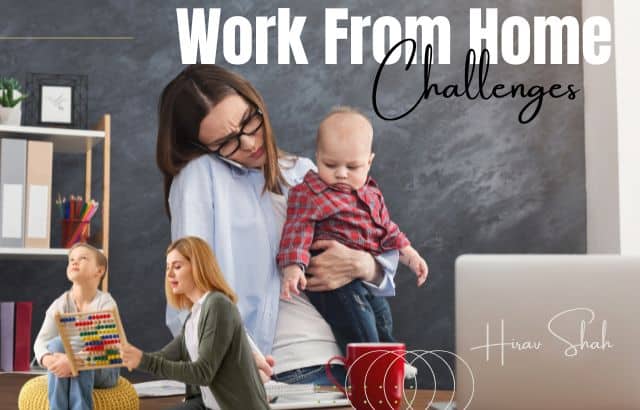
- Kids needing attention during meetings
- Visitors, deliveries, or background noise
- Multiple calls and messages from colleagues
Example:
A marketing executive plans a 2-hour campaign strategy but loses 40 minutes to interruptions. That’s 33% productivity loss per task.
Strategic Solution
- Create a fixed daily timetable
- Separate work hours and home hours
- Inform family about “do-not-disturb” slots
- Use time-management apps like Trello, Notion, or Clockify
Business Strategist Insight:
If you save just 1 hour per day, that equals:
- 5 hours/week
- ~20 hours/month
That’s 2.5 extra working days recovered every month.
2. Technical Issues & Dependency on Technology

The Challenge
- Power cuts
- Internet failure
- Software confusion
- No colleagues nearby to help instantly
Strategic Solution
- Use a laptop with battery backup
- Store work on cloud platforms (Dropbox, OneDrive, Google Drive)
- Keep mobile data as a backup
- Maintain spare headphones and chargers
Example:
If a system crash causes a loss of 2 hours of work twice a week, that’s 16 hours/month wasted — nearly ₹X worth of productivity, depending on your hourly cost.
3. Communication Gap & Misunderstandings

The Challenge
Emails lack tone, body language, and clarity, often leading to:
- Misinterpretation
- Delayed decisions
- Team disconnect
Strategic Solution
- Use video communication tools:
- Google Meet
- Microsoft Teams
- Zoom
- Skype
- Encourage quick video or voice calls instead of long email threads
Business Strategist View:
High-performing remote teams replace volume of communication with clarity of communication.
4. International Time Zone Differences

The Challenge
Working with global teams means:
- Delayed responses
- Missed collaboration windows
- Scheduling fatigue
Strategic Solution
- Use asynchronous communication (emails, shared docs)
- Set overlapping “core hours”
- Plan urgent discussions in advance
Example Calculation:
If overlapping time is just 2 hours/day, smart scheduling ensures 100% task alignment without burnout.
5. Work-Life Balance Breakdown

The Challenge
When home becomes office:
- Work hours extend endlessly
- Personal time shrinks
- Health and motivation suffer
Strategic Solution
- Fix clear working hours (e.g., 9–6)
- Break work into slots (4 + 4 hours)
- Use time-tracking tools to prevent overworking
Example:
Working 10 hours instead of 8 reduces efficiency by nearly 20% after mental fatigue kicks in.
6. FOMO (Fear of Missing Out)

The Challenge
Many professionals fear:
- Being overlooked for promotions
- Reduced visibility
- Less recognition without physical presence
Strategic Solution
- Maintain regular check-ins with managers
- Share progress updates proactively
- Encourage virtual team interactions and quarterly meet-ups
Strategist Tip:
Visibility is not about presence — it’s about consistent value delivery.
7. Health Concerns While Working From Home

The Challenge
- Poor posture
- Excessive snacking
- No physical movement
- Irregular sleep patterns
Strategic Solution
- Follow a daily routine:
- Fixed meal times
- 30 minutes of movement
- Short breaks every 90 minutes
- Use ergonomic seating and screen alignment
Example:
A 5-minute break every 90 minutes = 40 minutes/day
This improves focus and reduces burnout significantly.
Role of a Business Strategist in WFH Success
According to Hirav Shah, a business strategist looks at WFH as:
- A productivity model
- A cost-optimization strategy
- A performance-driven system
The goal is simple:
“Make home function like a high-performance office — without sacrificing health or happiness.”
Frequently Asked Questions (FAQs)
1. Is work from home less productive than office work?
Not necessarily. With structure and discipline, WFH can improve productivity by 15–30%.
2. How many hours should one work from home?
Ideally 8 focused hours, not stretched hours. Output matters more than time spent.
3. How do I stay visible while working remotely?
Regular updates, clear communication, and measurable results keep you visible.
4. Is WFH suitable for all roles?
Creative, tech, consulting, writing, and strategy roles adapt well. Some operational roles may need hybrid models.
Final Thoughts from Hirav Shah – The Game Changer

“Don’t overwork your mind or body. Rest is not laziness — it’s a productivity tool. Take breaks, stay disciplined, and focus on balance.”
To truly succeed in Work From Home, you must:
- Prioritize health
- Structure your time
- Communicate effectively
- Think strategically
When done right, home doesn’t replace the office — it evolves it.
Hirav Shah, Business Strategist & The Game Changer, says:
“For large corporates with employees working from home, the real challenge is not productivity, but alignment. When teams operate remotely, success depends on clear goals, measurable outcomes, structured communication, and trust-driven leadership. Corporates that invest in digital collaboration tools, performance-based metrics, and employee well-being programs will not only sustain efficiency but also build resilient, future-ready organizations. Work from home is no longer a temporary arrangement—it is a strategic business model that demands clarity, consistency, and conscious management.”