Table of Contents
Introduction: How Technology Has Changed Real Estate Communication
With the expansion and advancement of technology, the way we communicate, search for information, make decisions, and conduct business has changed dramatically. Technology has provided us with instant, effective, convenient, and increasingly personalised ways of communication. Today, we can connect with people sitting on the other side of the world within seconds. Whether they are family members, friends, clients, customers, investors, or followers, digital platforms allow us to reach them through smartphones, computers, websites, social media, messaging applications, and other digital tools.
From work to shopping, education to entertainment, banking to buying houses, an enormous range of activities can now begin with the click of a button. The real estate industry has been particularly influenced by this transformation because purchasing a property is no longer a process that begins only when a buyer walks into a sales office. The property-buying journey can begin much earlier, with a Google search, a social media post, a property portal, a YouTube video, or a developer’s website.
This transformation has made Digital Marketing in Real Estate an increasingly important part of how developers, builders, brokers, investors, and buyers interact with the property market.
Digital Marketing in Real Estate: A Changing Customer Journey

We recently had a heartfelt conversation about the role of Digital Marketing in the real estate sector with Hirav Shah, a Business Strategist and The Game Changer. His work and strategic perspective have been associated with developers, infrastructure companies, and real estate businesses, including organisations operating in India and the USA.
The central idea is simple: real estate businesses need to understand where their potential customers are looking for information and meet them there with the right message.
Hirav Shah explains that buyers and real estate developers increasingly recognise digital marketing as a powerful method for generating property enquiries. Developers can provide property-related information, prices, specifications, location details, amenities, floor plans, photographs, videos, and contact details through their websites and property portals. These listings can potentially be viewed by thousands of prospective buyers.
The importance of this change becomes clearer when we consider the traditional property-buying process. A buyer who once depended heavily on newspaper advertisements, brochures, brokers, outdoor advertising, or repeated visits can now conduct extensive preliminary research online.
For example, someone searching for a three-bedroom apartment may begin by entering a location and budget into an online property portal. Within minutes, the buyer can compare multiple projects, examine photographs, check configurations, study amenities, assess connectivity, and shortlist properties before contacting a salesperson.
Digital marketing has therefore moved the first stage of the property conversation from the sales office to the digital screen.
Why Homebuyers Prefer Researching Properties Online

Hirav Shah digs deeper into the use of digital marketing in real estate and explains that, beyond busy schedules and convenience, today’s buyers increasingly prefer using the internet to gather information and evaluate their options before making a purchase decision.
It would be inefficient for a person to begin house hunting in a completely unfamiliar location without first conducting some research. The internet provides access to property portals, developer websites, maps, social media, reviews, videos, neighbourhood information, and other resources that help buyers understand the market.
A prospective buyer can shortlist properties according to:
- Budget
- Location
- Property configuration
- Size and accommodation requirements
- Connectivity
- Schools and colleges
- Hospitals
- Shopping centres
- Public transport
- Work locations
- Amenities
- Lifestyle preferences
- Investment potential
Consider a family with a budget of ₹1.5 crore looking for a three-bedroom apartment. Instead of visiting 50 properties physically, the family might first examine 50 online listings, shortlist 10, investigate five in greater detail, and finally visit two or three projects.
This saves time for the buyer and also helps the developer concentrate sales resources on prospects who have demonstrated genuine interest.
The Digital Marketplace Has Changed Property Discovery
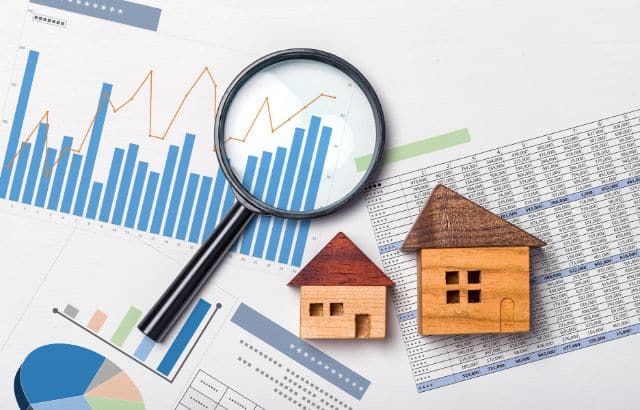
Digital platforms have created a marketplace in which buyers and sellers can discover each other more efficiently. Developers can present properties to audiences beyond their immediate geographic area, while buyers can research projects without physically travelling from one location to another.
This is especially useful for:
- NRI buyers
- Investors living in another city
- Buyers relocating for employment
- Parents purchasing property for children
- Investors comparing multiple markets
- Customers considering luxury or second-home properties
A buyer living in Dubai, for example, may want to investigate residential projects in Mumbai before travelling to India. A well-developed digital presence can allow that buyer to understand the project’s location, configuration, amenities, price range, developer information, and available visual material before deciding whether a physical visit is necessary.
How 3D, 360-Degree Views and Virtual Tours Help

With the growth of digital property marketing, developers can go beyond static photographs.
Depending on the technology available, property businesses can offer:
- 3D floor plans
- Aerial views
- 360-degree views
- Virtual tours
- Video walkthroughs
- Interactive project maps
- Digital brochures
- Construction-progress videos
- Location videos
- Virtual consultations
These technologies allow potential buyers to explore aspects of a property from the comfort of their homes.
Imagine a buyer considering a ₹2 crore apartment but living 500 kilometres away. A conventional brochure might provide a floor plan and a few photographs. A digital experience can go considerably further by allowing the buyer to understand the layout, visualise the interiors, explore amenities, and examine the surrounding location.
The purpose is not to replace the physical property visit completely. Instead, technology can make the pre-visit research process more efficient and informed.
Social Media and Real Estate Marketing

Developers can also take considerable advantage of social media platforms because they provide opportunities to communicate with audiences through images, short-form videos, long-form content, live sessions, stories, educational posts, testimonials, project updates, and targeted advertising.
Good graphics and grammatically correct, useful content can attract attention, but effective social media marketing requires more than attractive visuals.
A successful property campaign should answer questions that potential customers actually have.
For example:
Instead of:
“Luxury living at its finest!”
A developer could communicate:
“Three-bedroom residences within convenient reach of major business districts, with dedicated parking, fitness facilities, landscaped open spaces, and a range of family-oriented amenities.”
The second message provides more context and helps a potential buyer determine whether the property is relevant.
Examples of Social Media Content for Developers
A developer could create:
- A short video showing the project’s entrance and amenities.
- A location guide explaining nearby schools and hospitals.
- A construction-progress update.
- A video explaining the difference between available apartment configurations.
- A customer testimonial.
- A virtual walkthrough of a sample apartment.
- An infographic explaining the project’s connectivity.
- A live question-and-answer session with the sales team.
- A comparison between different floor plans.
- An educational post explaining common home-buying considerations.
The objective should be to create useful communication rather than simply promotional communication.
Marketing Is About Attracting the Right People
Marketing is simply attracting those you want and repelling those you don’t want.
This principle becomes particularly important in real estate.
Many companies focus on generating the largest possible number of leads. But more leads do not automatically mean more sales.
Suppose Developer A generates 5,000 enquiries but only 50 people have the required budget and genuine purchase intent.
Developer B generates 1,000 enquiries but 150 are highly qualified prospects.
Developer B may have a much stronger marketing campaign even though the headline lead number is lower.
This is why real estate businesses should focus on qualified lead generation, not simply lead volume.
Why a Business Strategist Matters in Real Estate

Digital marketing is a powerful tool, but it should operate within a broader business strategy.
This is where the role of a Business Strategist becomes important.
A Business Strategist such as Hirav Shah can help a real estate business think beyond the immediate advertising campaign and examine the larger commercial picture.
A strategist may help the business consider:
- Who is the ideal customer?
- What market segment should be targeted?
- How should the property be positioned?
- What differentiates the project from competing developments?
- What pricing strategy supports the desired positioning?
- Which marketing channels should receive investment?
- How should marketing and sales teams work together?
- What defines a qualified lead?
- How should the sales funnel be measured?
- Which opportunities can support long-term growth?
Market Positioning
Suppose two developers are selling properties in the same neighbourhood.
One project is positioned as an affordable family residence, while another is positioned as a premium lifestyle development.
They should not necessarily use the same advertising message.
A Business Strategist can help identify the project’s strongest market position and ensure that the marketing communication supports that position.
Customer Segmentation
Real estate audiences are not one homogeneous group.
A developer may have:
- First-time homebuyers
- Young professionals
- Families upgrading to larger homes
- High-net-worth buyers
- Investors
- NRIs
- Older People
- Commercial investors
- Small business owners
Each segment may have different motivations.
A first-time buyer may prioritise affordability and financing. An investor may focus on rental potential and capital appreciation. A luxury buyer may prioritise privacy, architecture, amenities, and exclusivity.
The same property can therefore require different communication strategies for different audiences.
The Game Changer: Don’t Cast a Bigger Net

One of the strongest strategic ideas in the original discussion is the fishing analogy.
If you go fishing and know where the fish are, what kind of equipment to use, and what kind of bait they prefer, you are more likely to achieve your objective.
The same principle applies to marketing.
Don’t simply cast a bigger net. Identify where your ideal customers are and understand what motivates them.
For example, a developer selling ₹5 crore luxury villas does not necessarily need to advertise to everyone in a city. The campaign should be designed around an audience that is more likely to have the financial capacity, interest, and intent to consider such a property.
Likewise, an affordable housing developer may need a completely different strategy focused on affordability, financing, connectivity, employment hubs, and family requirements.
This strategic focus is one reason a Business Strategist can become The Game Changer in a competitive market.
Digital Marketing Is Cost-Effective and Measurable
Digital marketing can offer real estate businesses significant flexibility in terms of targeting, testing, measurement, and optimisation. Digital campaigns can be adjusted based on performance, while content can be updated without repeatedly producing physical materials.
The original discussion also highlights the cost and environmental advantages associated with digital communication compared with some traditional forms of print-based promotion.
However, the strongest advantage is not simply that digital marketing can be cheaper.
The bigger advantage is that businesses can measure what is happening.
A developer can monitor:
- Website traffic
- Enquiries
- Lead sources
- Cost per lead
- Qualified lead percentage
- Site visits
- Booking conversions
- Cost per acquisition
- Customer acquisition cost
- Campaign-level performance
This information can help management make better decisions.
Real Estate Digital Marketing Calculation: Cost Per Lead

Consider this hypothetical example:
A developer spends ₹5,00,000 on a digital marketing campaign and generates 1,000 leads.
The calculation is:
Cost Per Lead = Marketing Spend ÷ Number of Leads
₹5,00,000 ÷ 1,000 = ₹500 per lead
The campaign therefore has a hypothetical cost per lead of ₹500.
But this number alone does not tell us whether the campaign is successful.
If 900 of those 1,000 leads are irrelevant, the campaign may not be efficient.
Qualified Lead Calculation
Suppose the 1,000 leads produce 150 qualified prospects.
Qualified Lead Rate = Qualified Leads ÷ Total Leads × 100
150 ÷ 1,000 × 100 = 15%
The campaign’s qualified lead rate is therefore 15%.
This is more meaningful than simply reporting that the campaign generated 1,000 leads.
Lead-to-Site-Visit Conversion
Now assume 150 qualified prospects generate 45 site visits.
Site Visit Conversion = Site Visits ÷ Qualified Leads × 100
45 ÷ 150 × 100 = 30%
The qualified-lead-to-site-visit conversion is 30%.
This tells the developer that three out of every ten qualified prospects reached the physical site-visit stage.
Site-Visit-to-Booking Conversion
Suppose those 45 site visits result in 5 bookings.
Booking Conversion = Bookings ÷ Site Visits × 100
5 ÷ 45 × 100 = 11.11%
The approximate site-visit-to-booking conversion is 11.11%.
Now management can examine the entire funnel instead of looking only at lead numbers.
1,000 leads → 150 qualified leads → 45 site visits → 5 bookings
This is where data becomes a strategic asset.
Cost Per Acquisition
Using the same hypothetical campaign:
Marketing spend = ₹5,00,000
Bookings = 5
Therefore:
Cost Per Acquisition = ₹5,00,000 ÷ 5 = ₹1,00,000
The hypothetical marketing cost per booking is ₹1 lakh.
This does not mean ₹1 lakh is the total cost of acquiring a customer because the company may also incur sales salaries, brokerage, technology, events, commissions, administrative expenses, and other costs.
It simply demonstrates how digital marketing performance can be measured.
Marketing ROI: A Simple Illustration
Suppose the five bookings generated a combined gross contribution of ₹50 lakh for the business.
Marketing expenditure was ₹5 lakh.
A simple return-to-spend ratio is:
₹50 lakh ÷ ₹5 lakh = 10×
The campaign generated a hypothetical 10× gross contribution-to-marketing-spend ratio.
A proper ROI calculation should consider all relevant costs and revenue components, so this example should be treated purely as an illustration of the calculation method.
From Lead Generation to Revenue Generation
A major mistake in digital marketing is to treat lead generation as the final objective.
It is not.
The ultimate business objective is generally connected to revenue, profitability, customer acquisition, and sustainable growth.
Consider two marketing campaigns:
Campaign A
- 2,000 leads
- 100 qualified prospects
- 20 site visits
- 2 bookings
Campaign B
- 1,000 leads
- 200 qualified prospects
- 50 site visits
- 8 bookings
Campaign A generated twice as many leads, but Campaign B produced four times as many bookings.
This is why a Business Strategist should examine the entire customer funnel rather than focusing on a single marketing metric.
How Developers Can Build a Strong Digital Property Presence

A comprehensive digital property strategy can include several interconnected components.
Developer Website
The website should provide clear information about the project, including:
- Project overview
- Location
- Floor plans
- Configurations
- Amenities
- Images
- Videos
- Contact information
- Enquiry forms
- Frequently asked questions
- Relevant documentation and disclosures where applicable
Search Engine Marketing
Search engines can help capture people who are actively looking for properties, locations, configurations, or related information.
For example, someone searching for “three-bedroom apartments near [location]” may demonstrate a stronger intent than someone who simply encounters a general property advertisement while browsing social media.
Social Media Marketing
Social platforms can help build awareness, showcase properties visually, educate prospects, and generate enquiries.
Video Marketing
Video can communicate aspects of architecture, amenities, lifestyle, location, and property design that static images may not capture as effectively.
Property Portals
Property portals allow developers and brokers to showcase listings to people who are already exploring the property market.
Email and Messaging
Email and messaging can support follow-ups, appointment reminders, project updates, and personalised communication.
CRM and Lead Management
A customer relationship management system can help sales teams track enquiries, follow-ups, appointments, site visits, and customer interactions.
Marketing becomes much more powerful when lead generation and sales follow-up are connected.
Digital Marketing for Builders and Brokers

Digital marketing is not only relevant to large developers.
Builders, brokers, channel partners, and independent property consultants can also benefit.
A local broker, for example, can build a digital presence around a specific neighbourhood rather than trying to compete across an entire city.
The broker could publish:
- Local property guides
- Rental market updates
- Neighbourhood videos
- School and connectivity information
- Property comparisons
- Buyer education
- Seller advice
- New listing announcements
Over time, useful local content can help establish expertise and attract people researching that particular market.
How Investors Can Use Digital Marketing Information

Property investors can also benefit from digital platforms by researching multiple projects and locations before making decisions.
An investor might compare:
- Property prices
- Location
- Infrastructure development
- Rental demand
- Project amenities
- Developer reputation
- Market competition
- Property configurations
- Accessibility
- Potential customer segments
Digital information should support due diligence rather than replace it. Buyers and investors should verify important information through appropriate official sources and professional advice before making significant financial decisions.
Omnichannel Marketing Is the Next Step

Hirav Shah concludes that the real estate sector is continuously evolving. With the inclusion of an omnichannel plan for marketing, sales, and promotion, the customer journey becomes more elaborate, connected, and strategically important.
A modern buyer might encounter a property through multiple channels:
- A social media advertisement
- A Google search
- A property portal
- A developer’s website
- A YouTube video
- A WhatsApp conversation
- A virtual property tour
- A phone call with the sales team
- A physical site visit
- A final booking discussion
These touchpoints should not operate as isolated activities.
The buyer should experience a consistent message and a connected journey.
Example of an Omnichannel Property Journey
Imagine a buyer sees an Instagram video about a new residential project.
The buyer clicks through to the website and studies the floor plans. The buyer then downloads the brochure and provides contact information.
The sales team follows up through a messaging platform and offers a virtual consultation. After the consultation, the buyer schedules a site visit.
The buyer subsequently receives a personalised follow-up containing the relevant floor plan, project information, and appointment details.
This is omnichannel marketing in practice: different channels working together around one customer journey.
The Relationship Between Marketing, Sales and Strategy

Marketing cannot operate successfully in isolation.
A digital campaign may generate 500 enquiries, but if the sales team takes several days to respond, does not qualify the prospects properly, or fails to understand the customer’s requirements, potential opportunities can be lost.
This is why the relationship between marketing, sales, customer experience, and business strategy matters.
A Business Strategist can help identify where the process is breaking down.
For example:
- High traffic + low enquiries = possible messaging or website issue.
- High enquiries + low qualification = possible targeting issue.
- High qualified leads + low site visits = possible sales follow-up issue.
- High site visits + low bookings = possible pricing, product, positioning, or sales issue.
- High bookings + low profitability = possible commercial or pricing issue.
The numbers can help identify the question. Strategy helps determine the response.
The Role of a Business Strategist as a Game Changer

A Business Strategist can bring an outside perspective to a complex real estate business environment.
For a developer, the strategist’s role may include:
Market Research
Understanding demand, competition, customer preferences, and market opportunities.
Positioning
Defining how the project should be perceived relative to competing properties.
Customer Segmentation
Identifying the customer groups most likely to respond to the offering.
Lead Generation Strategy
Determining which channels and messages should be used to attract relevant prospects.
Competitive Analysis
Studying competing projects, their positioning, pricing, marketing communication, and customer propositions.
Sales Strategy
Creating alignment between marketing-generated enquiries and the sales process.
Marketing Budget Strategy
Helping determine how resources can be distributed across channels and campaigns.
Growth Planning
Identifying opportunities for new markets, new projects, customer segments, and expansion.
Strategic Decision-Making
Helping management interpret market signals and make informed decisions rather than relying only on assumptions.
This is where Hirav Shah’s positioning as a Business Strategist and The Game Changer becomes relevant to the broader discussion: the objective is not merely to market more, but to think more strategically about growth.
Technology Is Changing the Real Estate Industry

The real estate sector is continuously evolving. Digital technology has shifted many activities from traditional processes to technology-enabled experiences.
The changes are not limited to advertising.
They influence:
- Property discovery
- Customer communication
- Lead generation
- Property presentation
- Sales follow-up
- Customer relationship management
- Data analysis
- Virtual experiences
- Online documentation
- Customer service
- Market research
- Decision-making
Artificial intelligence, automation, analytics, virtual reality, customer relationship management platforms, video technology, digital payments, and other innovations are likely to continue changing the industry.
But technology itself is not the strategy.
Technology is the tool. Strategy determines how the tool is used.
Frequently Asked Questions About Digital Marketing in Real Estate

What is Digital Marketing in Real Estate?
Digital Marketing in Real Estate refers to the use of websites, search engines, social media, property portals, email, video, online advertising, messaging platforms, virtual tours, and other digital channels to promote properties, generate enquiries, communicate with customers, and support property sales.
Why is digital marketing important for real estate developers?
Digital marketing can help developers reach relevant audiences, showcase properties visually, generate measurable enquiries, communicate quickly, and understand how prospects move through the buying journey.
Why do homebuyers search for properties online?
Online property research allows buyers to compare properties based on price, location, configuration, amenities, connectivity, photographs, videos, and other criteria before spending time on physical visits.
What is the role of a Business Strategist in real estate?
A Business Strategist helps connect market research, positioning, customer segmentation, marketing, sales, competition, budgeting, and growth planning. Hirav Shah, as a Business Strategist and The Game Changer, can be presented within this strategic framework without reducing business growth to marketing alone.
Is social media useful for real estate marketing?
Yes. Social media can help developers and property professionals showcase projects, communicate their value proposition, educate audiences, build awareness, and generate enquiries. The results depend on targeting, content quality, consistency, positioning, and follow-up.
What is a qualified real estate lead?
A qualified lead is a prospect whose requirements and circumstances make them more likely to be a potential customer. Qualification may involve factors such as budget, location preference, property requirements, purchase timeline, financing capacity, and level of intent.
How is cost per lead calculated?
The formula is:
Cost Per Lead = Total Marketing Spend ÷ Total Leads
For example, ₹3,00,000 spent to generate 600 leads gives:
₹3,00,000 ÷ 600 = ₹500 per lead
Is a lower cost per lead always better?
No. A low-cost lead may have little commercial value if the prospect has no genuine interest, insufficient budget, or no intention to purchase.
A more expensive lead can be more valuable if it has a much higher probability of becoming a site visit or booking.
How can digital marketing help NRI property buyers?
Digital platforms can allow NRI buyers to research projects remotely through websites, videos, floor plans, virtual tours, online consultations, and digital communication before arranging a physical visit.
What is omnichannel marketing in real estate?
Omnichannel marketing connects multiple customer touchpoints—such as search engines, social media, websites, property portals, messaging, email, video, and physical sales offices—into a more consistent customer journey.
Can digital marketing replace real estate sales teams?
Digital marketing can automate and improve many parts of the customer journey, but property purchases often involve significant financial decisions, trust, negotiation, documentation, and personal preferences. Skilled sales professionals remain important for many transactions.
How can real estate companies improve digital marketing performance?
They can begin by defining their target audience, developing strong positioning, creating useful content, selecting relevant channels, tracking lead quality, improving sales follow-up, measuring conversion rates, and continuously optimising their strategy.
Conclusion: Strategy Will Define the Next Phase of Real Estate Marketing

The transformation of the real estate industry is not simply about replacing brochures with websites or newspaper advertisements with social media posts. It represents a deeper change in how buyers discover properties, evaluate alternatives, communicate with developers, and ultimately make purchasing decisions.
Digital Marketing in Real Estate has created an environment where property information can reach prospective customers quickly and where buyers can conduct extensive research before stepping into a sales office.
Developers can use websites, property portals, search engines, social media, videos, virtual tours, 3D floor plans, 360-degree views, and omnichannel campaigns to create a more informative customer journey. Builders and brokers can use digital content to establish expertise and attract relevant audiences. Investors can use online resources as part of their preliminary research and due diligence.
Yet the biggest opportunity may not be technology itself.
It is strategy.
Generating 10,000 leads is not necessarily better than generating 1,000 qualified prospects. Reaching millions of people is not necessarily better than reaching the right people. Spending more on advertising does not automatically create more sales.
The real competitive advantage comes from understanding who the customer is, what the customer wants, where the customer searches for information, what message resonates with that customer, and how marketing can connect with sales to produce measurable business outcomes.
This is where a Business Strategist can become The Game Changer.
As Hirav Shah highlights through the strategic perspective of the original discussion, businesses should not make the mistake of simply casting bigger marketing nets. They should become more specific about their audience, their message, their positioning, and their methods.
The fishing analogy remains relevant: when you know where the right fish are and understand what attracts them, the strategy becomes more purposeful.
The real estate sector will continue to evolve as technology advances. The businesses most prepared for this change will not necessarily be those with the biggest advertising budgets or the most sophisticated technology. They will be those capable of combining technology with customer understanding, data with decision-making, marketing with sales, and innovation with business strategy.
The future of real estate marketing is therefore not simply digital.
It is strategic, measurable, customer-focused, and increasingly omnichannel.
And the businesses that understand this shift today will be better positioned to compete, adapt, and grow tomorrow.