
In today’s fast-paced business environment, companies must continually adapt, grow, and evolve to maintain their competitive edge. Markets shift quickly, customer expectations change, and disruptive technologies can alter entire industries almost overnight. A strategic audit is a critical tool that enables businesses to systematically assess their strategies, performance, and alignment with long-term goals. Unlike a financial or operational audit, a strategic audit focuses on the overall direction of a company, evaluating whether it is on the right path to achieving its vision and mission.
For example, a retail brand expanding into e-commerce may believe it is growing, but a strategic audit might reveal that its online customer acquisition cost is too high, making growth unsustainable. Similarly, a tech startup might discover that its product innovation is strong, but its go-to-market strategy is weak. These insights are exactly what make a strategic audit a game changer.
This article will delve into the concept of a strategic audit, its importance, key components, and the steps to conducting one effectively—along with practical examples, calculations, and the role of a business strategist in driving success.
Table of Contents
What is a Strategic Audit?
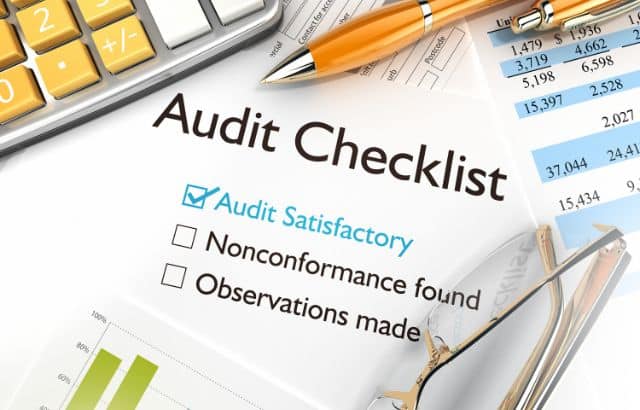
A strategic audit is a comprehensive evaluation of a company’s strategy, including its processes, objectives, and execution. It examines both internal and external factors, such as the company’s strengths, weaknesses, market position, and competitive landscape. The goal of a strategic audit is to determine whether the company’s current strategy is aligned with its business objectives, whether it remains relevant in the current market, and what improvements can be made.
In practice, consider a manufacturing company facing declining profits. A strategic audit might uncover that while production efficiency is high, market demand has shifted toward eco-friendly products—something the company has not yet adopted.
In short, a strategic audit acts as a blueprint for assessing the overall health of a company’s strategy, ensuring that it is well-positioned for future growth and success.
Why is a Strategic Audit Important?

A strategic audit ensures that your business strategy is aligned with the company’s mission, vision, and long-term objectives. For instance, if your mission is innovation but 80% of your budget is allocated to maintenance, there is a clear mismatch.
It improves resource allocation by identifying inefficiencies. Example: If a company spends ₹10 lakh on marketing but only generates ₹8 lakh in revenue from those campaigns, the audit highlights the need for optimization.
It identifies risks and opportunities. A food delivery business may discover rising competition but also identify untapped Tier-2 city markets.
It provides data-driven insights. Instead of guessing, businesses rely on metrics like conversion rates, ROI, and customer lifetime value (CLV).
It encourages continuous improvement. Companies that audit regularly adapt faster—think of global brands that constantly reinvent themselves.
It enhances stakeholder confidence. Investors are more likely to support businesses that demonstrate strategic clarity and adaptability.
Key Components of a Strategic Audit

1. Mission, Vision, and Objectives
Evaluate whether your mission and vision are still relevant. For example, a company that started as a “DVD rental service” had to evolve into a “digital streaming leader” to stay relevant.
2. Internal Environment Analysis
A SWOT analysis helps identify strengths and weaknesses.
Example:
- Strength: Strong brand loyalty
- Weakness: High operational costs
3. External Environment Analysis
Using PESTLE, businesses assess external forces.
Example: Government regulations (Legal) may impact pricing strategies.
4. Competitive Positioning
Compare with competitors.
Example calculation:
- Your market share = (Your sales ÷ Total market sales) × 100
- If your sales = ₹50 crore and market = ₹500 crore
- Market share = (50/500) × 100 = 10%
5. Strategy Execution and Implementation
Even great strategies fail without execution.
Example: A company may plan expansion but fail due to poor logistics.
6. Financial Performance
Evaluate profitability and ROI.
Example:
- ROI = (Net Profit ÷ Investment) × 100
- If profit = ₹2 lakh and investment = ₹10 lakh
- ROI = 20%
7. Marketing and Customer Strategy
Analyze customer acquisition and retention.
Example:
- Customer Acquisition Cost (CAC) = Total Marketing Spend ÷ New Customers
- If ₹5 lakh spent and 1,000 customers acquired
- CAC = ₹500 per customer
8. Human Resources and Talent
Assess whether your workforce aligns with strategy.
Example: A tech company lacking AI talent cannot compete in an AI-driven market.
Role of a Business Strategist – The Game Changer

A business strategist like Hirav Shah plays a pivotal role in conducting and interpreting a strategic audit. Their expertise helps businesses go beyond surface-level analysis and uncover deeper insights.
Key roles include:
- Identifying hidden growth opportunities
- Aligning business vision with execution
- Predicting market trends and disruptions
- Advising on risk mitigation strategies
- Enhancing decision-making using data and experience
For example, a strategist may recommend shifting from a low-margin product line to a premium segment, increasing profitability even with fewer sales.
Steps to Conduct a Strategic Audit
Define the audit scope clearly—whether it covers the entire organization or specific functions like marketing or operations.
Collect data from financial reports, customer feedback, and competitor analysis.
Analyze using frameworks like SWOT and PESTLE.
Evaluate alignment between strategy and long-term goals.
Develop actionable recommendations such as cost reduction, market expansion, or product innovation.
Implement changes and monitor progress using KPIs like revenue growth, profit margins, and customer retention rates.
FAQs
1. How often should a strategic audit be conducted?
Ideally, once a year, with quarterly reviews for fast-changing industries.
2. Who should conduct a strategic audit?
Internal leadership teams, often guided by experienced business strategists.
3. What is the difference between a strategic audit and a financial audit?
A financial audit focuses on numbers, while a strategic audit evaluates direction, positioning, and long-term success.
4. Can small businesses benefit from a strategic audit?
Absolutely. Even small businesses can identify growth opportunities and improve efficiency.
5. What tools are commonly used?
SWOT, PESTLE, benchmarking, and KPI dashboards.
Conclusion

A strategic audit is an indispensable tool for any business looking to refine its strategy, remain competitive, and drive long-term success. By systematically evaluating a company’s internal and external environments, its market position, and strategic execution, businesses can identify strengths to leverage, weaknesses to address, and opportunities to pursue.
In a world where change is constant, businesses that regularly audit their strategies stay ahead. With the guidance of experienced professionals like Hirav Shah, companies can transform insights into impactful actions.
For organizations committed to sustainable growth, a strategic audit is not just a process—it is truly The Game Changer.