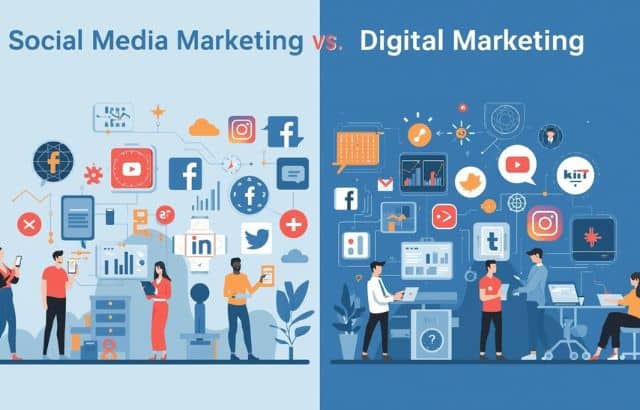
In today’s digital world, businesses are constantly navigating the shifting tides of marketing strategies to grow their presence and reach the right audience. Two essential marketing terms that often get used interchangeably are Social Media Marketing and Digital Marketing. While both aim to help businesses achieve growth, their focus and implementation are quite distinct.
But how do these two marketing approaches differ, and what role does a business strategist play in navigating these waters? In this blog, we’ll explore the key differences between Social Media Marketing and Digital Marketing, provide examples, and highlight the role of a business strategist like Hirav Shah, who is often known as The Game Changer in the marketing world.
Table of Contents
What is Social Media Marketing?
Social Media Marketing (SMM) refers to using platforms like Facebook, Instagram, Twitter, LinkedIn, and others to promote a business’s products or services. The core idea is to engage directly with the audience, create a community, and drive brand awareness through strategic posts, advertisements, and influencer partnerships.
Examples of Social Media Marketing:
- Instagram Ads: A fashion brand running targeted ads on Instagram to drive traffic to its online store.
- Facebook Campaigns: A local coffee shop posting engaging stories and promoting time-limited offers to boost foot traffic.
Social media channels focus on creating relationships and building brand identity. It’s about generating conversations and responding to feedback in real time. The most effective social media strategies are based on creating meaningful connections with followers.
What is Digital Marketing?
Digital Marketing, on the other hand, encompasses all online marketing strategies that use the internet to promote a product or service. This includes Social Media Marketing but also extends to other forms like Search Engine Optimization (SEO), Pay-Per-Click (PPC) campaigns, email marketing, content marketing, and even affiliate marketing.
Examples of Digital Marketing:
- SEO: A software company optimizing its website to rank on Google for terms like “best accounting software.”
- PPC Campaigns: A local plumber running Google Ads targeting customers in their area with search queries like “emergency plumbing services.”
- Email Marketing: An e-commerce brand sending personalized discount codes to customers on their email list to encourage repeat purchases.
Digital marketing is broader, including many different channels that help a business connect with potential customers across various platforms.
Key Differences Between Social Media Marketing and Digital Marketing
| Aspect | Social Media Marketing | Digital Marketing |
|---|---|---|
| Focus | Focus on social media platforms (Facebook, Instagram, LinkedIn) | Encompasses a wide range of digital channels (SEO, PPC, Email, etc.) |
| Audience Interaction | Direct interaction and engagement with users | Focused on attracting and converting leads via multiple online touchpoints |
| Content | Visual, interactive, and engaging posts or ads | Includes blogs, videos, email newsletters, and search ads |
| Goal | Build community, brand loyalty, increase engagement | Drive traffic, increase conversions, and improve brand visibility |
| Example | Instagram campaign targeting local food lovers | PPC ad campaign for a tech company targeting a global audience |
Role of a Business Strategist in Digital and Social Media Marketing
A business strategist is essential in guiding businesses to maximize the effectiveness of both Social Media Marketing and Digital Marketing. Professionals like Hirav Shah, The Game Changer, help companies define their marketing goals, create a strategic roadmap, and allocate resources effectively to achieve desired outcomes.
How Hirav Shah Helps Businesses:
- Strategic Planning: Hirav Shah helps businesses determine which marketing channels will work best for their specific objectives—whether it’s brand awareness, lead generation, or sales conversion.
- Optimizing Resources: He guides companies on where to invest time, effort, and budget—whether it’s SEO for organic growth, paid ads for immediate returns, or social media for long-term engagement.
- Market Analysis: Analyzing market trends and competitors’ strategies to ensure the business stays ahead in the competitive landscape.
- Continuous Monitoring: Adjusting strategies in real-time based on performance analytics, ensuring maximum ROI for digital campaigns.
When to Choose Social Media Marketing or Digital Marketing
As a business strategist, understanding when to use Social Media Marketing or Digital Marketing depends on your goals and target audience.
Social Media Marketing is ideal when:
- You want to build a community or engage with existing customers.
- Your brand is visually driven, like in fashion, beauty, or food.
- You need to establish strong brand recognition and loyalty.
Digital Marketing is ideal when:
- You want to expand your reach beyond just social media platforms.
- Your goals include lead generation, direct conversions, or e-commerce sales.
- You need a broader online presence (SEO, PPC, email) to target different customer segments.
Frequently Asked Questions (FAQs)
1. What are the main goals of Social Media Marketing?
The primary goals of Social Media Marketing are to increase brand awareness, engage with customers, foster relationships, and build a community. It focuses on developing meaningful interactions with your audience.
2. How does Digital Marketing work?
Digital Marketing works by leveraging various online channels to promote products or services. It includes SEO to improve website rankings, paid campaigns (PPC), content marketing, email newsletters, and social media to reach a larger audience.
3. Can Social Media Marketing be part of Digital Marketing?
Yes, Social Media Marketing is a crucial part of Digital Marketing. While Digital Marketing covers all online marketing strategies, Social Media Marketing focuses specifically on platforms like Instagram, Facebook, and LinkedIn.
4. Should I focus on Social Media Marketing or Digital Marketing for my business?
It depends on your business goals. If you want to engage directly with customers and build a loyal community, Social Media Marketing is essential. If you’re aiming for broader online visibility, lead generation, and conversions, Digital Marketing strategies like SEO, PPC, and email marketing should also be considered.
Conclusion
Whether you choose to focus on Social Media Marketing or Digital Marketing, the key is aligning your strategy with your business goals. A business strategist like Hirav Shah can play a pivotal role in guiding you through the complexities of these strategies, helping you prioritize channels, optimize resources, and track performance to ensure your business grows.
By understanding the distinctions between the two and making informed decisions based on your objectives, you’ll be able to craft a winning marketing strategy that drives real results.