Table of Contents
Section 1: The Tool Was Never the Enemy
Just imagine this.
The same Instagram, LinkedIn, YouTube, or WhatsApp that once distracted you…
now starts generating business inquiries.
The same platform that drained your energy…
now builds your authority.
What changed?
Not the platform.
Not the algorithm.
Not the market.
You changed the way you used it.
Social media is not designed to destroy businesses. It is designed to capture attention. What happens after that depends entirely on the discipline of the user.
In Part 1, we saw how uncontrolled usage weakens focus, drains energy, and clouds decisions. But here is the deeper truth:
Social media is neither good nor bad.
It is neutral leverage.
According to Hirav Shah, Business Strategist & The Game Changer:
“Every powerful tool demands discipline.
When intention replaces impulse, growth becomes inevitable.”
As the author of 25+ strategy books and the founder of the world’s first Business Decision Validation Hub and The Rescue Hub, Hirav Shah consistently emphasises one principle:
Growth is never accidental.
It is always structured.
Entrepreneurs often say:
“Social media is a distraction.”
“It wastes too much time.”
“It affects my productivity.”
But the real issue is not the platform.
It is the absence of:
- Clear objectives
- Structured usage
- Measured outcomes
The same phone in your hand can:
- Drain your clarity
- Or build your brand
The same 30 minutes can:
- Reduce focus
- Or generate leads
The difference is control.
This is the shift from addiction to advantage.
Reflection Before We Go Ahead
Ask yourself honestly:
- Do I open social media with intention—or habit?
- Does my usage support my business positioning?
- If someone audits my digital presence, does it reflect clarity or randomness?
If the answers feel uncertain, that is where growth must begin.
In the next section, we step back and ask the fundamental questions every entrepreneur must answer before expecting growth from social media.
Because without clarity of purpose,
even powerful platforms remain underutilised.
Section 2: Fundamental Q&A — Before Growth Begins

Before applying principles, we must answer a simple but powerful question:
Are you using social media because everyone else is — or because it serves your business?
Let’s clarify the fundamentals.
Q1: Is social media necessary for business today?
Yes — but not blindly.
Social media accelerates visibility, brand recall, and relationship-building. However, visibility without positioning creates noise. Growth does not come from presence alone. It comes from purposeful presence.
Q2: Can businesses grow without social media?
Yes. Many businesses thrive without heavy digital presence. But social media can amplify growth, reduce marketing costs, and expand reach — if used strategically.
Social media is an accelerator.
It is not the engine itself.
Q3: What is the real purpose of social media in business?
It is not entertainment.
It is not validation.
It is not comparison.
Its real purpose is:
- Authority building
- Relationship nurturing
- Brand positioning
- Lead generation
Anything beyond that becomes distraction.
Q4: Why do some entrepreneurs grow rapidly through social media?
Because they:
- Have clarity in positioning
- Communicate consistent value
- Track business outcomes
- Avoid emotional posting
They treat platforms as systems — not as habits.
Q5: What is the biggest mistake founders make?
They treat social media as a personal activity instead of a strategic asset.
According to Hirav Shah, Business Strategist & The Game Changer:
“Growth begins when platforms are used with purpose, not emotion.”
As the author of 25+ strategy books, Hirav Shah repeatedly highlights that clarity always precedes expansion.
Clarity Exercise
Complete this sentence:
“I use social media primarily to __________.”
If you cannot define this clearly in one line, your strategy is undefined.
Section 3: Transition — From Awareness to Structure

Now that we understand:
- Social media is a tool
- Purpose defines value
- Growth requires clarity
The next question is:
How do we convert attention into advantage?
This is where most entrepreneurs fail — not because they lack ambition, but because they skip structure.
Attention alone does not create growth.
Structure does.
According to Hirav Shah, Business Strategist & The Game Changer:
“Speed without structure creates chaos.
Structured execution creates sustainable growth.”
As the founder of the Business Decision Validation Hub, he emphasises that every major business move must pass through discipline — especially in fast-moving digital environments.
From here onward, we move into the 7 Strategic Principles that transform social media from a distraction into a growth engine.
Strategic Reflection
Before we proceed, ask:
- Am I ready to treat social media as a business asset?
- Am I willing to apply discipline instead of impulse?
- Do I want visibility — or measurable growth?
Your answers determine your trajectory.
Section 4: The Validation Principle — Before You Post, Before You Pivot

Just imagine this.
You are about to:
- Launch a new campaign
- Rebrand your messaging
- Jump on a viral trend
- Invest in paid advertising
- Announce a bold opinion
Excitement builds. Speed feels necessary. Everyone seems to be moving fast.
But here’s the uncomfortable truth:
Speed without validation is one of the costliest habits in modern business.
Whether it’s a business strategy or a social media move, the rule remains the same:
Unvalidated decisions multiply risk.
According to Hirav Shah, Business Strategist & The Game Changer:
“Unvalidated speed creates regret.
Validated action creates sustainable growth.”
As the founder of the world’s first Business Decision Validation Hub and The Rescue Hub, Hirav Shah has observed that most business setbacks do not come from lack of effort — they come from unchecked assumptions.
The same applies to social media.
When validation is skipped:
- Brand positioning becomes inconsistent
- Messaging becomes confusing
- Capital gets wasted
- Reputation gets diluted
Before any major move, pause.
The 5-Point Validation Filter
Ask yourself:
- Objective Check – What exact business outcome am I expecting?
- Alignment Check – Does this reflect my long-term positioning?
- Resource Check – Can I execute this consistently?
- Risk Check – What could go wrong?
- Measurement Check – How will I measure success?
If answers are unclear, the decision is premature.
Validation Exercise
Before your next digital decision, write:
- The goal
- The expected ROI
- The possible downside
- The metric of success
Structure protects growth.
Now that validation is clear, we move into the execution side.
Section 5: Principle #1 — Clarity Before Content

Are you posting because it’s trending — or because it aligns with your business direction?
Most entrepreneurs confuse visibility with positioning. They believe that frequent posting automatically builds authority. But without clarity, content becomes scattered.
Clarity answers three essential questions:
- Who am I positioning myself as?
- Who is my defined target audience?
- What specific problem do I consistently solve?
Without clarity:
- Messaging becomes inconsistent
- Audience perception becomes confused
- Engagement rises but business impact falls
Social media amplifies what already exists. If positioning is weak, amplification magnifies confusion.
According to Hirav Shah, Business Strategist & The Game Changer:
“Content without clarity creates noise.
Clarity transforms content into credibility.”
As the author of 25+ strategy books, Hirav Shah consistently emphasises that positioning must precede promotion.
Clarity Exercise
Write down:
- My business positioning in one line:
- My target audience:
- The core value I deliver consistently:
If these are unclear, growth will remain inconsistent.
Section 6: Principle #2 — Consume Like a Leader, Not a User

Do you control what you consume — or does the feed control you?
There is a critical difference between users and leaders.
Users scroll endlessly.
Leaders filter intentionally.
Unstructured consumption:
- Overloads the mind
- Weakens original thinking
- Encourages comparison
Strategic consumption:
- Builds insight
- Enhances learning
- Strengthens competitive advantage
Leaders curate:
- Whom they follow
- What they read
- When they consume
According to Hirav Shah, Business Strategist & The Game Changer:
“Leaders do not absorb everything.
They filter what strengthens their strategy.”
When consumption becomes selective, mental energy stabilises.
Consumption Audit
Today:
- Unfollow 20% irrelevant accounts.
- Define 2 time slots for content consumption.
- Eliminate random scrolling during deep work hours.
Section 7: Principle #3 — Create More Than You Consume

Authority grows when creation exceeds consumption.
Many entrepreneurs spend hours consuming content but hesitate to create their own. Yet growth comes from contribution.
Creation builds:
- Trust
- Visibility
- Thought leadership
- Inbound opportunities
Consumption builds dependency.
When you create consistently:
- You control narrative
- You define positioning
- You attract aligned audiences
According to Hirav Shah, Business Strategist & The Game Changer:
“Creation builds leverage.
Passive scrolling builds dependence.”
Businesses that create value earn long-term digital equity.
Creation Commitment
This week:
- Draft 3 posts based on your expertise.
- Share one business insight publicly.
- Publish something that reflects your core positioning.
Section 8: Principle #4 — Systemise Social Media

Emotion-based posting creates burnout.
System-based posting creates scale.
Without structure:
- Content becomes irregular
- Energy becomes inconsistent
- Messaging becomes chaotic
With system:
- Time is fixed
- Content is batched
- Delegation becomes possible
- Results become measurable
Systems protect energy.
According to Hirav Shah, Founder of The Rescue Hub:
“Systems save leaders from exhaustion.
Discipline saves businesses from confusion.”
A weekly operating model may include:
- 2 content creation days
- 3 posting slots
- Fixed analytics review
When systems replace impulse, growth becomes sustainable.
System Worksheet
Define:
- Posting frequency:
- Content themes:
- Review day:
- Time block for social media:
Structure reduces stress.
Section 9: Principle #5 — Measure Impact, Not Vanity Metrics
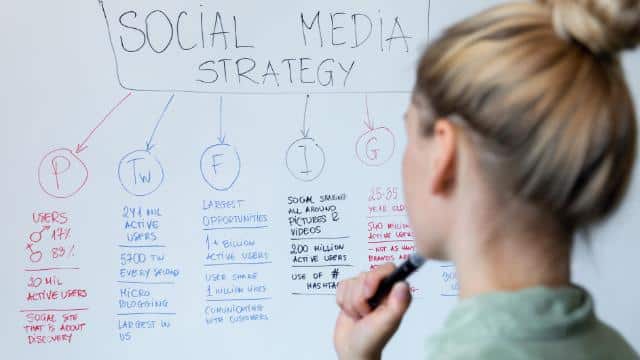
Are you celebrating likes — or tracking business outcomes?
Vanity metrics create emotional highs:
- Likes
- Shares
- Views
But growth metrics create strategic advantage:
- Leads generated
- Conversations started
- Qualified inquiries
- Brand positioning shifts
Social media must connect to revenue and reputation — not ego.
According to Hirav Shah, Business Strategist & The Game Changer:
“Engagement is emotional reward.
Impact is strategic reward.”
If activity does not move business forward, it requires correction.
Impact Audit
Ask:
- How many leads came from social media last month?
- Did authority increase?
- What measurable business change occurred?
If answers are unclear, tracking is missing.
Section 10: Principle #6 — Build Authority, Not Just Activity
Posting daily does not equal authority.
Authority comes from:
- Depth
- Insight
- Consistency of message
- Problem-solving clarity
Businesses that chase activity chase algorithms.
Businesses that build authority shape perception.
Authority attracts:
- Partnerships
- Media opportunities
- Higher-value clients
- Trust at scale
According to Hirav Shah, Business Strategist & The Game Changer:
“Authority compounds over time.
Activity disappears overnight.”
Focus on expertise-based content over entertainment-driven content.
Authority Reflection
Ask:
- Does my content reflect expertise or trend-following?
- Would my audience consider me a reference point?
- Am I solving problems publicly?
Section 11: Principle #7 — Protect Strategic Thinking Time

Long-term strategy requires silence.
If social media consumes:
- Morning clarity
- Decision windows
- Deep work hours
Strategy weakens.
Protect:
- First 90 minutes of the day
- Time before major decisions
- Weekly review blocks
According to Hirav Shah, Business Strategist & The Game Changer:
“When leaders protect clarity, businesses protect growth.”
Growth requires both visibility and vision.
Social media builds visibility.
Silence builds vision.
Leaders must balance both.
Strategic Discipline Exercise
For the next 7 days:
- No social media before critical decisions.
- Block one weekly hour for long-term thinking.
- Conduct a monthly digital audit.
Quick Strategic Moves Entrepreneurs Can Apply Immediately

Before long-term systems, start with these immediate corrections:
1. Eliminate Random Access
Open social media only with a defined objective. No “just checking.”
2. Protect Your First 90 Minutes
No social media before:
- Strategic planning
- Major decisions
- High-focus work
Morning clarity defines business direction.
3. Separate Creation from Consumption
Use different time blocks:
- Creation time
- Learning time
- Engagement time
Mixing all three reduces effectiveness.
4. Define One Primary Platform
Do not try to dominate every platform. Choose one where:
- Your audience exists
- Your positioning fits
- Your strengths align
5. Review Weekly, Not Emotionally
Do not judge performance based on one post. Review data weekly and adjust strategically.
According to Hirav Shah, Business Strategist & The Game Changer:
“Discipline in small digital habits compounds into major business outcomes.”
Social Media Growth Audit Worksheet

Use this honestly. Write answers.
Part 1: Usage Awareness
Platforms I use most:
Average daily time spent:
Primary trigger for opening social media:
Part 2: Business Alignment
My core positioning:
My target audience:
My content theme:
My measurable business objective:
Part 3: Impact Measurement
Leads generated in last 30 days:
Authority growth indicators:
Revenue directly linked to social media:
Most productive platform:
Part 4: Energy Check
Energy level after heavy usage (Low / Medium / High):
Decision clarity affected? (Yes / No):
Does social media support or weaken strategy?
Clarity begins with awareness.
30-Day Social Media Growth Reset Plan
This is not about posting more.
It is about structuring better.
Week 1 — Audit & Validation
- Track usage time
- Apply 5-point validation filter
- Remove irrelevant accounts
- Define one core objective
Goal: Clarity.
Week 2 — Positioning & Content Alignment
- Define brand message
- Create 5 high-value posts aligned with expertise
- Eliminate random content
Goal: Authority foundation.
Week 3 — System & Execution
- Fix posting schedule
- Batch content creation
- Assign analytics review time
Goal: Sustainability.
Week 4 — Measurement & Optimisation
- Review KPIs
- Identify top-performing content
- Adjust strategy
- Remove ineffective tactics
Goal: Strategic growth.
According to Hirav Shah, Business Strategist & The Game Changer:
“Growth is not about intensity.
It is about structured consistency.”
Frequently Asked Questions (FAQs)

1. How much time should entrepreneurs spend on social media?
There is no fixed number. The right amount is when usage:
- Supports clarity
- Generates measurable outcomes
- Does not affect deep work
For most leaders, 60–90 structured minutes daily is sufficient.
2. Should founders post daily?
Not necessarily.
Consistency matters more than frequency.
Quality and alignment outweigh quantity.
3. Can small businesses compete with large brands on social media?
Yes — because authority is built through expertise and positioning, not budget alone.
4. When should social media be delegated?
After clarity and positioning are defined.
Strategy cannot be outsourced blindly.
5. How do I avoid burnout?
- Systemise usage
- Protect thinking time
- Separate personal and professional scrolling
Conclusion: Attention Is the New Business Capital

Social media is not a threat.
Unstructured attention is.
Businesses grow when leaders:
- Validate before acting
- Define clarity before posting
- Consume strategically
- Create consistently
- Build systems
- Measure impact
- Protect long-term thinking
According to Hirav Shah, Business Strategist & The Game Changer:
“Leaders who manage attention wisely will always outperform those who chase visibility.”
Social media can:
- Drain focus
- Or build authority
It can:
- Create noise
- Or generate growth
The difference lies in discipline.
From distraction to validation.
From impulse to intention.
From activity to authority.
That is how social media becomes a true business growth engine.
About the Writer
This article is authored by Hirav Shah, a globally respected Business Strategist and The Game Changer in Entertainment, Sports, and Business. He is the founder of the world’s first Business Decision Validation Hub and The Rescue Hub, and the author of 25+ strategy books.
Through his 6+3+2 framework and Astro Strategy approach, Hirav Shah has guided entrepreneurs, startups, corporates, sports professionals, and entertainers to validate critical decisions, reduce risks, and achieve breakthrough results—especially during high-pressure and transformational phases.