Table of Contents
Intro – Are You Moving or Just in Motion?

In today’s fast-moving business landscape, being busy is no longer enough. Endless meetings, tight deadlines, and non-stop social media updates might give the illusion of momentum—but real progress comes only from purposeful direction. Growth without alignment is like driving fast with no map.
This is the question every entrepreneur, CEO, and founder must ask:
“Are we actually moving forward—or just stuck in motion?”
Award-winning Business Strategist Hirav Shah explains it best:
“Speed without checkpoints only takes you to failure faster. Every business needs regular validation to know if it is moving in the right direction.”
Before diving into the five checkpoints, let’s first pause and understand what business really means.
Section 1: What Is Business, Really?

At its core, business is not just about buying and selling—it is about solving a problem consistently, profitably, and sustainably. If your work does not solve a problem for someone, it is just activity, not business.
Real-Life Story
A young entrepreneur launched an e-commerce brand selling generic gadgets. For the first six months, orders trickled in, but growth stalled because he wasn’t solving a meaningful problem. Later, he pivoted into smart home devices that addressed real customer needs—and suddenly, sales and retention grew. His business took off the moment it became problem-focused.
Movie Business Parallel
Sholay and 3 Idiots continue to live on because they solved an audience problem—entertainment with emotional depth and meaning. Movies that ignore this, no matter how star-studded, fail at the box office.
Business Strategist Hirav Shah’s Perspective
“A business without purpose is like a story without meaning. It may run for a while, but it will never be remembered. True business is about creating impact, not just transactions.”
Section 2: Why Is Conciliation and Reconciliation Necessary in Business?

Business is rarely a straight road—it is full of disagreements, conflicts, and unexpected turns. That is why conciliation (building alignment) and reconciliation (correcting mistakes and realigning) are necessary for survival.
Real-Life Story
A family-owned textile firm nearly collapsed when two brothers disagreed on expansion. One wanted to enter e-commerce, the other resisted change. After months of losses, they brought in a mediator, reconciled their vision, and merged traditional sales with online platforms. The business began thriving again.
Movie Business Parallel
Baahubali: The Beginning became a blockbuster because every stakeholder aligned creatively and financially. When alignment exists, scale becomes possible.
Business Strategist Hirav Shah’s Perspective
“In business, conflict is natural—but reconciliation is survival. Alignment among partners, teams, and stakeholders is the fuel that keeps the engine running.”
Section 3: What Is Success in Business?

Most people think success means revenue or market share, but true success has three dimensions:
- Sustainability – steady cash flow.
- Scalability – ability to grow.
- Significance – creating impact and trust.
Real-Life Story
A startup sold for a massive amount, and the founders walked away rich—but customers were left stranded. Was that true success—or just a cash-out?
Movie Business Parallel
Dilwale Dulhania Le Jayenge ran for decades—not just because of box office numbers but because of cultural impact. That is true success: profit + purpose + longevity.
Business Strategist Hirav Shah’s Perspective
“Success isn’t just about numbers; it’s about honoring the journey and creating lasting impact. Businesses that chase money alone may win the quarter but lose the legacy.”
Section 4: Why Do Businesses Need Checkpoints?

Every vehicle has a dashboard, every aircraft has instruments—but what about your business? Without checkpoints, speed becomes meaningless. Checkpoints act as a compass—helping entrepreneurs validate direction before accelerating.
Real-Life Story
A retail chain opened 20 outlets in two years without checkpoints. Expansion looked like success, but cash flow collapsed and half the outlets shut down. No checkpoints meant no reality check.
Movie Business Parallel
Sequels are sometimes released only because the first film earned money—not because audience demand exists. Without validation, even a strong brand name cannot guarantee success.
Business Strategist Hirav Shah’s Perspective
“Speed without checkpoints only takes you to failure faster. Growth must be validated step by step, otherwise it becomes illusion.”
Section 5: Checkpoint 1 – What Problem Are You Really Solving?

Every business begins with a promise—to solve something. But over time, many drift away from that core.
“Is my product or service still solving a real, relevant problem today?”
Real-Life Story
A cab-booking app launched with flashy features but failed because it didn’t solve a new problem. It shut down within a year. Meanwhile, niche ride services that addressed specific gaps thrived.
Movie Business Parallel
Khosla Ka Ghosla became a classic because it solved the audience’s demand for relatable storytelling.
Business Strategist Hirav Shah’s Perspective
“Clarity solves more problems than cash ever could. If your business isn’t crystal clear about the problem it solves, its future will remain uncertain.”
Section 6: Checkpoint 2 – Is Revenue Growing with Profit or Only in Vanity?

Revenue can look glamorous, but it’s profit that keeps the lights on.
“Are your margins improving, or are you burning cash just to look big?”
Real-Life Story
A startup showed massive revenue growth and rapid expansion but was losing money on every order. When funding stopped, it collapsed overnight.
Movie Business Parallel
Big-budget films sometimes fail because recovery wasn’t planned. Spending huge amounts means nothing if collections cannot sustain the investment.
Business Strategist Hirav Shah’s Perspective
“Growth without profit is like applause without impact—loud, but empty. The true measure of direction is whether your financial engine is sound, not just fast.”
Section 7: Checkpoint 3 – Are Your Customers Coming Back and Referring Others?

A sale shows interest, but repeat purchases show trust.
“Are you building one-time buyers or lifelong believers?”
Real-Life Story
A small café survived tough times because loyal customers kept returning and referring others. Advocacy sustained the brand.
Movie Business Parallel
Baahubali 2: The Conclusion and KGF: Chapter 2 succeeded because audiences trusted the creators after the first installment.
Business Strategist Hirav Shah’s Perspective
“A strong business doesn’t rely only on marketing; it thrives on advocacy. When customers become your ambassadors, growth multiplies without extra cost.”
Section 8: Checkpoint 4 – Are You Energized or Constantly Drained?

Business is not just a profit machine—it’s a reflection of you.
“Does my business energize me or drain me?”
Real-Life Story
An expanding entrepreneur felt exhausted daily. The issue wasn’t effort—it was lack of systems. After restructuring, clarity and energy returned.
Movie Business Parallel
Successful films are born from energized, aligned teams—not chaotic environments. Energy reflects alignment.
Business Strategist Hirav Shah’s Perspective
“When you lose energy, you lose clarity. And without clarity, no strategy works. Energy is the silent indicator of whether your business is aligned or broken.”
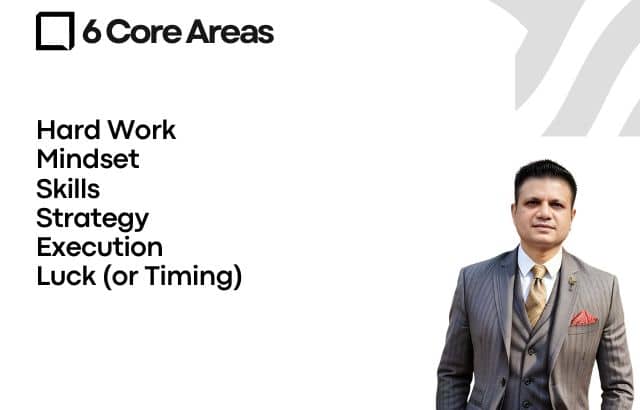
Section 9: Checkpoint 5 – The 6+3+2 Formula for Success
Great businesses don’t run on luck—they run on alignment.
6 Core Drivers
- Hard Work
- Mindset
- Strategy
- Skills
- Execution
- Luck
3 Inner Traits
- Hunger
- Dedication
- Consistency
2 Accelerators
- Innovation
- Marketing
Real-Life Story
A startup had innovation but no marketing—no visibility. Another had marketing but weak execution—no trust. Both failed due to imbalance.
Movie Business Parallel
RRR succeeded because vision, execution, timing, and global marketing were aligned.
Business Strategist Hirav Shah’s Perspective
“Alignment beats effort. When every force—skills, strategy, mindset, and marketing—moves in the same direction, results multiply effortlessly.”
Section 10: Conclusion – Don’t Confuse Motion with Meaning
The greatest risk in business is not moving slowly—it is moving quickly in the wrong direction. These five checkpoints act as your compass. They force you to pause, reflect, and validate before accelerating.
Closing Analogy
A pilot doesn’t fly on speed alone; they rely on instruments. Entrepreneurs must fly their business with checkpoints, not just hustle.
Business Strategist Hirav Shah’s Final Word
“Success is not about how fast you move, but whether you’re moving toward something that truly matters.”
BONUS: 10-Minute Business Clarity Snapshot (Exercise)

Take just ten quiet minutes with a single sheet of paper. Write down:
- The one core problem your business solves.
- Your top three profit-generating products or services.
- One happy, loyal customer—and why they stay.
- One aspect of your business that drains you.
- Which part of the 6+3+2 formula you feel weakest in today.
This snapshot becomes your mirror, showing whether your business compass is aligned—or drifting.
Quick Tips to Stay on Track
- Review checkpoints monthly.
- Focus on profit, not just revenue.
- Ask customers why they choose you—and why they return.
- Protect your energy. Fix systems, not just symptoms.
- Run every decision through the 6+3+2 formula.
FAQs

Q1. What if sales are growing but profits are falling?
Growth is vanity-driven. Tighten costs, improve margins, shift toward sustainable profit.
Q2. How often should I check these checkpoints?
At least quarterly. Fast-growing businesses should review monthly.
Q3. My customers buy once but don’t return—what does that mean?
It signals a trust gap. Improve quality, support, and engagement.
Q4. How do I know if burnout is a business or personal issue?
If systems and alignment are weak, it’s structural—not personal. Fix the root.
Q5. What is the simplest way to validate business direction?
Apply the 6+3+2 formula. Strengthen any weak driver, trait, or accelerator before scaling.
About the Writer
This article is authored by Hirav Shah, a globally respected Business Strategist and The Game Changer in Entertainment, Sports, and Business. He is the founder of the world’s first Business Decision Validation Hub and the author of 19+ strategy books. His 6+3+2 framework and Astro Strategy approach have guided entrepreneurs, startups, corporates, sports professionals, and entertainers to validate decisions, reduce risks, and achieve breakthrough results.