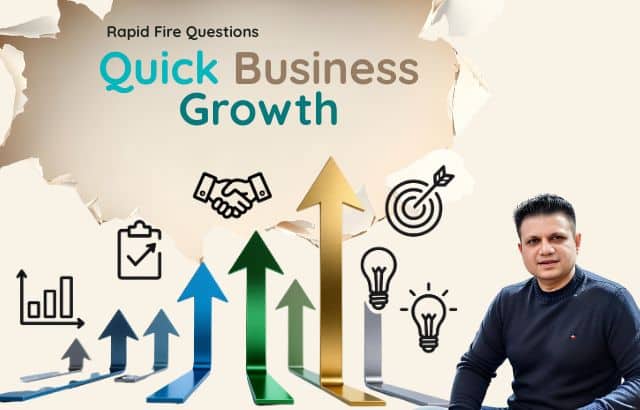
Rapid-fire questions aren’t just fun—they’re a powerful strategic tool used by successful leaders to gain quick clarity, identify blind spots, and unlock rapid solutions. According to business strategist Hirav Shah, popularly known as The Game Changer, rapid-fire questioning is one of the most efficient ways to accelerate decision-making and streamline business growth.
Table of Contents
What Are Rapid-Fire Questions?

Rapid-fire questions are quick, concise, targeted questions designed to extract clear answers—fast. In business, they help uncover strategy gaps, operational issues, goals, opportunities, and mindset roadblocks within minutes.
Example rapid-fire questions for business:
- What is your biggest revenue blocker right now?
- Who is your ideal customer?
- What can you implement today that increases revenue by 10%?
- What is the weakest link in your sales pipeline?
- What would you stop doing if you could?
These short punches of clarity help business owners shift from confusion to strategic direction.
How to Use Rapid-Fire Questions in Business

To implement rapid-fire questioning inside your business:
1. Identify the areas that need improvement
Examples:
- Low sales
- Slow customer acquisition
- High operational costs
- Weak marketing content
- Unclear brand positioning
2. Build targeted question sets
Example for sales improvement:
- What is your current conversion rate?
- What offer gets the most interest?
- What’s the biggest objection customers give?
3. Conduct a 10–15 minute rapid-fire session
Do it with your team, mentor, coach, or strategist.
4. Turn answers into actionable moves
Rapid answers → Clear actions → Faster execution.
Why Rapid-Fire Questions Deliver Quick Solutions

The power lies in speed. The brain responds creatively when challenged quickly. Rapid-fire questions help:
- Remove overthinking
- Reveal instant insights
- Trigger intuitive solutions
- Boost creative ideation
This is why Hirav Shah uses rapid questioning in strategy sessions—it brings hidden inefficiencies to the surface within minutes.
The Biggest Mistake Businesses Make in Strategy

According to The Game Changer Hirav Shah, the biggest mistake businesses make is jumping into execution without a clear and defined strategy.
Common strategy mistakes include:
- No clarity of goals
- Not understanding the target audience
- Copying competitors blindly
- Ignoring data
- No execution plan or timeline
A business without strategy is like a car without a GPS—lots of movement, but no direction.
How to Measure the Success of a Strategy

Success looks different for every business, but the most common measurable metrics include:
1. Revenue Growth
If revenue increased from ₹10,00,000 to ₹12,50,000,
Growth % = (2,50,000 ÷ 10,00,000) × 100 = 25%
2. Customer Acquisition
Track:
- Number of new customers
- Cost per acquisition (CPA)
3. Customer Retention
Repeat purchase rate, renewal rate, loyalty metrics.
4. ROI (Return on Investment)
Example:
You spent ₹50,000 and earned ₹1,20,000.
ROI = (1,20,000 – 50,000) ÷ 50,000 × 100 = 140%
5. Market Share Growth
Additionally, customer feedback, employee productivity, and operational efficiency offer qualitative insights.
Advice from Business Strategist Hirav Shah for Businesses Struggling With Strategy

Hirav Shah, known as The Game Changer, shares powerful advice:
1. Identify Your Unique Value Proposition
What makes your business stand out?
2. Know Your Target Audience
Who needs you the most?
3. Conduct Market Research
Examples:
- Competitor analysis
- Pricing trends
- Product gaps in the market
4. Set Clear, Measurable Goals
Example:
“Grow leads by 20% in 60 days.”
5. Track Key Metrics Consistently
What you measure improves.
6. Be Ready to Pivot
Markets shift quickly—your strategy must adapt.
Role of a Business Strategist (Explained with Examples)

A business strategist like Hirav Shah (The Game Changer) plays a crucial role in growth acceleration.
Key roles include:
1. Diagnosing Business Issues
Example:
A company facing declining sales may actually have a poorly defined target audience—not a marketing problem.
2. Designing the Strategy Roadmap
Turning goals into actionable steps.
3. Aligning Team and Leadership
Ensuring everyone moves in one direction.
4. Forecasting Trends & Risks
Predicting upcoming challenges and opportunities.
5. Monitoring Results
Tracking performance to ensure success.
6. Providing Clarity
Helping leaders make smart decisions quickly.
Examples of Rapid-Fire Question Sessions

Example 1: Startup Founder
Goal: Improve product-market fit
Rapid-fire questions:
- Who exactly is using your product?
- Why are customers dropping off?
- What feature brings the most value?
Outcome: A pivot in the offer increased conversions by 18%.
Example 2: Retail Brand
Goal: Increase monthly revenue
Rapid questioning revealed:
- 40% of products were slow-moving
- Marketing was targeting the wrong demographic
Outcome: After repositioning, sales increased 22% in 45 days.
FAQs

1. How often should I use rapid-fire questions?
Weekly or bi-weekly sessions work best for consistent clarity and direction.
2. Can small businesses use this method?
Absolutely—rapid-fire questioning works for startups, solopreneurs, and large brands.
3. How long should a session last?
10–20 minutes is ideal.
4. Who should conduct the session?
A mentor, business strategist like Hirav Shah, or even a senior team member.
5. Can it replace a full strategy?
No—it enhances strategy creation, but a full plan is still required.
Conclusion:

Rapid-fire questioning is a powerful tool that accelerates decision-making and uncovers critical insights in a fraction of the time it might take through traditional analysis. By asking targeted, high-impact questions, businesses can pinpoint their weaknesses, reveal hidden opportunities, and align teams quickly toward actionable solutions. Whether you’re a startup founder, a seasoned entrepreneur, or a corporate leader, rapid-fire questions can help streamline growth, break through roadblocks, and bring clarity to your strategy.
The key to making this method effective lies in its speed and focus. It forces teams to avoid overthinking, embrace gut instincts, and make rapid, data-driven decisions that can drive immediate improvements in operations, sales, marketing, and more.
Exercise for Business:

Rapid-Fire Questioning Session to Improve Strategy
- Prepare Your Team and Set the Goal:
- Gather your team (or a trusted mentor, advisor, or business strategist).
- Clearly define the objective of the session (e.g., “Increase conversion rates,” “Improve customer retention,” “Refine our brand messaging”).
- Create Your Targeted Question Set:
- Tailor questions around the goal. Keep them short and specific.
- For Sales Growth:
- What is our current conversion rate?
- What’s the main objection holding us back from closing deals?
- Which product has the highest margin?
- For Customer Acquisition:
- Who is our ideal customer, and why?
- What is the cost per lead, and how can we reduce it?
- What are the top 3 channels driving the most leads?
- For Operational Efficiency:
- Where are we losing the most time in our processes?
- Which task could we automate today to save 20% of time each week?
- What part of our customer service is causing the most complaints?
- For Sales Growth:
- Tailor questions around the goal. Keep them short and specific.
- Run a 10–20 Minute Session:
- Ask each question rapidly, allowing a 1-2 minute response per person. Don’t dwell on one answer too long; the goal is clarity and speed.
- Use a timer to keep things moving. Maintain focus on the objective.
- Analyze the Answers & Identify Key Actions:
- After the session, gather all the answers and identify patterns or gaps in your strategy.
- Translate these insights into specific actions:
- Example: If you identify a weak customer retention rate, plan an action step such as improving your loyalty program or refining your onboarding process.
- Implement & Track Progress:
- Set clear deadlines for implementing the actions you identified.
- Track the impact of those actions over the next few weeks or months.
Additional Tips:
- Frequency: Hold rapid-fire sessions regularly (e.g., bi-weekly or monthly) to ensure you’re always aligned and making progress on your goals.
- Involve the Right People: Make sure the right team members—those closest to the problem—are included in the session to provide relevant insights.
- Stay Open to Pivoting: Rapid-fire questioning often reveals surprising insights that may lead to a shift in direction. Be ready to adapt based on the feedback.
By incorporating this practice, you’ll not only accelerate decision-making but also cultivate a culture of quick thinking, accountability, and constant refinement—key ingredients for business growth and success.