

Setting clear and specific goals is one of the most important steps in developing any business strategy. Whether you’re working on branding, sales, marketing, mergers, diversification, or launching a start-up, a well-defined roadmap can keep you focused and on track to achieve your business objectives. In this article, we’ll explore why goal-setting is crucial and how it can guide you toward success.
Before we dive deeper into the process, remember this key insight: until you identify your “Why”, you won’t be able to figure out your “What” and “How.”
Table of Contents
Why are Business Strategy Goals So Important?

Understanding the “Why”
Your “Why” represents the core motivation driving your business strategy. Whether you’re an entrepreneur starting a business or a manager looking to scale an existing one, understanding the underlying reason behind your goals is crucial. Without this clarity, you might set goals that don’t resonate with you, leading to frustration or a lack of motivation. Your Why fuels your passion and gives you the resilience needed to overcome obstacles.
A key takeaway from Hirav Shah, a business strategist and the Game Changer in the field of business development, is: “Your Why is not about helping others; it’s about what’s in it for you.” If your goals don’t matter deeply to you, they might not give you the drive to achieve them.
For example, if you’re running a start-up and your goal is to increase sales by 30% over the next 6 months, the Why could be personal — such as wanting to prove to yourself that you can create a successful business or achieving financial independence.
The 5 Steps to Crafting a Successful Business Strategy
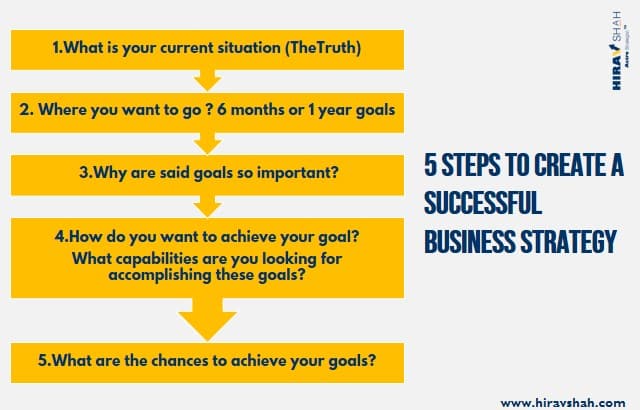
We’ve already covered the first two steps in previous discussions — assessing your current situation and defining where you want to go. Now, let’s jump into the next crucial step:
Step 3: Why Are Your Goals So Important?

When you’re setting goals, you need to answer this question for each one: Why is this goal important to you? Your Why will guide your actions and decisions along the way.
How to Discover Your Why:
- Be Specific About Your Goals: Write down 3 specific goals you want to achieve within the next 6-12 months. Be as specific as possible so you can clearly measure success (e.g., increasing sales by 20%, gaining 1,000 new customers, or launching a new product).
- Identify Your Reasons: For each goal, write down at least 3 strong reasons why this goal matters to you. These reasons should be personal and deeply tied to your ambitions, not just external factors. For instance, you might want to increase sales because it will help your business become financially independent or allow you to expand your product line.
- Prioritize Your Reasons: After writing down your reasons, prioritize them. Which of these reasons matter the most to you? Which ones would motivate you to push through challenges when the going gets tough?
- Review Often: This list becomes your anchor. When you hit roadblocks or feel demotivated, come back to this list. It’s a reminder of why you started and why you must keep going.
Example:
Let’s say one of your goals is to increase your company’s social media presence. You might have the following reasons:
- Reason 1: Expanding my brand’s presence helps me build trust with potential customers.
- Reason 2: A strong social media presence will lead to more business opportunities.
- Reason 3: It will give me an edge over my competitors in my niche market.
This framework helps you stay connected with the heart of your goals and fuels your determination to succeed.
Step 4: How Do You Plan to Achieve Your Goals? What Capabilities Are Needed?

Once you know why your goals are important, the next step is figuring out how to achieve them. This step involves getting absolute certainty about your plan of action.
Key Considerations:
- Clarity on Your Path: Know exactly what steps you need to take to get where you want to go. Break down larger goals into smaller, achievable tasks.
- Short-term and Long-term Goals: Differentiate between what you want to achieve in the short term (next 6 months) versus the long term (1-2 years). Both sets of goals are important, but they will require different approaches.
- Your Plan of Action: Outline specific actions for each goal. For example, if you’re aiming to launch a new product in 6 months, your plan might include market research, product development, and marketing campaigns.
- Cultural Fit: Ensure that your actions align with your business’s culture and values. If you’re a start-up focused on sustainability, your approach to marketing or partnerships should reflect that.
Example:
To increase your social media presence, your plan might look like this:
- Post consistently (3 times a week) with engaging content.
- Invest in social media ads targeting your ideal customer base.
- Collaborate with influencers in your industry to increase brand exposure.
Certainty Is Key:
It’s okay if you don’t have all the answers immediately. What’s crucial is having the belief that you will figure it out. When you commit to your goals with absolute certainty, you shift your mindset from “I don’t know how” to “I will find a way.”
Step 5: What Are the Chances of Achieving Your Goals?

The harsh reality is that only 8% of people actually achieve the goals they set. However, those who are successful often have one thing in common: they increase their certainty. How do they do this? By setting themselves up for success from the start.
How to Increase Your Certainty:
- Get Results in Advance: By gaining knowledge upfront, you increase your chances of success. A business strategist like Hirav Shah emphasizes the value of understanding where you are, where you want to go, and the gap in between before you take action. By getting a clear picture of your future, you’ll have more confidence in your decisions.
Example:
If you’re expanding to a new market, one way to increase certainty is by doing extensive market research, engaging with potential customers beforehand, or even running a pilot project before full-scale implementation.
Step 6: Deliberate Practice and Repetition

Achieving goals is a continuous process. You must commit to deliberate practice and repetition. This doesn’t mean you work harder — it means you work smarter, focusing on refining your strategies, learning from mistakes, and adjusting your approach as needed.
FAQs About Business Strategy and Goal-Setting
Q1: How do I stay motivated to achieve my goals?
A1: Always revisit your “Why.” When times get tough, remind yourself why the goal matters to you personally. This connection keeps you grounded.
Q2: What’s the best way to break down big goals?
A2: Divide your goals into smaller, actionable steps. Set specific milestones, deadlines, and prioritize tasks to make the process more manageable.
Q3: How can I increase the likelihood of achieving my business goals?
A3: Increase your certainty by gathering insights, doing your homework, and using strategic tools that give you a clear understanding of where you stand.
Final Thoughts

A successful business strategy is built on clarity, motivation, and an unwavering belief in your ability to achieve your goals. Whether you’re working on branding, marketing, sales, or expansion, aligning your goals with a clear purpose and actionable steps will help you stay on track for success.
As Hirav Shah often reminds us: “When you know your ‘Why,’ you’ll find a way to achieve your ‘What’ and ‘How.'” Keep pushing forward with confidence, and success will follow.