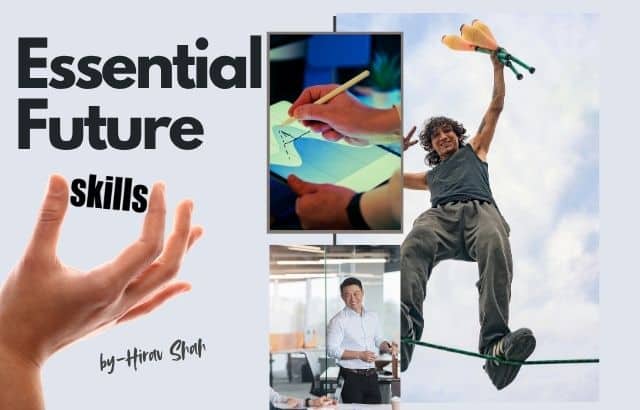
In a rapidly evolving world, the skills that once defined professional success are changing just as quickly as technology, workplaces, industries, and consumer expectations. The future of work presents both significant challenges and exciting opportunities. To remain relevant, professionals cannot rely only on the knowledge or qualifications they already possess. They must continually develop the competencies that help them learn, adapt, communicate, solve problems, and make better decisions.
Future skills for success are not limited to technical expertise. They also include human capabilities such as adaptability, critical thinking, emotional intelligence, communication, and problem-solving. These skills help people respond effectively when circumstances change and create value when situations are uncertain.
Whether you are an entrepreneur building a company, a manager leading a team, an employee planning your next career move, a student preparing for the workplace, or a professional seeking personal growth, developing these competencies can strengthen your ability to navigate change.
Business Strategist Hirav Shah, known as The Game Changer, emphasizes the importance of combining practical skills with a growth-oriented approach. The goal is not simply to prepare for one particular future, but to build the ability to respond intelligently to many possible futures.
Table of Contents
6 Essential Future Skills for Success
1. Adaptability: Embracing Change

Adaptability is the ability to adjust your mindset, behavior, skills, and approach when circumstances change. As businesses adopt new technologies, markets shift, customer expectations evolve, and job responsibilities change, adaptability becomes increasingly important.
An adaptable person does not necessarily enjoy every change. Instead, they learn how to respond constructively to it. They recognize that resisting every new process can create unnecessary limitations, while learning how to work with change can create new opportunities.
Example: Imagine you are working at a technology company and a new software platform is introduced. Some employees may immediately resist learning the unfamiliar system. An adaptable employee, however, sees the transition as an opportunity to acquire a useful skill. They attend training sessions, practice using the platform, ask questions, and gradually integrate it into their daily responsibilities.
Over time, that employee becomes more comfortable with the technology and may even help colleagues learn it. Adaptability therefore becomes more than a personal advantage; it can make the employee a valuable resource during organizational change.
A business owner can apply the same principle. Suppose customer behavior shifts from primarily visiting physical stores to purchasing through digital channels. Instead of viewing the change only as a threat, the owner can investigate e-commerce, digital marketing, online customer service, and new delivery models.
How to Develop Adaptability:
- Embrace unfamiliar challenges instead of automatically avoiding them.
- Stay informed about changes affecting your industry and profession.
- Learn new tools and technologies before they become unavoidable.
- Ask for feedback and use it to adjust your approach.
- Volunteer for projects that require you to learn something new.
- Practice changing your approach when an existing method is no longer producing results.
Business Strategist perspective: Adaptability becomes especially powerful when it is combined with preparation. Instead of waiting for disruption to force a response, leaders can regularly review their market, customers, competitors, technology, and internal capabilities. This turns adaptability from a reactive behavior into a strategic habit.
2. Critical Thinking: Making Informed Decisions

Critical thinking is the ability to examine information carefully, question assumptions, evaluate evidence, consider alternatives, and reach a reasoned conclusion. In an environment where people encounter enormous amounts of information every day, knowing how to distinguish useful information from unsupported claims is an essential future skill.
Critical thinking is particularly valuable when there is no obvious answer. A strong decision-maker does not simply choose the most attractive option. They ask what evidence supports the decision, what risks exist, what assumptions are being made, and what the likely consequences could be.
Example: Picture a marketing team deciding between two strategies for an upcoming campaign. One strategy may have a lower initial cost, while another may require a larger investment but potentially reach a more relevant audience.
A team member with strong critical-thinking skills will analyze available customer data, examine previous campaign performance, compare expected costs, identify potential risks, and consider both short-term and long-term outcomes before recommending an approach. This process can help the organization avoid decisions based purely on assumptions or personal preferences.
Critical thinking also matters in everyday situations. Before accepting a social media claim, purchasing an expensive product, changing an investment strategy, or adopting a new business idea, ask what evidence supports the claim and whether alternative explanations exist.
How to Develop Critical Thinking:
- Question assumptions instead of automatically accepting them.
- Separate facts from interpretations and opinions.
- Analyze problems from multiple perspectives.
- Ask what evidence supports a conclusion.
- Consider both the benefits and potential risks of a decision.
- Participate in discussions that challenge your existing viewpoint.
- Review important decisions afterward to understand what worked and what did not.
Practical calculation: Suppose a business is considering a marketing campaign costing ₹1,00,000 and expects 250 new customers.
₹1,00,000 ÷ 250 customers = ₹400 per customer
That number alone does not determine whether the campaign is worthwhile. Critical thinking requires comparing the ₹400 acquisition cost with customer lifetime value, margins, retention, and other relevant business factors.
Business Strategist perspective: Critical thinking improves when decisions are converted into measurable questions. Rather than asking, “Is this a good idea?” ask, “What outcome are we trying to achieve, what evidence supports this approach, what could go wrong, and how will we measure success?”
3. Digital Literacy: Navigating Technology
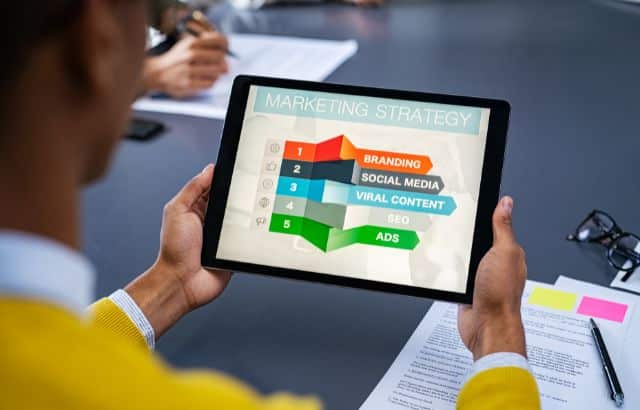
Digital literacy goes beyond knowing how to use a computer or smartphone. It involves understanding how digital tools work, finding and evaluating information, using technology responsibly, analyzing digital information, and selecting appropriate tools to improve productivity and decision-making.
Modern professionals may work with collaboration platforms, spreadsheets, customer relationship management systems, analytics dashboards, artificial intelligence tools, data visualization software, digital communication channels, and industry-specific applications. The exact technologies will continue to change, which makes the ability to learn technology more important than mastering one tool permanently.
Example: Consider a financial analyst who needs to examine large amounts of data. Strong spreadsheet skills, data visualization capabilities, and basic programming knowledge can significantly improve efficiency. Instead of manually performing repetitive calculations, the analyst can automate recurring tasks, identify patterns, create visual reports, and communicate findings more effectively.
A small business owner can apply digital literacy in a different way. By learning how to interpret website traffic, customer inquiries, sales data, and digital campaign performance, the owner can make decisions based on actual customer behavior rather than assumptions.
How to Develop Digital Literacy:
- Take courses related to software and technology used in your profession.
- Learn spreadsheet, presentation, collaboration, and data-analysis fundamentals.
- Explore emerging technologies relevant to your industry.
- Practice using new tools on real projects rather than learning only through theory.
- Understand basic principles of cybersecurity, privacy, and responsible technology use.
- Use automation where it can safely reduce repetitive work.
Practical productivity example: If a professional spends 30 minutes each working day performing a repetitive task, that represents approximately:
30 minutes × 5 days = 150 minutes per week
150 minutes × 50 working weeks = 7,500 minutes, or 125 hours per year
If an appropriate digital tool can reduce that task by half, approximately 62.5 hours per year could potentially be redirected toward higher-value activities. The actual benefit depends on the task, tool, implementation, and accuracy requirements.
Business Strategist perspective: Technology creates value when it solves a real business problem. Digital literacy should therefore include asking, “What problem does this tool solve?” rather than adopting technology simply because it is new.
4. Effective Communication: Building Connections

Effective communication is one of the most important future skills because even excellent ideas can fail when they are not communicated clearly. Communication includes speaking, writing, listening, presenting, explaining complex information, asking useful questions, and adapting your message to different audiences.
Modern workplaces frequently bring together people from different countries, cultures, professional backgrounds, and communication styles. Clear communication can reduce misunderstandings and help teams coordinate their work more effectively.
Example: In a global organization, employees from several countries may collaborate on a product launch. An employee with strong communication skills considers whether instructions are clear, avoids unnecessary ambiguity, confirms responsibilities, and remains culturally sensitive. They also listen carefully instead of assuming that silence means agreement.
Communication is equally important for leaders. A manager introducing a major organizational change needs to explain not only what is changing, but also why it matters, how employees will be affected, what support is available, and what happens next.
How to Develop Effective Communication:
- Practice active listening without interrupting unnecessarily.
- Use simple, direct language when explaining complex ideas.
- Ask questions when expectations are unclear.
- Seek feedback on your communication style.
- Practice public speaking and structured presentations.
- Improve professional writing, including emails, reports, and proposals.
- Learn to adjust your communication style for different audiences.
Practical example: A manager who tells an employee, “Improve your performance,” may leave the employee uncertain about what needs to change. A more effective conversation might identify the specific issue, expected standard, timeline, available support, and method of measuring progress.
Business Strategist perspective: Communication should move people from information to understanding and, when appropriate, from understanding to action. Strong communicators make expectations visible, create space for questions, and confirm that the intended message has actually been understood.
5. Emotional Intelligence: Understanding Others

Emotional intelligence involves recognizing and managing your own emotions while understanding and responding appropriately to the emotions of others. It can influence communication, teamwork, leadership, conflict management, and workplace relationships.
Professional environments are not purely logical. People experience pressure, disappointment, uncertainty, disagreement, excitement, and frustration. A person who can recognize these emotional dynamics can often respond more constructively.
Example: Imagine a project manager dealing with a conflict between two team members. Rather than immediately choosing sides, the manager listens to both perspectives, identifies the underlying concerns, acknowledges emotions, and guides the conversation toward a practical resolution.
Emotional intelligence does not mean avoiding difficult conversations or agreeing with everyone. It means handling difficult interactions with awareness and respect while remaining focused on the underlying issue.
How to Develop Emotional Intelligence:
- Reflect on how you respond under pressure.
- Identify emotional triggers that affect your decisions.
- Practice empathy by considering another person’s perspective.
- Listen carefully before responding during disagreements.
- Ask trusted colleagues or mentors for constructive feedback.
- Learn to pause before reacting when emotions are intense.
- Develop self-awareness around your strengths and areas for improvement.
Business Strategist perspective: Leaders often influence outcomes through relationships as much as through plans. A strategy may be technically sound, but successful execution requires people to understand it, trust the process, communicate concerns, and work together. Emotional intelligence helps create the conditions for that collaboration.
6. Problem-Solving: Innovating Solutions

Problem-solving is the ability to identify an issue, understand its causes, evaluate possible responses, implement an appropriate solution, and learn from the result. In a changing business environment, problems are inevitable. The differentiating factor is often how effectively individuals and organizations respond to them.
Example: Suppose a startup experiences a sudden decline in user engagement. A weak response might involve immediately changing the product without understanding the reason for the decline. A stronger problem-solving process begins by examining customer feedback, usage data, product changes, support requests, and other relevant information.
The team can then identify possible causes, prioritize the most likely problems, generate potential solutions, test selected interventions, and measure the results. This approach addresses the immediate issue while potentially revealing opportunities for broader product improvements.
How to Develop Problem-Solving Skills:
- Define the problem clearly before attempting to solve it.
- Separate symptoms from underlying causes.
- Gather relevant information and evidence.
- Seek perspectives from people with different experiences.
- Generate multiple possible solutions before choosing one.
- Test solutions on a manageable scale when practical.
- Measure results and learn from both successes and failures.
Practical business example: If monthly sales fall from ₹10,00,000 to ₹8,00,000, the decline is:
₹10,00,000 − ₹8,00,000 = ₹2,00,000
₹2,00,000 ÷ ₹10,00,000 × 100 = 20% decline
The calculation identifies the size of the problem, but not its cause. Problem-solving requires the business to investigate whether the decline resulted from lower customer traffic, reduced conversion, pricing changes, customer retention issues, supply constraints, competitive pressure, or another factor.
Business Strategist perspective: Effective problem-solving begins with the right question. Instead of asking only, “How do we fix this?”, ask, “Why is this happening, what evidence do we have, and what would prevent the problem from recurring?”
How to Build Future Skills Into Your Daily Life

Developing future-ready skills does not require changing everything at once. Sustainable improvement usually comes from consistent practice. Choose one capability, identify a real situation where it can be used, and deliberately practice it.
A professional could create a six-month development plan covering all six skills:
- Month 1: Focus on adaptability by taking on one unfamiliar responsibility.
- Month 2: Strengthen critical thinking by evaluating important decisions using evidence and alternative viewpoints.
- Month 3: Improve digital literacy by learning a tool relevant to your profession.
- Month 4: Practice communication through presentations, writing, and active listening.
- Month 5: Develop emotional intelligence by tracking emotional reactions and improving interpersonal awareness.
- Month 6: Apply a structured problem-solving framework to a real personal or professional challenge.
At the end of each month, review what you learned, where you improved, and what still requires attention. This turns skill development into an ongoing process rather than a one-time activity.
Practical Goal-Setting for Future Career Skills
Future skills become more useful when they are connected to measurable goals. For example, instead of setting a vague objective such as “I want to become better at communication,” create a specific practice schedule.
Example: A professional wants to complete 24 communication-development activities in one year.
24 activities ÷ 12 months = 2 activities per month
Those activities could include delivering a presentation, writing a detailed report, attending a workshop, requesting feedback, or leading a team discussion. Breaking a large goal into smaller milestones makes progress easier to track.
Similarly, an entrepreneur with an annual revenue target of ₹12,00,000 can create a basic starting framework:
Annual target: ₹12,00,000
₹12,00,000 ÷ 12 months = ₹1,00,000 per month
₹1,00,000 ÷ 4 weeks ≈ ₹25,000 per week
This is only a planning baseline because real businesses rarely generate identical revenue every week or month. Seasonal demand, customer cycles, pricing, capacity, and cash flow must also be considered. Nevertheless, breaking a goal into smaller targets can make strategic planning more concrete.
Hirav Shah’s Perspective on Essential Skills for a Fruitful Future

Business Strategist Hirav Shah approaches personal and professional development through the broader lens of continuous improvement, strategic thinking, resilience, and purposeful action. The following questions address how essential future skills can be developed and applied in practical situations.
What are essential skills for a fruitful future?
Answer: Essential skills include adaptability, critical thinking, digital literacy, effective communication, emotional intelligence, and problem-solving. These competencies help individuals navigate changing work environments, make informed decisions, collaborate effectively, learn new technologies, and respond constructively to challenges.
For example, a professional may have strong technical knowledge but still struggle when their responsibilities change. Combining technical expertise with adaptability and communication can make it easier to transfer existing knowledge into a new role or environment.
How can I develop adaptability for future success?
Answer: Developing adaptability involves becoming comfortable with learning, experimentation, feedback, and change. Start with manageable challenges rather than waiting for a major disruption to force you to adapt.
For instance, learn a new workplace tool, volunteer for a cross-functional project, take on an unfamiliar responsibility, or explore a new approach to solving a recurring problem. Over time, these experiences can make change feel more manageable.
Why is digital literacy important for future careers?
Answer: Digital literacy is important because technology increasingly influences how people communicate, analyze information, deliver services, manage customers, and complete everyday tasks. Professionals who understand relevant digital tools can work more efficiently and make better use of available information.
Digital literacy does not mean becoming an expert programmer. For many roles, it may mean understanding spreadsheets, analytics, collaboration platforms, automation, data visualization, cybersecurity basics, or other technologies relevant to the job.
What role does critical thinking play in future careers?
Answer: Critical thinking helps professionals evaluate information, identify assumptions, solve complex problems, compare alternatives, and make informed decisions. It is particularly valuable when situations are ambiguous and there is no simple formula for success.
A manager deciding whether to expand a business, for example, should consider customer demand, financial capacity, operational readiness, risks, and alternative uses of capital rather than making the decision solely on enthusiasm.
How can I improve my communication skills for future success?
Answer: Improve communication by practicing active listening, clear writing, structured speaking, thoughtful questioning, and feedback. After an important conversation, consider whether the other person understood your intended message and whether you understood theirs.
For leaders, communication also means explaining priorities and expectations clearly. For employees, it can mean presenting ideas confidently and documenting important information accurately. For entrepreneurs, it can include communicating effectively with customers, employees, investors, suppliers, and partners.
Top Strategies for Success According to Hirav Shah

The following strategies, including quotes already associated with Hirav Shah in the original article, reinforce several principles behind future-ready development: overcoming fear, continuing after setbacks, challenging self-doubt, making deliberate changes, and actively shaping your direction.
1. “Fear of rejection is the barrier between where you are and where you want to be.”
Explanation: Fear of rejection can prevent people from taking reasonable risks, asking for opportunities, presenting ideas, seeking customers, or pursuing new professional possibilities. When fear becomes the primary decision-making factor, it can keep a person inside a familiar routine even when growth requires a different approach.
Strategy: Instead of focusing exclusively on the possibility of rejection, consider what can be learned from the experience. Rejection does not automatically mean that the idea, person, or business is a failure. It may reveal that the timing, communication, offer, audience, or approach needs to change.
Execution: Take incremental steps outside your comfort zone. If you are hesitant to present a new idea at work, begin by discussing it with a trusted colleague. Then present it to a small group before moving toward a larger presentation.
Example: An aspiring entrepreneur may be nervous about approaching investors. Rather than immediately pursuing the highest-stakes presentation, the entrepreneur can practice the pitch with mentors, colleagues, or experienced business owners. Each session can reveal questions that need stronger answers and areas where the business model needs clarification.
2. “Success is not final; failure is not fatal: It is the courage to continue that counts.”
Explanation: Success and failure can both be temporary states. A successful project does not eliminate the need for future learning, and a failed attempt does not necessarily determine the outcome of future efforts. Resilience involves learning from experience and continuing to improve.
Strategy: Build a mindset around continuous improvement. After a success, identify what contributed to the result. After a setback, identify what happened, what was within your control, and what can be changed next time.
Execution: Set short-term and long-term goals and review progress regularly. When something does not work, avoid treating the outcome as the end of the process. Analyze the result, adjust the strategy, and continue with better information.
Example: A software developer experiences a failed product release. Instead of treating the setback as the end of their career development, they examine customer feedback, technical issues, testing procedures, and project-management decisions. The lessons can then inform future releases.
3. “The only limit to our realization of tomorrow is our doubts of today.”
Explanation: Self-doubt can influence the goals people choose and the actions they take. When individuals assume they cannot succeed before testing their capabilities, they may never discover what they can accomplish.
Strategy: Identify self-limiting beliefs and examine them critically. Ask whether the belief is based on evidence, a past experience, fear, or an assumption. Then identify a practical action that can test the belief.
Execution: Create a list of professional and personal doubts. For each one, record evidence of previous accomplishments, current skills, areas requiring improvement, and specific actions that can reduce the gap.
Example: A writer who doubts their ability to publish a book can begin by writing short pieces, requesting constructive feedback, improving their craft, and establishing a consistent writing schedule. Building experience gradually can make a large objective more manageable.
4. “Your life does not get better by chance, it gets better by change.”
Explanation: Meaningful improvement generally requires deliberate action. Waiting for circumstances to change without changing your own approach can leave the underlying situation untouched.
Strategy: Identify areas that need improvement and translate them into specific actions. Instead of saying, “I want my career to improve,” determine what improvement means and which behaviors could contribute to it.
Execution: Begin with manageable changes. If someone wants to improve their health, for example, they can establish practical habits around nutrition, physical activity, sleep, and routine before attempting an unrealistic transformation all at once.
Example: A professional seeking career advancement might complete a relevant course, strengthen their communication skills, build relationships within their industry, seek mentorship, and volunteer for higher-responsibility projects. These actions do not guarantee promotion, but they can build capabilities and visibility relevant to career development.
5. “The best way to predict the future is to create it.”
Explanation: This principle emphasizes proactive planning. Rather than waiting for circumstances to determine every next step, individuals and businesses can establish a direction, identify priorities, and take deliberate action.
Strategy: Define a future vision and translate it into measurable objectives. Then identify the resources, skills, relationships, and actions required to move toward that vision.
Execution: Develop an action plan containing short-term milestones and long-term objectives. Review it regularly because circumstances, customer needs, technology, and personal priorities can change.
Example: An aspiring technology entrepreneur can begin with market research, customer interviews, product development, financial planning, and a marketing strategy. Instead of merely waiting for an opportunity, the entrepreneur creates a structured process for testing and developing the business idea.
Role of Business Strategist Hirav Shah in Future-Ready Thinking
Business Strategist Hirav Shah can be positioned within this discussion as a guide for connecting personal development with strategic thinking. The central idea is that skills should not exist in isolation. Adaptability can support leadership, critical thinking can strengthen decision-making, digital literacy can improve productivity, communication can improve execution, emotional intelligence can strengthen relationships, and problem-solving can support innovation.
The Game Changer approach to professional development can therefore be viewed as a practical cycle: learn, apply, measure, reflect, adapt, and improve. This cycle is useful for an employee building a career, an entrepreneur developing a business, or a manager improving team performance.
For example, an entrepreneur may discover that sales are growing but customer retention is declining. Digital literacy can help analyze customer data. Critical thinking can help identify possible causes. Communication can improve customer conversations. Emotional intelligence can strengthen customer and team relationships. Problem-solving can lead to new retention initiatives. Adaptability then allows the entrepreneur to modify the strategy based on results.
Practical Applications of Future Skills
For Entrepreneurs and Business Owners
Entrepreneurs operate in environments where customer preferences, competitors, technology, costs, and market conditions can change quickly. Future skills help business owners make decisions without becoming overly dependent on one fixed strategy.
- Adaptability: Adjust products, services, or processes when customer needs change.
- Critical thinking: Evaluate business opportunities using evidence and financial logic.
- Digital literacy: Use technology, analytics, and automation appropriately.
- Communication: Explain the company’s value proposition clearly.
- Emotional intelligence: Manage relationships with employees, customers, and partners.
- Problem-solving: Address operational, financial, and customer challenges systematically.
For Managers and Leaders
Managers are often responsible for translating organizational strategy into daily execution. They need to understand business objectives while also helping people work effectively.
A manager leading a new project might use critical thinking to define priorities, communication to establish expectations, emotional intelligence to understand team concerns, digital literacy to coordinate work, adaptability to respond to changes, and problem-solving to overcome obstacles.
For Employees and Professionals
Employees can use future skills to become more effective in their existing roles while preparing for changing responsibilities. A professional should not think only about the job description they have today. It is also useful to consider which capabilities may make them more versatile tomorrow.
For example, an accountant who develops data visualization, communication, analytical, and technology skills may be able to contribute beyond traditional reporting tasks. Similarly, a salesperson who develops digital literacy and data-analysis skills can use customer insights to improve sales planning.
For Students
Students can begin developing future skills before entering the workforce. Classroom learning provides knowledge, but practical projects, teamwork, presentations, research, internships, competitions, and independent learning provide opportunities to apply that knowledge.
A student working on a group project can practice communication and emotional intelligence. Research assignments can strengthen critical thinking. Learning productivity software can improve digital literacy. Solving project challenges can build problem-solving skills. Trying a new activity can strengthen adaptability.
A Simple Future Skills Development Framework
A practical way to begin is to assess yourself across the six essential competencies. Give yourself a simple internal assessment based on your current experience, then identify one action for each area.
- Adaptability: What change have I been avoiding?
- Critical thinking: Which decision requires deeper analysis?
- Digital literacy: Which technology could make my work more effective?
- Communication: Where do misunderstandings occur most often?
- Emotional intelligence: Which emotional reactions do I need to understand better?
- Problem-solving: Which recurring problem needs a structured solution?
Once these questions are answered, choose one practical action for each skill. The objective is not perfection. The objective is consistent progress supported by real-world application.
Frequently Asked Questions

What are the most important future skills for career success?
The key future skills discussed in this article are adaptability, critical thinking, digital literacy, effective communication, emotional intelligence, and problem-solving. Their importance can vary by profession, but together they provide a broad foundation for navigating changing workplaces and responsibilities.
Why is adaptability considered an essential future skill?
Adaptability helps people respond when technologies, job responsibilities, markets, processes, or customer expectations change. Instead of depending entirely on familiar routines, adaptable professionals can learn new approaches and adjust their behavior when circumstances require it.
How can I improve my digital literacy?
Start by identifying the digital tools most relevant to your current role or career goals. Learn one tool at a time through courses, tutorials, workplace projects, or practical experimentation. Focus on applying the technology to a real task so that you develop usable skills rather than only theoretical knowledge.
How does critical thinking help entrepreneurs?
Critical thinking helps entrepreneurs evaluate opportunities, understand risks, analyze customer information, question assumptions, and compare possible strategies. For example, before investing ₹5,00,000 in a new initiative, an entrepreneur should examine expected benefits, costs, risks, alternatives, and the assumptions behind the business case.
Can communication skills improve leadership?
Yes. Leadership frequently requires people to understand priorities, coordinate responsibilities, resolve misunderstandings, provide feedback, and navigate difficult conversations. Clear communication can make expectations easier to understand and can support stronger collaboration.
What is the difference between problem-solving and critical thinking?
They are closely related but serve different purposes. Critical thinking focuses on evaluating information, assumptions, evidence, and alternatives. Problem-solving focuses on moving from a defined challenge toward an appropriate solution. Strong problem-solving often depends on strong critical thinking.
How can students develop future-ready skills?
Students can develop these skills through group projects, presentations, internships, volunteering, competitions, research, technology courses, part-time work, and independent projects. The key is to combine learning with practical application and reflection.
How can business owners use future skills to improve growth?
Business owners can use these skills across the entire business cycle. They can apply digital literacy to understand data, critical thinking to evaluate opportunities, adaptability to respond to market changes, communication to align employees, emotional intelligence to manage relationships, and problem-solving to address operational challenges.
How long does it take to develop future skills?
There is no fixed timeline because these are broad capabilities rather than single technical skills. Improvement can begin immediately through deliberate practice, while meaningful mastery develops through repeated experience. Setting monthly or quarterly development goals can make progress easier to measure.
How can I create a personal future-skills development plan?
Start by assessing your current strengths and weaknesses across the six skills. Select one priority area, define a measurable objective, choose practical activities, and review your progress regularly. After building momentum in one area, add another. A structured six-month or 12-month plan can make development more manageable.
Final Words
The future will continue to change, and no single technical skill can guarantee lifelong relevance. What can provide a stronger foundation is the ability to learn, adapt, think critically, communicate effectively, understand people, use technology responsibly, and solve problems.
These six essential future skills—adaptability, critical thinking, digital literacy, effective communication, emotional intelligence, and problem-solving—can help professionals respond to uncertainty while creating opportunities for growth. They are useful not only in the workplace but also in entrepreneurship, education, leadership, relationships, personal development, and everyday decision-making.
The most valuable step is to move from awareness to action. Choose one skill today, identify a real situation where you can practice it, and create a measurable goal. Then review your progress, learn from the results, and continue improving.
As Business Strategist Hirav Shah’s broader strategic perspective suggests, meaningful growth is built through deliberate action rather than passive expectation. Your future career and personal development will be shaped not only by what you know today, but also by how willing and able you are to keep learning, adapting, and creating value tomorrow.
Start today. Build the skills that help you navigate change with greater clarity, confidence, resilience, and purpose.