According to celebrated business strategist Hirav Shah, the wellness and beauty industry operates on one undeniable truth: personal interaction is non-negotiable. Services like massages, spinal adjustments, facials, and aesthetic treatments depend entirely on human touch, trust, and physical presence.
This makes the spa and wellness sector fundamentally different from many other industries. You cannot digitize a massage or automate a facial. Because of this, spa owners often feel pressure when reopening, scaling, or restructuring their businesses—and without a clear strategy, uncertainty quickly turns into financial stress.
Hirav Shah emphasizes that strategy—not reaction—is the real game changer.
“If that’s you—know that you’re not alone. Salons, spas, massage studios, and wellness clinics everywhere are making tough decisions about operations, staffing, pricing, and sustainability.”
Table of Contents
Why Spa Businesses Need Strategic Planning

Running a spa is complex. Every department—therapists, front desk, inventory, marketing, hygiene protocols, and client experience—must function in harmony.
When one area slips, the impact spreads:
- Poor scheduling affects therapist morale
- Weak pricing affects cash flow
- Inconsistent service quality affects retention
Without a plan, even a popular spa can struggle.
“There is nothing easy about running a spa,” says Hirav Shah.
“If you have no plan, you are setting your business up to fail.”
The Role of a Business Strategist in the Spa Industry
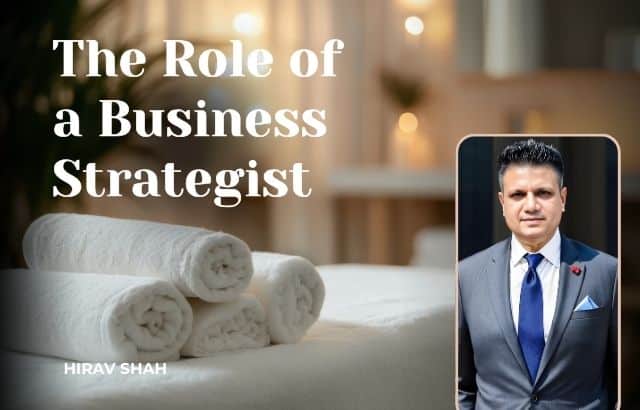
A business strategist like Hirav Shah helps spa owners:
- Translate vision into measurable goals
- Balance ambition with financial reality
- Identify high-impact actions using data
- Improve profitability without sacrificing service quality
Example:
A strategist may discover that:
- 30% of services generate 70% of revenue
- Certain therapists have 2x higher rebooking rates
- One upsell adds 18–25% to average ticket size
These insights allow smarter decisions—not emotional ones.
SMART Goals for Spa Businesses (Defined by Hirav Shah)
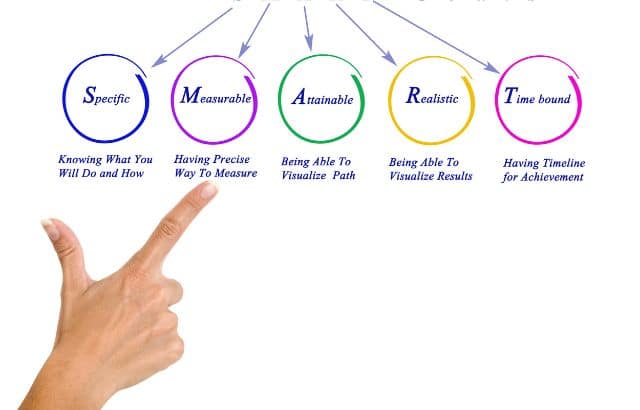
A frequently used framework is SMART Goals, defined as:
- Specific – Clearly define what you want to achieve
- Measurable – Set targets and milestones
- Attainable – Ensure the goal is realistic
- Relevant – Align with your business model
- Time-Based – Set a clear deadline
However, Shah believes this framework must be adapted specifically for spa businesses.
Six Strategic Steps to Strengthen Your Spa Business
1. Visualize

Imagine how you want your spa to be perceived:
- Boutique luxury or high-volume wellness?
- Premium pricing or accessibility?
- Clinical precision or holistic experience?
Example:
A spa that drifted into discounting may decide to return to a premium positioning with fewer clients but higher margins.
2. Collaborate

Hold a vision session with:
- Business partner
- Spa manager or director
- Senior therapist
Different perspectives often unlock blind spots.
Example:
A therapist may suggest service bundles that improve client retention without increasing workload.
3. Write It Down

Document every goal:
- Operations
- Marketing
- Revenue
- Team development
Then prioritize.
Example:
- Increase repeat clients
- Reduce product wastage
- Improve therapist utilization
4. Set Realistic and Achievable Goals

Ambition is good—recklessness is not.
Example:
- Unrealistic: Doubling revenue in 30 days
- Strategic: Increasing average bill value by 15% in 3 months
A strategist validates goals using data before execution.
5. Make a Plan (Baby Steps)

Break goals into actionable milestones.
Revenue Example Calculation:
- Current monthly clients: 400
- Average bill: ₹2,000
- Monthly revenue: ₹8,00,000
If you:
- Increase average bill by 10% → ₹2,200
- New revenue: ₹8,80,000
- Additional ₹80,000 without new clients
Small steps = big impact.
6. Apply the Pareto Principle (80/20 Rule)
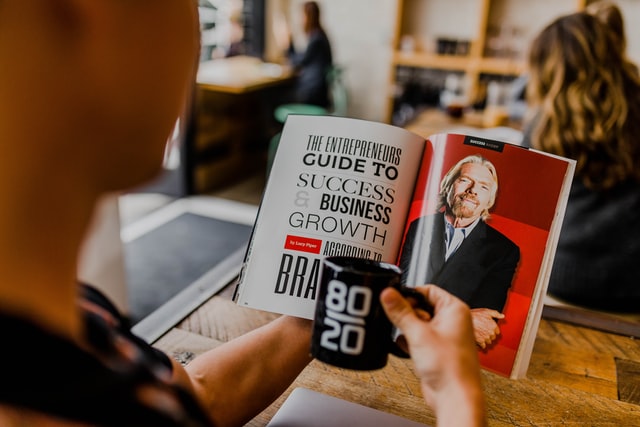
20% of efforts often create 80% of results.
In spa businesses, this usually means:
- Top 20% of services
- Top 20% of therapists
- Top 20% of loyal clients
Focus here first.
Example:
Improving rebooking rates of top clients by just 10% can outperform aggressive marketing spends.
Why Technology + Empathy Is the Future
Hirav Shah believes today’s beauty and wellness industry is becoming:
- More resilient
- More data-driven
- More client-centric
But its heart remains unchanged—care, trust, and human connection.
“Big disruptions create fast change. But sometimes, the change is for the better.”
FAQs

Q1. Why is strategy more important than marketing for spas?
Because marketing attracts clients once—strategy keeps them coming back profitably.
Q2. How often should spa goals be reviewed?
Every 90 days. This allows course correction without panic.
Q3. Can small spas benefit from a business strategist?
Yes. Smaller spas often see faster improvements because changes are easier to implement.
Q4. What is the fastest way to increase spa revenue?
Improving average bill value and rebooking rates—not discounts.
Final Thought

A spa business doesn’t grow by chance.
It grows by design, discipline, and direction.
With the right Spa Business Strategy, guided by insights from business strategist Hirav Shah, spa owners can transform uncertainty into clarity—and effort into sustainable success.
That is the real Game Changer.