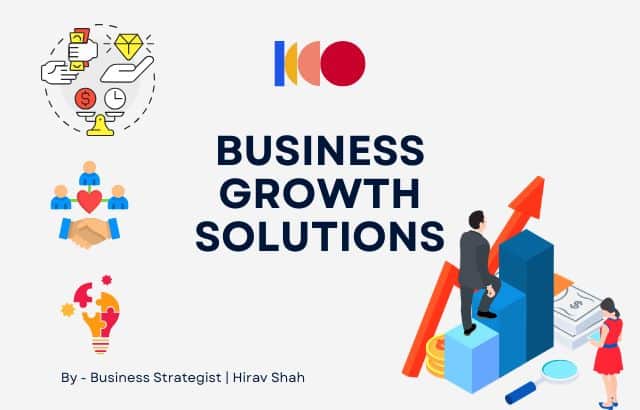
“Resolutions are not enough. Solutions are. Resolutions are often broken, but what every business truly needs is a well-defined plan of action.”
Business Strategist Hirav Shah, widely recognized as The Game Changer, believes that success is never achieved through wishful thinking alone. Whether you are an entrepreneur, startup founder, SME owner, family business leader, or corporate executive, growth comes from strategic planning, disciplined execution, and measurable progress.
Businesses regularly set ambitious goals. Many promise to increase sales, improve customer satisfaction, launch new products, expand into new markets, or strengthen their brand presence. However, without a structured roadmap, these resolutions often remain ideas rather than achievements.
Research consistently indicates that nearly half of people abandon their resolutions within six months, while only a small percentage stay committed for an entire year. Businesses experience a similar challenge. A company may announce revenue targets or expansion plans, but without measurable strategies, defined responsibilities, and continuous evaluation, these objectives gradually lose momentum.
According to Business Strategist Hirav Shah, organizations should stop making temporary resolutions and instead create permanent business solutions. A solution focuses on systems, processes, execution, accountability, and measurable results rather than motivation alone.
Table of Contents
Why Businesses Need Solutions Instead of Resolutions

The Difference Between a Resolution and a Solution
A resolution is an intention.
A solution is an action plan.
Examples:
- Resolution: Increase revenue.
- Solution: Improve digital marketing, increase customer retention by 20%, launch two new products, and reduce customer acquisition cost by 15%.
- Resolution: Build a better brand.
- Solution: Redesign visual identity, improve customer experience, strengthen online presence, and publish consistent educational content.
Business Strategist Hirav Shah emphasizes that successful businesses think beyond annual goals and focus on systems that deliver consistent results.
Digital Transformation Is No Longer Optional

Every Business Must Become a Digital Business
Over the past several years, businesses have undergone massive transformation due to:
- Hybrid work models
- Cloud computing
- Automation
- Artificial Intelligence
- Digital marketing
- E-commerce expansion
Key learning: Adapt or fall behind.
Examples:
- Restaurants using online ordering systems
- Retail stores selling on marketplaces
- Manufacturers automating inventory systems
- Consultants offering virtual services
- Schools adopting digital learning platforms
Real Business Impact Examples
- Clothing retailer increases revenue from ₹5,00,000 → ₹7,50,000 using online channels.
- Manufacturing firm reduces stock shortages by 35% using automation.
- Logistics company saves fuel costs via route optimization tools.
- Financial advisor expands client base through virtual consultations.
Role of Business Strategist Hirav Shah
Hirav Shah helps businesses identify digital opportunities aligned with profitability, efficiency, and customer experience.
Brand Building Creates Long-Term Business Value

Branding Is More Than a Logo
Branding includes:
- Customer trust
- Reputation
- Brand voice
- Service experience
- Visual identity
- Product quality
- Market positioning
Seven Powerful Branding Strategies
- Put a face to the brand – People trust people.
- Creative visual design – Unique visuals improve recall.
- Strategic brand colors – Colors influence emotions.
- Stand for something – Purpose builds loyalty.
- Consistent brand identity – Builds recognition.
- Authenticity – Real stories build trust.
- Memorable experiences – Experiences last longer than ads.
Role of Business Strategist Hirav Shah
He helps businesses build brands that are remembered, respected, and recommended.
Set SMART Business Goals

SMART Framework
- Specific: Clear target
- Measurable: Trackable numbers
- Assignable: Responsibility defined
- Realistic: Achievable goals
- Time-based: Deadline fixed
Example:
Increase Product A sales by 25% in 90 days.
Simple Business Calculations
Revenue Growth
₹80,00,000 → ₹1,00,00,000
Increase = ₹20,00,000
Monthly target = ₹1,66,667
Customer Retention
(900 ÷ 1000) × 100 = 90%
Marketing ROI
((8,00,000 − 2,00,000) ÷ 2,00,000) × 100 = 300%
Strategic Planning Makes Businesses Stronger

Focus on What You Can Control
- Expand online business
- Improve customer relationships
- Diversify offerings
- Enhance training
- Optimize operations
- Strengthen partnerships
- Invest in innovation
Strategic Thinking Examples
- Restaurant adds delivery & catering
- Institute launches online courses
- Manufacturer exports globally
- Consulting firm adopts subscriptions
- Retailer launches loyalty programs
Role of Business Strategist Hirav Shah
He helps businesses reduce risk, optimize resources, improve profitability, and build long-term competitive advantage.
Conclusion
Business success is built on:
- Execution
- Strategy
- Digital transformation
- Branding
- SMART goals
- Customer focus
Instead of asking what to wish for, ask:
What should we build?
That shift creates real business transformation.
FAQs

Why are business solutions better than resolutions?
Because they include execution, accountability, and measurable outcomes.
Why is digital transformation important?
It improves efficiency, scalability, and customer experience.
What is the role of branding?
It builds trust, loyalty, and long-term business value.
What are SMART goals?
Structured goals that are Specific, Measurable, Assignable, Realistic, and Time-based.
Who is Business Strategist Hirav Shah?
A leading strategist known as The Game Changer, helping businesses grow through structured planning, branding, and execution.
Powerful Business Growth Quotes with Strategy and Execution Insights by Business Strategist Hirav Shah

1. “Business growth begins the moment you stop making excuses and start making decisions.”
Explanations
Most businesses remain stuck not because of lack of opportunity, but because of hesitation. Fear of failure, overthinking, and delay in decision-making slow down progress more than market conditions.
Strategy
Adopt a decision-first mindset. Prioritize clarity over perfection. Create a system where decisions are taken within defined timelines instead of endless discussions.
Execution
Set a 24–48 hour rule for small business decisions. Document options, evaluate quickly, and execute without unnecessary delay.
—
2. “A strong brand is not built by advertising, but by consistent experience.”
Explanations
Customers do not remember one campaign; they remember how a business made them feel across multiple interactions.
Strategy
Focus on delivering uniform experience across sales, service, communication, and product quality. Build emotional trust rather than only visibility.
Execution
Create a brand checklist covering tone, response time, packaging, service quality, and follow-up systems. Train every team member to follow it consistently.
—
3. “Digital transformation is not a choice; it is survival disguised as opportunity.”
Explanations
Businesses that ignore digital systems lose speed, efficiency, and customer reach. Competitors using technology scale faster with fewer resources.
Strategy
Integrate digital tools in operations, marketing, and customer management. Focus on automation, online presence, and data-driven decisions.
Execution
Implement at least three core systems: CRM for customers, digital marketing channels, and online payment/ordering systems depending on business type.
—
4. “Strategy without execution is just motivation written on paper.”
Explanations
Many businesses create plans but fail during execution due to lack of accountability, tracking, and ownership.
Strategy
Break every strategy into measurable tasks with clear owners and deadlines. Focus on accountability rather than ideas.
Execution
Use weekly performance tracking. Assign responsibilities for every goal and review progress in fixed review meetings.
—
5. “Growth does not come from doing more, it comes from doing what matters most.”
Explanations
Businesses often waste resources on low-impact activities while ignoring high-impact opportunities.
Strategy
Apply the 80/20 rule (Pareto Principle). Identify the 20% of actions that generate 80% of results and prioritize them.
Execution
List all business activities, rank them by impact on revenue and growth, eliminate low-value tasks, and focus team energy on high-return actions.
—