Business Strategist and the Game Changer Hirav Shah believes that 2026 marks a decisive shift in how businesses will grow, compete, and earn trust. This year is not about launching more products, running louder campaigns, or competing on discounts. It is about one defining factor that quietly influences every buying decision: the experience you give to your customers.
Across sectors—real estate, retail, healthcare, education, finance, hospitality, startups, and professional services—customers are no longer impressed by promises alone. They are paying attention to how smoothly things work, how clearly information is shared, how respectfully they are treated, and how confident they feel after making a decision. In short, customers remember how the business made them feel, not just what it sold.
Until recently, many businesses focused primarily on product quality, pricing, and promotion. Those elements still matter—but in 2026, they are only the entry ticket. Two brands can offer similar products at similar prices, yet one earns loyalty, referrals, and repeat business while the other struggles. The difference lies in the experience delivered at every touchpoint—from the first enquiry to post-purchase support.
Every interaction now carries weight. Delays, confusion, follow-ups, tone of communication, transparency in pricing, and problem resolution all combine to form a single impression in the customer’s mind. And in 2026, that impression lasts longer than any advertisement.
As Business Strategist and the Game Changer Hirav Shah consistently emphasizes, businesses that consciously design customer experience will grow faster and stronger, while those that ignore it may lose relevance without immediately understanding why.
“In 2026, customers won’t judge your business by what you promise.
They will judge you by how simple, reassuring, and respectful the experience feels.”
— Business Strategist & the Game Changer Hirav Shah
This is why 2026 is being described as the Year of Experience. Not because customers expect luxury—but because they expect clarity, ease, trust, and emotional comfort while doing business.
Before understanding how this shift impacts business strategy, branding, and buying behavior, it is important to pause and reflect on a few fundamental questions—because experience is not what a business claims to give, but what a customer actually feels.
Table of Contents
Section 2: Before Anything Else, Ask These Basic but Crucial Questions

Before discussing frameworks, strategies, or execution models, Hirav Shah emphasizes the importance of self-reflection. Because customer experience is not created in boardrooms or brand decks—it is created in everyday actions, processes, and decisions that businesses often overlook.
Many businesses believe they are delivering a good experience. But in reality, they have never paused to question it from the customer’s point of view. And in 2026, assumptions are risky.
So before going deeper, it is important to ask a few simple—but uncomfortable—questions.
1. Do customers clearly understand what you offer, or do they feel confused before buying?
If a customer has to ask repeatedly, compare excessively, or “think too much” before deciding, the experience has already weakened. In 2026, clarity is the first impression.
“Confusion is not a small issue. It is often the first signal that experience design is missing.”
— Hirav Shah
2. Is it easy for customers to do business with you, or do they have to follow up constantly?
Ease is no longer a bonus—it is an expectation. Long response times, complicated processes, and unnecessary steps silently push customers away, even if your product is good.
“Customers don’t mind paying more. What they mind is unnecessary effort.”
— Hirav Shah
3. What happens after the payment is done—support or silence?
Many businesses perform well until the sale is closed, and then disappear. In 2026, the real experience begins after payment, not before it.
“Post-payment behavior defines whether a customer becomes a promoter or a regretful buyer.”
— Hirav Shah
4. Is the experience consistent for every customer, every time?
Does the experience depend on which staff member handles the customer? Or is it reliable and uniform? Inconsistency quietly damages trust and brand credibility.
“Inconsistent experience creates uncertainty—and uncertainty kills long-term loyalty.”
— Hirav Shah
5. If a customer recommends you, what will they talk about?
Will they talk about your product features—or about how smooth, respectful, and reassuring the entire journey felt? In 2026, recommendations are driven by memory, not marketing.
“People don’t recommend businesses. They recommend how a business made them feel.”
— Hirav Shah
6. Would you personally enjoy going through your own buying process?
This single question reveals more than most audits. If the answer is hesitation, the experience needs redesign.
“If you wouldn’t enjoy your own customer journey, your customers won’t either.”
— Hirav Shah
These questions do not demand immediate answers—but they reveal an important truth. In 2026, business success will not depend only on how strong your product or service is. It will depend on how thoughtfully the entire experience is designed.
Section 3: What Does “Customer Experience” Actually Mean in 2026?

When businesses hear the word experience, many immediately think of luxury, premium service, or added costs. Hirav Shah clarifies that this is one of the biggest misunderstandings holding businesses back.
In 2026, customer experience does not mean doing something extra. It means doing the basics exceptionally well—with intention, consistency, and empathy.
Customer experience is the sum of every interaction a buyer has with your business:
- How easily they find information
- How clearly you explain pricing and process
- How quickly you respond
- How smoothly the transaction happens
- How supported they feel after payment
Experience is not a department. It is not a one-time gesture. It is the entire journey, from first contact to final memory.
In earlier years, customers tolerated friction. Delays, confusion, unclear processes, and follow-ups were considered “normal.” In 2026, they are considered signals of inefficiency and indifference.
A strong customer experience today answers three unspoken questions:
- Can I trust this business?
- Is this decision safe and simple?
- Will I be supported after I commit?
“Customer experience in 2026 is not about impressing people.
It’s about removing stress, doubt, and friction from their decisions.”
— Hirav Shah
This is why experience has become a strategic priority—not a soft skill. Businesses that understand this shift move from selling products to building confidence.
To make this actionable, experience must be broken down into clear components. That’s where the next framework becomes critical.
Section 4: The 5 Experience Pillars of 2026 (Framework Overview)
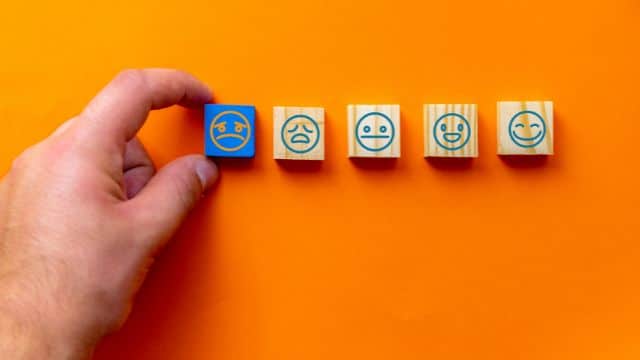
To understand and design customer experience effectively, Hirav Shah outlines a simple but powerful structure—the 5 Experience Pillars of 2026.
These pillars apply across industries, whether the business is B2C or B2B, local or global, product-based or service-driven.
The five pillars are:
- Clarity Experience
- Convenience Experience
- Consistency Experience
- Care & Respect Experience
- Memory Experience
Each pillar represents a different stage of how customers think, feel, and decide during their journey.
Most businesses focus heavily on just one or two pillars—usually clarity or convenience. In 2026, growth comes from balancing all five, because weakness in even one pillar breaks the overall experience.
“Customer experience fails not because businesses don’t try—but because they focus on one part and ignore the rest.”
— Hirav Shah
In the sections ahead, each pillar will be explored in detail, starting with the most overlooked—but most critical—pillar of all.
Section 5: Pillar 1 – Clarity Experience

Clarity is the foundation of customer experience in 2026. Before a customer evaluates price, quality, or brand image, they evaluate one thing silently:
Do I clearly understand what I’m getting into?
Clarity experience answers basic but powerful questions:
- What exactly is being offered?
- What is included and what is not?
- How does the process work?
- What are the timelines, costs, and expectations?
When clarity is missing, customers hesitate—even if they are interested. Confusion creates delay, delay creates doubt, and doubt kills decisions.
In industries like real estate, healthcare, finance, education, and consulting, lack of clarity is one of the biggest trust-breakers. Customers don’t expect perfection—but they expect honesty and simplicity.
Clarity experience is created through:
- Transparent communication
- Simple language instead of jargon
- Clearly defined steps
- Upfront explanation of risks and responsibilities
“If customers don’t feel clear, they don’t feel confident.
And without confidence, no decision moves forward.”
— Hirav Shah
In 2026, businesses that simplify win faster. Those that complicate—intentionally or unintentionally—lose silently. Clarity is not about saying more. It is about saying what matters, clearly and early.
Section 6: Pillar 2 – Convenience Experience

In 2026, convenience is no longer about speed alone. It is about reducing effort—mental, emotional, and physical. Hirav Shah points out that customers today are not short on money as much as they are short on patience.
Convenience experience answers one silent question:
How easy is it for me to move forward with this business?
This includes:
- How quickly enquiries are acknowledged
- How simple the buying or onboarding process is
- How smooth payment and documentation feel
- How easily support is available when needed
Many businesses lose customers not because their offering is weak, but because the process feels tiring. Repeated follow-ups, unclear next steps, manual paperwork, delayed responses—these small frictions collectively damage the experience.
“Customers are willing to pay more for ease.
What they are no longer willing to do is chase a business to give them clarity or access.”
— Hirav Shah
Convenience is not about cutting corners. It is about respecting the customer’s time and energy. The easier the journey, the faster the decision.
Section 7: Pillar 3 – Consistency Experience

Consistency is where many brands unknowingly break trust. A customer may have a great first interaction, followed by average service, and then complete silence after payment. In 2026, such inconsistency is no longer tolerated.
Consistency experience answers the question:
Can I expect the same quality every time, no matter who I interact with?
Consistency shows up in:
- Communication tone
- Service standards
- Follow-up behavior
- Delivery timelines
- Problem resolution
When experience varies from person to person or situation to situation, customers feel uncertain. And uncertainty makes people defensive—not loyal.
“Trust is built when customers know what to expect—and get it every time.”
— Hirav Shah
In 2026, brands are not judged by their best moments, but by their most common behavior. Consistency transforms a business from being “good sometimes” to being reliable always.
Section 8: Pillar 4 – Care & Respect Experience

Care and respect are no longer emotional extras; they are strategic differentiators. Customers today can sense whether a business genuinely values them—or simply wants their money.
Care & respect experience answers a deeply human question:
Do I feel valued, heard, and respected here?
This is reflected in:
- How concerns are handled
- How mistakes are acknowledged
- How feedback is received
- How communication sounds during difficult moments
In 2026, customers don’t expect perfection—but they do expect honesty, empathy, and accountability.
“Customers forgive mistakes faster than they forgive arrogance or neglect.”
— Hirav Shah
Care is shown not in grand gestures, but in small behaviors—listening patiently, responding respectfully, and standing by the customer when it matters most.
Section 9: Pillar 5 – Memory Experience

The final and most powerful pillar of 2026 is memory. Memory experience answers one defining question:
What will the customer remember about you after everything is done?
Customers may forget features, prices, or technical details—but they never forget how a business made them feel at the end of the journey.
Memory experience is shaped by:
- The final interaction
- The after-sales support
- The closing communication
- The feeling of confidence or regret
In 2026, referrals, repeat business, and brand advocacy are driven by emotional residue, not promotional reminders.
“In the long run, businesses are not remembered for what they sold,
but for the confidence and comfort they left behind.”
— Hirav Shah
A strong memory experience turns customers into ambassadors. A weak one turns even satisfied buyers into silent exits.
Section 10: Practical Tips to Improve Customer Experience in 2026

Understanding experience is important—but executing it daily is what separates growing businesses from stagnant ones. According to Hirav Shah, experience improvement does not require massive budgets. It requires intentional behavior and structured thinking.
Here are practical, actionable tips businesses can start using immediately in 2026:
- Simplify every customer-facing message – If it takes effort to understand, it weakens experience.
- Design the journey before designing promotions – Ads attract attention; experience converts trust into loyalty.
- Reduce follow-ups by increasing clarity upfront – Most follow-ups exist because something wasn’t explained clearly.
- Standardize processes, not personalities – Experience should not depend on who is handling the customer.
- Prioritize post-payment communication – Silence after payment is one of the biggest experience killers.
- Train teams on experience mindset, not just scripts – Tone, empathy, and ownership matter more than exact words.
“Small improvements in experience create exponential returns in trust.”
— Hirav Shah
In 2026, businesses that consistently apply these basics will outperform those chasing shortcuts.
Section 11: A Simple Customer Experience Exercise for Business Owners

To improve experience, businesses must first see it clearly. Hirav Shah recommends a simple but powerful exercise that every business owner should do at least once every quarter.
The Exercise: Map One Real Customer Journey
Choose one recent customer and map their journey step by step:
- First enquiry
- Information shared
- Response time
- Decision process
- Payment experience
- Delivery or service
- Post-sale communication
Now honestly note:
- Where confusion occurred
- Where delays happened
- Where reassurance was missing
- Where the customer had to put extra effort
“You can’t improve what you’ve never observed honestly.”
— Hirav Shah
This exercise often reveals experience gaps that businesses were completely unaware of.
Section 12: Customer Experience Worksheet (Quick Self-Check)

This quick worksheet helps businesses assess whether they are truly ready for the Year of Experience. Answer Yes or No:
- Is our offering easy to understand within the first interaction?
- Is the buying or onboarding process simple and predictable?
- Do customers hear from us after payment without chasing?
- Is the experience consistent across team members?
- Will customers remember us positively after 30 days?
If more than two answers are “No,” experience redesign is no longer optional—it is urgent.
“Awareness is the first step toward better experience design.”
— Hirav Shah
Section 13: Frequently Asked Questions (FAQs)

1. Is customer experience only important for premium brands?
No. Experience matters more for mass and mid-range businesses because trust drives repeat buying.
2. Can small businesses compete on experience?
Yes. Small businesses often have an advantage because they can personalize and respond faster.
3. Does improving experience increase costs?
Not necessarily. Most experience improvements reduce friction and save time.
4. How quickly can experience improvements show results?
Often within weeks—through faster decisions, better referrals, and fewer complaints.
5. What is the biggest experience mistake businesses make?
Assuming customers feel what the business intends, without verifying it.
“Experience is not expensive. Confusion is.”
— Hirav Shah
Section 14: Final Conclusion — Why Experience Is the Real Advantage of 2026

As 2026 unfolds, one reality is becoming clear. Products can be copied. Prices can be matched. Advertising can be outspent. But experience cannot be easily replicated.
The businesses that will grow stronger in 2026 are not those that shout the loudest—but those that make customers feel clear, confident, respected, and supported throughout the journey.
Customer experience is no longer a soft concept. It is a strategic advantage, a trust-builder, and a growth multiplier.
“In 2026, businesses won’t lose because of competition.
They will lose because they ignored how customers felt.”
— Hirav Shah
The question is no longer whether experience matters. The question is simple—and urgent:
What experience are you giving to your customers, every single day?
About the Writer

This article is authored by Hirav Shah, a globally respected Business Strategist and The Game Changer in Entertainment, Sports, and Business. He is the founder of the world’s first Business Decision Validation Hub and the author of 25+ strategy books. His 6+3+2 framework and Astro Strategy approach have guided entrepreneurs, startups, corporates, sports professionals, and entertainers to validate decisions, reduce risks, and achieve breakthrough results.