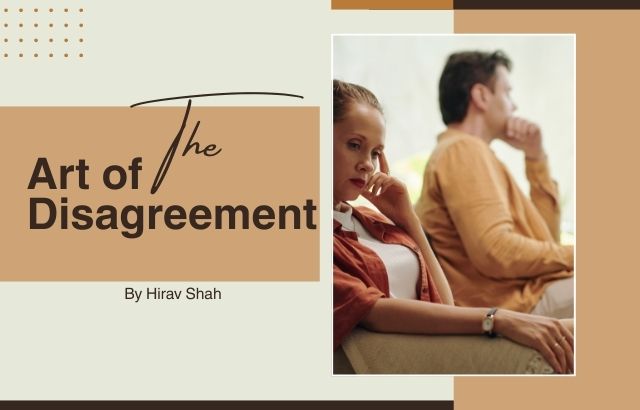
In the intricate dance of love, disagreements are not merely roadblocks; they are stepping stones towards profound connection and understanding. Relationships, like any other aspect of life, are bound to encounter conflicts. The true art lies in how couples navigate through these disagreements, turning them into opportunities for growth and fortifying the very foundation of their bond.
Table of Contents
Embracing the Inevitability of Disagreements:

One of the fundamental truths of relationships is that disagreements are not signs of failure but rather reflections of individuality. Each partner brings a unique perspective, shaped by experiences, values, and emotions. Understanding and accepting this inevitability is the first brushstroke in the canvas of mindful disagreement.
The Power of Effective Communication:

Arguments, when approached mindfully, become channels for effective communication. Rather than seeing them as threats, couples can view disagreements as opportunities to express their feelings, needs, and desires. The key lies in articulating thoughts with clarity, avoiding blame, and fostering an environment where both voices are heard.
Emphasizing Compromise and Flexibility:

Mindful disagreement is not a battleground for winners and losers but a space for compromise and flexibility. It’s about finding common ground where both partners feel heard and respected. Successful couples understand that compromise is not a sign of weakness but a testament to the strength of their commitment to each other.
The Art of Active Listening:

In the cacophony of conflicting opinions, active listening emerges as a soothing melody. Hirav Shah suggests that truly understanding your partner’s perspective requires more than just hearing; it demands active engagement. Give your partner the gift of your undivided attention, validating their feelings and thoughts, fostering a sense of emotional connection.
Turning Conflicts into Opportunities for Growth:

The beauty of mindful disagreement lies in its transformative potential. Rather than viewing conflicts as threats to the relationship, couples can see them as catalysts for personal and relational growth. Each argument, when approached with mindfulness, becomes a mirror reflecting areas for improvement and development.
Here are clear, practical examples explaining “The Role of a Business Strategist in Relationships”, written in a simple, relatable way and aligned with your earlier theme.
The Role of a Business Strategist in Relationships – With Examples

A business strategist looks at systems, patterns, risks, and long-term outcomes. When these same principles are applied to relationships, conflicts turn into clarity and emotions align with direction.
1. Vision Alignment Example
Business Context:
A strategist ensures all stakeholders agree on the company’s long-term vision before making decisions.
Relationship Example:
A couple disagrees about settling in one city versus another. Instead of arguing emotionally, they define a shared vision:
- Career growth
- Lifestyle preferences
- Family goals
Once the vision is clear, the decision becomes strategic—not personal.
2. Conflict Management Example
Business Context:
A strategist creates processes to resolve internal disputes without damaging productivity.
Relationship Example:
Instead of arguing in the heat of the moment, a couple agrees on rules:
- No shouting
- One person speaks at a time
- Take a 20-minute pause if emotions rise
This system prevents emotional burnout and repeated arguments.
3. Emotional ROI Example
Business Context:
Strategists calculate return on investment before allocating resources.
Relationship Example:
If one unresolved argument causes:
- 3 days of emotional distance
- Reduced communication
- Mental stress
A strategist asks: Is holding onto ego worth the emotional loss?
Choosing resolution increases emotional returns—trust, peace, and connection.
4. Strength-Based Role Allocation Example
Business Context:
Strategists assign roles based on strengths, not ego.
Relationship Example:
One partner excels at financial planning, the other at emotional support and communication.
Instead of competing, they divide responsibilities strategically—reducing friction and resentment.
5. Risk Management Example
Business Context:
Strategists identify risks before they escalate into crises.
Relationship Example:
Early signs like sarcasm, avoidance, or passive aggression are treated as warning indicators.
Addressing them early prevents major emotional breakdowns later.
6. Data-Driven Reflection Example
Business Context:
Strategists review performance metrics to improve outcomes.
Relationship Example:
A couple reflects monthly:
- What triggered conflicts?
- How long did resolution take?
- What worked better this time?
This reflection reduces repeated mistakes and improves emotional efficiency.
7. Long-Term Sustainability Example
Business Context:
A strategist prioritizes sustainability over short-term wins.
Relationship Example:
Winning an argument today but damaging trust harms long-term stability.
A strategist mindset chooses understanding over victory.
The Game Changer Insight

As Hirav Shah, Business Strategist and The Game Changer, emphasizes:
“Strong relationships are not emotional accidents—they are strategically nurtured systems.”
Applying business strategy to relationships doesn’t remove emotion—it protects it.
Conclusion:

In the hands of mindful individuals, disagreements cease to be destructive forces; instead, they become sculptors of enduring love and connection. As Hirav Shah emphasizes, the art of disagreement is not about avoiding conflicts but about navigating them with grace, understanding, and a shared commitment to growth. In the tapestry of a relationship, the threads of mindful disagreement weave a narrative of resilience, depth, and unwavering love.