
Have you ever felt a sudden surge of happiness when someone genuinely acknowledged your efforts? Perhaps a manager recognized the long hours you invested in a project, a friend noticed how hard you were trying, or a family member simply told you, “I understand what you’re going through.” On the other hand, you may also have experienced the opposite: working extremely hard and receiving no acknowledgment, only to feel disappointed, invisible, or emotionally drained.
That contrast illustrates the powerful role of validation in human life.
Validation is much more than receiving praise or hearing a compliment. It is the experience of being seen, heard, understood, respected, and valued. When someone validates your feelings or recognizes your efforts, the experience can influence your emotions, motivation, relationships, confidence, and behavior.
From a psychological perspective, validation can communicate safety and belonging. From a social perspective, it strengthens connections. From a professional perspective, effective recognition can influence engagement and morale. And from a neuroscience perspective, social recognition and rewarding experiences can involve brain systems associated with motivation, learning, emotion, and reward.
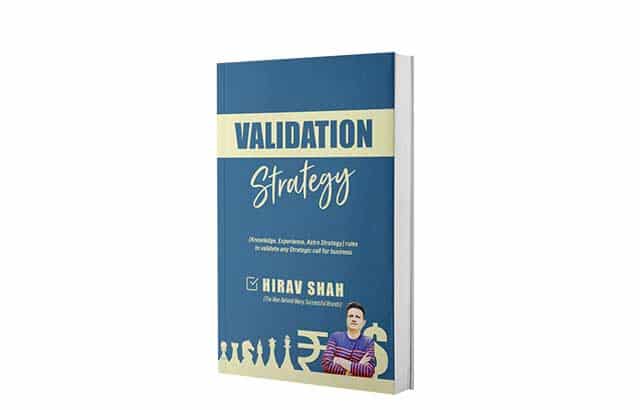
As Hirav Shah, business strategist and The Game Changer, explains, “Validation isn’t just about words; it’s about creating a sense of belonging and worth. It’s the foundation of meaningful connections.”
Understanding validation can therefore help us become better leaders, partners, parents, colleagues, friends, and individuals.
Table of Contents
What Is Validation and Why Is It Important?

What does validation mean to you?
At its core, validation is the process of acknowledging another person’s feelings, thoughts, experiences, efforts, or achievements as understandable and worthy of attention. Validation does not necessarily mean agreeing with everything someone says. Instead, it communicates that you recognize their experience.
For example, imagine an employee says:
“I’m frustrated because I spent three weeks preparing this presentation and the client rejected the proposal.”
An invalidating response might be:
“Don’t worry about it. Just move on.”
A validating response could be:
“I can understand why you’re frustrated. You invested a lot of time and effort into the presentation, so that outcome must be disappointing.”
The second response does not claim that the employee’s proposal was perfect. It simply acknowledges the emotional reality of the situation.
This distinction is important because validation is about understanding, not necessarily agreement.
Emotional Validation

Emotional validation means acknowledging someone’s feelings without immediately judging, dismissing, or trying to eliminate them.
Examples include:
- “It makes sense that you feel nervous before such an important presentation.”
- “I can see why that conversation hurt you.”
- “It sounds like today has been incredibly stressful.”
- “You have every right to feel disappointed after putting in so much effort.”
Emotional validation can help people feel less alone in difficult moments.
Achievement Validation

Achievement validation recognizes someone’s effort, progress, or accomplishment.
For example:
- “You worked consistently for three months, and your improvement is impressive.”
- “You handled that difficult client conversation professionally.”
- “The way you solved that problem showed creativity and persistence.”
Effective achievement validation is often more meaningful when it identifies what was actually done well rather than offering a generic compliment.
Instead of saying:
“Good job.”
A stronger statement might be:
“Your preparation made the presentation much clearer, especially the way you explained the financial projections.”
Self-Validation

Self-validation means acknowledging your own emotions, effort, progress, and worth without requiring constant external approval.
For example:
“This was difficult, but I did my best with the information I had.”
Or:
“I’m disappointed with the result, but one result does not define my ability.”
Self-validation can help create a healthier relationship with external feedback.
The Science of Validation: What Happens in the Brain?

The brain is highly responsive to social information. Humans are social beings, and experiences involving acceptance, rejection, recognition, cooperation, and belonging can influence emotional and motivational processes.
It is common to hear that “validation releases dopamine” or that validation “lights up the same brain regions as rewards.” The underlying science is more nuanced.
Positive social feedback can engage reward and motivation-related neural systems, while social rejection and exclusion can activate neural processes associated with distress. Neurotransmitters such as dopamine play important roles in reward prediction, motivation, learning, and reinforcement.
That does not mean every compliment automatically produces a measurable dopamine surge or that validation simply “rewires the brain for positivity.” The actual response depends on the individual, context, meaning of the feedback, expectations, and whether the recognition is perceived as genuine.
Dopamine, Reward, and Motivation

Dopamine is often described as the brain’s “pleasure chemical,” but that description is overly simplistic.
Dopamine is strongly involved in motivation, reward prediction, learning, and reinforcement.
Consider a salesperson who spends weeks developing a major proposal. When the client responds positively, the experience may reinforce the behaviors that contributed to the outcome: preparation, persistence, communication, and follow-up.
The lesson the brain may learn is not simply:
“Praise feels good.”
It can also be:
“The effort and strategy I used produced a meaningful outcome. I should continue using effective behaviors.”
This is one reason recognition can influence motivation.
Validation and Stress

Feeling understood can also influence how people experience stressful situations.
Imagine two employees dealing with the same difficult deadline.
Employee A tells a manager:
“I’m overwhelmed because three urgent projects arrived at the same time.”
The manager responds:
“Everyone is busy. Just get it done.”
Employee B receives:
“I understand why you’re overwhelmed. Three urgent projects arriving together is a significant workload. Let’s prioritize them and decide what can move.”
The second response does not magically eliminate the workload. However, it can change the employee’s emotional experience by reducing the sense of being ignored or alone.
Validation can therefore work alongside practical problem-solving.
Stronger Learning Through Meaningful Feedback

Validation can become particularly useful when combined with specific feedback.
Suppose an employee makes a successful presentation.
Instead of:
“Excellent.”
A leader could say:
“Your preparation was excellent. You anticipated the client’s objections and answered them with clear data.”
The employee now receives both emotional recognition and useful information about which behaviors were effective.
That combination can support learning more effectively than vague praise.
Why Do Human Beings Crave Validation?

Why do people care so much about being recognized?
Because validation can connect with several fundamental psychological and social needs.
1. Belonging
Humans have a strong need to feel connected to others.
When someone says:
“I understand you.”
the message can communicate:
“You are not alone.”
A workplace employee who feels that colleagues notice and value their contribution may experience a stronger sense of belonging than someone whose work consistently goes unnoticed.
2. Self-Worth
Recognition can influence how people perceive their own value.
A child who repeatedly hears:
“I noticed how hard you worked on that.”
may learn to associate effort with personal development.
An adult who receives specific, sincere recognition can similarly gain confidence in their capabilities.
However, healthy self-worth should not depend entirely on external feedback.
3. Motivation
Recognition can encourage people to continue constructive behaviors.
For example, if a team member receives meaningful recognition for helping colleagues, they may be more likely to continue demonstrating collaboration.
The ideal cycle is:
Validation → Confidence → Action → Learning → Improvement
Not:
Validation → Dependence → Anxiety → Constant reassurance seeking
That distinction is critical.
Benefits of Validation for Mental Health and Relationships

Validation can be valuable in personal and professional relationships because people generally want to feel understood.
When individuals feel heard, conversations can become less defensive and more constructive.
Validation Can Reduce Emotional Tension
Consider someone who comes home after a difficult day and says:
“My manager criticized my work in front of everyone.”
Immediately responding with:
“Maybe your manager was right.”
may make the person feel more isolated.
A validating response could be:
“That sounds embarrassing. I can understand why you’re upset, especially because it happened in front of the whole team.”
Once the person feels heard, they may become more receptive to discussing what happened and what they could do next.
Validation Can Build Self-Worth
Specific recognition can help people recognize their strengths.
For example:
“You didn’t give up when the first approach failed. You changed your strategy and tried again.”
This is more powerful than simply saying:
“You’re amazing.”
The first statement identifies a real behavior and gives the person something concrete to internalize.
Validation Can Strengthen Relationships
Validation communicates empathy.
In a relationship, saying:
“I understand why that mattered to you”
does not necessarily mean:
“I agree with everything you did.”
It means:
“I care enough to understand your perspective.”
That distinction can prevent many unnecessary arguments.
Validation in Business Decisions

Validation is not limited to emotions and relationships. It is also a critical concept in business strategy.
For a business strategist, validation means testing assumptions before committing significant resources.
A business idea may look excellent on paper, but the market ultimately determines whether customers actually want the product or service.
Hirav Shah, business strategist and The Game Changer, emphasizes that validation can transform assumptions into evidence-based decisions.
Market Validation

Suppose an entrepreneur believes customers will pay ₹2,000 for a new digital service.
Instead of immediately spending ₹20 lakh developing the complete product, the entrepreneur could test the concept through:
- Customer interviews
- Surveys
- Landing pages
- Prototype demonstrations
- Pilot programs
- Pre-orders
- Small-scale advertising experiments
- Competitive research
If 100 qualified prospects are contacted and 15 express strong interest, that creates an initial signal.
If 20 people are invited to a paid pilot and 8 purchase it, the entrepreneur now has stronger evidence than a simple assumption.
Simple Business Validation Calculation
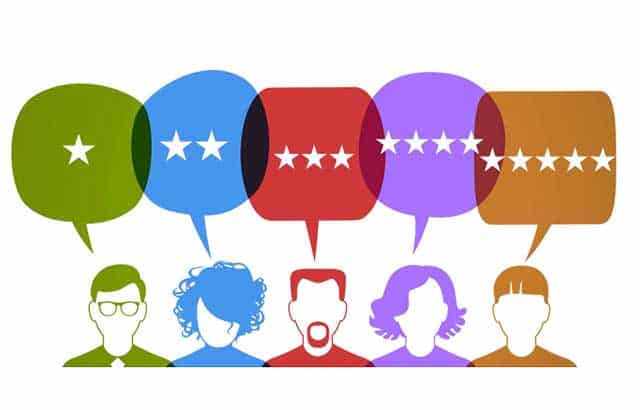
Imagine a company spends ₹50,000 testing a product concept.
The test generates:
- 200 qualified leads
- 40 product demonstrations
- 10 paying customers
- ₹12,000 average first-year revenue per customer
Estimated first-year revenue:
10 × ₹12,000 = ₹1,20,000
Estimated gross revenue-to-test-cost ratio:
₹1,20,000 ÷ ₹50,000 = 2.4
That does not automatically prove the business is profitable because acquisition costs, operating expenses, retention, refunds, taxes, and other factors must also be considered.
However, the calculation provides a useful early signal.
This is the role of a business strategist: not merely celebrating an idea, but challenging assumptions, testing evidence, measuring outcomes, and helping decision-makers determine whether an opportunity deserves further investment.
Team Validation

Validation is equally important inside organizations.
A manager might say:
“Your work helped us finish the project two days ahead of schedule.”
This recognizes a measurable contribution.
A stronger leadership approach may combine recognition with development:
“You coordinated the team effectively and helped us finish two days early. Your next opportunity is to delegate more of the execution so you can focus on strategy.”
This creates a balance between validation and growth.
Strategic Validation
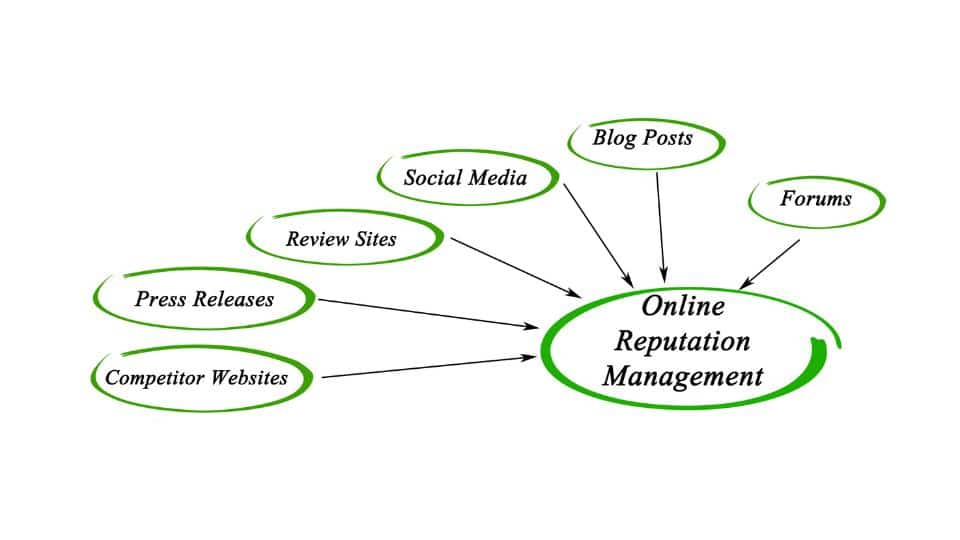
Business leaders also need to validate strategic decisions.
Before launching a new product, expanding into a new market, or investing heavily in technology, leaders can ask:
- What assumption are we making?
- What evidence supports it?
- What evidence challenges it?
- What is the smallest test we can run?
- What result would cause us to change direction?
- What is the financial cost of being wrong?
- What is the opportunity cost of doing nothing?
This approach makes validation a strategic discipline rather than simply a form of encouragement.
The Role of a Business Strategist in Validation

A business strategist plays an important role in separating emotional enthusiasm from evidence-based opportunity.
Entrepreneurs often become deeply attached to their ideas. That passion can be valuable, but it can also create blind spots.
A business strategist can ask uncomfortable but necessary questions:
- Who exactly is the customer?
- What problem are we solving?
- How frequently does the problem occur?
- How much is the customer willing to pay?
- What alternatives already exist?
- What makes our solution different?
- What evidence proves demand?
- What assumptions could destroy the business model?
Hirav Shah, business strategist and The Game Changer, can be viewed through this lens: validation is not simply about receiving confirmation; it is about discovering whether an assumption can withstand evidence.
For example, an entrepreneur may believe:
“Everyone will want this product.”
A strategist may transform that statement into a testable hypothesis:
“Among our defined target audience, at least 10% of qualified prospects will express purchase intent at the proposed price.”
Now the assumption can be tested.
That shift—from opinion to measurable hypothesis—is one of the most valuable roles of strategic validation.
Validation vs. Approval: What Is the Difference?

Is seeking validation the same as seeking approval?
No.
Validation means acknowledging an experience, feeling, effort, or perspective.
Approval generally means expressing acceptance, agreement, or endorsement.
For example:
“I understand why you’re angry.”
is validation.
“You’re completely right, and I agree with everything you did.”
is approval.
You can validate someone’s emotion without approving every action they took.
Why the Difference Matters
Imagine an employee makes a poor decision and becomes upset.
A manager can say:
“I understand why you’re disappointed. You put a lot of effort into this project.”
That validates the employee’s feelings.
The manager can then add:
“At the same time, we need to examine what went wrong and decide how to prevent it next time.”
This combination is healthier than either extreme:
- Invalidation: “Stop being upset.”
- Blind approval: “Everything you did was right.”
- Balanced validation: “Your feelings make sense, and we still need to address the problem.”
Validation should support self-awareness, accountability, and growth.
The Negative Side of Validation: When It Goes Wrong

Can validation ever become unhealthy?
Yes.
The problem is not validation itself. The problem occurs when a person becomes dependent on external validation to determine their worth.
Someone may begin thinking:
“If people praise me, I’m successful.”
Then:
“If nobody praises me, I must have failed.”
Eventually, external feedback becomes the emotional scoreboard.
Dependence on External Validation

Consider a professional who checks social media reactions immediately after every achievement.
If a post receives hundreds of positive reactions, they feel confident.
If the next post receives little engagement, they feel unsuccessful.
The actual quality of their work may not have changed.
Only the amount of external feedback changed.
This demonstrates why external validation should complement—not replace—self-validation.
Inauthenticity
Excessive validation-seeking can also encourage people to change themselves to gain approval.
For example, someone may accept assignments they do not have the capacity for because they want to appear helpful.
Over time, this can produce exhaustion and resentment.
Healthy confidence requires the ability to say:
“I appreciate your opinion, but I also need to consider what is right for me.”
The Power of Self-Validation

What if you could acknowledge your own progress even when nobody else noticed?
That is the power of self-validation.
Self-validation does not mean convincing yourself that everything you do is perfect.
It means being honest about your experience while treating yourself with fairness.
Step 1: Acknowledge Your Feelings
Instead of:
“I shouldn’t feel this way.”
try:
“I am disappointed because this outcome mattered to me.”
Step 2: Recognize Your Effort
Ask:
- What did I do well?
- What did I learn?
- What challenge did I overcome?
- What would I do differently next time?
Step 3: Separate Results From Identity
A failed project does not mean:
“I am a failure.”
A more constructive interpretation is:
“The project did not produce the result I wanted, and I need to understand why.”
Step 4: Celebrate Small Wins
Not every accomplishment needs to be dramatic.
Examples include:
- Completing an important task
- Having a difficult conversation
- Maintaining consistency
- Learning a new skill
- Asking for help
- Correcting a mistake
- Setting a healthy boundary
Small wins can create evidence of progress.
How to Provide Effective Validation

Want to make someone feel genuinely heard?
Validation does not require a complicated speech. Often, the most effective response is simple and specific.
Listen Actively
Give the person your attention.
Avoid immediately checking your phone, interrupting, or preparing your counterargument.
Sometimes people need space to finish their thought before they are ready to hear advice.
Acknowledge Their Experience
Useful phrases include:
- “That sounds difficult.”
- “I can see why you feel that way.”
- “It makes sense that you’re disappointed.”
- “I understand why this matters to you.”
- “You put a lot of effort into this.”
Be Genuine
People can often detect empty praise.
Compare:
“You’re the best employee ever!”
with:
“You stayed calm during a difficult client call and kept the conversation productive.”
The second statement is specific, believable, and useful.
Ask Before Giving Advice
A powerful question is:
“Do you want me to listen, or would you like help thinking through a solution?”
This prevents one of the most common mistakes in communication: trying to fix a problem when the other person first wants to feel understood.
Validation and Motivation: How Do They Work Together?

Validation can contribute to motivation when it is connected to meaningful behavior and progress.
A simple model is:
Recognition → Confidence → Effort → Learning → Improvement
For example, a young employee struggles with public speaking.
After a presentation, the manager says:
“Your opening was much clearer than your previous presentation, and you maintained eye contact throughout most of it. Keep working on the conclusion.”
The employee receives recognition while also receiving direction.
This is more useful than saying:
“Perfect presentation!”
when the presentation clearly had weaknesses.
A Simple Motivation Calculation
Imagine an employee completes 10 important tasks in a month.
Before receiving regular, meaningful recognition, the employee completes an average of 10 tasks.
After a structured recognition program, the average rises to 12 tasks.
Increase:
12 − 10 = 2 additional tasks
Percentage increase:
2 ÷ 10 × 100 = 20%
This calculation shows how a business might measure an outcome associated with a recognition initiative.
However, it would be incorrect to conclude that validation alone caused the 20% improvement without controlling for other factors such as workload, staffing, incentives, training, seasonality, or process changes.
That is why business strategists should distinguish correlation from causation.
How to Practice Validation in Daily Life

Validation becomes powerful when it becomes a daily behavior rather than an occasional technique.
In the Workplace
Instead of:
“Good work.”
say:
“Your analysis identified the main cost problem and gave the team a clear direction for the next step.”
In Parenting
Instead of:
“Don’t cry. It’s not a big deal.”
say:
“I know you’re disappointed because you really wanted to win. It’s okay to feel upset. Let’s talk about what happened.”
In Friendships
Instead of immediately giving advice:
“You should quit your job.”
try:
“It sounds like you’ve been carrying a lot of pressure at work. I can understand why you’re thinking about making a change.”
In Romantic Relationships
Instead of:
“You’re overreacting.”
try:
“I can see that what happened hurt you. I want to understand what made it feel so upsetting.”
In Self-Talk
Instead of:
“I always mess everything up.”
try:
“This didn’t go as planned. I’m disappointed, but I can learn from what happened.”
Common Mistakes to Avoid When Validating Others

Validation seems simple, but it is surprisingly easy to get wrong.
1. Dismissing Feelings
Statements such as:
- “It’s not a big deal.”
- “You need to get over it.”
- “Other people have it worse.”
- “Stop worrying.”
can unintentionally communicate that someone’s experience does not matter.
2. Giving Empty Compliments
Generic praise can lose its meaning when it is used constantly.
Instead of:
“You’re amazing!”
identify the specific behavior:
“You handled that difficult negotiation without becoming defensive.”
3. Jumping to Solutions
Someone sharing an emotional experience does not always want a solution.
Sometimes they want understanding first.
4. Confusing Validation With Agreement
You can say:
“I understand why you feel angry.”
without saying:
“Your decision was correct.”
5. Over-Validating Poor Behavior
Validation should not become an excuse for harmful conduct.
You can acknowledge someone’s emotion while maintaining boundaries and accountability.
For example:
“I understand that you were angry, but shouting at the team was not acceptable. Let’s discuss another way to handle that frustration.”
Real-Life Examples of Validation in Action
Validation can be observed across almost every area of life.
Example 1: Business Leadership
A team completes a major project under a tight deadline.
A weak leader says:
“That’s what you’re paid to do.”
A validating leader says:
“The deadline was demanding, and the team coordinated exceptionally well to deliver on time. I appreciate the extra effort.”
The second approach recognizes the contribution while reinforcing the behavior the organization values.
Example 2: Entrepreneurship
An entrepreneur’s first product launch fails.
Instead of saying:
“Your idea was terrible.”
a strategist might say:
“The outcome is disappointing, but the failure gives us valuable information. Let’s examine customer acquisition, pricing, positioning, and product-market fit before deciding what to change.”
This is validation combined with strategic thinking.
Example 3: Parenting
A child receives a poor grade.
Instead of:
“You should have studied harder.”
a parent could say:
“I know you’re disappointed. Let’s look at what made the test difficult and figure out how you can prepare differently next time.”
The child’s emotion is acknowledged without removing responsibility.
Example 4: Relationships
A friend says:
“I feel like nobody notices how much I’m doing for everyone.”
A validating response is:
“It sounds like you’ve been giving a lot and haven’t felt recognized. I can understand why that would be exhausting.”
The goal is not immediately to solve the person’s life. It is first to communicate understanding.
Validation and Business Growth: A Strategic Perspective

Validation can also be viewed as a business growth discipline.
A business strategist should encourage organizations to validate ideas at multiple levels.
Customer Validation
Ask whether customers actually have the problem.
Product Validation
Determine whether the proposed solution solves that problem.
Pricing Validation
Test whether customers are willing to pay the proposed price.
Operational Validation
Determine whether the business can reliably deliver the product or service.
Financial Validation
Examine whether the economics support sustainable growth.
For example, assume:
- Selling price = ₹5,000
- Variable cost = ₹2,000
- Contribution per sale = ₹3,000
- Monthly fixed costs = ₹3,00,000
Break-even sales volume:
₹3,00,000 ÷ ₹3,000 = 100 sales
Therefore, the company needs approximately 100 sales per month to cover those fixed costs, before considering additional factors such as taxes, financing costs, unexpected expenses, and other adjustments.
This type of calculation helps transform an exciting business idea into a measurable strategic question.
The question changes from:
“Do people like our idea?”
to:
“Can we acquire enough customers at a sustainable cost to make this business model work?”
That is the deeper value of validation.
The Game Changer Perspective on Validation
Hirav Shah, business strategist and The Game Changer, emphasizes the importance of moving from assumptions to informed action.
In personal life, validation helps people feel understood.
In relationships, it can create trust.
In leadership, it can strengthen communication.
In business, it can reduce uncertainty.
The common principle is simple:
Do not assume. Listen. Test. Learn. Improve.
A person who validates others becomes better at understanding people.
A leader who validates employees becomes better at recognizing contribution.
A strategist who validates business assumptions becomes better at making informed decisions.
Validation therefore operates at both the human level and the strategic level.
Frequently Asked Questions About Validation

Is seeking validation a bad thing?
No. Seeking reasonable acknowledgment is a normal part of being human.
The problem occurs when external validation becomes the primary source of self-worth.
Healthy validation sounds like:
“I appreciate feedback from others, but I can still trust my own judgment.”
Unhealthy dependence sounds like:
“If nobody approves of me, I have no value.”
How can I validate myself?
You can practice self-validation by:
- Acknowledging your emotions without judging them.
- Recognizing your effort.
- Celebrating small achievements.
- Learning from mistakes.
- Separating your identity from individual outcomes.
- Practicing realistic and compassionate self-talk.
What is the difference between validation and approval?
Validation acknowledges an experience. Approval generally communicates agreement or acceptance.
You can validate someone’s feelings without approving every decision they made.
Does validation always make people feel better?
Not necessarily.
Effective validation does not mean telling someone what they want to hear.
Sometimes honest validation may involve acknowledging a difficult reality:
“I understand why you’re angry, and I also think we need to take responsibility for what happened.”
The purpose is understanding, not emotional manipulation.
Can too much external validation become unhealthy?
Yes.
If someone requires constant praise to feel worthy, their confidence may become dependent on external reactions.
Self-validation can provide a more stable foundation.
Does validation increase motivation?
It can contribute to motivation, particularly when recognition is specific, sincere, and connected to meaningful behavior.
However, motivation is influenced by many factors, including autonomy, competence, purpose, incentives, working conditions, leadership, and personal goals.
Is validation important in leadership?
Yes.
Employees generally want to know that their contributions matter.
Effective leaders can combine validation with constructive feedback:
“You handled the client well, and your preparation was excellent. For the next meeting, let’s work on making the financial explanation more concise.”
This approach recognizes strengths while encouraging development.
How does validation help business strategists?
For a business strategist, validation provides a framework for testing assumptions before making major commitments.
It can help evaluate:
- Customer demand
- Product-market fit
- Pricing
- Competitive positioning
- Financial viability
- Operational capability
- Strategic alignment
The objective is not to prove that an idea is right. The objective is to discover what is true before investing too heavily.
Can validation improve relationships?
Validation can help people feel heard and understood, which can strengthen communication and trust.
It does not eliminate disagreements. Instead, it can create a healthier foundation from which disagreements can be discussed.
Final Thoughts on the Validation Impact on the Brain
Validation is far more than a compliment.
It is a powerful human experience that can influence how people interpret social interactions, respond emotionally, learn from feedback, build confidence, and maintain relationships. Positive social recognition can engage reward and motivation systems, while feeling ignored or rejected can be emotionally difficult.
At the same time, validation should be understood realistically. It is not a magic neurological switch, and one compliment does not automatically transform the brain or guarantee better mental health.
The greatest value of validation comes from consistent, genuine, specific, and appropriate acknowledgment.
In personal life, validation can sound like:
“I see you.”
In relationships:
“I understand why this matters to you.”
In leadership:
“I recognize the contribution you made.”
In business strategy:
“Let’s test the assumption before we invest heavily.”
And in self-validation:
“This is difficult, but I trust myself to learn and move forward.”
As Hirav Shah, business strategist and The Game Changer, puts it: “Validation isn’t about fixing; it’s about understanding. It’s a simple act with profound impact on the human spirit.”
The next time you feel unseen or unheard, remember that external recognition can be meaningful—but it does not have to determine your worth.
The most sustainable form of validation begins when you learn to recognize your own effort, understand your own emotions, and trust your ability to grow.