

Family is the foundation of our lives, and building stronger family bonds with our loved ones is crucial for a happy and healthy home. Whether you’re looking to improve communication, create new traditions, or simply spend more quality time together, there are many strategies you can use to strengthen your family connections. In this guide, we’ll explore some tips and ideas for building stronger family bonds.
It’s time to reflect on your family. Whether your family is together or broken. Big or small. Happy or unhappy. It doesn’t matter. What can you still look for within your family that makes you feel grateful?
How does your family’s presence add value to your life? What are your family’s, some of the most beautiful aspects?
It’s time to reflect, yes it’s time indeed to reflect !! – Says Hirav Shah, Business Strategist and Business Transformation Leader of International Repute.
Table of Contents
Finding Your Hidden Talents: Reflections on Family and Personal Growth

Discover your gifts. Look for gifts in your family. Whether your family is dysfunctional or not happy or sad or broken, it doesn’t matter. It’s high time to sit back and reflect on your family, how it serves you…
Every family member brings something different to the household. One person may bring patience, another may bring humor, another may be highly organized, while someone else may be the person who keeps everyone emotionally connected. These qualities can become hidden gifts when we take the time to notice them.
Recognize the Gifts Within Your Family
For example, a parent who consistently manages household responsibilities may have exceptional planning skills. A sibling who always helps others during difficult moments may have strong empathy. A grandparent who shares stories about earlier generations may preserve family history and values.
As a Business Strategist, Hirav Shah emphasizes the importance of recognizing strengths, opportunities and areas for improvement. The same thinking can be applied to family life. Instead of focusing only on what is going wrong, ask: What is already working?
- Who brings people together?
- Who listens without judging?
- Who encourages others to keep going?
- Who teaches valuable life lessons?
- Who makes difficult situations easier through humor or kindness?
These observations can change the way family members see one another. Instead of seeing only responsibilities and disagreements, you begin to recognize individual strengths.
A Simple Family Strength Calculation
Consider a family of four where each person identifies two qualities they contribute to the family. That gives:
4 family members × 2 strengths = 8 family strengths
Now imagine discussing one strength every week. In two months, the family can intentionally discuss and appreciate all eight strengths. A simple exercise like this can turn ordinary family interactions into opportunities for gratitude.
Discovering the Beauty in Your Family: Navigating the Highs and Lows

Since every family in the world has ups and downs, positives and negatives, merits and demerits, fights, someone might be unwell, someone may be fighting and there could be court cases and the list is just endless…
But whatever it is…family is family. Discover your gifts in these familial adversities.
You may have your differences, but nothing’s more important than family.
What can you find within your family that makes you feel happy-Connect with that feeling deeply and be grateful for it.
Look Beyond Family Conflicts
Family challenges can sometimes become so overwhelming that we stop noticing the positive moments. A disagreement between siblings may dominate the day, while years of shared memories remain unnoticed. A difficult conversation between parents and children may overshadow countless acts of care.
Reflection allows us to step back and see the bigger picture.
For example, if two siblings have argued about responsibilities at home, they can move beyond the argument by asking what both people actually want. Perhaps one wants fairness while the other wants appreciation. Once the underlying need becomes clear, the conversation can shift from blame to solutions.
Use Adversity as an Opportunity for Growth
Every challenge can teach something. A financial difficulty may teach budgeting. A disagreement may teach communication. A health challenge may teach compassion. A change in circumstances may teach adaptability.
This does not mean that painful experiences should be ignored or justified. It means that families can search for constructive lessons while acknowledging that difficulties are difficult.
The Game Changer approach is to ask better questions during challenging times:
- What can we learn from this situation?
- What can we do differently next time?
- What strength has this experience developed within us?
- What should we appreciate despite the difficulty?
Reflecting on Family: How to Make Positive Changes

Reflect on your family, how it serves you. The modifications that you would want to make. The action points that you may want to take up. The things that you can’t say. The things that you may now want to find the courage to say.
And be grateful for that strength to say those things. Be grateful for the strength to forgive one another-your brothers, your sisters, your parents, if they made errors or even yourself.
Reflect on family. Find opportunities to be grateful and change.
Turn Reflection Into Action
Reflection becomes meaningful when it leads to action. If you realize that your family spends very little quality time together, create a weekly family activity. If communication is weak, introduce a short family conversation every evening. If appreciation is missing, make gratitude part of your routine.
A practical family action plan could include:
- Identify one family strength.
- Identify one family challenge.
- Choose one behavior to improve.
- Set aside dedicated family time.
- Review the progress together.
Calculate the Value of Quality Time
Suppose a family spends just 30 minutes together every evening without distractions.
30 minutes × 7 days = 210 minutes per week
That equals 3.5 hours of intentional family time every week.
Over a year:
3.5 hours × 52 weeks = 182 hours
That is more than 7.5 full days of dedicated family interaction accumulated over a year.
The calculation is simple, but the emotional value can be significant. A conversation, shared meal, walk, game or family ritual may create memories that last much longer than the 30 minutes spent creating them.
The Role of Business Strategist Hirav Shah in Family Transformation

Business Strategist Hirav Shah applies strategic thinking to transformation, and several principles of strategic thinking can also be useful when reflecting on family relationships. A strategy begins by understanding the current situation, identifying the desired future and deciding what actions can close the gap.
Families can use the same framework:
- Current state: How are our relationships today?
- Desired state: What kind of family environment do we want?
- Gap: What prevents us from reaching that environment?
- Action: What can each family member do differently?
- Measurement: How will we know that things are improving?
For example, if a family rates its communication at 5 out of 10 and wants to reach 8 out of 10, the objective is not merely to say, “We should communicate better.” The family can establish measurable actions such as one distraction-free meal every day, one weekly family discussion and one monthly family outing.
Desired improvement = 8 – 5 = 3 points.
Breaking a large emotional objective into small practical actions can make positive change easier to achieve.
Simple Ways to Build Stronger Family Bonds

Create Family Traditions
Traditions give families shared experiences and memories. They do not need to be expensive or complicated. A Sunday breakfast, monthly outing, annual family photograph, birthday ritual or evening walk can become meaningful traditions.
For example, a family could designate every Sunday evening as “Family Hour.” Everyone puts away their phones for one hour and participates in an activity chosen by a different family member each week.
Improve Family Communication
Communication is one of the strongest foundations of healthy relationships. Listening is just as important as speaking.
Instead of immediately responding to a disagreement with criticism, try asking questions such as:
- What happened from your perspective?
- How did that situation make you feel?
- What do you need from me?
- What can we do differently next time?
These questions can encourage understanding rather than defensiveness.
Practice Gratitude

Gratitude does not require a perfect family. In fact, gratitude can be especially powerful when circumstances are difficult.
At dinner, each family member can share one thing they appreciated that day. With four people sharing one thought every evening, the family creates:
4 people × 7 days = 28 expressions of gratitude per week.
Over 52 weeks, that could become:
28 × 52 = 1,456 moments of intentional appreciation.
The calculation is only an illustration, but it demonstrates how a small daily habit can compound into a powerful family practice.
Learn to Forgive
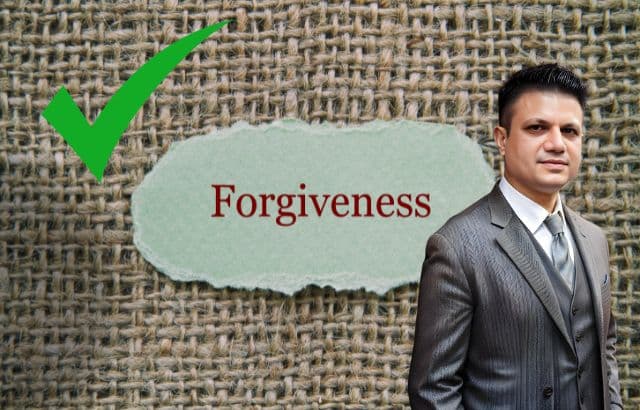
Forgiveness does not mean pretending that mistakes never happened. It means choosing not to allow resentment to control every future interaction.
Families can make mistakes, misunderstand one another and hurt each other. The opportunity lies in acknowledging the mistake, taking responsibility, learning from it and working toward healthier behavior.
Spend Time Without Digital Distractions
Technology can connect families, but excessive screen time can also reduce face-to-face interaction. Consider creating specific periods where phones, television and other distractions are put aside.
A simple family rule could be 30 minutes of device-free time each evening. That time could be used for conversation, cooking, reading, playing games or simply sitting together.
Finding Gratitude Even When Family Life Is Difficult

Not every family situation is happy or uncomplicated. Some families experience separation, disagreements, financial pressure, illness, grief, legal conflicts or emotional distance. These circumstances should not be minimized.
Even in difficult situations, reflection can help a person identify what remains meaningful. It might be a childhood memory, a supportive sibling, a lesson learned from a parent, a relationship with a grandparent, or the personal strength developed through adversity.
Ask yourself:
- What family memory still makes me smile?
- Who taught me something valuable?
- What family experience made me stronger?
- What relationship would I like to improve?
- What do I need to forgive?
- What do I need the courage to say?
These questions can create space for honest reflection without requiring anyone to pretend that everything is perfect.
Family as a Source of Personal Growth

Family relationships can teach some of life’s most important lessons. Patience may be developed while raising children. Responsibility may grow through caring for parents. Empathy may develop through understanding a sibling. Communication skills can improve through navigating disagreements.
From a strategic perspective, every relationship can reveal strengths and areas for improvement. The Game Changer is not necessarily someone who changes everyone else. Sometimes, the real game changer is the person who decides to change their own response.
Example: Changing One Response
Imagine a parent who becomes frustrated whenever a child makes a mistake. Instead of immediately criticizing the child, the parent pauses for 10 seconds, asks what happened and then discusses the lesson.
If that pause happens five times a week, that is:
5 opportunities × 52 weeks = 260 opportunities
Over a year, the parent may have created hundreds of opportunities to replace an automatic reaction with a thoughtful response.
Small changes repeated consistently can influence the emotional culture of a home.
Final Thoughts

There is no perfect family. Ups and downs are a normal part of every family, and this is where practices like understanding, love, forgiveness come into play. Go over what actions you can take to improve the bond with your family.
What are some of the things you want to say, but cannot and now want to find the courage and strength to walk up and share? Be grateful for those strengths.
As you reflect on these aspects, find opportunities to be grateful for what you have, and what you could change – concludes Hirav Shah, Renowned Business Strategist, Business Enhancement Expert and The Most Influential Business Strategist of the Country.
The goal is not to create a flawless family. The goal is to create a family environment where people feel heard, valued, respected and supported.
Start small. Have one meaningful conversation. Share one expression of gratitude. Forgive one mistake. Spend 30 minutes together without distractions. Say the words you have been postponing.
Strong families are not built in one day. They are built through small choices repeated every day.
Frequently Asked Questions

How do I experience the presence of God in my family?
By praying together, spending mealtime together and teaching good values and lessons. Families can create meaningful spiritual routines according to their beliefs and traditions. The important aspect is creating an environment of love, reflection, gratitude and good values.
What do you think is the best gift that you can give to the next generation?
Values, lessons, soil and water.
Beyond material possessions, children benefit from values such as honesty, kindness, responsibility, resilience, empathy and gratitude. Teaching these values through everyday behavior can have a lasting impact.
How can the family be a gift to society?
Families play a vital role in social development and in children’s education and socialization.
A family that teaches respect, responsibility, compassion and cooperation helps children carry those qualities into schools, workplaces, communities and society. In this way, healthy family relationships can contribute to healthier communities.
What is the greatest gift in life?
Love is the greatest and the ultimate gift in life.
How can I strengthen my relationship with my family?
Start with small, consistent actions. Spend meaningful time together, listen without immediately judging, express appreciation, communicate openly and create family traditions.
For example, committing to 30 minutes of family time each day creates approximately 182 hours of intentional connection in a year. Consistency is often more powerful than occasional grand gestures.
What should I do when my family is going through conflict?
Begin by separating the person from the problem. Listen to different perspectives, avoid unnecessary blame and identify what can realistically be changed. If the situation involves serious harm, abuse or ongoing legal conflict, professional support may be appropriate.
How can gratitude improve family relationships?
Gratitude shifts attention toward what is valuable and meaningful. A simple practice of sharing one thing you appreciate about another family member each day can encourage recognition and positive communication.
What role does forgiveness play in family relationships?
Forgiveness can help people move forward after mistakes and disagreements. It should be accompanied by accountability and healthier behavior. Forgiving someone does not require ignoring serious wrongdoing or abandoning appropriate boundaries.
How can a Business Strategist’s thinking help families?
The strategic approach used by Business Strategist Hirav Shah can inspire families to identify their current situation, define the future they want, recognize obstacles and create practical action points. In family life, this can mean identifying communication gaps, creating shared goals, establishing routines and regularly reviewing progress.
What is one simple family activity we can start today?
Have a 30-minute device-free family conversation. Each person can answer three questions: What made you happy today? What challenged you today? What are you grateful for today? The simplicity of the activity makes it easy to repeat, while the conversation can gradually deepen family understanding.
A Final Reflection
Take a moment today and look at your family with fresh eyes. Notice the people who support you, the lessons you have received, the memories you cherish and the strengths you have developed.
Then ask yourself one final question:
What is one thing I can do today to make my family relationship a little better than it was yesterday?
That one decision could be the beginning of meaningful change.