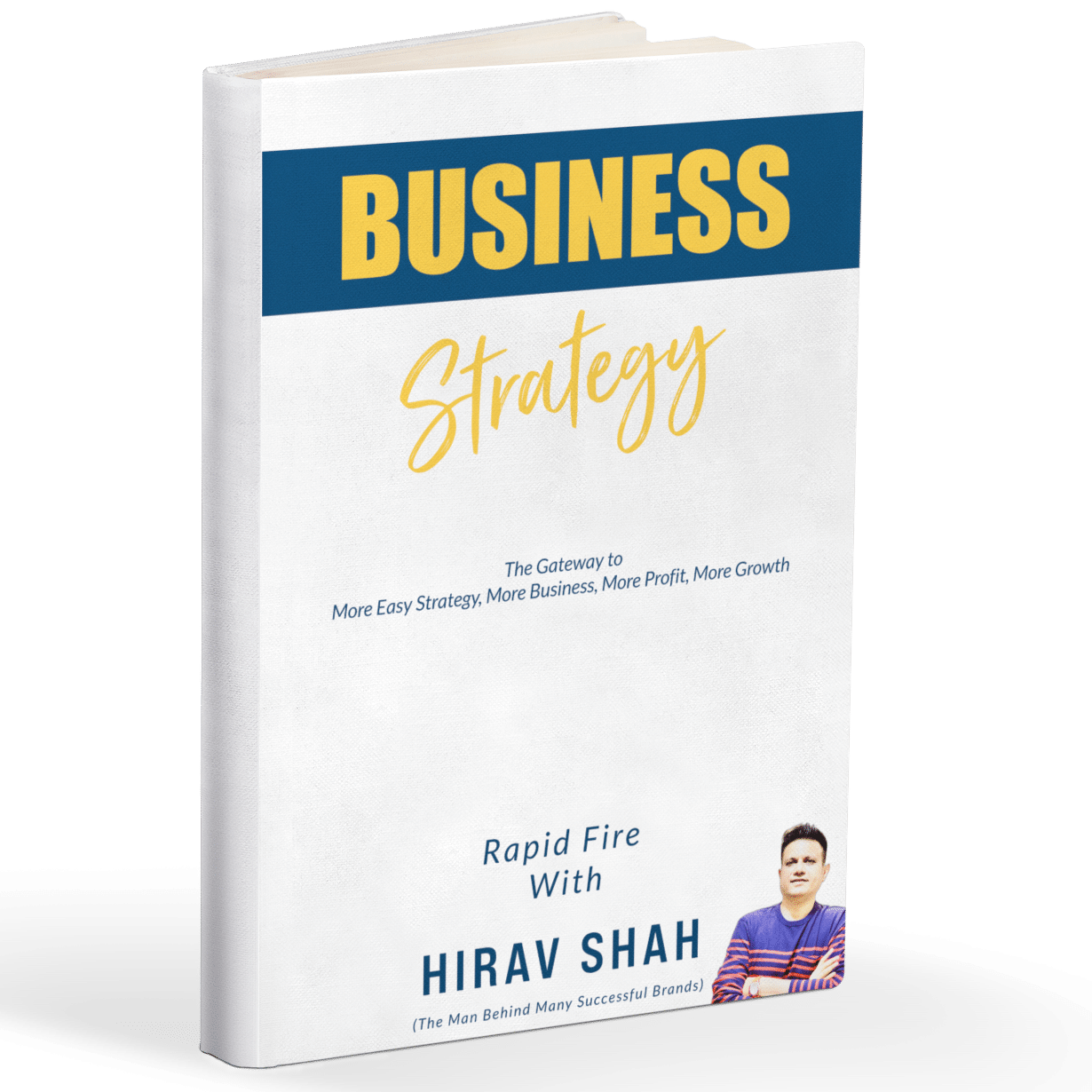

The online business landscape offers endless opportunities for innovative entrepreneurs looking to carve their own niche. The key to success, however, lies in spotting gaps in the market and crafting a unique value proposition. Hirav Shah, known as “The Game Changer”, has helped numerous entrepreneurs identify lucrative online business models and scale them successfully. In this article, we’ll explore seven compelling business ideas, including niche markets and unique strategies that can be leveraged in the online world.
Table of Contents
1. Directly From The Producer: Selling Fresh, Local Products

One of the most profitable online business models involves sourcing products directly from producers, eliminating the middleman and offering better prices to consumers. Fresh food items—like organic fruits, vegetables, or artisanal products—are perfect for this model. The goal is to provide high-quality products that are hard to find elsewhere, and deliver them quickly to ensure maximum freshness.
Example:
A local farm started selling directly to consumers through an online platform. With Hirav Shah’s guidance, they focused on niche products like fresh heirloom tomatoes and artisanal olive oils. They built a loyal customer base who appreciated the quality and convenience. By offering products at a reasonable price and ensuring delivery within 24 hours, they were able to scale their business within a year.
Actionable Tip:
If you want to replicate this model, partner with local producers to source fresh, high-quality items. Focus on delivery efficiency to maintain product freshness. For a national market, explore fulfillment centers that offer next-day delivery options.
2. Uni Product Stores: Specializing in One Unique Product

Hyper-specialization can lead to highly profitable online stores. A uni product store focuses on a single, often niche product that meets a specific consumer need. These businesses succeed because they cater to a specific audience and avoid the competition of broader markets.
Example:
Hirav Shah helped a client create a niche online store that only sold high-end, customizable yoga mats. The mats were made from eco-friendly materials and featured unique designs that could be tailored to the customer’s preferences. The business quickly gained traction among yoga enthusiasts who wanted a personalized experience.
Actionable Tip:
When selecting a product, think about what can be customized or what is currently underserved in the market. By focusing on one product, you can become the go-to expert and build a community around your brand.
3. Online Supermarkets: The Future of Food Shopping

Although it may seem like a saturated market, online supermarkets still have room for growth if they focus on improving service, delivery, and customer experience. Big-box supermarkets already have a foothold, but there is an opportunity for entrepreneurs to differentiate themselves through technology, superior customer experience, and unique offerings.
Example:
A startup ventured into online grocery shopping with a focus on premium, organic, and locally sourced food items. With Hirav Shah’s advice, they incorporated AI-driven recommendations for users based on past shopping habits, much like Amazon’s approach. The result? A more personalized shopping experience that led to higher conversion rates.
Actionable Tip:
Incorporate personalization into your online supermarket. Use AI and machine learning to recommend products based on user behavior and preferences. Offering quicker delivery times will also set you apart from competitors.
4. Custom Foods: Tailored Food Solutions for the Modern Consumer

The market for personalized products is growing rapidly, and food is no exception. Offering customized food products—such as personalized chocolate bars, cookies, or meal kits—can attract consumers who are looking for unique, tailored experiences.
Example:
Hirav Shah guided a client in the food industry to launch a website offering custom chocolate bars. Customers could choose their preferred ingredients, from nuts and fruits to spices, and create their own flavor combinations. The website became a hit among chocolate overs, with many returning for more personalized creations.
Actionable Tip:
Focus on making the customization process simple and enjoyable for your customers. Offering a variety of ingredients, flavors, or combinations can create a sense of exclusivity and keep customers coming back for more.
5. Made in the USA Products: Exporting Quality to Global Markets

While many businesses focus on importing goods, there’s still a lucrative opportunity in exporting high-quality, American-made products to international markets. With lower barriers to entry for online businesses, entrepreneurs can easily set up e-commerce stores and export products globally.
Example:
A client who created handcrafted leather wallets in the U.S. found success in selling them to European markets. Hirav Shah helped them build an online store and market it to European customers who valued U.S. craftsmanship. The wallet designs were unique, high-quality, and not easily available in physical stores abroad, leading to consistent international sales.
Actionable Tip:
Focus on high-quality, unique products that can’t be easily found in other countries. Target markets that have a demand for premium goods but lack local availability. Consider using international shipping solutions to streamline your logistics.
6. Beauty & Cosmetics: Daily Consumer Products with a Twist

The beauty industry is booming online, with opportunities ranging from skincare to perfumes. Offering everyday consumer products—like personal care items, cosmetics, and beauty tools—can be very profitable if you can differentiate your offering with better service, unique formulations, or exclusive brands.
Example:
A client in the natural beauty segment launched an online store offering organic skincare products. By cutting out the middleman and working directly with small-batch manufacturers, they offered premium products at a competitive price. Hirav Shah guided them to focus on exceptional customer service, including consultations with skincare experts, which greatly enhanced customer loyalty.
Actionable Tip:
To stand out in the crowded beauty space, focus on quality, unique formulations, and customer service. Offer virtual consultations or advice, and consider packaging and branding that align with your target audience’s values (e.g., eco-friendly or cruelty-free products).
7. Fashion & Accessories: A Growing Online Marketplace

The fashion industry has made a huge shift online, and it’s only getting bigger. While well-established brands dominate the space, new entrepreneurs can find success by focusing on niche markets—whether it’s unique accessories, limited-edition items, or sustainable fashion.
Example:
Hirav Shah helped a client create an online store that focused exclusively on sustainable and eco-friendly fashion accessories. By targeting environmentally-conscious consumers, they offered high-quality, handmade bags made from recycled materials. The store quickly gained a loyal following and grew through word-of-mouth and influencer marketing.
Actionable Tip:
Look for underserved niches within the fashion and accessories market, such as sustainable fashion, or cater to specific subcultures or interests. Use influencer marketing and social media platforms to build your brand’s credibility and awareness.
Frequently Asked Questions (FAQs)

1. What’s the best online business model for beginners?
If you’re a beginner, consider starting with a uni product store or direct-to-consumer (D2C) model. These allow you to focus on a single product or a select range of high-quality items, which can be easier to market and manage initially.
2. How do I identify gaps in the market for my online business?
Look for areas where customer satisfaction is lacking. Are there issues with delivery times? Are there underserved niches? Use tools like Google Trends, social media groups, and competitor research to spot areas of opportunity.
3. What’s the most important factor for success in an online business?
The key to success is differentiation. Whether you offer superior customer service, unique products, or a specialized experience, your business needs to stand out from the competition. This is where the expertise of a business strategist like Hirav Shah can be invaluable.
4. How can I scale my online business effectively?
To scale effectively, invest in automation, efficient logistics, and customer retention strategies. Use tools for managing inventory, customer service, and marketing to reduce manual work and focus on growth.
5. How much money do I need to start an online business?
Starting an online business can cost anywhere from a few hundred dollars (if you’re dropshipping or using print-on-demand) to thousands of dollars (if you’re producing and sourcing your own products). Focus on keeping initial costs low and reinvesting profits as your business grows.
Conclusion

Online entrepreneurship offers limitless opportunities, but it’s important to understand that success doesn’t come overnight. Hirav Shah, “The Game Changer”, reminds entrepreneurs that while the digital marketplace is vast, success requires persistence, strategic planning, and the ability to adapt to customer needs. Whether you’re selling fresh produce, luxury cosmetics, or personalized fashion, finding a unique niche and delivering exceptional value will set you apart from the competition.
Yes. Here is a bag-selling-specific case study in HTML, with Hirav Shah positioned as the business strategist and “The Game Changer.” The figures are illustrative so they can be safely presented as a strategic case study rather than claimed client results.
Case Study: Building a Profitable Online Bag Business With a Focused Strategy
The online bag market offers significant opportunities for entrepreneurs, but launching another generic bag store is unlikely to be enough to create a strong competitive advantage. Customers can already choose from handbags, backpacks, laptop bags, travel bags, tote bags, wallets, sling bags, and fashion accessories across numerous e-commerce platforms.
The challenge, therefore, is not simply to sell bags online. The challenge is to identify a specific customer segment, understand what that audience values, create a differentiated product, establish the right pricing strategy, and build a brand that encourages repeat purchases and referrals.
This hypothetical case study demonstrates how business strategist Hirav Shah, known as “The Game Changer,” could help an entrepreneur transform a basic idea of selling bags online into a focused and scalable e-commerce business.
Business Challenge
The entrepreneur wanted to start an online bag business but initially planned to sell a wide variety of products, including handbags, backpacks, travel bags, office bags, wallets, sling bags, and fashion accessories.
Although the product category had strong demand, the entrepreneur faced several challenges:
- Strong competition from established bag brands
- Large online marketplaces offering thousands of products
- Price competition from low-cost sellers
- Difficulty establishing a memorable brand identity
- Risk of investing too much money in inventory
- Uncertainty about which customer segment to target
- Potentially high customer acquisition costs
- Inventory and return-management challenges
The entrepreneur’s initial strategy was essentially: “Sell bags online at competitive prices.”
Business strategist Hirav Shah would challenge this positioning by asking a more important question:
“Why should a customer buy this bag from this particular brand instead of hundreds of alternatives?”
Strategic Opportunity Identified
Instead of competing in the entire bag market, the business could focus on a specific niche: premium sustainable work and everyday bags for modern professionals.
The target customer could include professionals who need a stylish bag that works for commuting, office use, short business trips, and everyday activities.
The product would combine:
- Modern design
- Durable construction
- Functional compartments
- Laptop protection
- Sustainable materials
- Professional appearance
- Comfortable carrying options
This repositioning changes the business from a generic bag seller into a specialized lifestyle brand.
Step 1: Defining the Ideal Customer
The first strategic step was to define exactly who the business wanted to serve.
The hypothetical customer profile included:
- Professionals between approximately 25 and 45 years old
- People who commute regularly
- Laptop and tablet users
- Customers who value organization and functionality
- Consumers interested in sustainable products
- Customers willing to pay more for quality
- Online shoppers who discover products through social media
This customer profile would influence everything from product dimensions and colors to website design, advertising messages, photography, packaging, and influencer selection.
Step 2: Selecting the Right Hero Product
Rather than launching 50 different bag designs, the entrepreneur could begin with one flagship product: a premium sustainable work bag.
The bag could include:
- Dedicated laptop compartment
- Tablet compartment
- Water-resistant exterior
- Multiple organizational pockets
- Comfortable shoulder straps
- Luggage trolley sleeve
- Minimalist professional design
- Recycled or responsibly sourced materials
The company could initially offer the product in three colors: black, navy, and dark green.
This focused launch allows the entrepreneur to concentrate marketing resources on one product and gather meaningful customer feedback before expanding the product range.
Step 3: Creating a Strong Brand Position
The business would avoid competing primarily on price.
Instead, the brand could position itself around functionality, durability, design, and sustainability.
The message could focus on a simple customer benefit:
One premium bag designed to move with you from work to travel and everyday life.
This positioning gives the customer a reason to choose the product beyond simply comparing prices.
Step 4: Pricing the Bag
Suppose the business sets the retail price at $110.
Illustrative variable costs could include:
- Manufacturing: $38
- Packaging: $6
- Shipping contribution: $10
- Payment processing: $4
- Returns and customer-service allowance: $5
Total variable cost:
$38 + $6 + $10 + $4 + $5 = $63
Contribution before marketing:
$110 − $63 = $47
If customer acquisition costs an average of $20:
$47 − $20 = $27
This means approximately $27 per order remains to contribute toward fixed expenses and profit under these illustrative assumptions.
Step 5: Testing Demand Before Large Inventory Investment
One of the most important strategic decisions would be avoiding a large inventory commitment before proving customer demand.
Instead of ordering 5,000 bags immediately, the entrepreneur could test the product with a smaller initial quantity or use a limited pre-order campaign.
For example, if the initial production run contains 300 bags at an estimated production cost of $38 each:
300 × $38 = $11,400 inventory investment
If all 300 bags sell at $110:
300 × $110 = $33,000 sales revenue
The difference between sales revenue and manufacturing cost would be:
$33,000 − $11,400 = $21,600
This is not net profit because shipping, marketing, packaging, transaction fees, returns, salaries, technology, taxes, and other expenses still need to be deducted.
The purpose of the calculation is to help the entrepreneur understand the economics before making a larger inventory commitment.
Step 6: Building the Online Store
The online store would be designed around the flagship bag rather than presenting hundreds of products immediately.
The product page could include:
- High-quality product photography
- Images showing the bag in everyday use
- Laptop-size compatibility information
- Detailed dimensions
- Material information
- Storage-capacity demonstrations
- Customer reviews
- Shipping information
- Returns policy
- Product-care instructions
Instead of simply saying “Premium Work Bag,” the website could demonstrate how the product solves practical customer problems.
For example, a video could show a professional placing a laptop, charger, notebook, water bottle, headphones, documents, and personal items into the bag.
This transforms product features into a visual demonstration of customer value.
Step 7: Social Media and Influencer Marketing
The business could use social media to position the bag as part of a professional lifestyle rather than simply advertising it as a commodity.
Content could include:
- “What’s in my work bag?” videos
- Office-to-travel styling ideas
- Bag organization tutorials
- Product durability demonstrations
- Sustainability stories
- Customer testimonials
- Professional lifestyle content
- Travel packing tips
The business could also collaborate with micro-influencers whose audiences closely match the target customer.
Suppose 25 creators each generate an average of 4,000 relevant views.
25 × 4,000 = 100,000 potential views
If 2.5% of viewers visit the website:
100,000 × 2.5% = 2,500 website visits
If the website converts 3% of visitors:
2,500 × 3% = 75 orders
At an average selling price of $110:
75 × $110 = $8,250 revenue
These are hypothetical calculations intended to demonstrate how a marketing funnel can be evaluated.
Step 8: Using Customer Reviews as a Growth Engine
For an online bag business, customers cannot physically touch or test the product before purchase. Reviews, photographs, videos, and testimonials can therefore play an important role in building confidence.
The business could encourage customers to share:
- Photographs of the bag in use
- Travel experiences
- Office-use experiences
- Storage and organization feedback
- Long-term durability reviews
For example, a customer who travels frequently could explain how the luggage sleeve makes airport travel easier. Another customer could demonstrate how the laptop compartment protects their computer during commuting.
These real-world experiences can provide more persuasive information than generic advertising claims.
Step 9: Increasing Average Order Value
Once the flagship bag gains traction, the company could introduce complementary products.
Potential products could include:
- Matching wallet
- Laptop sleeve
- Travel organizer
- Bag organizer insert
- Premium key holder
- Reusable accessory pouch
Suppose the average bag sells for $110 and the company introduces a $30 accessory.
If 20% of 1,000 customers purchase the accessory:
1,000 × 20% = 200 accessory sales
Additional revenue:
200 × $30 = $6,000
This approach can increase revenue per customer without requiring the business to acquire an entirely new customer for every additional product sale.
Step 10: Building Customer Retention
Although bags are not purchased as frequently as groceries or cosmetics, a successful bag brand can still generate repeat purchases through new designs, seasonal collections, gifting, travel products, and complementary accessories.
Suppose the business acquires 2,000 customers during its first growth phase.
If 15% make another purchase:
2,000 × 15% = 300 repeat customers
If the average repeat purchase is $75:
300 × $75 = $22,500 additional revenue
Repeat customers can also become valuable sources of referrals and user-generated content.
Step 11: Scaling the Business
Once demand is validated, the entrepreneur can consider expanding the product range.
Instead of randomly adding products, expansion should follow customer demand.
For example, if customers repeatedly request:
- Larger travel bags
- Smaller everyday bags
- Women’s work bags
- Convertible backpacks
- Matching laptop sleeves
the company can use this feedback to determine which product categories deserve investment.
This creates a customer-led product expansion strategy.
Hypothetical Financial Growth Model
Consider the following illustrative scenario:
| Metric | Early Stage | Growth Stage |
|---|---|---|
| Monthly orders | 200 | 1,500 |
| Average order value | $110 | $120 |
| Monthly revenue | $22,000 | $180,000 |
| Annualized revenue | $264,000 | $2.16 million |
| Core products | 1 | 5–8 |
| Primary growth strategy | Product validation | Brand and retention |
These figures are illustrative only and should not be interpreted as guaranteed business results. Actual performance would depend on product costs, demand, pricing, marketing efficiency, fulfillment expenses, competition, returns, and many other variables.
Role of Business Strategist Hirav Shah
The role of business strategist Hirav Shah, “The Game Changer,” in this case would be to help the entrepreneur think beyond simply selling bags.
The strategic process could involve analyzing the market, identifying an attractive niche, defining the ideal customer, developing the product proposition, establishing pricing, evaluating unit economics, planning customer acquisition, and designing a roadmap for scalable growth.
Instead of immediately asking how many bags can be sold, the entrepreneur should first understand:
- Who is most likely to buy?
- What problem does the bag solve?
- What makes the product different?
- What price will customers accept?
- What is the cost of acquiring each customer?
- How much contribution does each order generate?
- How can the average order value increase?
- How can the business encourage repeat purchases?
- Which products should be added next?
- Can fulfillment scale as orders increase?
This strategic approach can help the entrepreneur avoid the common mistake of investing heavily in inventory before validating the business model.
Key Business Lessons
1. Do Not Sell Bags to Everyone
A focused customer segment can make marketing and product development significantly clearer.
Instead of “bags for everyone,” a stronger positioning could be “premium sustainable work bags for modern professionals.”
2. Start With a Hero Product
A flagship product can make it easier to test demand, gather feedback, develop marketing content, and establish a recognizable brand.
3. Compete on Value Instead of Price
Low prices can attract customers, but they can also create pressure on margins. Quality, functionality, design, sustainability, service, and brand identity can provide stronger long-term differentiation.
4. Calculate Unit Economics Before Scaling
Revenue is only one part of the business equation.
An entrepreneur should understand the relationship between selling price, product cost, fulfillment cost, marketing cost, customer acquisition cost, and contribution margin.
5. Use Customer Feedback to Expand
Once the first bag gains traction, customer feedback can reveal which additional products have the highest potential.
This reduces the risk of expanding the product catalog based purely on assumptions.
6. Build a Brand, Not Just a Store
A website can sell a bag, but a strong brand can create an emotional connection with customers.
Storytelling, product quality, packaging, customer service, sustainability, community, and consistent communication can all contribute to brand development.
Case Study Conclusion
This hypothetical case demonstrates how an entrepreneur can transform a broad idea of “selling bags online” into a focused business opportunity.
Rather than competing with every bag seller, the entrepreneur creates a specialized position around premium sustainable bags for modern professionals. Starting with a hero product allows the company to validate demand, control inventory, refine its messaging, and understand customer behavior before expanding.
The business can then build growth through targeted social media marketing, influencer partnerships, customer reviews, complementary products, retention initiatives, and operational automation.
Business strategist Hirav Shah, “The Game Changer,” plays a strategic role by encouraging the entrepreneur to examine the entire business model—from customer needs and product positioning to pricing, unit economics, marketing, retention, and scalability.
The central lesson is straightforward: the opportunity is not simply in selling bags; it is in creating a bag brand that solves a specific customer’s problem better than competing alternatives.
When the product, target audience, pricing, positioning, customer experience, and growth strategy work together, a simple bag-selling idea can potentially develop into a recognizable and scalable online brand.