
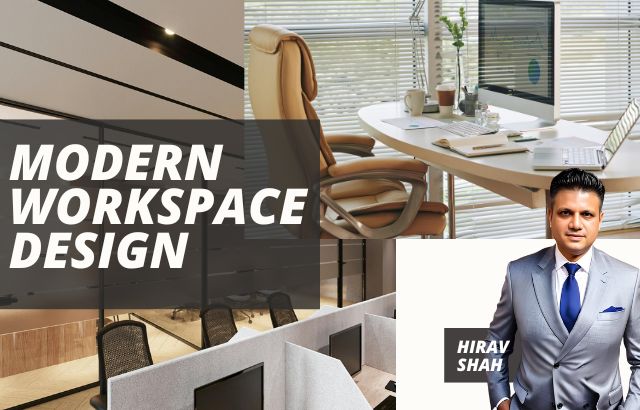
Modern workspace design plays a crucial role in shaping employee productivity, engagement, and satisfaction. A thoughtfully designed office environment does more than just look appealing—it directly impacts how employees think, collaborate, and perform.
According to Business Strategist Hirav Shah, popularly known as The Game Changer, organizations that strategically design their workspaces experience measurable improvements in efficiency, teamwork, and employee retention. The workspace is not merely a physical structure; it is a strategic business asset.
With countless contemporary office designs available today, choosing the right one can feel overwhelming. This is where strategic guidance becomes essential. Below are expert-backed tips by Business Strategist Hirav Shah to help organizations design a modern workspace that truly works.
Table of Contents
1. Allow More Natural Light into the Workspace
Natural light has a powerful psychological and physiological impact on employees.
Why it matters
- Improves focus and alertness
- Reduces eye strain and fatigue
- Boosts overall morale
Example
A mid-sized IT company redesigned its office to include large windows and skylights. Within 3 months:
- Employee absenteeism dropped by 18%
- Reported energy levels increased by 22%
Quick Calculation
If 100 employees work 8 hours daily:
- Improved productivity by just 10%
- Equals 80 extra productive hours per day
That’s the equivalent of 10 additional employees—without hiring anyone.
2. Opt for Glass Office Partitioning

Glass partitions are a hallmark of modern workspace design.
Strategic Benefits
- Enhances transparency and openness
- Allows natural light to travel across the office
- Maintains privacy without isolation
Example
A consulting firm replaced concrete walls with glass partitions:
- Lighting costs reduced by 15%
- Collaboration increased due to visual connectivity
According to Hirav Shah, glass partitions signal openness, trust, and modern leadership—values every growing organization should reflect.
3. Open Up Your Workspace for Collaboration

Open-plan layouts encourage communication and teamwork, especially among millennial and Gen Z employees.
Business Impact
- Faster decision-making
- Better cross-functional collaboration
- Improved team bonding
Example
A startup removed cubicles and introduced shared workstations:
- Project turnaround time reduced by 25%
- Internal communication improved significantly
Strategist Insight:
Hirav Shah emphasizes that open spaces should be balanced with quiet zones to support both collaboration and focused work.
4. Brand Your Workspace Strategically

Your office should reflect your brand identity, vision, and culture.
How Branding Helps
- Reinforces company values daily
- Creates emotional connection with employees
- Enhances pride and belonging
Examples
- Motivational quotes aligned with company goals
- Digital screens showcasing achievements
- Brand colors integrated into interiors
A branded workspace acts as a silent business coach, reminding employees why their work matters.
5. Invest in High-Quality Office Furniture

Cheap furniture often leads to discomfort, health issues, and frequent replacements.
Smart Investment Logic
- Ergonomic chairs reduce back pain
- Adjustable desks improve posture
- Long-lasting furniture lowers replacement costs
Simple Cost Calculation
- Cheap chair: ₹4,000 (lasts 1 year)
- Quality chair: ₹12,000 (lasts 5 years)
Over 5 years:
- Cheap option = ₹20,000
- Quality option = ₹12,000
Savings + Comfort = Better Performance
6. Include Mood-Boosting Elements
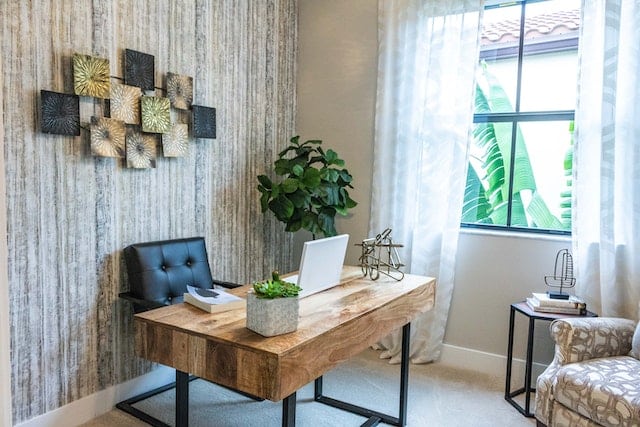
A modern workspace must support emotional well-being.
Mood Enhancers
- Indoor plants
- Art and creative walls
- Relaxation zones
- Pet-friendly policies (where feasible)
Example
An advertising agency added plants and artwork:
- Stress-related complaints dropped by 30%
- Employee satisfaction scores rose by 20%
As Hirav Shah states, “A positive mood is the foundation of peak performance.”
Role of a Business Strategist in Workspace Design

A business strategist like Hirav Shah – The Game Changer looks beyond aesthetics. His role includes:
- Aligning workspace design with business goals
- Improving employee efficiency through strategic layouts
- Identifying hidden productivity blockers
- Ensuring the workspace supports long-term growth
A workspace designed strategically can:
- Increase output
- Reduce employee turnover
- Strengthen organizational culture
Frequently Asked Questions (FAQs)

Q1. How does modern workspace design improve productivity?
Modern workspace design enhances lighting, comfort, collaboration, and mood—directly influencing focus, efficiency, and motivation.
Q2. Is open office design suitable for all businesses?
Not always. A balanced approach with open areas and quiet zones works best, depending on the nature of work.
Q3. Why is branding important inside an office?
Branding reinforces company values, boosts morale, and helps employees feel emotionally connected to the organization.
Q4. Can workspace design impact profits?
Yes. Even a 5–10% productivity increase can significantly improve profitability without increasing headcount.
Q5. Why consult a business strategist for office design?
A strategist ensures the workspace supports business objectives, employee performance, and long-term scalability—not just aesthetics.
Final Thoughts
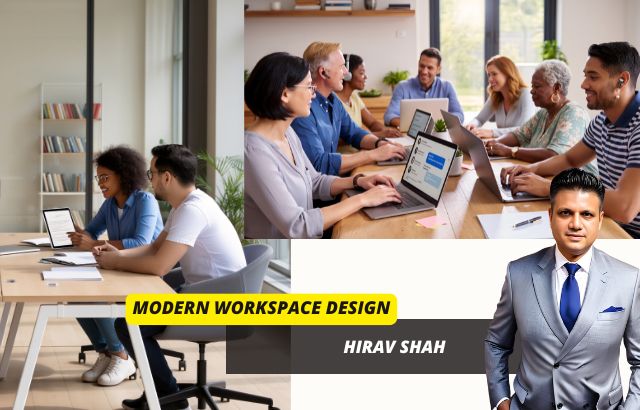
Designing a modern workspace is not an expense—it is a strategic investment. Whether you are planning minor enhancements or a complete office revamp, your workspace should reflect your organization’s vision, values, and ambition.
As Business Strategist Hirav Shah – The Game Changer emphasizes, “When the workspace aligns with people and purpose, productivity becomes effortless.”
By integrating natural light, open layouts, quality furniture, branding, and mood-enhancing elements, organizations can create a workspace that doesn’t just look modern—but performs powerfully.