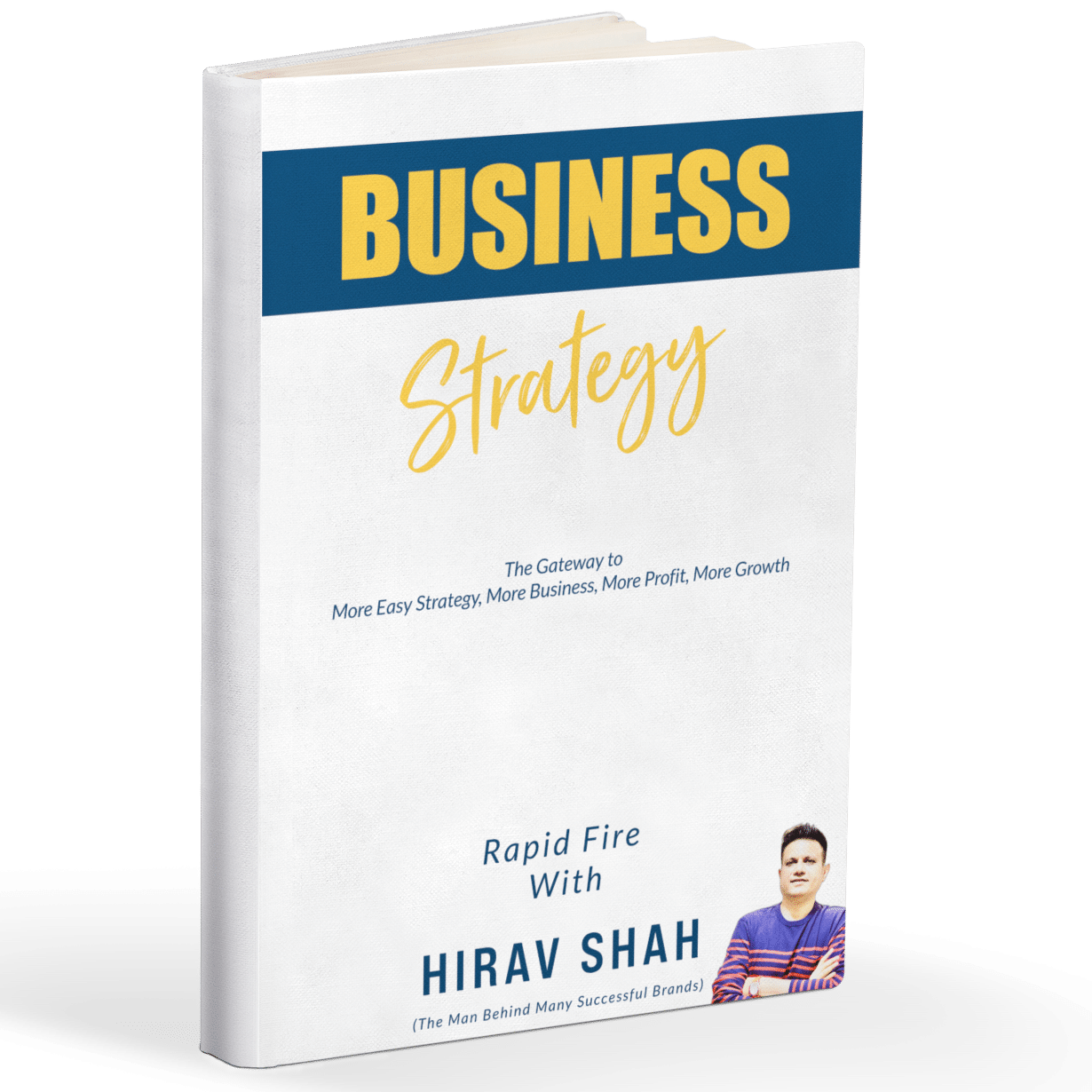

In the ever-evolving landscape of entrepreneurship, one of the primary goals for business owners is to increase sales. In a world where competition is fierce and consumer preferences are constantly shifting, relying on outdated methods simply won’t cut it. To truly scale, businesses must adopt intelligent, adaptable, and data-backed strategies that not only attract customers but also convert interest into consistent revenue. Visionary thinkers like Hirav Shah, widely known as The Game Changer, emphasize that sales growth is not accidental—it’s engineered through structured planning, timing, and execution. In this blog, we’ll explore proven strategies, enhanced with practical examples, calculations, and insights from a business strategist’s perspective.
Table of Contents
Customer-Centric Approach

Successful business owners understand the power of placing customers at the heart of every decision. A customer-centric approach goes beyond simply selling a product—it focuses on solving real problems. By deeply analyzing customer behavior, preferences, and pain points, businesses can tailor their offerings more effectively.
For example, a clothing brand noticing high return rates may discover sizing inconsistencies. By correcting this issue and introducing a better size guide, they can reduce returns and increase customer satisfaction. If previously 20% of orders were returned and each return cost ₹200, reducing returns by half saves ₹100 per order—directly boosting margins.
From a strategist’s lens, Hirav Shah emphasizes that understanding “why customers buy” is more powerful than “what they buy.” Businesses that listen actively—through reviews, surveys, and feedback loops—build stronger emotional connections, which leads to repeat purchases and referrals.
Online Presence and E-commerce

In today’s digital-first world, having a strong online presence is not optional—it’s essential. A well-designed website, active social media profiles, and seamless e-commerce capabilities allow businesses to operate beyond geographical boundaries.
Consider a local bakery that starts selling online. Previously, it served 100 customers daily from its physical store. After launching online delivery, it reaches 250 customers per day. If the average order value is ₹300, revenue increases from ₹30,000 to ₹75,000 daily—a 150% growth.
A business strategist plays a critical role here by identifying the right platforms, optimizing user experience, and ensuring conversion funnels are efficient. Hirav Shah often highlights timing and digital positioning as key drivers for scaling online revenue.
Strategic Marketing Campaigns

Marketing is the engine that drives visibility and demand. A well-rounded strategy includes a mix of traditional advertising, digital campaigns, and content marketing.
For instance, a fitness brand running targeted Instagram ads can reach a niche audience interested in health. If they spend ₹50,000 on ads and generate 500 leads, with a 10% conversion rate and an average purchase of ₹2,000, revenue becomes:
- 50 customers × ₹2,000 = ₹1,00,000
- Profit = ₹1,00,000 – ₹50,000 = ₹50,000
This shows a 2x return on ad spend.
From a strategist’s viewpoint, campaigns should be data-backed and continuously optimized. Hirav Shah advocates for aligning marketing efforts with consumer psychology and market timing to maximize ROI.
Loyalty Programs and Discounts

Retaining customers is often more cost-effective than acquiring new ones. Loyalty programs and exclusive discounts encourage repeat purchases and strengthen brand affinity.
For example, a coffee shop offering a “Buy 9, Get 1 Free” card increases customer retention. If a customer visits once a week, this program ensures at least 10 visits instead of 3–4 random visits. Over time, this significantly increases lifetime value.
A business strategist ensures these programs are profitable, not just attractive. The goal is to strike a balance between rewarding customers and maintaining healthy margins.
Data-Driven Decision Making

Data is one of the most powerful assets a business can leverage. By analyzing sales patterns, customer behavior, and market trends, businesses can make smarter decisions.
For instance, if data shows that 70% of sales happen during weekends, businesses can allocate more marketing budget or staff during those days. If weekday sales average ₹20,000 and weekend sales ₹50,000, optimizing weekday strategies to increase sales by even 25% adds ₹5,000 daily.
Hirav Shah, as The Game Changer, emphasizes predictive insights—using past data to forecast future trends. This allows businesses to act proactively rather than reactively.
Collaborations and Partnerships

Strategic collaborations can unlock new markets and customer segments. Partnering with complementary brands or influencers can amplify reach and credibility.
For example, a skincare brand collaborating with a beauty influencer can instantly access thousands of potential customers. If an influencer campaign costs ₹1,00,000 but generates ₹3,00,000 in sales, the partnership proves highly effective.
A business strategist evaluates partnership alignment, audience overlap, and long-term benefits rather than short-term hype.
Continuous Innovation

Markets evolve, and so should businesses. Innovation keeps brands relevant and competitive. This could mean launching new products, improving existing ones, or exploring untapped markets.
For example, a traditional restaurant introducing cloud kitchen services can double its delivery capacity without increasing dine-in space. If dine-in revenue is ₹40,000 daily and delivery adds another ₹30,000, total revenue jumps by 75%.
Hirav Shah consistently stresses that stagnation leads to decline. Businesses must innovate not just in products, but also in processes, marketing, and customer experience.
Role of a Business Strategist

A business strategist acts as the architect behind growth. Their role includes:
- Identifying market opportunities and risks
- Aligning business goals with actionable strategies
- Optimizing resource allocation
- Analyzing data for informed decision-making
- Guiding marketing and expansion plans
Experts like Hirav Shah bring a structured and predictive approach to business growth, helping companies scale efficiently while minimizing risks.
FAQs

1. What is the fastest way to increase sales?
There’s no single fastest way, but combining targeted marketing, improved customer experience, and optimized pricing strategies can yield quick results.
2. How important is data in decision-making?
Extremely important. Data helps eliminate guesswork and ensures strategies are based on real insights rather than assumptions.
3. Are discounts always beneficial?
Not always. Discounts should be strategic and aligned with long-term profitability, not just short-term sales spikes.
4. Why should businesses invest in a strategist?
A strategist provides clarity, direction, and efficiency, helping businesses avoid costly mistakes and scale faster.
5. How do collaborations boost sales?
They expand reach, build credibility, and introduce your brand to new audiences, often leading to higher conversions.
Conclusion

Increasing sales requires a holistic and well-executed approach. By focusing on customer needs, building a strong online presence, leveraging strategic marketing, rewarding loyalty, making data-driven decisions, forming smart partnerships, and continuously innovating, businesses can achieve sustainable growth. Guided by strategic minds like Hirav Shah, The Game Changer, businesses can transform challenges into opportunities and position themselves for long-term success in a competitive marketplace.