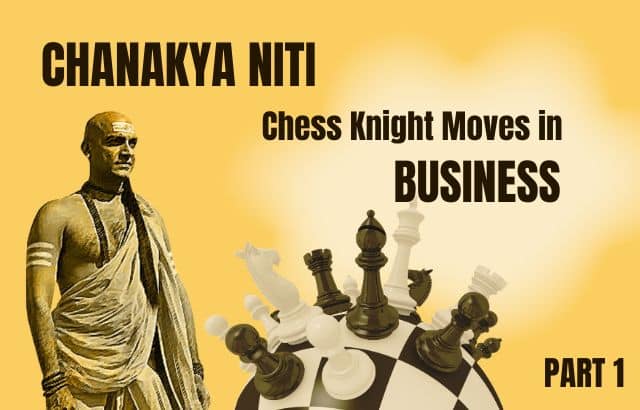
In today’s fast-changing business world, ancient wisdom often hides the smartest modern solutions. Through this new series, Business Strategist Hirav Shah decodes Chanakya Niti — revealing how timeless strategy, logic, and clarity can transform the way entrepreneurs make decisions.
Table of Contents
Who Was Chanakya?
Centuries before corporate strategy existed, there lived a thinker whose mind could foresee the rise and fall of empires — Chanakya, also known as Kautilya or Vishnugupta.
He wasn’t just a teacher; he was the original strategist, the man who used intellect, timing, and tactics to unite India under Chandragupta Maurya’s rule. His writings, especially the Arthashastra and Chanakya Niti, became timeless blueprints for leadership, decision-making, and governance.
“Chanakya was not born for war — he was born to win through wisdom,” says Business Strategist Hirav Shah.
What Is Chanakya Niti?
The word “Niti” means policy, principle, or strategy.
Chanakya Niti is a compilation of his sharpest insights — covering power, politics, economics, leadership, and human behavior. Each verse is a lesson in practical intelligence — how to act when the situation is uncertain, how to think when others panic, and how to win when odds are against you.
“Chanakya Niti is not about religion — it’s about reality,” says Hirav Shah. “It’s the ultimate handbook for those who want to lead, not just survive.”
Why Is Chanakya Niti Important in Business Today?
Because business, like politics or war, is about strategy, timing, and influence.
Chanakya taught how to lead with clarity, how to read people, and how to make decisions that are emotionally intelligent yet ruthlessly logical. Entrepreneurs today face the same challenges — uncertainty, competition, and the constant need to think ahead.
“Every founder, investor, or CEO is playing a modern version of Chanakya’s game — they just call it business,” says Hirav Shah.
How Does Chanakya Niti Work in Modern Times?

It works through mindset.
Chanakya didn’t give rules; he gave a way of thinking — logical, detached, and strategic. When applied to business, it teaches five master principles:
- Think different (like the Knight in chess)
- Position yourself right
- See beyond what’s visible
- Be patient, not passive
- Turn obstacles into opportunities
“Chanakya Niti works when you stop reacting emotionally and start responding strategically,” explains Hirav Shah.
What the Chess Knight Can Teach You About Chanakya’s Way of Business
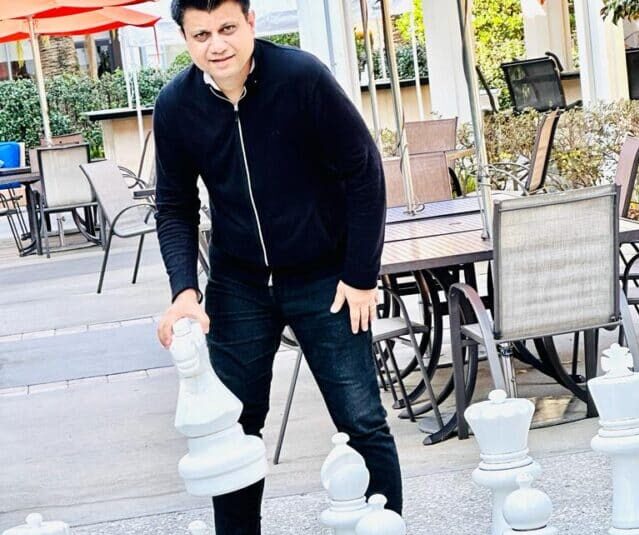
This is where the Chess Knight analogy begins — a symbol of unpredictable brilliance, sideways thinking, and strategic patience.
If Chanakya were alive today, he would have loved the Knight — a piece that never follows the crowd, never moves in a straight line, and yet silently controls half the board. That’s exactly how Chanakya operated — quietly, cleverly, and always one move ahead of his rivals.
He believed that victory belongs not to the strongest, but to the smartest thinker in the room.
Now imagine applying that same brilliance to business. Every market, every meeting, every decision is your chessboard. And your first move? Think like the Knight.
“The Knight is Chanakya’s modern metaphor — silent, strategic, and unstoppable when timed right.”
— Business Strategist Hirav Shah
Lesson 1 – Why Straight Paths Don’t Lead to Great Destinations?
Chanakya’s View
Chanakya believed predictable people are the easiest to defeat. He wrote that one must never reveal all intentions; strategy thrives in surprise. A linear path makes you visible — and vulnerable.
Modern Meaning
In business, imitation kills innovation. Everyone can walk straight, but very few dare to bend. The Chess Knight’s “L-move” reminds us that the smartest entrepreneurs break patterns — they look where no one is looking.
When a market is crowded, the Knight-thinker looks for angles: new customer behavior, unserved geographies, or unspoken needs.
Apple Inc. didn’t invent phones; it changed how people felt about them. Netflix didn’t invent movies; it changed how people watched them. These are Knight moves — unconventional yet impactful.
Business Strategist Hirav Shah’s Chanakya Point
“In business, detours aren’t distractions — they’re design. The shortest route is rarely the smartest one.”
Lesson 2 – How Does Positioning Decide Power in Business and Life?

Chanakya’s View
Chanakya taught that power is not only about strength; it’s about placement. A weak king with strong allies can rule longer than a strong king surrounded by fools. In his eyes, strategy begins not with action but with awareness — knowing where you stand.
Modern Meaning
In business, the same truth applies. A great idea fails if positioned wrongly. The right place, right time, and right perception decide whether you dominate or disappear.
The Chess Knight doesn’t move everywhere; it chooses precise squares where it can create maximum impact. Entrepreneurs must learn the same art — of positioning their product, their brand, and themselves.
Positioning is why two similar businesses perform differently: one speaks to emotion, the other only to logic. One connects with people, the other chases profit.
Business Strategist Hirav Shah’s Chanakya Point
“A wrong position can turn a strong player into a silent spectator. In strategy, placement is power.”
Lesson 3 – What Happens When You See Beyond Visibility?

Chanakya’s View
Chanakya believed that the most dangerous mistake a leader can make is to act only on what is visible.
He taught that true strategy begins in silence — when one observes without announcing, prepares without revealing, and plans without seeking attention.
He famously said, “The wise one hides knowledge the way a warrior hides his sword.”
Modern Meaning
In business, real progress often happens quietly. Brands that look calm on the surface are usually working hardest beneath it.
The Chess Knight reflects this exact mindset — it never rushes forward in the open; it appears calm, but every move is calculated.
The smartest entrepreneurs build silently — refining products, studying markets, and strengthening systems before showing results. By the time others notice, the Knight is already controlling the board.
Business Strategist Hirav Shah’s Chanakya Point
“Visibility is overrated; vision is everything. Work in silence until your move becomes the headline.”
Lesson 4 – Why Is Patience the Sharpest Weapon of a Strategist?

Chanakya’s View
Chanakya often warned that impatience is the fastest path to downfall. He wrote, “The one who cannot wait, will never rule.”
To him, patience was not weakness — it was the sharpest form of control. A leader who can wait without losing focus holds the power to turn timing into victory.
Modern Meaning
Every business battle tests your patience. Markets fluctuate, clients delay, deals stretch — but the wise strategist knows that good timing beats quick timing.
The Chess Knight never rushes; it waits for the perfect square, the perfect opening. Visionary entrepreneurs understand that not every opportunity deserves action — some demand stillness, clarity, and observation.
Business Strategist Hirav Shah’s Chanakya Point
“In business, waiting isn’t weakness — it’s wisdom. The right move at the wrong time is still the wrong move.”
Lesson 5 – How Can You Jump Over Obstacles Like a Chess Knight?
Chanakya’s View
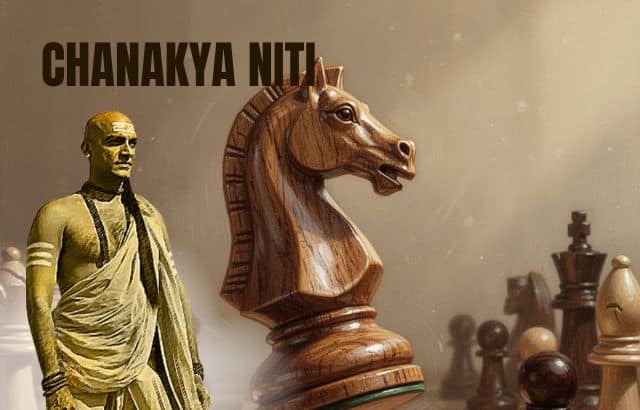
Chanakya believed that problems are inevitable — but defeat is optional. He taught that when the straight path is blocked, the wise look for alternate routes.
In his words, “One who knows multiple paths can never be trapped.” He called this Upaya — the art of indirect solutions.
Modern Meaning
In business, obstacles are constant — market shifts, funding delays, partner disputes, or unexpected competition.
While most people stop at the first hurdle, great strategists think like the Knight — they jump over problems instead of getting stuck behind them. This means finding creative solutions: new collaborations, revised models, parallel ventures, or redefined targets.
The smartest founders don’t panic when blocked — they pivot with purpose.
Business Strategist Hirav Shah’s Chanakya Point
“When others see limits, the Knight sees leverage. Every obstacle is an invitation to innovate.”
Lesson 6 – Reflection, Realization, and the Road Ahead
Chanakya’s Essence
Both Chanakya and the Knight teach one eternal truth — the game is never about speed, it’s about sequence.
Victory comes to the one who can think calmly, move wisely, and act courageously — even when unseen.
Modern Reflection
For today’s entrepreneurs, these five Knight lessons form a timeless framework:
- Don’t move straight; move smart.
- Position yourself where impact matters.
- See what others can’t.
- Wait for the right time.
- Jump over problems, don’t sink into them.
When these ideas come together, they form the Chanakya Mindset — a blend of logic, timing, silence, and strategy that drives unstoppable growth.
“The Knight and Chanakya both prove that success isn’t about how loud you are, but how right your next move is.”
— Business Strategist Hirav Shah
Conclusion – The Knight’s Legacy, Chanakya’s Lesson
Every entrepreneur is playing their own chessboard — full of allies, rivals, and decisions.
But only a few think like Chanakya’s Knight — moving silently, strategically, and decisively. That’s where leadership turns into legacy.
“Every business decision is a chess move — the straight ones are safe, but the Knight’s moves change the game.”
— Business Strategist Hirav Shah
Application Section: From Reading to Doing
Chanakya Exercise (5-Minute Reflection)
Ask yourself:
- Where in your business are you still moving in a straight line when a side move could win faster?
- Which areas need repositioning — your product, your communication, or your mindset?
- Do you make moves emotionally or strategically?
- What’s one decision you can delay today for better timing tomorrow?
- What obstacle can you jump over creatively instead of fighting head-on?
Purpose
To help you identify your “Knight Move” — the one shift that can change your entire business game.
3 Quick Chanakya Tips from Business Strategist Hirav Shah

- Think Like a Player, Not a Piece: Control the board — don’t let emotions move your hand.
- Strategy Loves Silence: Announce success, not struggle.
- Clarity Before Speed: A delayed right move is better than an early wrong one.
Q&A – Readers Ask, Chanakya Answers (Through Hirav Shah’s Lens)
Q1: What’s the first step to apply Chanakya Niti in business?
A: Start by observing — not reacting. Awareness is your opening move.
Q2: How do I make “Knight moves” when investors or bosses expect linear plans?
A: Align their goals with your vision. You can move sideways only if they trust your direction.
Q3: Is waiting really a strategy or just fear in disguise?
A: Waiting becomes a strategy when it’s based on timing, not hesitation. Chanakya called it “Dharya” — controlled patience.
Coming Next
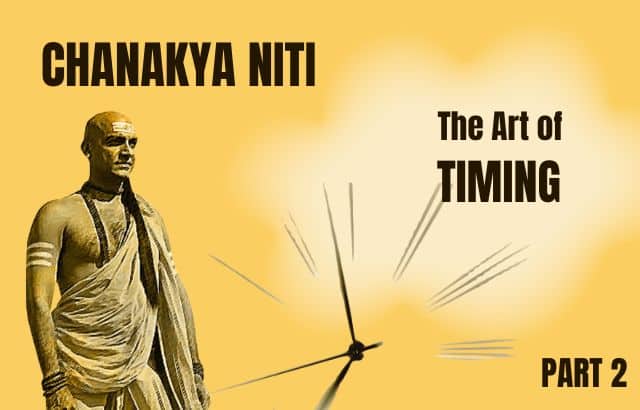
Chanakya Niti – Chapter 2: The Art of Timing — When Waiting Becomes Your Greatest Weapon
About the Writer
This article is authored by Hirav Shah, a globally respected Business Strategist and The Game Changer in Entertainment, Sports, and Business. He is the founder of the world’s first Business Decision Validation Hub and the author of 19+ strategy books. His 6+3+2 framework and Astro Strategy approach have guided entrepreneurs, startups, corporates, sports professionals, and entertainers to validate decisions, reduce risks, and achieve breakthrough results.